

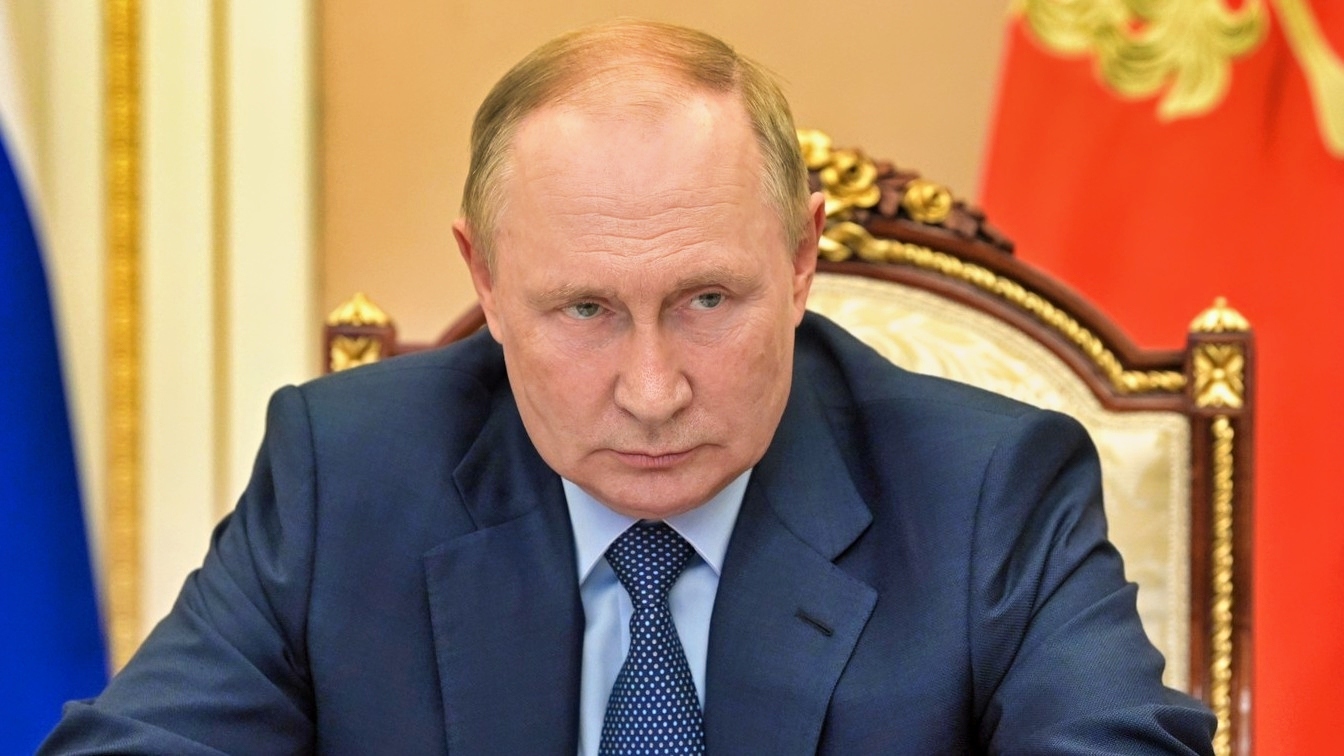
Crimea, the territory Vladimir Putin has prized above every other conquest since seizing it in 2014, is blacked out, running dry of fuel, and living under a state of emergency. Ukrainian drones have spent weeks cutting the peninsula off from the Russian mainland, and the damage is now severe enough that Moscow’s own officials have stopped pretending otherwise. The question hanging over the crisis is how far Putin will go to keep his grip on Crimea, and whether he reaches for the kind of extreme retaliation his rhetoric has long threatened.
His options are real, but his actual response so far has been damage control, and the menu of genuine escalation is narrower than the threats suggest.
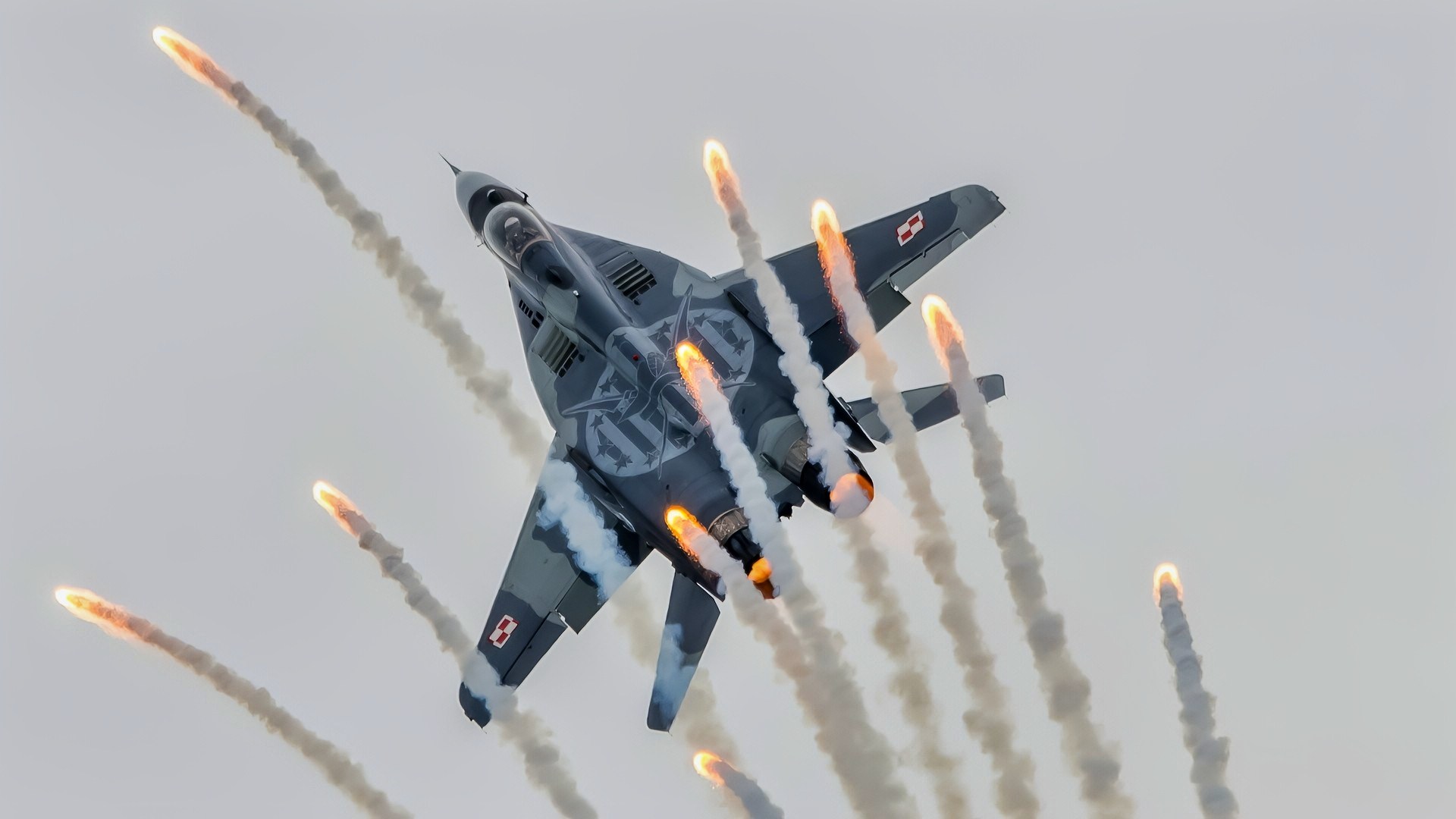
MiG-29 Flair Drop Creative Commons Image.
Crimea Under A State Of Emergency
The Russian-installed head of Crimea, Sergei Aksyonov, declared a regionwide state of emergency on Friday, with the governor of Sevastopol announcing a separate one for the city.
The official justification was economic. Aksyonov said the measure would let businesses invoke force majeure clauses and help residents claim compensation for damaged electrical equipment, which is the language of a government managing destruction rather than threatening retaliation for it.
The conditions on the ground are stark. Fuel is now restricted to government agencies only, cut off entirely from ordinary residents and businesses. Sevastopol has endured days of blackouts that have disrupted water supplies, sea passenger transport has been suspended, and authorities are halving the number of daily trains to and from Russia over the next two weeks.
The strain extends across daily life on the peninsula. Authorities have suspended tourism and children’s summer camps, and queues at the Kerch Bridge stretched to roughly 2,800 vehicles on Friday, with nearly twice as many cars trying to leave as to enter.
Crimea’s tourism-dependent economy is collapsing, with hotel-booking cancellations reported at around 88 percent compared with a year ago.
Putin has poured billions into developing Crimea since the annexation, and that investment is now unraveling under a campaign Ukraine’s military says may soon force Russia to risk moving military cargo back across the vulnerable Kerch Bridge.

MiG-29 Fighter. Image Credit: Creative Commons.
Why The Emergency Signals’ Weakness
Outside analysts read the state of emergency as evidence of Russian weakness rather than strength.
By suspending civilian fuel sales and rationing what remains for state and military use, Yuriy Boyechko of the aid group Hope for Ukraine told Newsweek, Moscow has effectively admitted it can no longer maintain basic local governance on the peninsula.
Jenny Mathers, a senior lecturer in international politics at Aberystwyth University, called the declaration perhaps the clearest demonstration yet of how effective Ukraine’s strike campaign has become, and said it exposes the emptiness of Putin’s claims that Russia is winning the war.
Putin’s broader strategy has rested on shielding most Russians, including the many who vacation and live in Crimea, from the daily reality of the war.
That shield is now failing on the one piece of territory he can least afford to see suffer.
What Extreme Measures Would Actually Mean
Putin’s realistic options for hitting back are mostly versions of what Russia is already doing.
The default is intensified long-range strikes on Ukrainian cities, the power grid, and defense plants, which Russia carries out continuously and can surge, though its missile stockpiles are finite and Ukraine has been striking the factories that build them.
Russian Security Council Secretary Sergei Shoigu, asked on June 23 about the strikes on Crimea, said Putin, the Defense Ministry, regional governors, and the defense industry were working on countermeasures, without offering specifics.
The other military option is to keep pouring air defenses and engineering effort into protecting Crimea’s supply lines, a reactive and costly approach that is losing against the sheer number of drones Ukraine now fields. None of it reopens the Kerch Bridge to fuel or restores the peninsula’s power grid.
The Belarus Question
The one escalation route that drew real attention this week runs through Belarus.
In mid-June, Zelensky accused Minsk of hosting Russian signal-relay stations used to guide drone strikes into Ukraine and gave it a week to dismantle them or face Ukrainian action.
By June 25, he said Ukrainian intelligence had found the stations were no longer operating, and he stepped back from the threat.
Putin and Lukashenko then met at Putin’s Valdai residence on June 26, in a previously unannounced visit that continued into a second day, with the Kremlin saying beforehand there would be no signed documents and no press conference.
The unusual secrecy fueled speculation, picked up across Ukrainian and Western coverage, that Moscow might be pressing Belarus to deepen its role in the war.
Russian officials kept the rhetoric pointed. Foreign Minister Sergei Lavrov said Russia stood ready to use the “full range of measures” available under its Union State treaty with Belarus, a reference to military cooperation.
Lukashenko, though, has worked to stay out, saying after meeting a Ukrainian envoy that Belarus would not be dragged into the war and restating what he calls a peaceful position.
The Belarus route is genuine, but it runs sideways rather than upward, and Minsk is actively resisting being pulled into the fight even as Moscow leans on it.
The Nuclear Question
The most extreme measure available to Putin is also the least likely, and the analyst consensus is clear on why.
Russia’s nuclear behavior throughout the war has functioned as signaling meant to deter direct Western intervention and support for Ukraine, not as a genuine path toward use, with the saber-rattling reliably intensifying when Moscow suffers a humiliation.
The 2026 US intelligence assessment judges that Russia is very unlikely to use nuclear weapons in the conflict unless its leadership concluded it faced an existential threat to the regime itself.
A fuel crisis and a tourism collapse in Crimea, however embarrassing for Putin, come nowhere near that threshold, and nothing in how Moscow has behaved suggests it would gamble the survival of the Russian state over the peninsula’s supply lines.
Putin will make Ukraine pay for what it has done to Crimea, almost certainly with more strikes on Ukrainian cities, and he may lean harder on Belarus. The specific problem he faces, a prized peninsula being slowly severed from the mainland, is one that more missiles on Kyiv and more nuclear exercises cannot solve.
The state of emergency that Moscow’s own officials were forced to declare is the clearest sign yet that the pressure in this fight is running toward Russia, and that Putin’s grip on his favorite trophy is loosening faster than his options for tightening it.
About the Author: Harry J. Kazianis
Harry J. Kazianis (@Grecianformula) was the former Senior Director of National Security Affairs at the Center for the National Interest (CFTNI), a foreign policy think tank founded by Richard Nixon based in Washington, DC. Harry has over a decade of experience in think tanks and national security publishing. His ideas have been published in the NY Times, The Washington Post, The Wall Street Journal, CNN, and many other outlets worldwide. He has held positions at CSIS, the Heritage Foundation, the University of Nottingham, and several other institutions related to national security research and studies. He is the former Executive Editor of the National Interest and the Diplomat. He holds a Master’s degree focusing on international affairs from Harvard University.


