

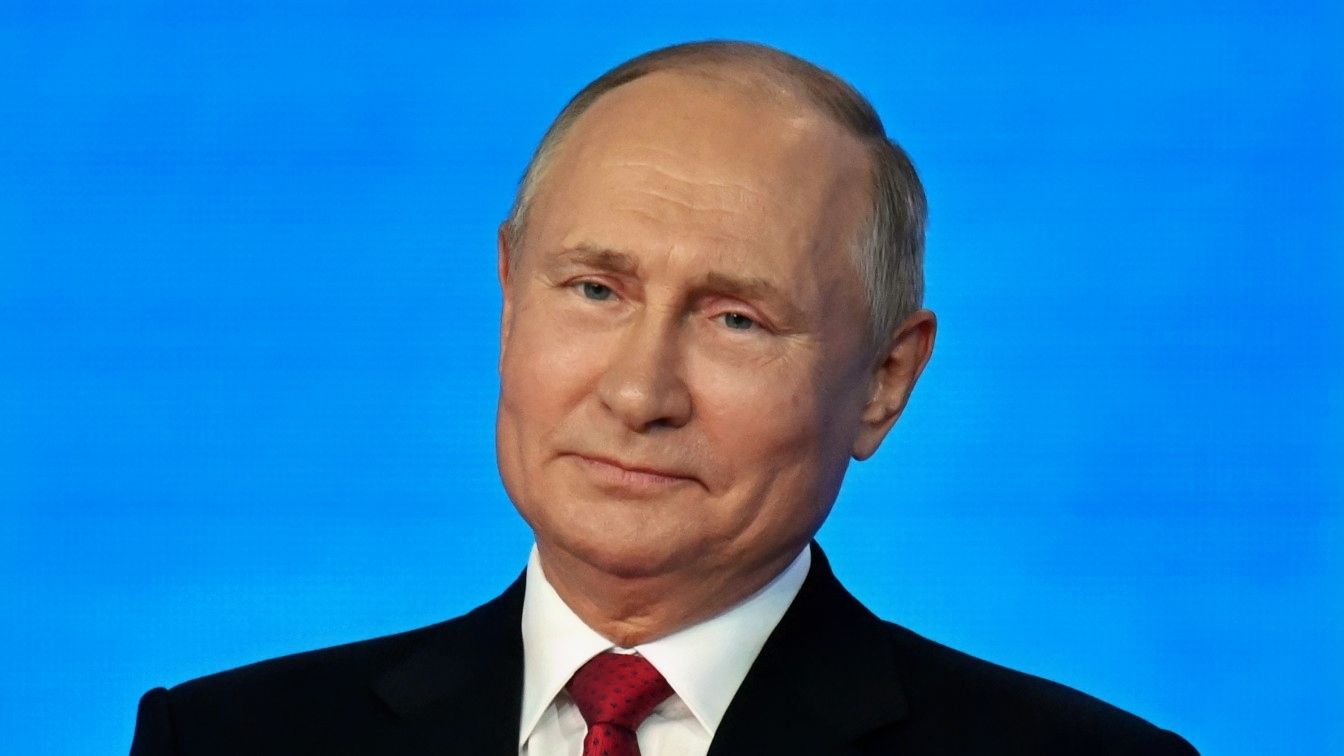
Warsaw, Poland – Russian nationalist hardliners are calling on President Vladimir Putin to exit negotiations with the United States and instead significantly escalate the war against Ukraine.
Reuters, quoting unnamed sources inside Russia’s elites, reported on 26 June that the advice those same hardliners are giving him also includes contingency plans for the use of tactical nuclear weapons.

Russian Mobile ICBM Nuclear Weapons. Image Credit: Creative Commons.
According to Reuters, those calls moved up several notches in intensity after Ukrainian drone strikes hit Moscow several times within a week, St. Petersburg earlier in the month, and also attacks on major sites inside occupied Crimea.
The attacks on St. Petersburg occurred during the Russian president’s International Economic Forum – one of his personal pet projects to which he attaches great importance- and were a humiliating blow.
For some time now, the more strident Russian nationalist figures have been calling for a full mobilization, which would mean forced conscription.
They have also advocated for attacks that would destroy all the buildings and installations in Kyiv’s government quarter, assassinating Ukrainian President Volodymyr Zelenskiy and launching strikes on defense industrial facilities that are supporting Ukraine but are also located on European territory.
Analysts say this increasingly strident rhetoric reflects growing unease over the reach and impact of Ukrainian drone attacks, and prompts a broader debate about how Russia — a nation with vast territory — can defend itself over this expansive landmass while still continuing to prosecute a conflict it launched in 2022.
The Ultimate Redline
And then there is crossing the ultimate red line that some of the hawks have been calling for: a nuclear strike on Ukraine.

Image Credit: Creative Commons. The image is of a Russian missile being tested.
They calculate that this would intimidate Kyiv into relenting to Russia’s demands and also frighten NATO nations into pressuring Ukraine to do the same.
“What else needs to happen before we start fighting for real? War means victory at any cost. The Ukrainians are at war, so they’re fighting with everything they’ve got,” raged Konstantin Malofeyev, a nationalist oligarch, after Ukrainian drone strikes set fire to the Gazprom-owned Moscow oil refinery last week.
Damage to the facility was severe, and it is now reported that it will not return to normal operations until sometime next year.
It generates 40 percent of the petrol used by residents and enterprises in the Moscow area.
“Why are we not using nuclear weapons, which our forebears developed and stockpiled with the full might of the nation precisely for this purpose?” Malofeyev asked.
“There is a state of total uncertainty,” said one former senior Russian finance official who spoke to the Washington Post, who, like others, spoke on the condition of anonymity due to this being a sensitive security matter.
“There is a feeling that there is no good end to this in sight.”
Divisions Among Russia’s Elite
But a 22 June assessment by the Jamestown Foundation in Washington, DC, concludes that there are still significant differences emerging within Russia’s ruling classes over how the war should be prosecuted going forward or brought to a close.
There are three major developments in this regard:
As Russia falls further into crisis mode, there is ample evidence of growing divisions in the elites over the war against Ukraine. Some of these figures advocate an end to the conflict, while others, hardline “hawks,” are calling for escalation, as reported in recent days.
The real concern here is that the hardline contingent reportedly continues to exert disproportionate influence over Kremlin decision-making.
A second trend feeding into this disturbing situation is the fact that Russian President Vladimir Putin is increasingly insulated within what is being called a “pro-war information environment.”
This “cocoon” that the former KGB Lt. Col. is living in is not only “reinforcing expectations of victory,” but is creating alarming comparisons to his mindset as a modern version of “dictator in the bunker” behavior.
A sizeable number of elites continue to support the war for fear of the price of taking the alternative position. Staying in the pro-war camp is the only way that many elites, hardliners, and propagandists can continue to hold on to power, wealth, and – in the case of a Russian victory – avoid being sent to the gulag.
Lastly, while public discontent in Russia is still rated as “limited” by some and the regime remains rated as stable, this climate is by no means guaranteed in the long run. As more than one experienced observer of Russia has pointed out, “these kinds of regimes, such as Putin’s, are very controlling, and nothing is left to chance, but they are also brittle.”
Putin and the Ukraine War: The Hardliners Pushing Hard
Translation: dictatorships centered on a single individual, with a cult of personality, always appear rock-solid until, one day, they are not. When it comes, collapse can take place overnight.
Putin’s continued reliance on these hardline advisers over others creates escalating risks that could once again prove this geopolitical reality.
About the Author: Reuben F. Johnson
Reuben F. Johnson has thirty-six years of experience analyzing and reporting on foreign weapons systems, defense technologies, and international arms export policy. Johnson is the Director of Research at the Casimir Pulaski Foundation. He is also a survivor of the Russian invasion of Ukraine in February 2022. He worked for years in the American defense industry as a foreign technology analyst and later as a consultant for the U.S. Department of Defense, the Departments of the Navy and Air Force, and the governments of the United Kingdom and Australia. In 2022-2023, he won two awards in a row for his defense reporting. He holds a bachelor’s degree from DePauw University and a master’s degree from Miami University in Ohio, with a specialization in Soviet and Russian studies. He lives in Warsaw.


Charles Scoggins
June 28, 2026 at 12:42 pm
This is the most retarded take I’ve seen to date, and it’s sad this is propaganda “plan A”. The TRUTH is that NATO is and has been the aggressor of this mess since 2014. Hell, they even ADMIT IT! That’s 12 years of escalating aggression for those of you weak in math skills. So WHO is actually pressuring Putin here?
Tell the truth and shame the Devil!
Alex FITCH
June 29, 2026 at 8:52 am
More and more I am seeing the reported reason for the Russian invasion as being the ( reportedly up to 30 ) bio-labs having been built and currently operating in Ukraine by American CIA interests.
Prevailing winds in the Ukraine-Russia border area are from West to East . . . any leaks, intentional or otherwise, will affect innumerable Russian citizens.
Raptor
June 29, 2026 at 1:14 pm
Ukraine will not sit idly by if nuclear weapons are deployed against it. Biological and Chemical agents such as Sarin and Ricin poison will have a pronounced effect on the russian population. Think carefully,Putin.