


Syria to Partially Retake Russian Bases on Its Coast – Russia’s military presence in Syria is set to be downgraded further under an agreement announced by Damascus on Sunday.
The full details of Moscow and Damascus’s new “memorandum of understanding” have not been published, but Syria is reportedly set to regain civilian control at two key Russian military bases on its Mediterranean coast.

Kirov-Class Russian Navy. Image Credit: Creative Commons.
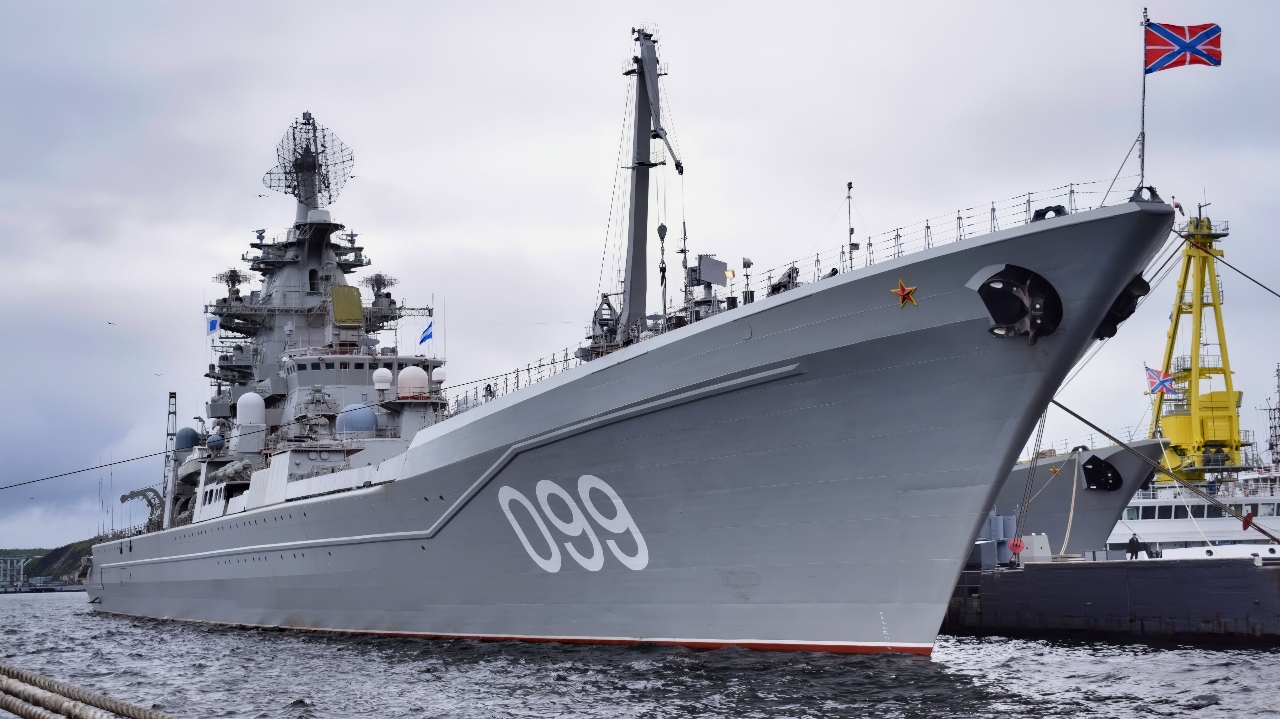
Kirov-Class Russian Navy Cleaned Up. Image Credit: Creative Commons.
The handover is now underway, with Syria having received shipments of wheat and cement via Berth No. 4 at Tartus on Tuesday.
Bases to be ‘Repurposed’
There has been a question mark over the status of Russia’s naval base at Tartus and air site in Khmeimim since Kremlin-allied Bashar al-Assad fled in 2024 following a lightning insurgency after over a decade of bloody civil war.
18 months of intensive talks preceded this week’s announcement, which Russia’s Foreign Ministry said will boost ties between the nations.
Syria’s ministry told the domestic press it would take over the management of Khmeimim airport, the commercial berth at Tartus port, and other civilian aspects of the areas.
Any military facilities in the area are set to be repurposed as joint training centers over the next three months.
Out of Africa?
The Tartus facility is Russia’s sole Mediterranean naval hub, where its ships are repaired and replenished. Khmeimim has also been used as a strategic site to fly its military contractors in and out of Africa, where Russia currently has thousands of military contractors and state-backed paramilitary personnel.
These bases have been a key pillar of Russia’s ability to project power across the Middle East and Africa in recent decades.
The End of an Era
Moscow has maintained a naval presence in Tartus since setting up a Soviet support facility there in 1971.
The Russian Foreign Ministry said in a statement on Tuesday: “We regard the signing on Aug. 9 of the memorandum between the Russian Federation and the Syrian Arab Republic on the operation of our bases in Khmeimim and Tartus as an important step aimed at further improving bilateral cooperation in the military sphere.”
It continued: “We believe that reaching this agreement will give further impetus to the development of the full range of relations between our countries, which are based on a long history of friendship and partnership.”
Hanna Notte, director of the Eurasia Nonproliferation Program at the James Martin Center for Nonproliferation Studies, told The Times newspaper that Russia’s prospects at those bases were uncertain going forward and stressed that it would be unwise to rule out Russia’s long-term presence there entirely.
“There’s a big Russian wariness over the extent to which Sharaa can actually hold power and stabilize Syria,” the expert noted. “The Russian thinking might well be, ‘Let’s see where Syria is at five or ten years down the line. We’re just going to bide our time,” she went on.
Century International fellow Aron Lund has warned against dismissing Russia’s ties with Syria, even following Assad’s exile. There are “lots of military and civilian technology” in Syria that is imported from Russia and the former Soviet Union.
‘Transactional Pragmatism’
“There is an old legacy of military, administrative and technical cooperation between Damascus and Moscow. It would be very painful for Syria to break that relationship completely,” he told the Qatari-state-funded outlet Al Jazeera.
He described the ties as “transactional pragmatism,” and noted that: “Al-Sharaa’s government, chronically cash-strapped and needing wheat, energy and technical support, has visited Putin twice in Moscow since taking power.”
An unnamed Syrian source close to the deal told The Moscow Times that Russian forces would still be stationed at the new training centers. They did not provide any details on the expected duration of this protracted presence.
Russia’s state-run TASS news agency has also revealed that Russia is set to reopen its Damascus-based “cultural center” following the talks. The so-called “Russia House” is owned by the Russian government, and is part of its soft power projection strategies in Syria.
On Tuesday, a Syrian court sentenced Assad to death in absentia, finding him guilty of killings, torture and crimes against humanity. Assad and his immediate family are currently living under asylum in Russia.
Following the Assad regime’s collapse, Washington has lifted most of its sanctions on Syria, and twice last year Donald Trump met Syrian President Ahmed al-Sharaa. Al-Sharaa formerly led al-Qaeda’s Syrian affiliate and was previously designated by the United States as a Specially Designated Global Terrorist.
About the Author: Georgia Gilholy
Georgia Gilholy is a journalist based in the United Kingdom who has been published in Newsweek, The Times of Israel, and the Spectator. Gilholy writes about international politics, culture, and education.


