

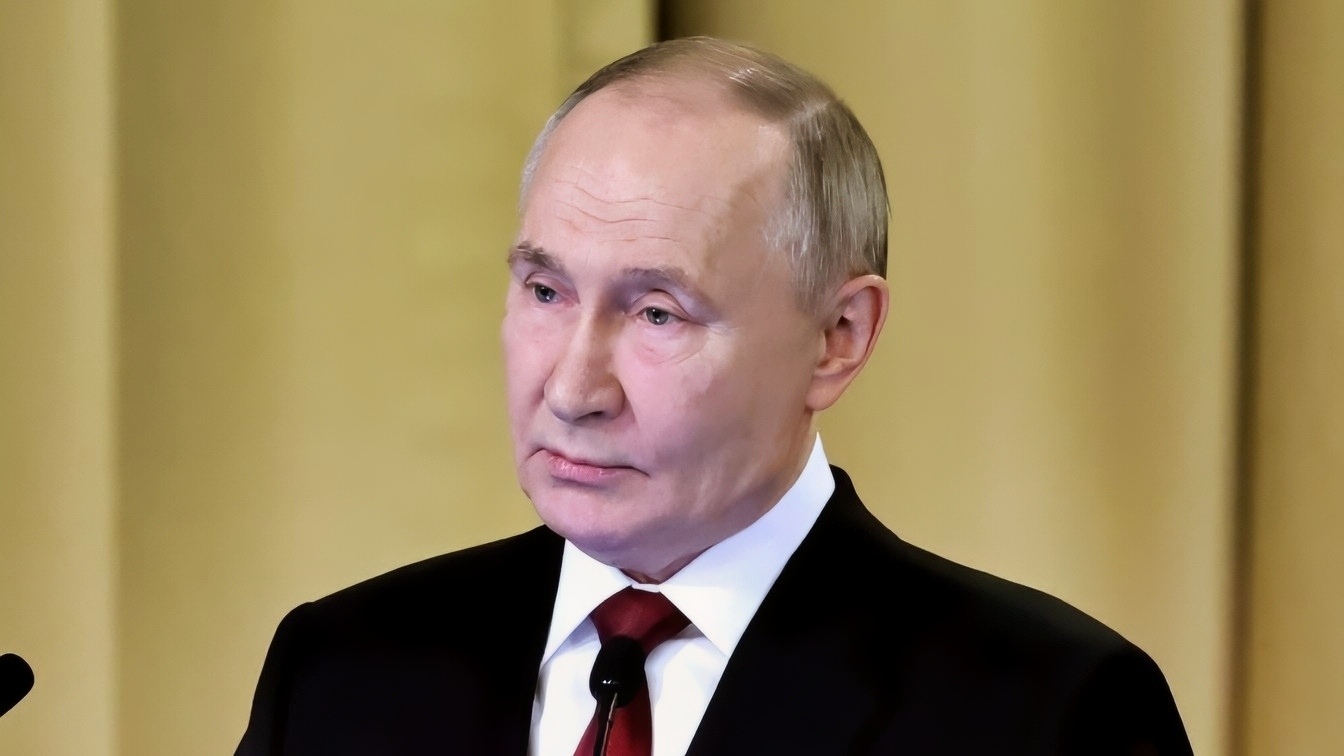
Despite U.S. President Donald John Trump’s 2024 presidential campaign claim that he could end the Russia-Ukraine war within the first 24 hours of his second presidency, he still hasn’t achieved his lofty and laudable goal.
Hence, the war rages on, as it has done since the commencement of Putin’s so-called “special military operation” back on 24 February 2022.

T-14 Armata. Image Credit: Russian State Media.

T-14 Armata Tank. Image Credit: Creative Commons.
This translates to plenty of misery for Russian military personnel, especially in and near occupied Crimea, thanks to the persistently merciless onslaught of Ukrainian drones and ballistic missiles.
Bottom Line Up Front (BLUF)
As reported on 17 November 2026 by Vlad Litnarovych of UNITED24 Media, “Ukrainian drones struck a section of a major Russian highway forming part of the land supply route to temporarily occupied Crimea, damaging infrastructure near a bridge over the Mius River in Russia’s Rostov region, according to regional governor Yuri Slyusar on November 17…The attack targeted the Rostov–Taganrog–Ukrainian border highway in the Neklinovsky district, near the 96th–97th kilometer markers. Preliminary reports indicate that the strike damaged the road surface and metal safety barriers near the river crossing.”
This is strategically significant by virtue of the fact that the highway forms part of a major overland logistics corridor linking Russia with the southern regions of occupied Ukraine, most notably providing a route toward Crimea, which Russia annexed back in 2014.
SIDEBAR NOTE: Cold War history buffs may also recognize Rostov as the region where Soviet dissident Aleksandr Solzhenitsyn received his university education, not to mention the location of a failed KGB assassination attempt upon him in the summer of 1971.
Spreading the Wealth
Or more accurately, spreading the misery. Ukrainian forces have continued to strike bridges and transportation infrastructure along Russia’s southern supply routes, including another attack on the Crimean Bridge on 17 November.

Russian Tu-160 Bomber. Image Credit: Creative Commons.
Going back to the beginning of October, Ukrainian forces have struck at least six bridges in Russia’s Rostov region and near the occupied city of Novoazovsk in Ukraine’s contentious Donetsk region.
Weapons Systems Specifics
Ukrainian President Volodymyr Zelenskyy revealed the weapons used in the latest strike on the Crimean Bridge to be Flamingo cruise missiles, Neptune missiles, and several types of domestically produced attack drones.
–FP-5 Flamingo cruise missile: In sharp contrast to the peaceable, pink plankton-eating bird it was named after, the Flamingo cruise missile is quite deadly to humans.
Initially developed in 2022 and first publicly revealed on 17 August 2025 by Associated Press photojournalist Efrem Lukatsky during a test launch at a hidden facility in southern Ukraine, the weapon is manufactured by Kyiv-based defense technology company Fire Point, whose official website proclaims the Latin motto “Quis Nisi Nos (Who, If Not Us).”
This missile is nearly 40 feet long, weighs 6 tons, and is credited with a range of 3,000 kilometers (1,864.11 miles).
Perhaps most impressively, it carries a 1,150-kilogram (2,535.31-lb) warhead, heavier than that of America’s time-honored Tomahawk cruise missile.
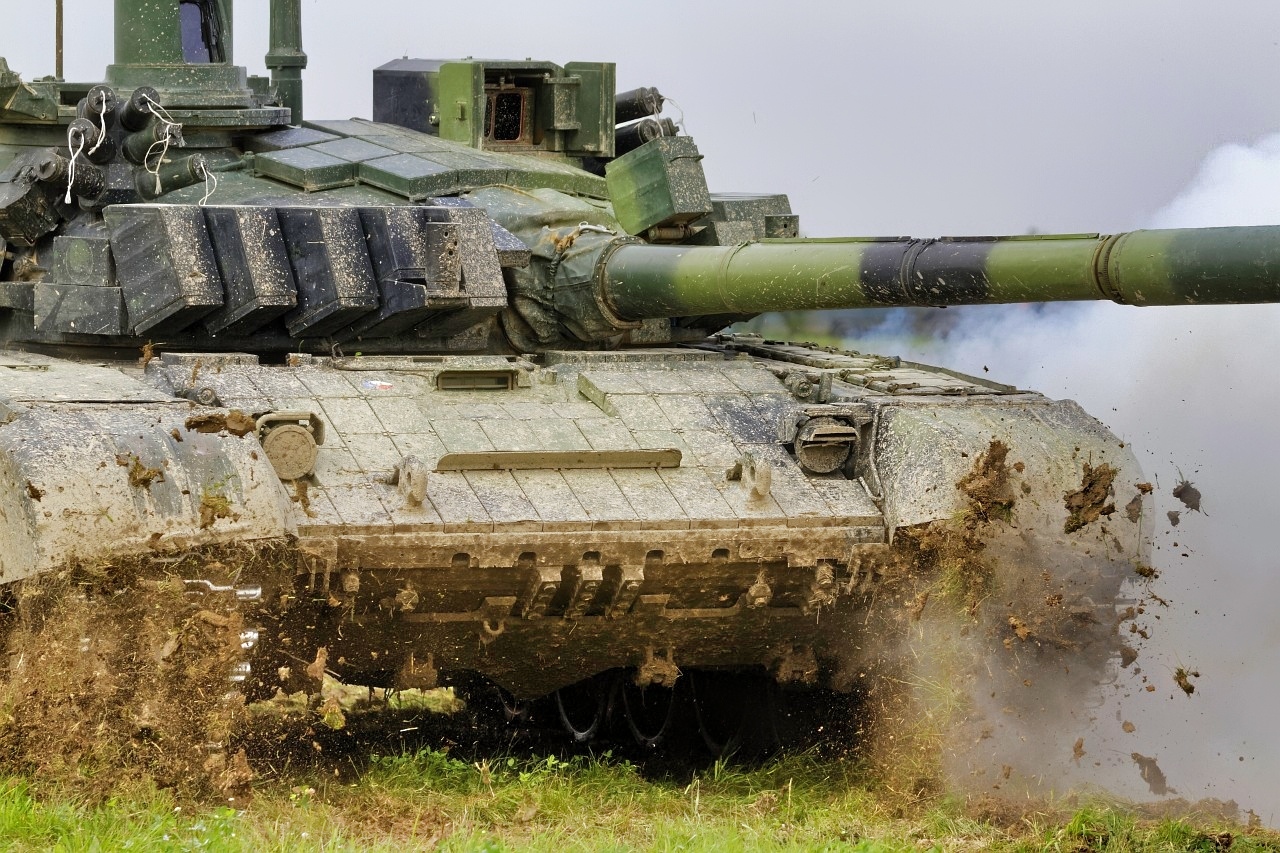
T-72 Tank. Image Credit: Creative Commons.
Yet, at a rough price tag of roughly $600,000 USD, it costs a mere one-sixth of the American counterpart. Talk about “More bang for your buck,” or, if you prefer, “more hellfire for your hryvnia!”
-Neptune missile: More specifically, the so-called “Long Neptune,” which involved Ukrainian weapons engineers transforming the original 2021 vintage Neptune anti-ship missile—like the one used to sink the Russian Navy flagship Moskva—into a land-attack tactical cruise missile with an impressive 1,000-kilometer (621.37-mile) range. Built by Kyiv’s Luch Design Bureau, the Long Neptune reportedly wields a 260-kilogram (570-lb) warhead.
As Ukrainian President Volodymyr Zelensky said of the weapon back in March 2025 via the presidential Telegram channel, “I am grateful to our Ukrainian developers, manufacturers and military. We continue to work to ensure Ukraine’s security… Today, we also reported on the use of Ukrainian missiles – Long Neptune. We can say that we are satisfied with the results of the destruction. But we need to produce more missiles, more drones, and we will be talking about this with our partners this week.”
Bigger Picture
Mr. Litnarovych hasn’t provided any Russian casualty figures or equipment/materiel losses in his article, presumably because traffic across the bridge had already been suspended on 8 November.
However, his UNITED24 colleague Illia Kabachynskyi reported on 9 November that–according to Ukraine’s General Staff—during 10 days from 30 October to 8 November, Russia has lost nearly 23,000 troops killed or wounded.

T-90 Tank from Ukraine War. Image Credit: Creative Commons.
What’s more, Russia lost over 2,000 killed in action (KIA) or wounded in action (WIA) in every single one of the first eight days of November, including a single-day record of 2,980 on the 8th.
That averages out to 2,388.75 casualties per day. Russian KIA/WIA figures were especially morbid in October, hitting a record 54,400, thus signifying the first time in the entire history that Russian casualty figures exceeded 50K in a single month.
About the Author: Christian D. Orr
Christian D. Orr is a Senior Defense Editor. He is a former Air Force Security Forces officer, Federal law enforcement officer, and private military contractor (with assignments worked in Iraq, the United Arab Emirates, Kosovo, Japan, Germany, and the Pentagon). Chris holds a B.A. in International Relations from the University of Southern California (USC) and an M.A. in Intelligence Studies (with a concentration in Terrorism Studies) from American Military University (AMU). He is also the author of the book “Five Decades of a Fabulous Firearm: Celebrating the 50th Anniversary of the Beretta 92 Pistol Series,” the second edition of which was recently published.


