

Over the weekend, Russia launched a huge attack on a warehouse west of Kyiv, which killed 38 people, for one of the largest single-attack death tolls of the entire war, as well as the largest this year.
And more strikes are to come.
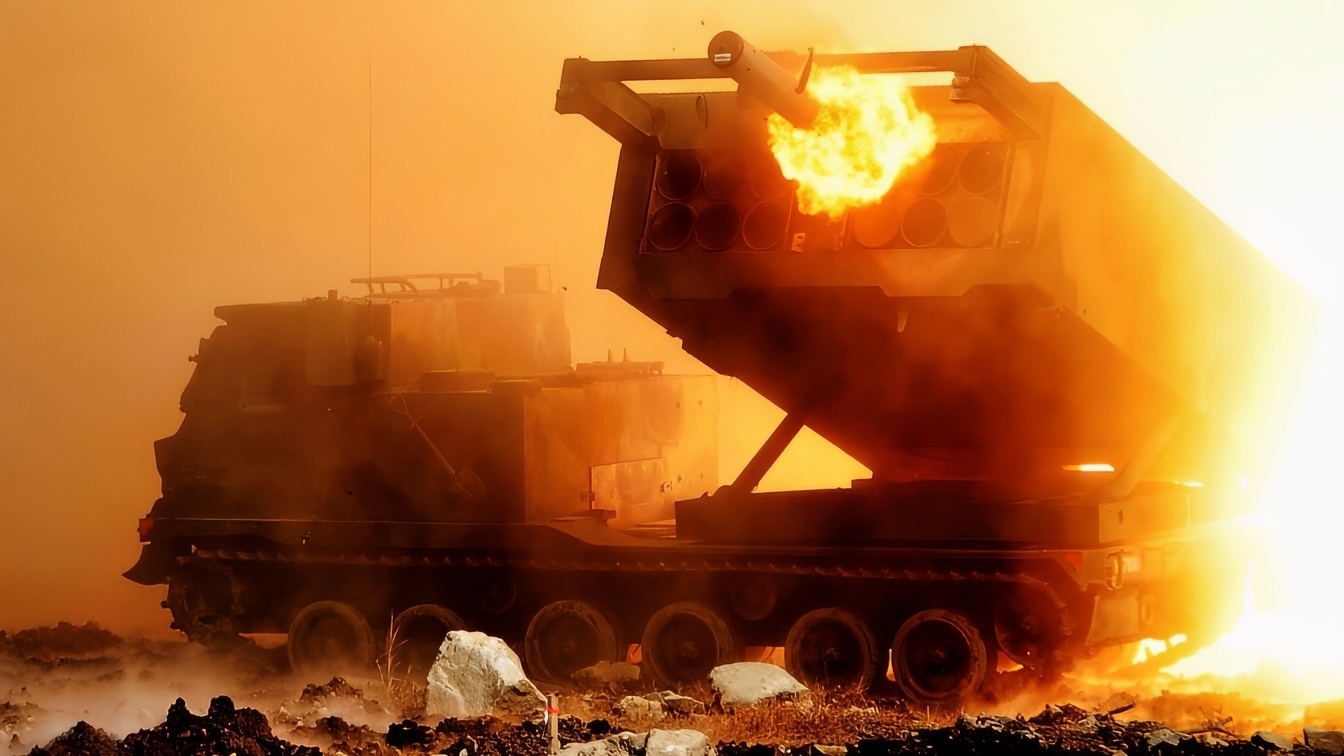
MLRS Firing Creative Commons Image
“Russian forces have begun preparations for massive strikes against facilities in Ukraine’s energy sector in response to the ongoing attacks by the Kyiv regime on civilian infrastructure and on Russia’s oil and energy complex,” Russia’s defense ministry said on Telegram this week, as cited by The Guardian.
This would follow Russia’s attacks on power plants last winter.
“A Nonstop Wave of Drones”
In the wake of those attacks, the New York Times reported on Monday about new tactics from the Russian side, which involve the launch of “nonstop waves of armed drones” into busy areas of Kyiv.
“With Moscow firing drone after drone into Kyiv, including many powered with jet engines that help them fly so fast they are difficult to intercept, many in the capital have begun to accept that they may be facing a new phase of the war,” the Times said of the recent tactic.
Previously, Russian attacks on Kyiv have tended to arrive overnight and have not usually taken place in daylight hours.
President Volodymyr Zelensky said this week that Russia had launched nearly 1,500 drones into Ukraine in a four-day period.
And many of them have targeted the Ukrainian capital.
“There is a widespread view among officials and civilians that the escalation is intended to wear down Ukrainian morale, complicate school reopenings and further damage the economy,” the Times said.
Russia’s attacks have also targeted something else: printing presses.
A Printing Press Attack
Russia also launched another attack last week, which destroyed as much as 10 percent of Ukraine’s book supply.
According to The BBC, Russian strikes destroyed 12 million books, ahead of the start of school for Ukrainian children.
A Russian missile, the report said, struck a printing press near Kyiv, destroying over a million books, and the 12 million figure represents the total number of strikes this year.
Russia, according to a Ukrainian Pravda report, has “destroyed one third of all the books printed in Ukraine this year.” In addition to books that have been burned, others were damaged by water from firefighting efforts.
“I believe it is deliberate on the part of the Russian Federation,” Viktoria Haidai, commercial director of the Konvi publishing firm, told the BBC. “Over the past two months, some of the largest publishing houses have lost their logistics warehouses, where very large quantities of books were stored.”
Ukraine Strikes Back
Amid all of that, Ukraine has continued to hit Russia. And a new report says that its recent oil refinery strikes have caused Russia to change how it fuels its warplanes.
According to Business Insider, Ukraine’s GUR said this weekend that “systematic and precise strikes by Ukraine’s Defense Forces against Russia’s oil-refining network have led to a significant reduction in jet fuel production in the Russian Federation.” In fact, Ukraine says Russia has been needing to import fuel for its warplanes.
Russia, Ukraine’s intelligence service said, “which for decades has positioned itself as an energy superpower, has officially introduced a temporary ban on the export of its own aviation fuel and is being forced to seek ways to import foreign Jet A-1 aviation fuel.”
The story added that GUR has purchased 70,000 tons of fuel from South Korea and Egypt, delivered to Russia through “shadow fleet’ tankers.
According to the Kyiv Independent, Ukraine targeted a refinery in Leningrad Oblast and an airbase in Krasnodar Krai over the weekend.
That refinery, the Kirishi Petroleum Organic Synthesis plant, “was set ablaze after it was struck by Ukrainian forces,” per a Telegram post by the Ukrainian General Staff.
Leningrad Oblast Governor Aleksandr Drozdenko had confirmed that “a drone crash has been reported in the vicinity of a refinery in the Kirishi district, resulting in a fire,” and that 62 drones had been shot down in the region.
Ukraine, per United 24 Media, had hit Russian refineries 21 times in the month of August, which marks a record for any month during the war.
About the Author: Stephen Silver
Stephen Silver is an award-winning journalist, essayist, and film critic, and contributor to the Philadelphia Inquirer, the Jewish Telegraphic Agency, Broad Street Review, and Splice Today. The co-founder of the Philadelphia Film Critics Circle, Stephen lives in suburban Philadelphia with his wife and two sons. For over a decade, Stephen has authored thousands of articles that focus on politics, national security, technology, and the economy. Follow him on X (formerly Twitter) at @StephenSilver, and subscribe to his Substack newsletter.


