

Ukraine’s expanding drone campaign has forced Russia to suspend shipping through key Sea of Azov chokepoints, with vessels backing up at ports and entrances to the waterway. Satellite imagery appears to show growing queues of ships, forced to wait, while Ukrainian officials say that drones struck more than 100 Russian vessels in recent days (although figures have not been independently verified). Regardless, Ukraine is clearly increasing its attacks on Russian logistics and trade rather than solely military formations.
What is the Sea of Azov?
Putin March 2023 Image Credit Creative Commons
The Sea of Azov is a small, shallow inland sea connected to the Black Sea through the Kerch Strait. Linked to Russia’s inland river and canal network through the Don-Azov Channel, the sea serves as a maritime highway connecting southern Russia to global shipping routes, and is commonly used to transport grain, petroleum products, steel, fertilizer, vegetable oils, and commercial cargo.
Since Russia occupied Ukraine’s Azov coastline in 2022, Moscow has effectively treated it as an internal logistics hub largely insulated from Ukrainian attack. But that assumption is being tested as Ukraine continues to expand the scope of its long-range drone capabilities.
Ukraine’s Expanding Campaign
Ukraine has shifted from isolated naval strikes toward sustained logistical interdiction. The objectives of the expanded campaign include isolating occupied Crimea, disrupting Russian military resupply, attacking fuel shipments, and complicating commercial shipping. According to Ukrainian officials, vessels are being targeted repeatedly in addition to bridges, railways, and highways.
The strategy seems to be broader than simply sinking ships; the goal is to make Russia’s southern logistics network unreliable—forcing Russia into costly rerouting.
This strategy will likely have economic ramifications for Russia, the world’s largest wheat exporter. Indeed, about one-quarter of Russian wheat exports reportedly move through the Sea of Azov. Harvest season makes timing particularly significant. If shipping remains disrupted, the grain exports will slow, shipping costs will increase, and insurance rates will rise. Global wheat prices will face upward pressure. Russia will likely have to reroute some cargo through Black Sea ports; however, capacity here is finite and peak harvest season limits flexibility. Prolonged disruption could produce billions in economic losses for a Russian economy that is already on an aggressive wartime footing.
Strategic Implications
Ukraine is expanding the battlefield. After four-plus years of fighting a war that has long been a grind of attrition, Ukraine is increasingly striking Russia’s economic infrastructure rather than exclusively tactical military targets. Ukraine is employing a similar concept to strategic interdiction—attacking logistics instead of frontline forces. The goal is to increase the economic and operational costs inside Russia, making continued participation in the conflict increasingly expensive.
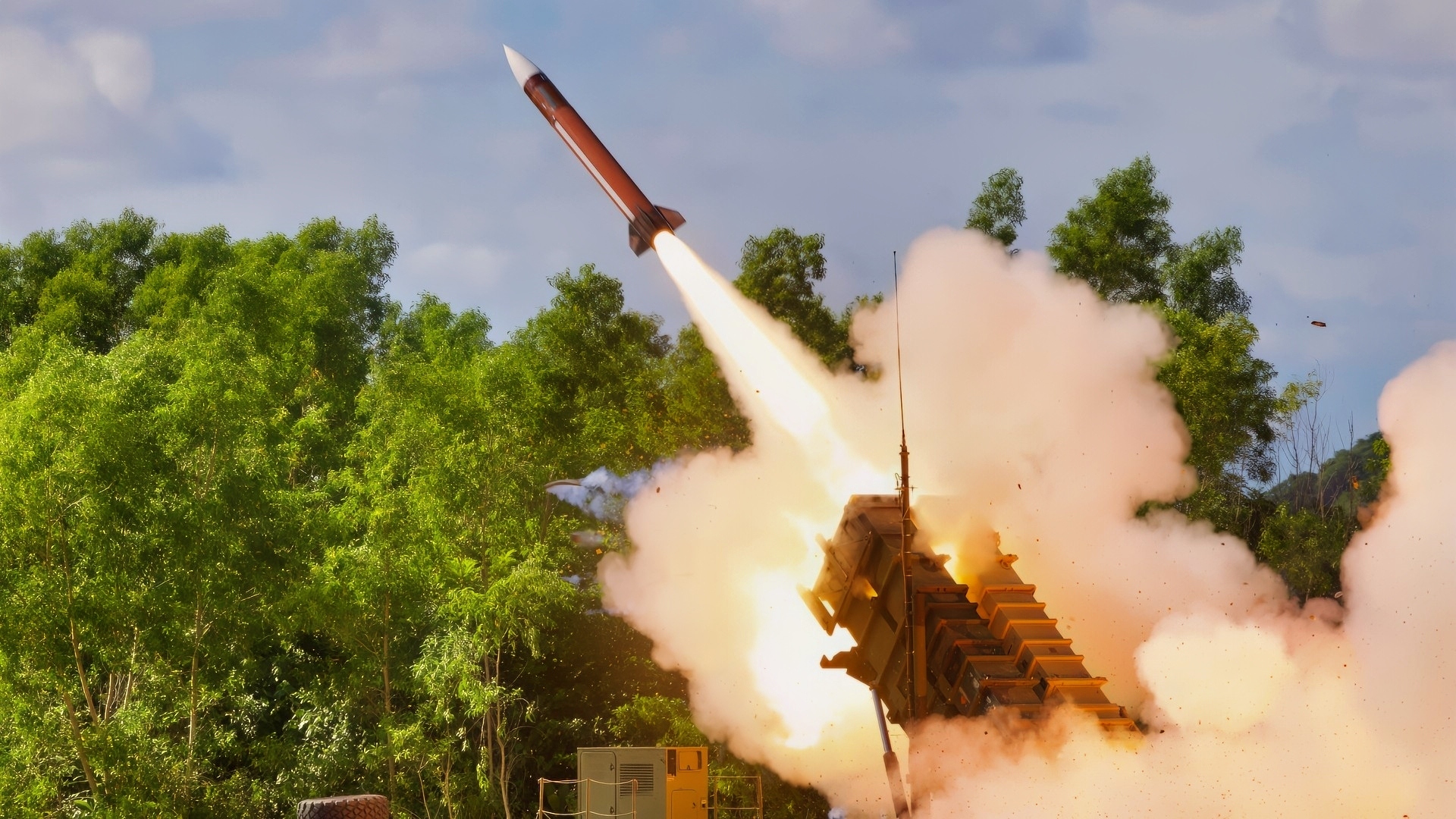
KOROR, Palau — A Patriot Advanced Capability 2 Interceptor missile is fired from an M903 Patriot Launching Station assigned to Battery D, 1st Battalion, 1st Air Defense Artillery Regiment during the patriot live fire portion of Exercise Tenacious Archer 25 on Aug. 21, 2025. Exercise Tenacious Archer 25 is a training event designed to build interoperability, capacity, and relationships that deter aggression and promote peace through strength. The exercise sharpens the brigade’s ability to operate across multiple domains, reinforcing U.S. Army Pacific’s commitment to regional security and stability.(U.S. Army photo by Capt. Frank Spatt)
Another implication is that Crimea is becoming more isolated. The expanded campaign is complementing earlier attacks on the Kerch Bridge, fuel depots, rail links, and military facilities. Together, these operations gradually complicate Russian sustainment of occupied Crimea.
The Sea of Azov warrants comparison to other strategic waterways, including the Strait of Hormuz, Suez Canal, and Bab el-Mandeb. In each case, geography magnifies relatively inexpensive attacks. For Ukraine, it does not need to destroy every vessel. Creating enough uncertainty can significantly reduce traffic and raise commercial risk. This is yet another example of relatively inexpensive unmanned systems imposing outsized strategic effects. Rather than going head-to-head with Russia’s navy in a conventional fleet engagement, Ukraine is exploiting geographic vulnerabilities with persistent drone pressure, in effect complicating Russian maritime operations in a way that causes economic harm.
Russia has condemned the attacks as terrorism, with Russian officials arguing that Ukraine’s campaign targets civilian commerce. Ukraine maintains it is striking military-related logistics and infrastructure supporting Russia’s war effort. Russia, meanwhile, continues attacking Ukrainian ports and infrastructure, highlighting the increasingly reciprocal nature of long-range strike campaigns.
In sum, the Sea of Azov has evolved from a secure Russian rear area into an increasingly contested logistics corridor. Can Ukraine sustain its current maritime pressure? That remains an open question—but the campaign illustrates how relatively low-cost drones can threaten strategically important maritime chokepoints.
If disruptions continue through the grain export seasons, the effect may hit Russia far beyond the battlefield, influencing the global commodity markets while forcing Russia to devote additional resources to protecting shipping routes that until recently appeared secure.
About the Author: Harrison Kass
Harrison Kass is a writer and attorney focused on national security, technology, and political culture. His work has appeared in Tablet, City Journal, The Hill, The Spectator, and The Cipher Brief. He holds a JD from the University of Oregon and a master’s in Global & Joint Program Studies from NYU. More at harrisonkass.com.


