
Pakistan Still Says An Iran Deal Is Close – Pakistan continues to push negotiations between the United States and Iran, with Pakistani officials claiming on Wednesday, August 12, that both sides have agreed to give diplomacy more time. But within hours of the statement, Tehran pushed back.
A senior Iranian official told Reuters that Iran has not agreed to extend the negotiating period established under the previous U.S.-Iran agreement, arguing that Washington effectively destroyed the deal weeks ago and that it would not be reimplemented.
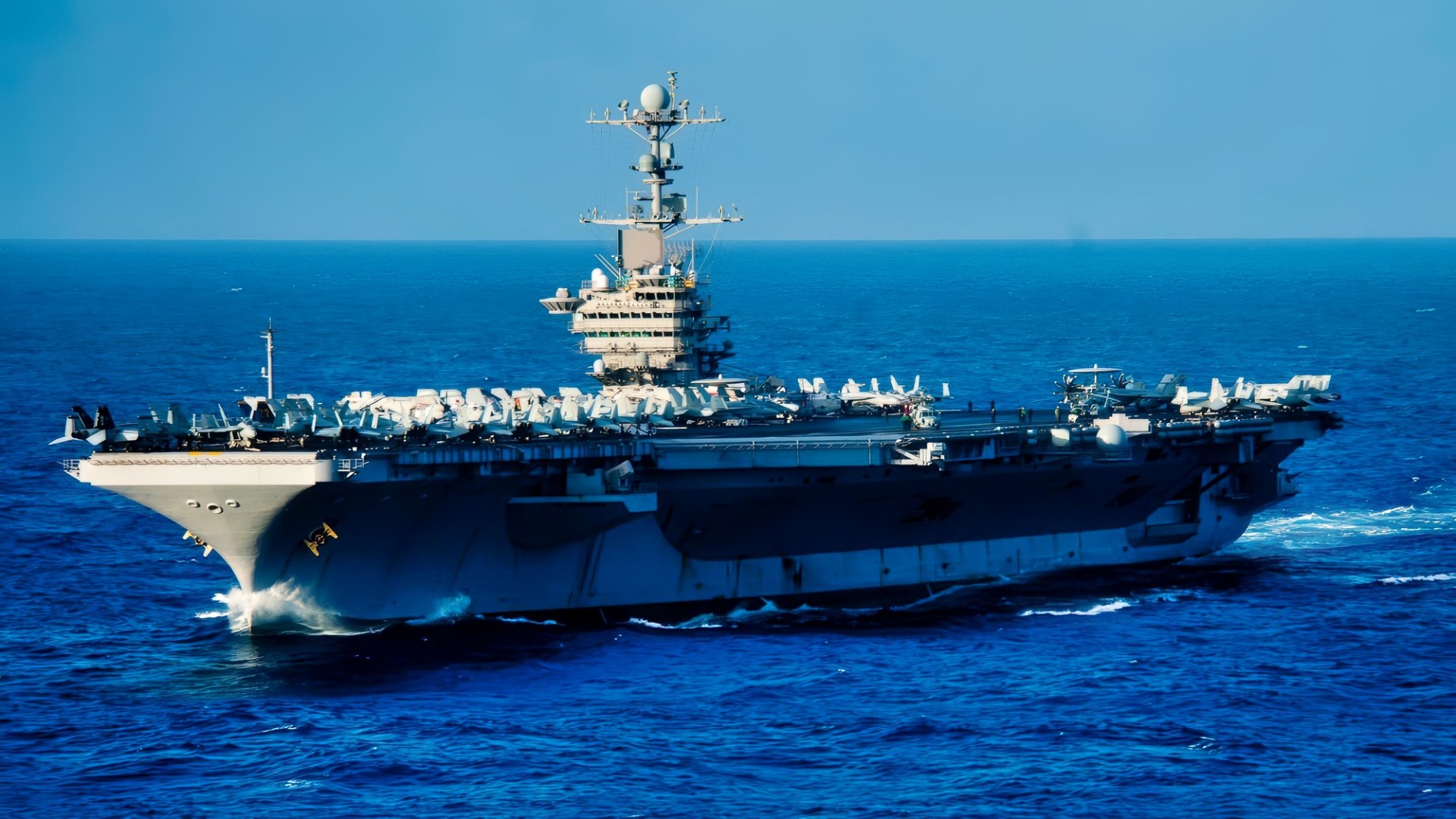
USS John C. Stennis Carrier. Image Credit: Creative Commons.
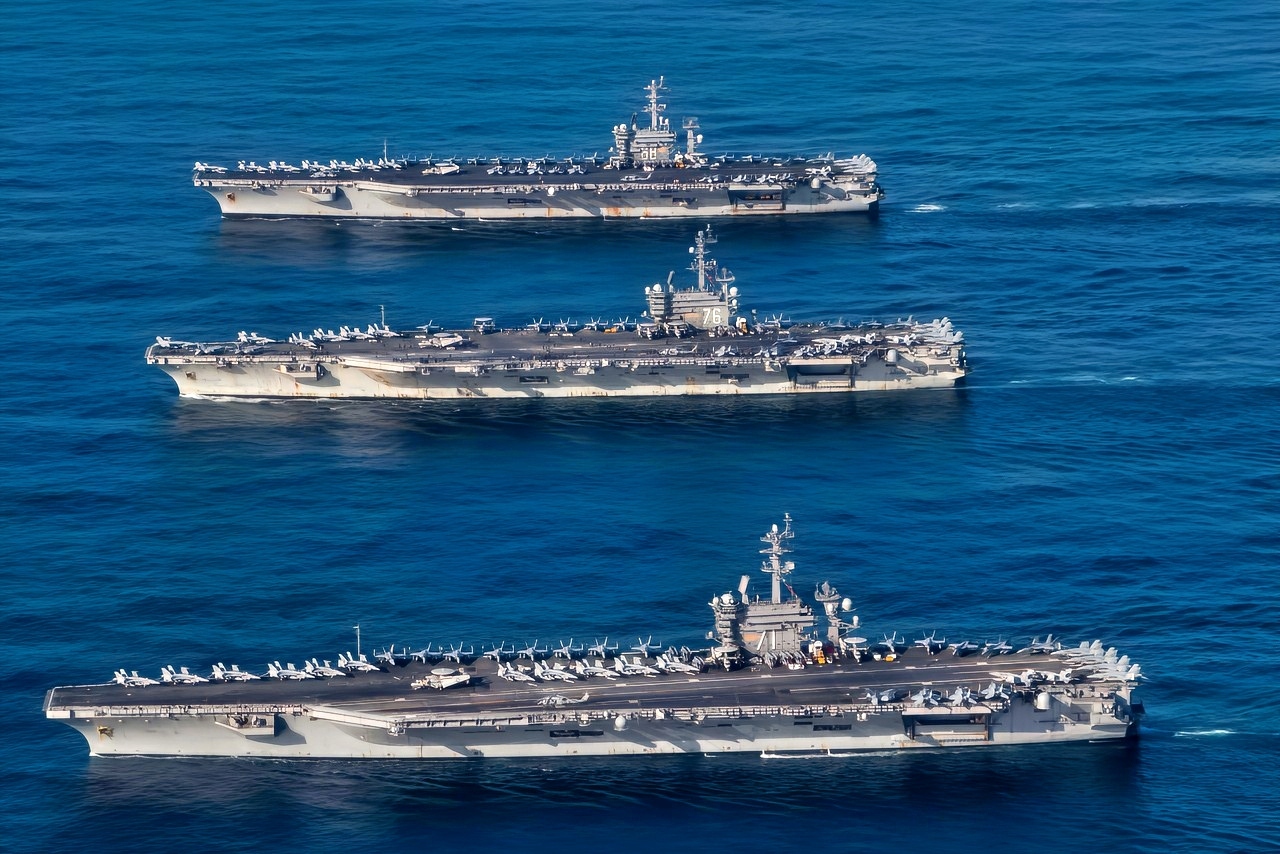
The U.S. Navy aircraft carriers USS Nimitz (CVN-68), USS Theodore Roosevelt (CVN-71) and USS Ronald Reagan (CVN-76) underway in the Western Pacific on 12 November 2017. The strike groups were underway and conducting operations in international waters as part of a three-carrier strike force exercise. This was the first time since August 2007 that three U.S. Navy carriers operated together. In 2007, USS Kitty Hawk (CV-63), USS Nimitz (CVN-68) and USS John C. Stennis (CVN-74) participated in exercise “Valiant Shield”.
It comes as President Donald Trump also announced via social media that U.S. forces have full control over the Strait of Hormuz and may decide to “keep it.”
What Pakistan Said
On Tuesday, August 11, Pakistani Defense Minister Khawaja Asif told reporters in Islamabad that recent diplomatic exchanges had given the government reason to believe that Washington and Tehran were moving toward an agreement. It was easily the most optimistic assessment of any government’s situation so far.
“Things are shaping up again in favor of a peace arrangement or a deal,” Asif said to Bloomberg. “The signals in the last two three days are that we are close to some sort of an arrangement.”
Asif did not offer any details about what an arrangement would involve, nor did he claim that the United States and Iran had resolved any major issues that had repeatedly derailed negotiations. His comments nevertheless suggested that messages were being exchanged between Tehran and Washington via regional mediators.
The next day, Pakistani officials went even further, with government sources telling Turkey’s state-run Anadolu Agency that both sides had indicated through mediators that they were willing to extend the negotiating period under the Islamabad Memorandum of Understanding (MOU). That failed June MOU is approaching its expiration, though both sides have already expressed that the deal is no longer considered to be in effect, following Iranian strikes on commercial vessels in the Strait of Hormuz and almost two weeks of consecutive nightly strikes on Iranian military infrastructure by U.S. forces.
What Is Pakistan Talking About?
Pakistan was not claiming that a final agreement had been reached behind the scenes, or even that the framework of a deal had been discussed. Instead, the suggestion appeared to be that mediators believe there is a reasonable chance they could buy more time to prevent the existing diplomatic framework—if that framework even means anything now—from expiring while attempts continue to bridge the remaining differences between Tehran and Washington.
Islamabad has long been involved in the discussions and continues its efforts to end the conflict through diplomacy, with Interior Minister Mohsin Naqvi traveling to Tehran this week to meet President Masoud Pezeshkian and Foreign Minister Abbas Araghchi. Naqvi’s office said that the Pakistani official delivered a “special and important message” from Pakistani Prime Minister Shehbaz Sharif and Chief of Defense Forces Field Marshal Asim Munir to the Iranian leadership.
Pakistan’s Foreign Ministry also said on Wednesday that Islamabad is working on “all-out efforts to bring the two parties to the negotiating table.”
Islamabad believes that enough communication is still taking place behind the scenes to keep negotiations alive. Tehran, however, says that Islamabad’s account is wrong.
What Tehran Claims
Speaking to Reuters on August 12, a senior Iranian official rejected Pakistan’s account and said that there have been no discussions with Washington about extending the existing diplomatic framework.
“There is no talk of an extension because, from Iran’s perspective, there is no period that began and therefore nothing to extend. The United States violated the interim agreement 48 hours after it was reached and withdrew from it a few days later,” the source said in response to reports from Turkey’s Anadolu news agency.
“One of the issues that is being discussed via mediators is the US returning to the interim agreement and defining a timeframe for implementing the commitments. There has been absolutely no progress on this issue,” the source continued.
Iran Threatens to Escalate
While Pakistan suggests that Iran may be willing to extend the negotiating period, Tehran continues to threaten escalation while promising not to open the Strait of Hormuz unless the United States makes a series of major concessions.
Tehran has even suggested in recent days that it would be unwilling to negotiate with Washington at all, and will instead wait until President Donald Trump’s term is over.
And in terms of escalation, Iran seems serious. On Tuesday, senior Islamic Revolutionary Guard Corps adviser Mohammad Reza Naqdi said the IRGC had been ordered to develop the capability to conduct operations beyond current Iranian reach when instructed to do so.
“Whenever the conditions are favorable and the order is issued, we must be able to take the operation into enemy territory,” he said.
About the Author: Jack Buckby
Jack Buckby is a British researcher and analyst specializing in defense and national security, based in New York. His work focuses on military capability, procurement, and strategic competition, producing and editing analysis for policy and defense audiences. He brings extensive editorial experience, with a career output spanning over 1,000 articles at 19FortyFive and National Security Journal, and has previously authored books and papers on extremism and deradicalization.


