

With the status of the Strait of Hormuz in much flux, there hadn’t been much attention in recent days on the Bab el-Mandeb Strait, where the Iran-allied Houthi militia had imposed a blockade on Saudi oil last month.
But that changed Wednesday, when the Houthis fired a missile at a ship in that Strait, killing six people.

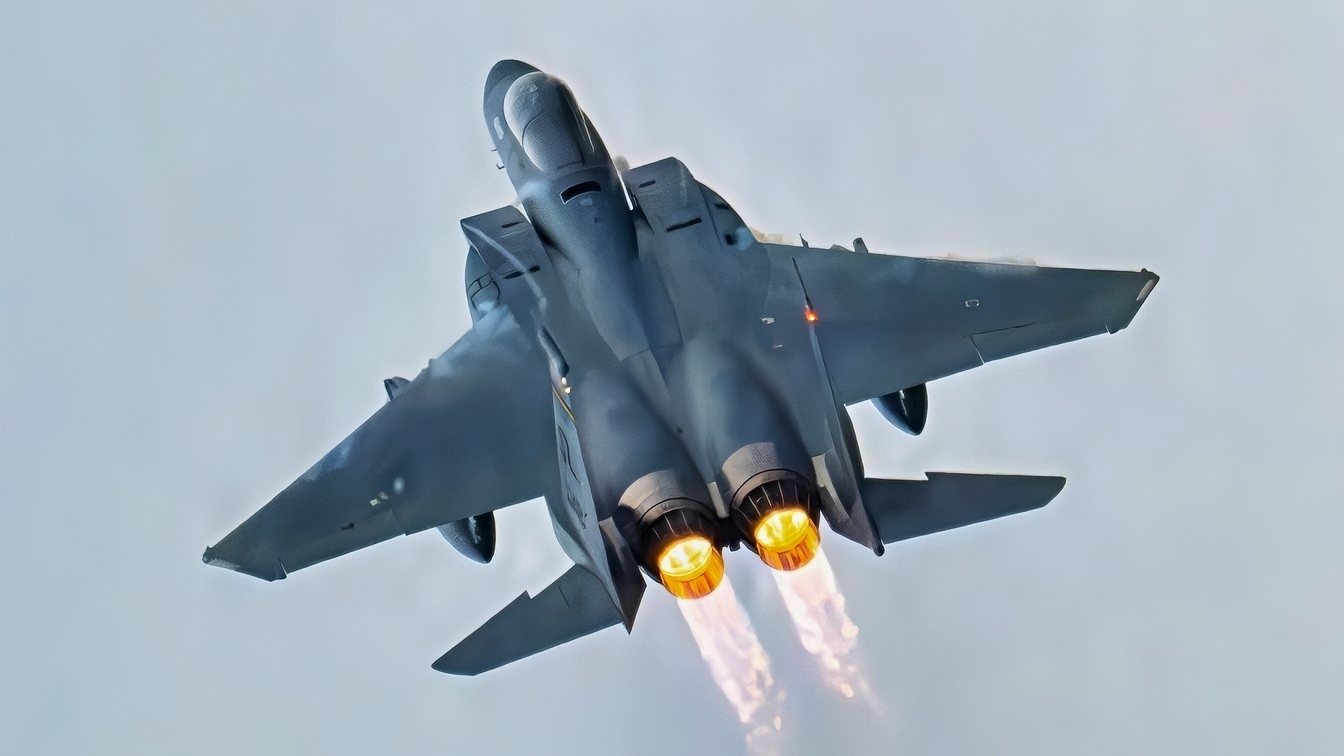
An F-15EX Eagle II Fighter Jet assigned to the 85th Test and Evaluation Squadron, Eglin Air Force Base, Florida, taxis out from Nellis Air Force Base, Nevada, Oct. 21, 2021. The new F-15EX aircrafts are at Nellis AFB to test how effective and suitable the aircraft is for future use in our Air Force. (U.S. Air Force photo by William R. Lewis)

A U.S. Air Force F-15EX Eagle II flies over the Gulf of America, September 16, 2025. The F-15EX, from the 40th Flight Test Squadron at Eglin Air Force Base, Florida, is one of the first F-15EXs in the Air Force, and is going through developmental and operational test series at Eglin to confirm its operational capabilities before it is delivered to the combat Air Force. (U.S. Air Force photo by Staff Sgt. Blake Wiles)
According to Yemen’s coast guard, as cited by the Associated Press, the six dead included two members of Yemen’s National Resistance Forces and four crew members.
The ship was a Yemeni commercial vessel and was hit by three ballistic missiles, the report said.
The Houthis had been striking the Red Sea port city of Mokha, with a death toll in the dozens, although the six people on Wednesday are described by the AP as the first known deaths on shipping in Yemen during the latest spell of fighting, although the Houthis have been firing at ships.
The killings, per the AP, risk restarting the Yemeni Civil War.
Yemen is currently divided between its Northern region, which is controlled by the Houthis, and its southern region, which is controlled by the internationally recognized government of Yemen.
The Sides Speak
According to the New York Times, the Yemeni Transport Ministry says that the vessel in question, which was carrying food supplies, was “hit while transiting the Bab al-Mandab Strait at the southern entrance to the Red Sea.” The four crew members killed, the report said, were three Pakistanis and one Indonesian.
Yemen’s foreign minister, Ishaq Dar, condemned the attack.
“Such attacks endanger innocent lives, constitute a violation of international law, and pose a serious threat to freedom of navigation, maritime security, and the safety of commercial shipping in the Red Sea,” Dar said on social media.
The Yemeni Coast Guard said in a separate statement that the two members of Yemen’s military were killed during a rescue mission when the vessel was hit by another missile.
The Houthis, in their own statement, claimed that the ship was carrying “Saudi military equipment.”
The Times also noted some ambiguity about the ownership of the ship that was hit.
The Transport Ministry calls it a “Yemeni commercial vessel,” although a shipping database lists it as owned by an Egyptian company and flying a Tanzanian flag.
Why the Bab al-Mandab Strait is Important
With the Strait of Hormuz blocked in recent months, and its future status uncertain, the Red Sea has become an important possible alternative for shipping traffic.
However, the Houthis on July 20 announced a maritime blockade on Saudi oil and the Bab al-Mandab Strait at the Southern end of the Red Sea. This was in response to what the Houthis called the “continued Saudi siege” on Yemen.
The Houthis clarified that they were not imposing a full blockade, just one specifically aimed at the Saudis. As noted by the Times, citing analytics firm Kpler, traffic has continued to go through that waterway.
“Risking Everything For Iran”
An analysis published Wednesday by Foreign Policy examined the Houthis’ current strategy and its relationship to the actions of their ally and backer, Iran.
It appears to have been written before the news of Wednesday’s deadly ship attack.
Author Fatima Abo Alasrar notes that the Houthis warned earlier this year that if Iran were attacked, the Red Sea would run “red with the blood of its enemies.” The author goes on to state that while nothing of that nature happened for months, that changed with the Saudi blockade, in which Iran “activated the Houthis at Bab el-Mandeb to demonstrate at the second chokepoint what Iran could not settle at the first.”
The analysis also notes that Hossein Shariatmadari, the late former Supreme Leader’s appointee as managing editor of the Iranian newspaper Kayhan, had written a column called “Close Bab el-Mandeb and See the Result,” before the Houthis did just that.
“Whichever way Washington turns after November, Saudi Arabia is left absorbing the fallout long after U.S. attention has moved on,” the analysis concludes. “That, by itself, is one of Tehran’s achievements: finding a way to make a confrontation with the United States someone else’s problem to pay for, indefinitely.”
About the Author: Stephen Silver
Stephen Silver is an award-winning journalist, essayist, and film critic, and contributor to the Philadelphia Inquirer, the Jewish Telegraphic Agency, Broad Street Review, and Splice Today. The co-founder of the Philadelphia Film Critics Circle, Stephen lives in suburban Philadelphia with his wife and two sons. For over a decade, Stephen has authored thousands of articles that focus on politics, national security, technology, and the economy. Follow him on X (formerly Twitter) at @StephenSilver, and subscribe to his Substack newsletter.


