


Ukraine struck a Wildberries logistics hub in the Russian city of Kotovsk, about 310 miles southeast of Moscow in the Tambov region, early Wednesday, according to regional officials and multiple news outlets.
The strike killed at least three people across a broader wave of drone attacks that night and, according to Tambov Governor Yevgeny Pervyshov, “completely” destroyed the warehouse.

Putin Is Speaking Image from Russian Federation Government End of 2024
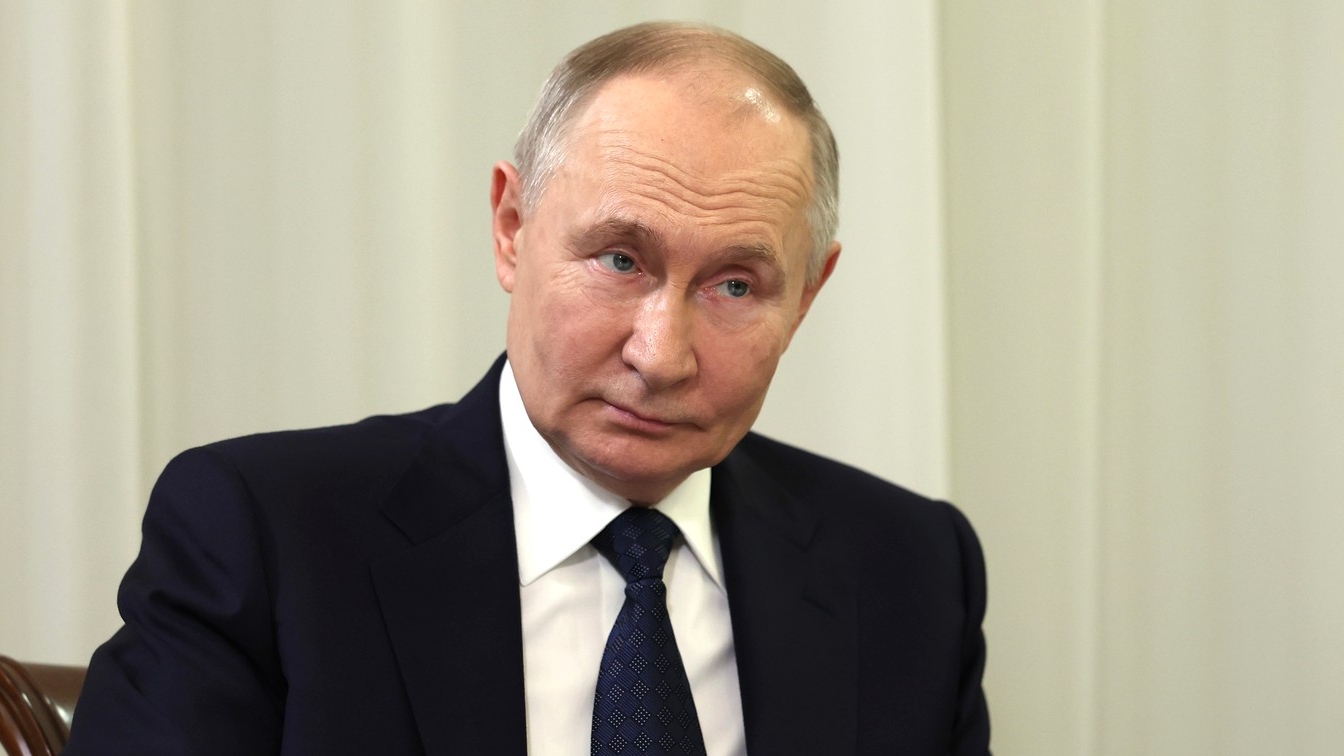
Putin in 2024 Image Credit: Russian Federation
It was the second time that the specific 1.1-million-square-foot facility had been hit since Ukraine’s campaign against the retailer began in mid-July. Separately, a man and a teenager were killed in the neighboring Lipetsk region when a downed drone sparked a fire, and a woman was killed in a drone strike in Belgorod.
Wildberries said all of its employees were safely evacuated from the Kotovsk site, though Pervyshov said at least one worker suffered a concussion from the blast.
The strike came alongside a wider barrage: Ukraine’s General Staff said it also hit Lukoil’s NORSI oil refinery in the Nizhny Novgorod region overnight, and President Volodymyr Zelenskyy said Ukrainian forces struck 16 targets across Russia in a single day, including airfields, a missile unit, and other military-linked infrastructure.
A Drone Campaign Now Months Old
This is not an isolated incident. Since mid-July, Ukraine has systematically targeted Wildberries, Russia’s dominant e-commerce marketplace. Wildberries is the Russian equivalent to Amazon.com, often compared to the American retail giant as part of an expanded strategy of long-range strikes deep inside Russian territory.
By early August, Ukrainian drones had hit roughly 21 Wildberries facilities, destroying an estimated quarter of the company’s total warehouse capacity, of 5.2 million square meters nationwide.
The campaign has continued since, with additional strikes on Wildberries’ main competitor, Ozon, and other logistics operators such as Logistera.
Ukrainian officials say the strikes serve a dual purpose.
Kyiv contends that Wildberries’ warehouses have been used to store and distribute dual-use goods, drone components, navigation equipment, thermal sights, and other military-application gear, alongside ordinary consumer merchandise.
Beyond that stated military rationale, Ukrainian officials and Western analysts widely agree the strikes are also designed to inflict direct economic pain and, in turn, erode Russian public tolerance for the war.
Why The Wildberries Attacks Matter So Much
The choice of target reflects how deeply embedded Wildberries has become in Russian daily life and its broader economy.
The company controls more than 40 percent of Russia’s retail marketplace sector on its own, and together with Ozon accounts for as much as 70 percent of it.
Its gross merchandise value reportedly reached around 6 trillion rubles in 2025, roughly $74 billion, or close to 3 percent of Russia’s entire GDP.
That scale means the damage ripples outward.
Small and medium-sized vendors who stored inventory in the destroyed warehouses have reported losing everything, with some estimates of aggregate merchandise losses running into the billions of dollars.
There have been reports of vendor bankruptcies and even a suicide linked to crushing debt after a seller’s entire stock was destroyed in a warehouse fire.
Wildberries’ financial ties to major state banks, including a strategic partnership with VTB, mean the strikes also touch the banking sector; VTB’s shares reportedly dipped following a late-July wave of attacks, and Sberbank has reportedly built a loan-restructuring program specifically for affected Wildberries vendors.
Wildberries’ banking division was sanctioned by the European Union last month over its financial contributions to the Russian budget, due to its central role in Russia’s consumer economy.
Russian authorities have reportedly discussed propping up the company financially altogether.
The Strategic Implications Of The Attacks
An expanding definition of legitimate targets. For most of the war, Ukraine’s deep-strike campaign focused on oil refineries, ammunition depots, airfields, and other conventional military-industrial targets.
Extending that campaign to civilian retail infrastructure marks a deliberate broadening of the economic-pressure strategy, blurring the line between military logistics and the consumer economy and likely drawing continued scrutiny and criticism from Moscow and potentially from humanitarian observers.
Real civilian costs. Wednesday’s deaths underscore that these strikes, even when aimed at commercial infrastructure, are producing a rising civilian toll.
That toll, and Wildberries CEO Tatyana Kim’s public description of the strikes as “acts of terrorism,” will shape how the campaign is perceived internationally, even as Ukraine frames the facilities as legitimate military-adjacent targets.
Pressure on Russia’s home front. Analysts at organizations including Chatham House and Poland’s OSW Center for Eastern Studies have argued the campaign is intended to bring the war’s costs home to ordinary Russians in a way oil-refinery strikes never fully did, hitting the online shopping habits of a broad, largely urban population the Kremlin has otherwise tried to insulate from the war’s disruptions.
That timing is noteworthy, landing ahead of Russia’s parliamentary elections scheduled for September, and coinciding with other signs of eroding public sentiment tied to economic strain and internet shutdowns.
A test of Russian resilience and adaptation.
Wildberries has said it is restructuring its supply chains around smaller “partner hubs” to reduce the risk of concentrated losses, a shift that, if sustained, could permanently raise costs and reduce efficiency across Russian retail.
Whether that adaptation reduces the drone campaign’s economic impact, or whether continued strikes simply outpace it, will be one of the more significant factors to watch this fall.
Taken together, Wednesday’s strike is unlikely to be the last. Ukraine has shown no indication of scaling back the Wildberries campaign, and with each new warehouse hit, the war’s economic and human costs for ordinary Russians look set to keep climbing.
Russian Civilians Are No Longer Insulated From The War
Russian civilians have been widely insulated from the realities of this war. The Kremlin’s censorship has hidden what Moscow has done since Day 1. Since Russia invaded Ukraine four and a half years ago, it has targeted Ukrainian civilians and civilian infrastructure.
The Kyiv Post wrote, “When Russia launched its full-scale invasion in 2022, it destroyed hundreds of civilian infrastructure sites across Ukraine, beginning with the Drama Theater and the maternity hospital in Mariupol, where hundreds of people were sheltering at the time.
“Over four years of war, Russia has struck every Ukrainian power plant – there is not a single one that has not been attacked, as well as several railway stations, the country’s largest children’s oncology hospital, not to mention logistics infrastructure.”
The Russians targeted Ukraine’s gas and oil industries; now they are facing the same kind of attacks that they’ve unleashed on Ukraine for four and a half years.
Ukraine is targeting logistics networks in an attempt to erode the sense of normality that has insulated many urban Russians from the realities of the war.
The Russians in the major cities now face mounting economic hardships caused by the war, which include soaring inflation, higher taxes, and rising costs as the Kremlin scrambles to finance its military campaign.
They are now facing the situation that Putin’s invasion and vision for incorporating Ukraine into Russia.
About the Author: Steve Balestrieri
Steve Balestrieri is a National Security Columnist. He served as a US Army Special Forces NCO and Warrant Officer. In addition to writing on defense, he covers the NFL for PatsFans.com and is a member of the Pro Football Writers of America (PFWA). His work was regularly featured in many military publications.


