

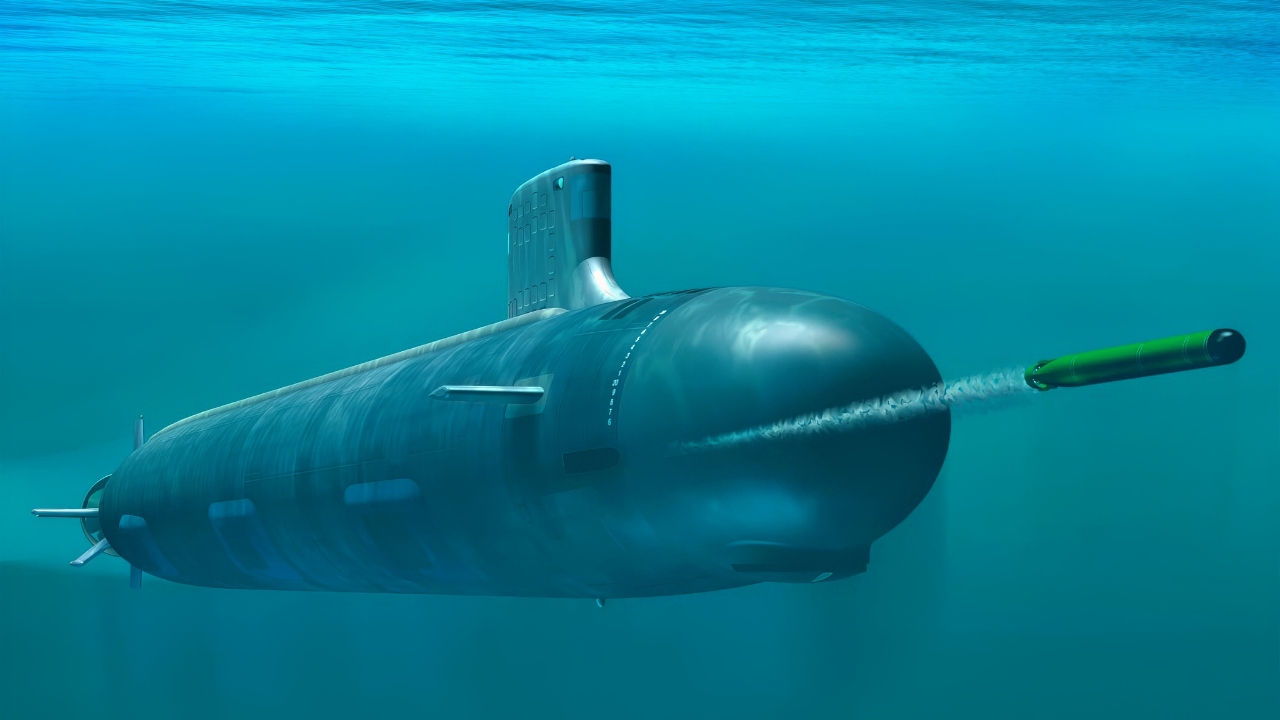
Key Points and Summary – President Trump announced the U.S. will share nuclear-propulsion technology with South Korea and allow a nuclear-powered submarine to be built at Hanwha’s Philadelphia yard.
-A White House fact sheet touted major U.S.–ROK deals and Hanwha’s planned $5B yard upgrade, but crucial details remain unclear: legal authorities, reactor fuel type, nonproliferation safeguards, design ownership, and how a commercial yard becomes nuclear-certified.
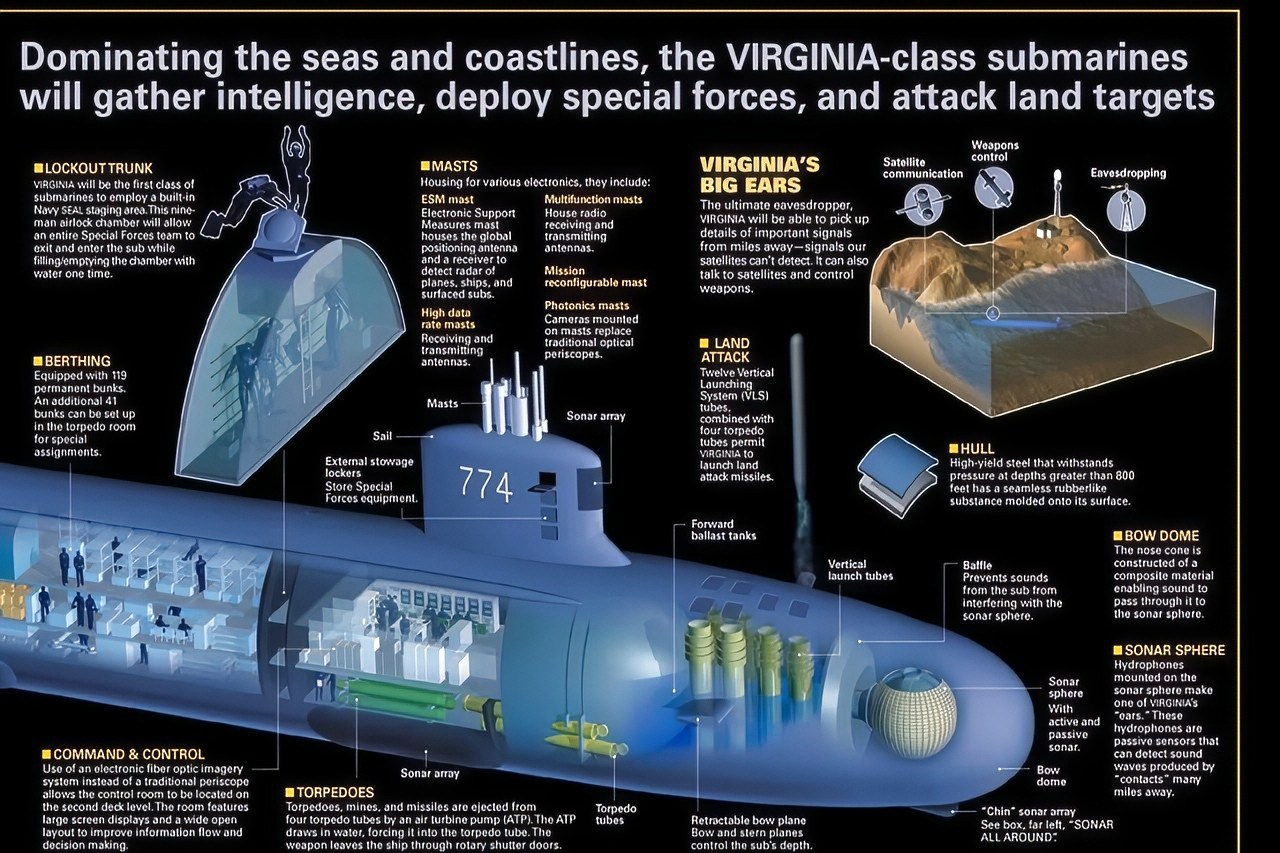
Virginia-Class Submarine Cut Out. Image Credit: Creative Commons.
-Only two U.S. yards currently build nuclear subs, and workforce, QA, and radiological infrastructure are decade-scale hurdles.
-The headline is bold; execution will be hard. If it happens, the pact could reshape the alliance—and America’s shipbuilding map.
Will South Korea Really Get a Nuclear Submarine?
During his visit to Asia this week, U.S. President Donald Trump made a surprising announcement: The United States has reached a deal under which it will share nuclear technology with South Korea. As part of the agreement, a South Korean company will build a new nuclear submarine in the United States.
According to a White House fact sheet released on Wednesday, Hanwha Ocean has committed to a “$5 billion infrastructure plan to strengthen Pennsylvania’s Philly Shipyard workforce and increase its current production capacity by more than tenfold.”
It’s part of a broader trade deal between the two countries.
According to Politico, the U.S. will share “nuclear propulsion technologies” with the Republic of Korea, which will allow the Koreans to build “at least one” nuclear-powered submarine.
The U.S. had previously shared such technology only with the United Kingdom and Australia, as part of the AUKUS agreement. According to the Associated Press, South Korea sought access to the technology from the Biden administration but was turned down—although President Lee Jae-myung added this week that there may have been a “misunderstanding” when those discussions took place last year. The leader added that South Korea was seeking only nuclear propulsion technology, not nuclear weapons.
From Seoul to Philly
Trump went into slightly more detail about the plans in a Truth Social post on Thursday.
“South Korea will be building its Nuclear Powered Submarine in the Philadelphia Shipyards, right here in the good ol’ U.S.A. Shipbuilding in our Country will soon be making a BIG COMEBACK,” the post said.
“Our Military Alliance is stronger than ever before and, based on that, I have given them approval to build a Nuclear Powered Submarine, rather than the old fashioned, and far less nimble, diesel-powered Submarines that they have now. A great trip, with a great Prime Minister!”
The post contained a minor gaffe, as noted by the media in South Korea: Lee is the president of South Korea, not the prime minister; Trump had likely confused South Korea with Japan, the country he had visited the previous day, which does have a prime minister. The post was later corrected to give Lee the proper title.
“As President Trump and President Lee make shipbuilding a central plank in the U.S.-Korea alliance, Hanwha stands ready to support with our advanced shipbuilding scale,” Alex Wong, Hanwha’s chief strategy officer, said in a statement to Politico.
Trump was also presented with a gold crown by the South Korean president.
The submarine will be built at Hanwha Philly Shipyards, which is located in the Philadelphia Navy Yard district. Hanwha purchased the former Philly Shipyard last year from its previous owner, a Norwegian investment group. The Committee on Foreign Investment in the United States approved the deal last fall.
According to the Philadelphia Inquirer, Lee visited the shipyard in August for a ship-christening ceremony, during which he was joined by Pennsylvania Gov. Josh Shapiro.
“Today’s christening ceremony is the embodiment of our two nations working side by side to reindustrialize for the sake of shared security and prosperity. We are creating good manufacturing jobs, building the world’s most advanced ships, and fostering a new skilled workforce right here in America,” Hanwha Vice Chairman Dong Kwan Kim said, although there was no announcement at that time that a nuclear submarine was under discussion.
In further deals, Korean Air agreed to purchase “103 new Boeing aircraft valued at $36.2 billion, supporting up to 135,000 jobs across the United States.” South Korea will purchase GE Aerospace engines to power them, the White House fact sheet said.
Reasons For Controversy?
According to Breaking Defense, the deal to construct a submarine “would raise a litany of questions for the American maritime industrial base.”
Under its previous owners, the shipyard had mostly built commercial ships, but Hanwha has been clear that it is seeking business from the U.S. Navy.
“Establishing a shipyard capable of building nuclear submarines would be a massive undertaking—a task that is scheduled to take Australia well into the 2030s and 2040s,” Breaking Defense said of the deal.
The company would also most likely face “substantial obstacles” in finding a workforce to undertake such a building effort.
The Inquirer noted that recent immigration crackdowns have complicated Korean manufacturing efforts in the United States.
In September, nearly 500 workers, most of them South Korean nationals, were arrested at a Hyundai plant in Georgia. An Inquirer op-ed in early October fretted that “Philadelphia’s $5B shipyard dream may hit an immigration iceberg.”
“The diplomatic fallout is escalating,” Jeffrey M. Voth wrote after the Georgia arrests. “Lee said Koreans were ‘baffled’ by the raid, and that companies would be ‘very hesitant’ to expand in the U.S. without a workable visa channel. On Sept. 12, a chartered Korean Air flight with many of the detained workers returned to Incheon International Airport, outside Seoul. It was reported that only one South Korean national opted to stay behind in the U.S. to seek residency.”
This did not stop the United States and South Korea from announcing the submarine deal on Thursday. But it may affect the company’s efforts to staff the project with engineers and other workers.
Meanwhile, the CBC reported that Canadian Prime Minister Mark Carney toured a submarine type that South Korea has proposed to sell to Canada. Carney was in Korea for the Asia Pacific Economic Cooperation summit.
About the Author: Stephen Silver
Stephen Silver is an award-winning journalist, essayist, and film critic, and contributor to the Philadelphia Inquirer, the Jewish Telegraphic Agency, Broad Street Review, and Splice Today. The co-founder of the Philadelphia Film Critics Circle, Stephen lives in suburban Philadelphia with his wife and two sons. For over a decade, Stephen has authored thousands of articles that focus on politics, national security, technology, and the economy. Follow him on X (formerly Twitter) at @StephenSilver, and subscribe to his Substack newsletter.
More Military
‘Long Way from Production’: China’s J-36 Might Be ‘Paper Tiger’ Stealth Fighter
‘Mach 2’ JAS 39 Gripen Is a Rocket Fighter Plane
New ‘Ferrari’ F-35 Stealth Fighter Is Aimed Right at Russia and China
Putin’s Poseidon Nuclear “Doomsday” Torpedo Looks Like a Bluff
The Air Force’s B-21 Raider Stealth Bomber Plan Doesn’t Make Any Sense


