

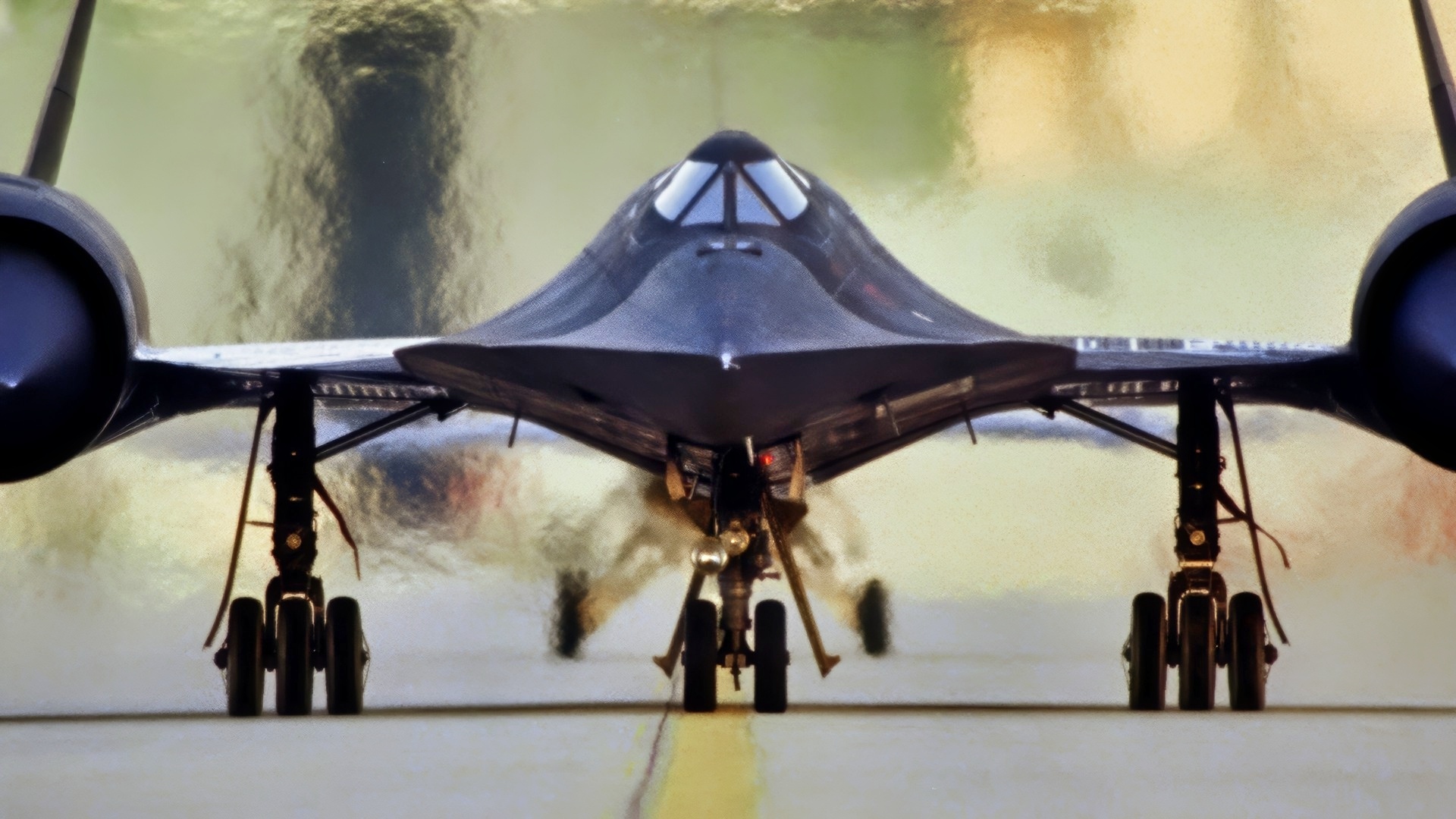
Key Points and Summary – National Security Journal visited an SR-71 Blackbird at the Smithsonian National Air and Space Museum outside of Washington, DC. We interviewed musuem staff and spent some upclose and personal time with one of the most legendary planes of all time.
-Bonus – We took a large number of photos and videos of the SR-71. We present in this article a small fraction of what we took. All images and videos (besides the very top image) are exclusive to National Security Journal and original.
-Why We Did This? Lockheed’s SR-71 Blackbird rewrote reconnaissance: Mach 3+, 80,000 ft, and 100,000 sq miles surveyed per hour.
-Its shapely chines, canted tails, and early RAM lowered radar returns, while a star-tracking astroinertial system (“R2-D2”) guided at speed with 300-ft accuracy.
-Pratt & Whitney’s J58s employed a blended turbojet and ramjet-like operation via moving inlet cones and bypass doors; an essentially titanium airframe broke new ground in materials and tooling.
What Made the SR-71 Unforgettable? We Visited a Mach 3 Blackbird to Find Out
The Lockheed SR-71 Blackbird is one of the most fascinating airplanes that ever knifed through the sky.
Its speed and sleek lines make it one beautiful creation.
This historic spy plane was the world’s fastest jet.
Few other Intelligence, Surveillance, and Reconnaissance aircraft can compare to the Blackbird.

SR-71 Blackbird National Security Journal Image. Taken by Dr. Brent M. Eastwood on September 26, 2025.
The SR-71 first flew in 1964, at the height of the Cold War.
It had a 24-year career. As the National Museum of the U.S. Air Force wrote, “The SR-71 remained the world’s fastest and highest-flying operational aircraft. From 80,000 feet, it could survey 100,000 square miles of Earth’s surface per hour. On July 28, 1976, an SR-71 set two world records for its class — an absolute speed record of 2,193.167 miles per hour and an absolute altitude record of 85,068.997 feet.”
I ventured out to the Smithsonian National Air and Space Museum at the Steven F. Udvar-Hazy Center in Chantilly, Virginia, to see the SR-71 up close and personal.
In the process, I had the pleasure of speaking with the museum’s curator, Michael Hankins.
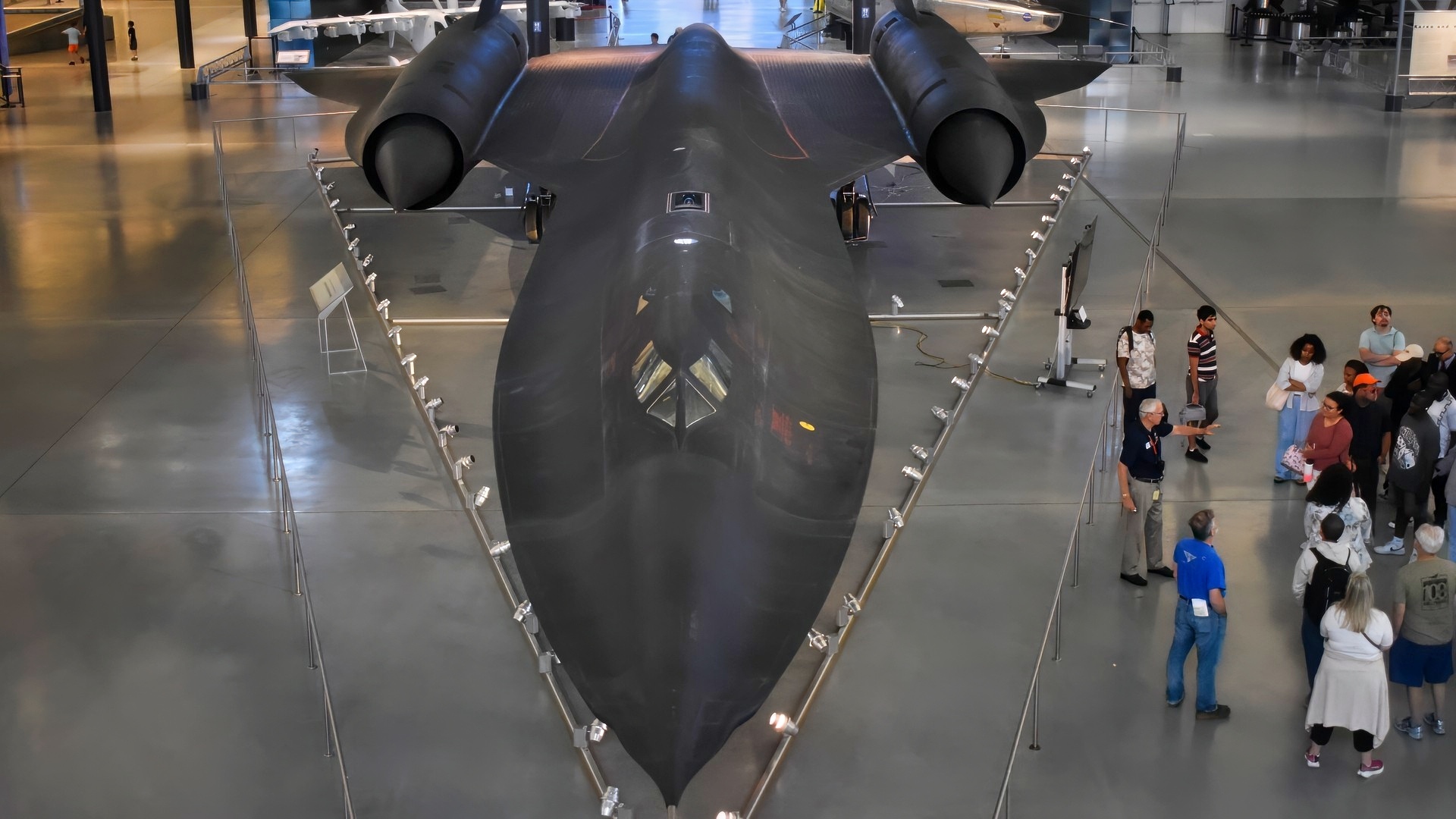
SR-71 Photo Taken September 26, 2025. Image Credit: National Security Journal.
He is an expert on post-World War II aviation and is responsible for curating the museum’s 30 aircraft from that era.
Radar Absorbing Material, Celestial Navigation, and ‘R2-D2’
Hankins began by discussing the amazing technologies of the SR-71.
Pay attention, because there is a reference to a Hollywood movie that you know and love dearly.
“First, the technology that was the most closely guarded secret about the Blackbird was its stealth features. Much of the aircraft’s shape was designed to deflect radar waves away, and there was a lot of effort put into using RAM (radar absorbing material) in key locations to absorb radar energy. The plane isn’t stealthy, that technology wasn’t able to be fully realized yet in the early 1960s, but it set the foundation for the stealth aircraft that came later.
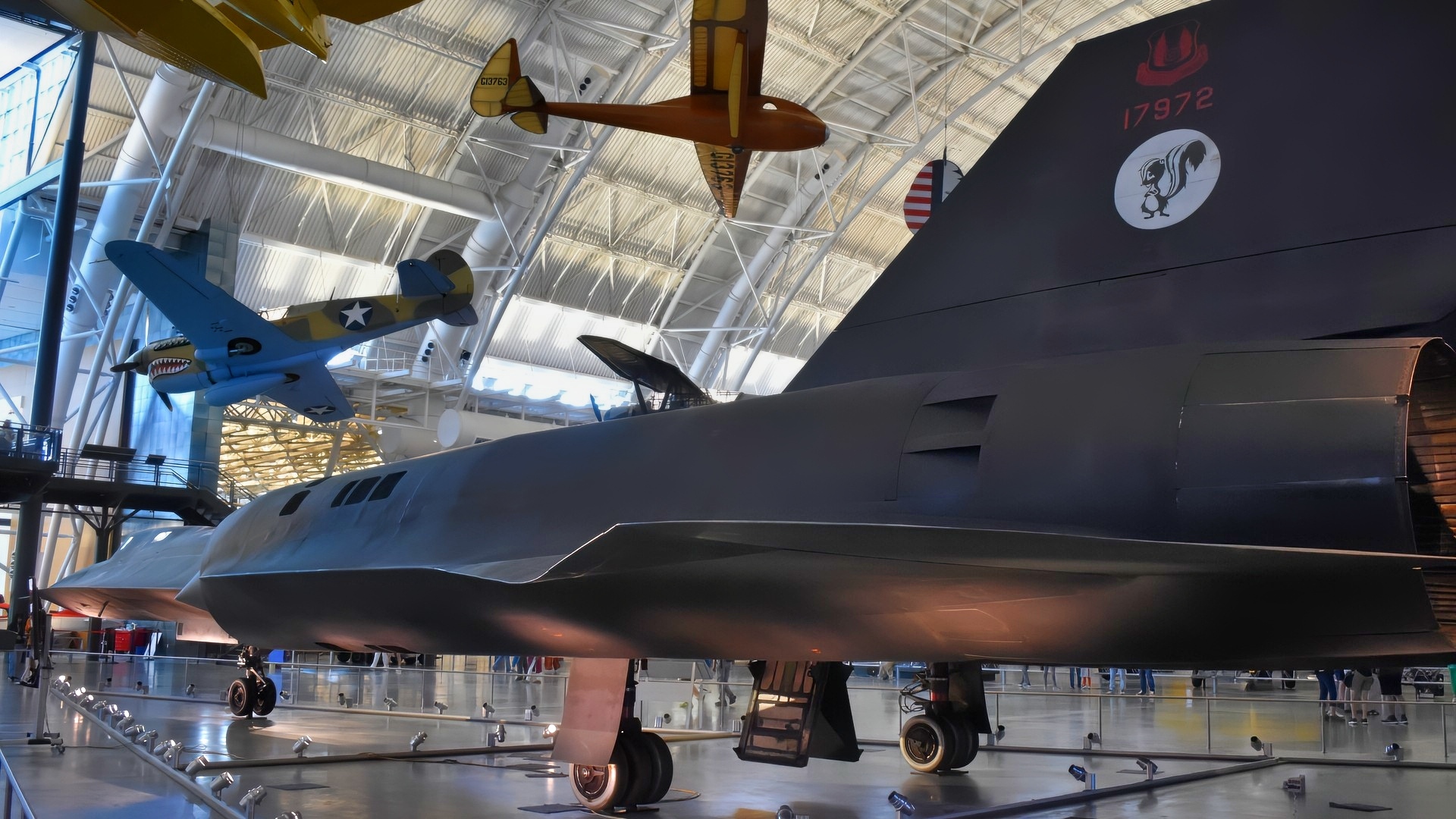
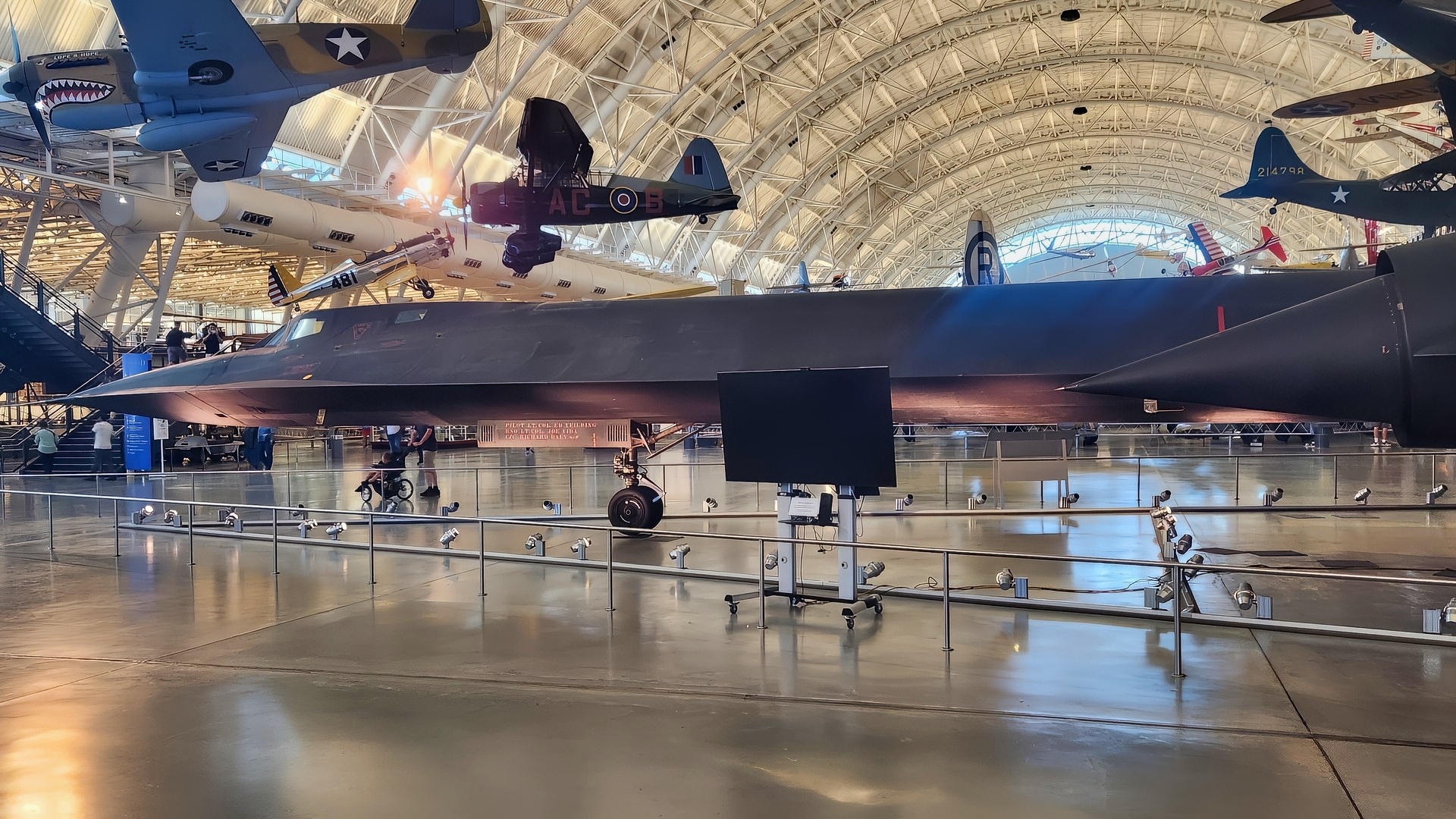
SR-71 Blackbird Full Side Shot. Image Credit: National Security Journal.
“Second, the Astroinertial Navigation System handled the very complex task of accurately tracking the aircraft’s location at high-speed using celestial navigation. There was no GPS back then, and aerial navigation had always been a challenge. This computer was right behind the RSO cockpit and looked up into the sky to track the stars, and based on the movement of stars, the system could calculate the position of the aircraft. The system was officially accurate to within 300 feet while travelling at Mach 3, which is very powerful. After the first Star Wars film came out in 1977, crews started referring to the ANS as ‘R2-D2.’
“Third, the engines and the inlet/cooling systems were very advanced. The Pratt & Whitney J58 engine was very innovative for the time, in the way that it functioned as a conventional turbojet at slower speeds, but at full speed switches to using ‘permanent compressor bleed.’ Essentially, at cruising speed, the engine works similar to a ramjet, although it isn’t exactly the same. Managing the air intake was crucial, and the cones inside the aircraft’s inlets were also very complicated, moving in and out to ensure the air enters at the right speed and angle. There is also a series of bypass doors that open and close around the engine in various places to control the airflow and shockwave to ensure the correct conditions for the engine to operate.
“Finally, I would mention that the construction of the aircraft led to a much greater understanding of working with titanium in large quantities. The special care and special tooling required to work with titanium can be difficult. Of course, other aircraft had made use of titanium before this, but to have over 90 percent of the airframe exterior made out of that metal brought significant challenges but also a much greater level of understanding.”
The Design Made It More Difficult to Track on Radar
I asked Hankins about the unforgettable design of the SR-71 and asked him what made it so great.
What was the advantage of those chines, the canted shape, and long tail?
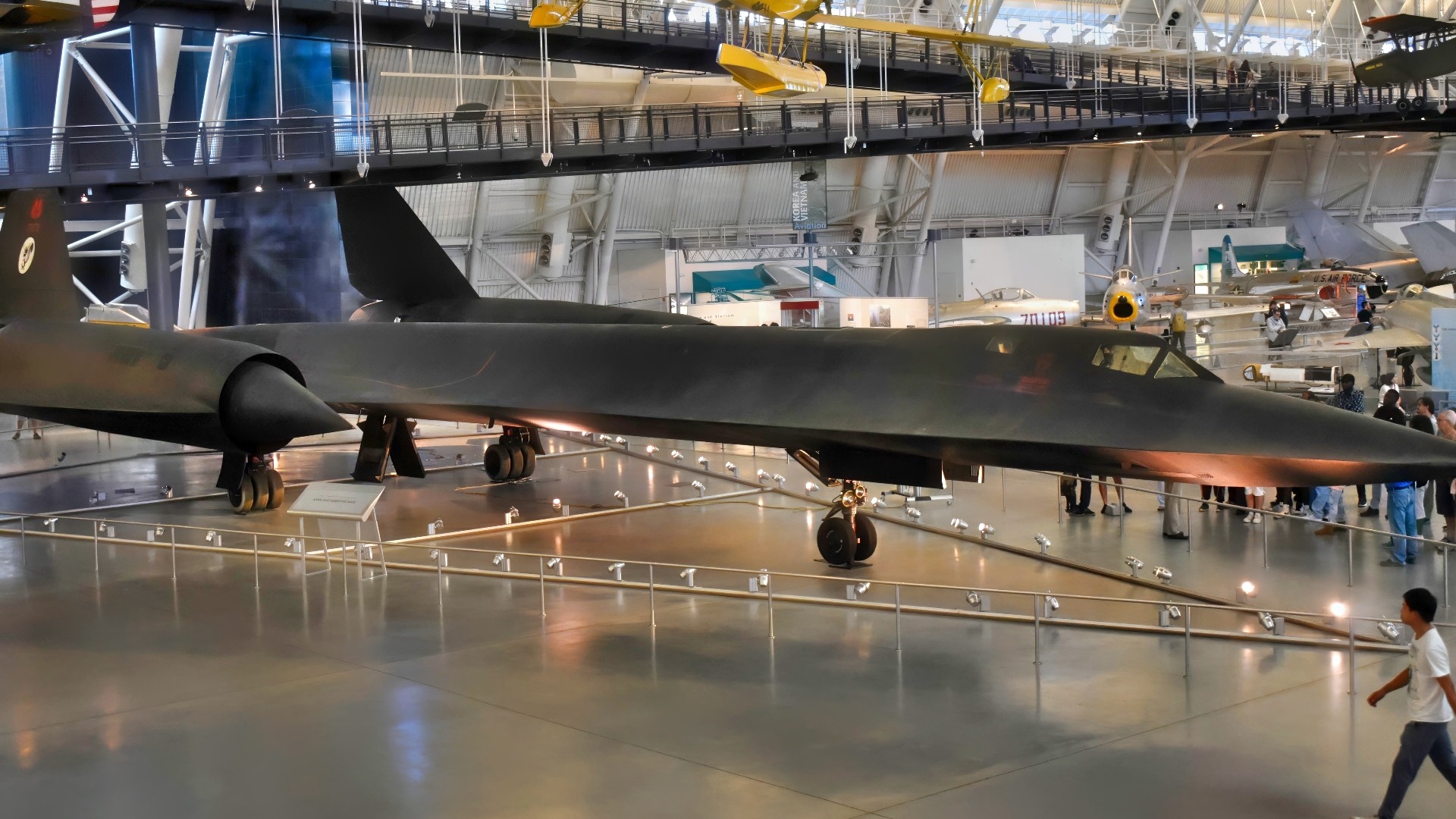
SR-71 Blackbird Smithsonian. Image Credit: National Security Journal.
“Some of the shape of the aircraft is simply a product of both the aerodynamic requirements of the high-speed, high-altitude mission, mixed with the large amount of fuel necessary for those long missions,” he said. “But many of these features are primarily stealth features, designed to deflect radar waves. Although work on the aircraft that became the SR-71 began in the late 1950s, after the 1960 shoot-down of a U-2, the U.S. really focused on making an aircraft that would be hard to detect. The chines, the canted tails, and the shape of the underside of the aircraft all contribute to that, deflecting radar energy. However, even with the addition of RAM, the techniques of that time were not enough to make the Blackbird truly stealthy. But these techniques were refined over the years, leading to the first true stealth airplanes in the 1970s.”
Flying the Blackbird Was a Beautiful Experience
What about the aircrews?
I inquired about how they could last so long at that speed and altitude. It must have been a beast to fly, requiring stamina and incredible attention to detail. His explanation:
“From the memoirs I’ve read and the folks I’ve talked to about it, I noticed two themes emerging: First, the mission required a lot of focus. Flying the aircraft and handling the reconnaissance and navigation duties took a lot of focused effort, and many of the aircrews have talked about just needing to pay a lot of attention, which kept them occupied for most of the flights. The frequent refuelings also broke up the time. Second, almost all the aircrews I’ve talked to or read from have talked about how beautiful of an experience it is to fly. Being that high up, seeing the curvature of the Earth, seeing the edge of space, and flying that fast, is, according to most folks, an immensely thrilling experience. They are able to eat if they need to.”
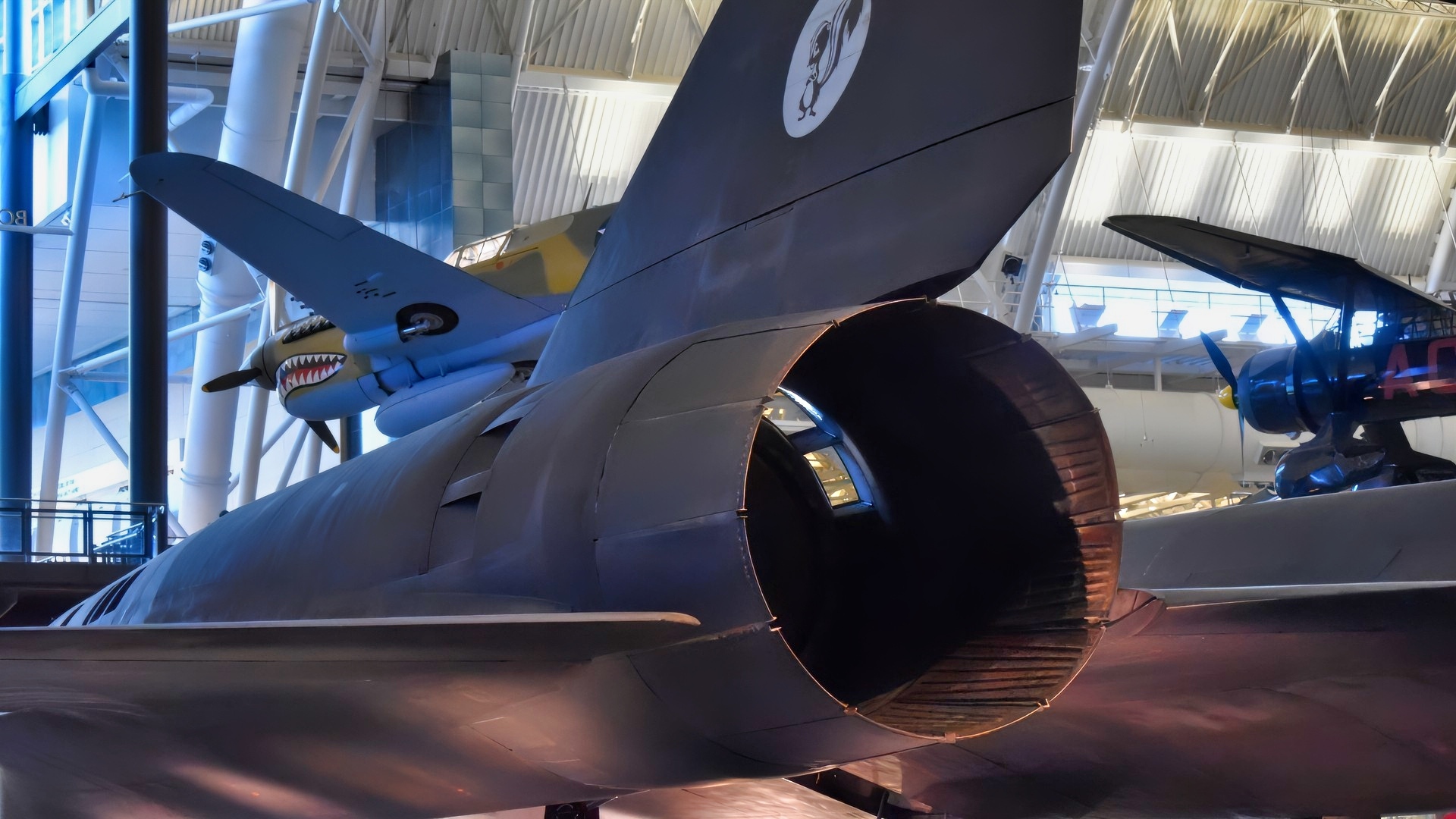
SR-71 Blackbird Rear Image. Credit: Taken on September 26, 2025 by National Security Journal.
The SR-71 Blackbird Proved Its Mettle During the Vietnam War
I asked what the most important or memorable missions flown by the SR-71 were.
“The first missions they flew were during the Vietnam War, and it played a key role,” he said. “By 1972, SR-71s were flying over Vietnam almost every day. The most important thing these missions accomplished was confirming that North Vietnam did not have surface-to-surface ballistic missile capabilities, which was a big worry in the late 1960s. SR-71s also provided key information on strategic targets in North Vietnam. President Lyndon’s Johnson’s national security adviser, Walt Rostow, said that without the SR-71 photos, he might not have conducted any tactical operations in the North, they were decisive factors for him. It also flew key missions throughout the Cold War, providing important information on the location of Soviet vessels, etc. One memorable mission in October 1973 provided key information about the unfolding violence during the Egyptian-Israeli conflict of that year.”
The SR-71 Just Cost Too Much to Fly
I asked Hankins about the retirement of the SR-71. Was it retired too soon? Could it have continued to make a difference?
Amazing SR-71 Blackbird September 2025. Image Credit: National Security Journal/Dr. Brent M. Eastwood.
“The biggest factor was cost,” he replied.
“Depending on how one chooses to calculate the cost and what factors go into it, the aircraft costs at least $85,000 per flight hour (in 1980s dollars, more than $260,000 today). As satellites and drones became more capable, it was harder to justify the high cost of the aircraft, especially as the tension between the Soviet Union and the United States was dissipating at the very end of the Cold War. I think a lot of decision makers were having to ask some very difficult questions about what missions needed to happen, and what the best way to accomplish those missions were in a world that was changing rapidly. There were some good arguments on all sides at that time.”
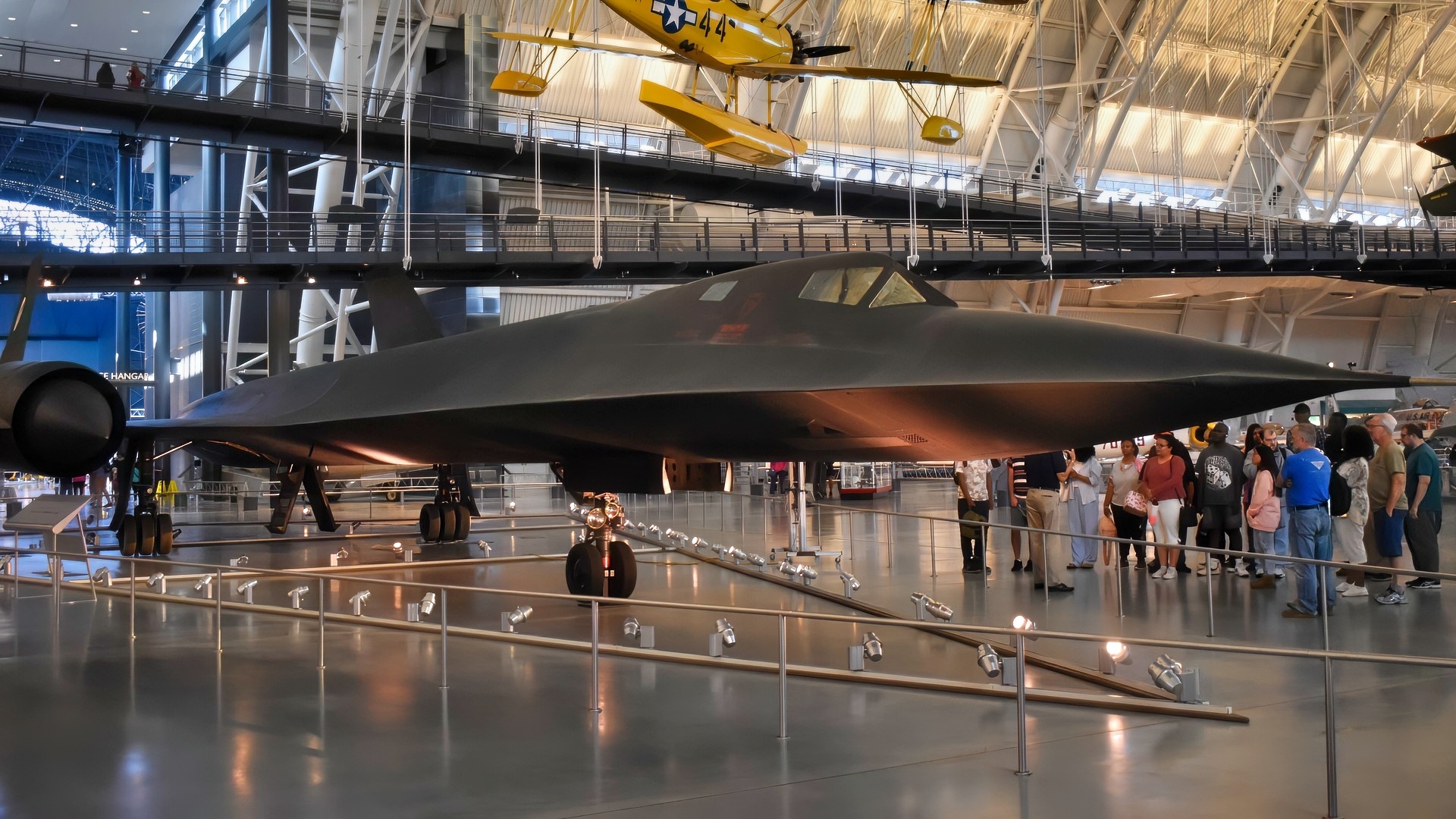
SR-71 Blackbird NSJ Photo. Image Credit: Dr. Brent J. Eastwood.
About the Author: Brent M. Eastwood
Brent M. Eastwood, PhD is the author of Don’t Turn Your Back On the World: a Conservative Foreign Policy and Humans, Machines, and Data: Future Trends in Warfare plus two other books. Brent was the founder and CEO of a tech firm that predicted world events using artificial intelligence. He served as a legislative fellow for US Senator Tim Scott and advised the senator on defense and foreign policy issues. He has taught at American University, George Washington University, and George Mason University. Brent is a former US Army Infantry officer. He can be followed on X @BMEastwood.
More Military
‘Built for the Impossible Missions’: The A-29 Super Tucano’s Secret Is Out
The J-20A Stealth Fighter: Better Than F-22?
KC-46: The Air Force’s Most Important Plane for a Reason
The F-15EX Eagle Doesn’t Need to Be Stealth
China’s J-20S Stealth Fighter: Just an F-22 or F-35 Copy? Nope.


