

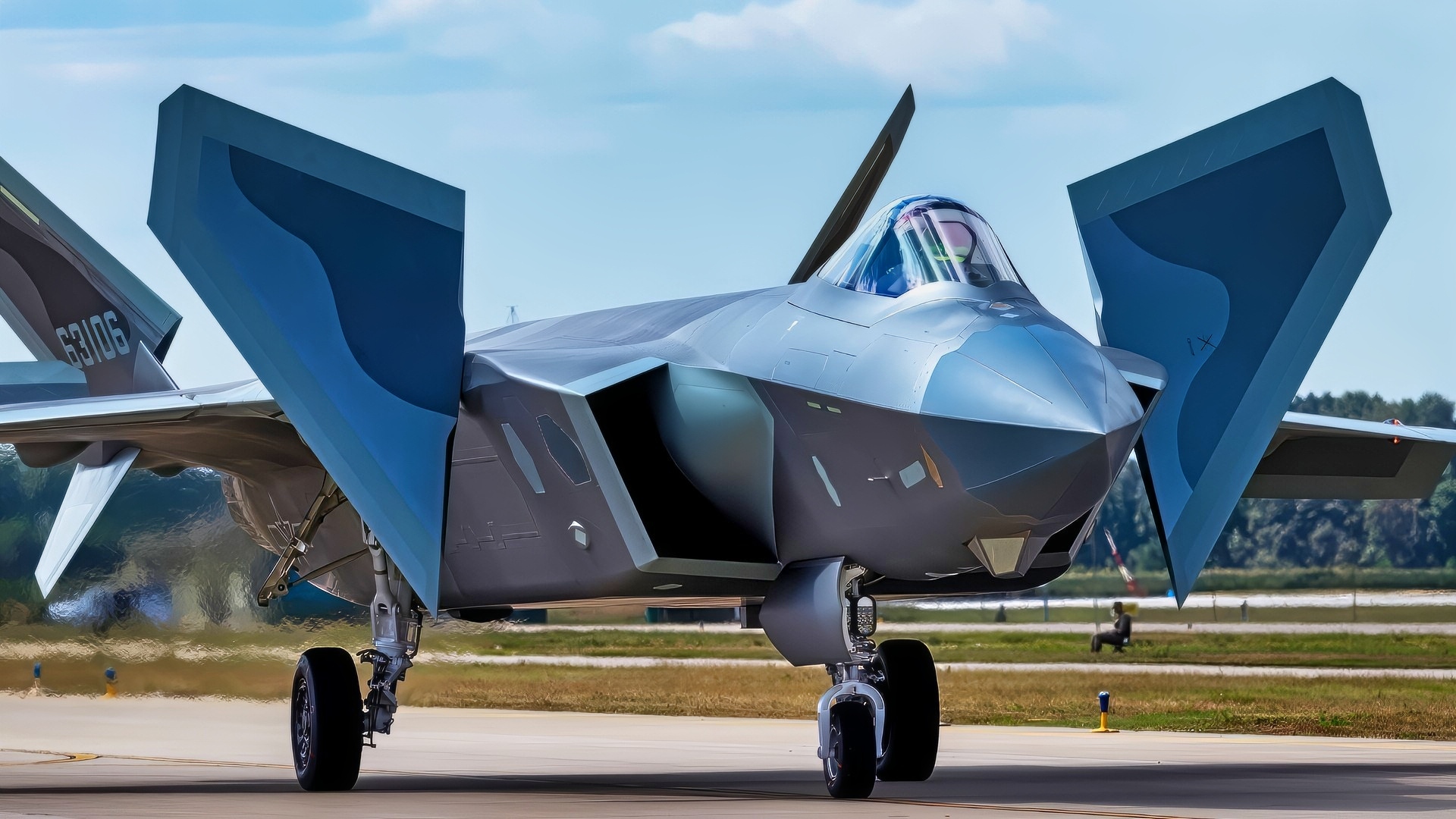
Key Points and Summary – The J-20S is China’s two-seat evolution of the J-20 “Mighty Dragon,” built to squeeze more value from a stealth airframe by adding mission flexibility and human bandwidth.
-It appears optimized for complex roles—long-range strike coordination, electronic warfare, loyal-wingman control, and dynamic targeting—while retaining the J-20’s stealth, sensor fusion, and long reach.
-With room for a second crew member and added avionics, the J-20S could orchestrate multi-axis attacks, manage drones, and adapt in contested airspace.
-It isn’t a copy of the F-22 or F-35; it’s a different bet on crewed-uncrewed teaming and theater depth that could complicate U.S. and allied air plans.
J-20S: China’s Two-Seat Stealth Gambit
The J-20 began as China’s answer to a high-end air-dominance problem: how to see first, shoot first, and survive long enough to shape the fight across Asia’s vast distances.
It wrapped stealth shaping around a big fuel fraction, a large sensor aperture, and a weapons bay sized for beyond-visual-range (BVR) missiles. Over a decade, the baseline airframe matured—engines improved, software hardened, cockpits were refined, and the aircraft moved from parade piece to operational fleet mainstay.
The J-20S grows out of this foundation but changes the conversation. By adding a second cockpit, China is not merely training instructors or showing off. It is leaning into a specific philosophy of modern air warfare: the belief that the hardest missions—long-range strike orchestration, electronic warfare, and real-time integration with unmanned systems—are limited more by cognitive load than by aerodynamics.
The second seat is not about flying; it’s about thinking—curating sensors, networks, and weapons across a fluid battlespace where milliseconds matter and information is a weapon.
Why China Wants A Two-Seat Stealth Fighter
China’s geography and strategy both suggest a premium on mission management. The Indo-Pacific theater stretches thousands of miles; targets are dispersed; U.S. and allied defenses are layered and mobile; and the electromagnetic spectrum is crowded and hostile. A stealthy platform with two crew members can share the mental burden of:
Teaming With Unmanned Assets: A mission commander in the back seat can task and retask “loyal wingmen” or other drones for sensing, decoying, jamming, and even strike, without robbing the pilot of attention needed to fly and survive.
Electronic Warfare And Spectrum Play: Modern EW isn’t a switch; it’s a chess match. Timing, waveform choice, power management, and deconfliction across the formation benefit from a dedicated operator.
Long-Range Targeting And Battle Management: Finding, fixing, and finishing maritime or land targets across hundreds of miles—while juggling air threats, refueling plans, and rules of engagement—suits a two-crewed cockpit.
Dynamic Kill Chains: When targetable opportunities appear for seconds, one crew member can shape geometry and keep stealth discipline while the other validates ID, fuses offboard cues, and finalizes weapon assignments.
In short, a two-seat stealth fighter enables China to extract more mission value from each sortie, especially during the first 72 hours of a contingency, when ambiguity, jamming, and deception are at their peak.
J-20S Airframe And Avionics: What Changes—and What Doesn’t
Adding a second canopy to a stealth jet risks signature penalties. The design response appears to strike a balance: preserving the J-20’s planform and internal bays while extending the dorsal area to accommodate additional avionics and environmental systems. The tandem cockpit retains a forward view and sensor coverage akin to the baseline model, while the aft station gains displays tuned for sensor control, targeting, and teaming functions.
Expect changes in:
Power And Cooling: Additional processors and high-duty electronic warfare or communications packages demand more electrical power and thermal management. The J-20S likely sports uprated generators and heat exchangers embedded to preserve signature.
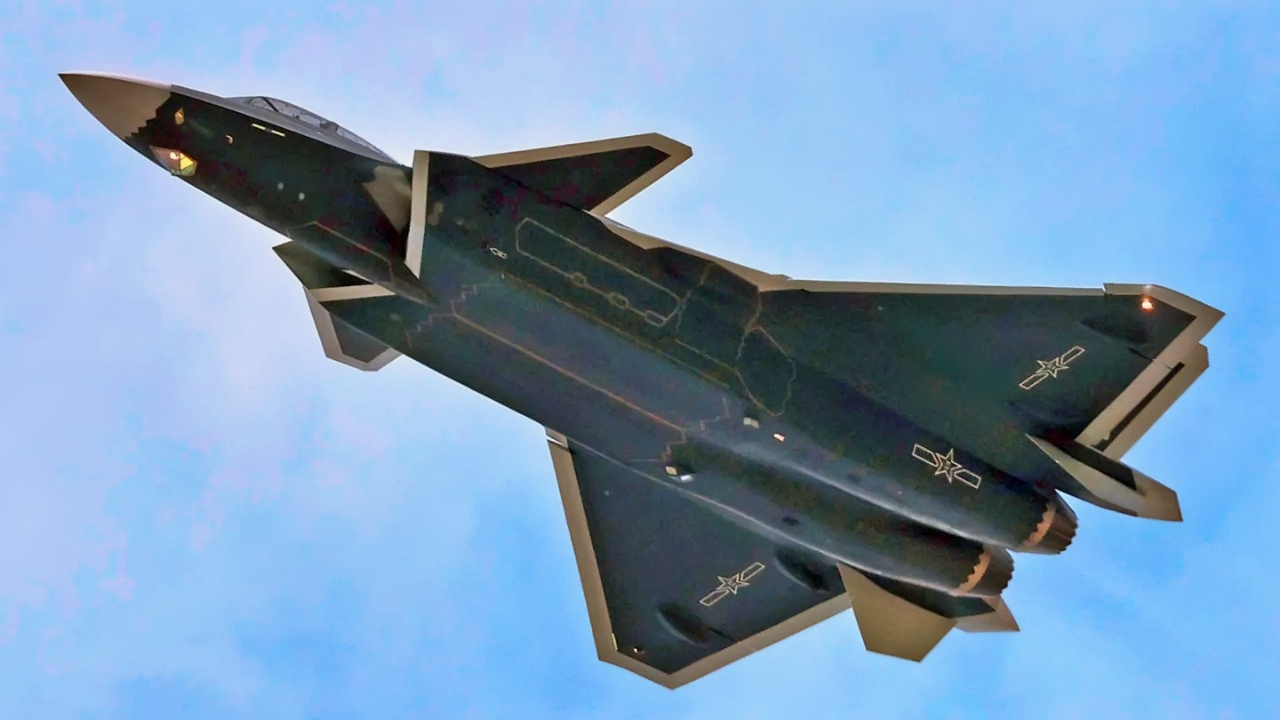
J-20S Fighter from X Screenshot. Image Credit: X.
Networking And Data Links: Two-way, high-bandwidth links likely underpin the concept. The J-20S’s “brain” is its radio suite—secure, agile, and able to talk to drones, other fighters, surveillance aircraft, and missiles.
Mission Computers And Fusion: The value proposition is not just more screens; it’s a smarter stack. Fusion engines that reconcile radar, infrared, passive emissions, and offboard data enable the back-seater to act as conductor rather than a second pilot clicking through pages.
Human-Machine Teaming (HMT): Expect more automation for routine flying and sensor housekeeping, freeing both crew to manage the fight. If China pursues onboard AI aids, the J-20S is the likely sandbox.
What stays constant is the J-20’s heart: a stealthy shape optimized against frontal and mid-aspect detection, internal weapons, and a high fuel fraction for long-leg patrols and multi-axis approaches.
Engines, Range, And Kinematics
Endurance is strategy in the Pacific. The J-20 family’s appeal lies in its combination of range and internal carriage. Whatever the exact engine fit on current production, the two-seat variant seeks to maintain useful combat radius with the added weight of a second crew station and more electronics. The design sacrifices some room and mass for cognition, but aims to maintain the “show up far, stay long, and still fight” profile. In practical terms, that means enough thrust and efficiency to support:
High-Altitude, Long-Dwell Sensing: Living above weather and outside some radar horizons to act as a stealth sensor and controller.
Fast Repositioning: The ability to sprint to an opening—e.g., a gap in a picket line or the reveal of a high-value emitter—and exploit it before the window closes.

Chinese J-20 Fighters. Image Credit: PLAAF.
Weapon-Friendly Kinematics: Sustaining energy and aspect for long-range missile shots, then egressing without lingering in the enemy’s sweet spot.
Sensors And Electronic Warfare: The Back-Seater’s Playground
The J-20S’s raison d’être is likely sensor management at scale. A modern stealth fighter may run active radar sparingly, preferring passive methods—infrared search and track, electronic support measures, and networked cues—to avoid advertising itself. The back-seater can orchestrate this low-probability-of-intercept dance: switching modes, shaping emissions, and fusing offboard reports from other shooters and scouts.
On the offensive EW side, a two-seat jet can manage escort jamming, spot-jamming of specific fire-control radars, and deception designed to create false tracks or mask real ones. Against a naval force, that might mean confusing sea-skimming missile defenses or opening a lane for follow-on strikes. Against land defenses, it could be blinding a specific battery just long enough to loft a standoff weapon, then shifting to the next threat before burn-through.
Weapons Loadout: What The J-20S Is Likely To Carry
The J-20 lineage balances air-to-air dominance and deep strike. Expect the two-seat variant to likely field:
Long-Range AAMs in the main bay for first-look, first-shot BVR fights, paired with high-agility short-range AAMs in side bays for the merge.
Air-Launched Anti-Ship Or Land-Attack Missiles carried internally if dimensions allow, or on low-observable pylons when mission dictates standoff over stealth purity.
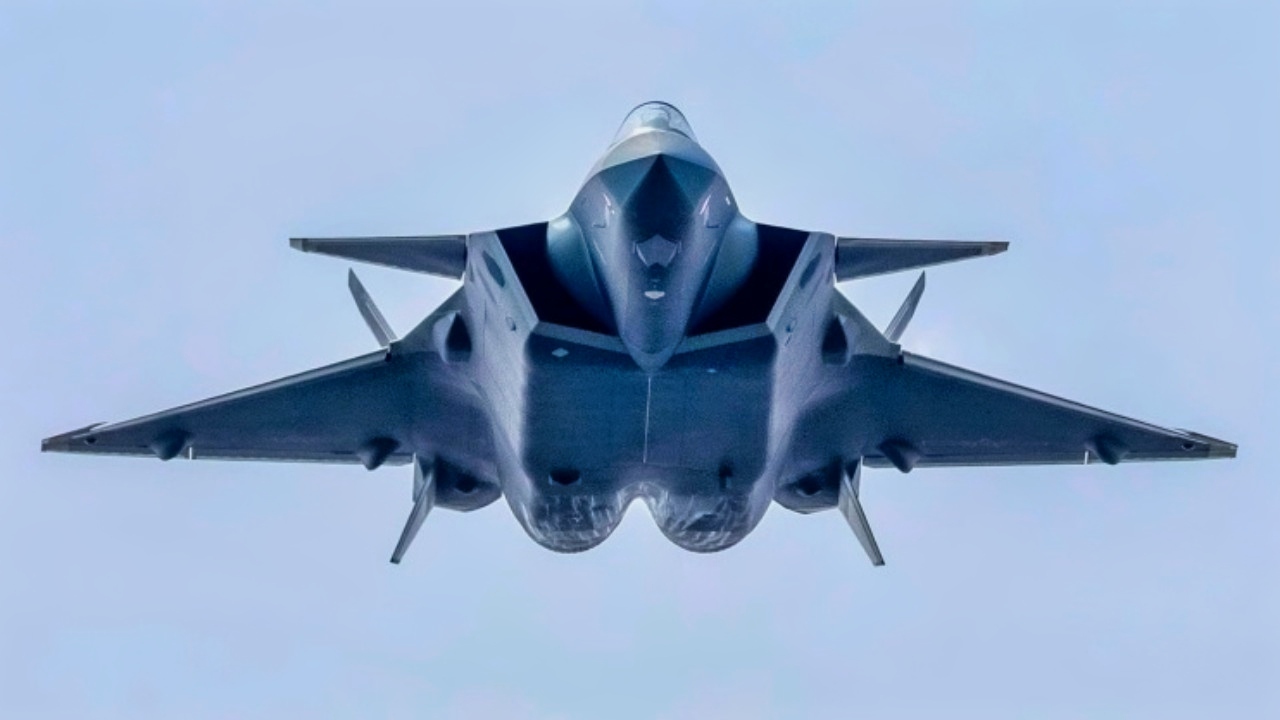
J-20 Fighter Screenshot from X. Image Credit: X.
Electronic Warfare Pods Or Collaborative Decoys compatible with stealth carriage, enabling the J-20S to act as both archer and shepherd for a mixed package.
Networked Weapons that accept mid-course updates from the back-seat operator, extending engagement envelopes and improving terminal accuracy.
The threaded needle is always the same: keep weapons inside when signature counts, go external only when the standoff and effect justify the signature cost—and have a crew member whose full-time job is making that call.
Not An F-22, Not An F-35—And That’s The Point
Comparisons are inevitable but often misleading. The F-22 is a pure air-dominance thoroughbred with unmatched kinematics and very low signature; it never pursued a two-seat variant and is optimized for killing airborne threats fast. The F-35 is a stealthy, single-seat sensor platform that fuses an extraordinary volume of information and strikes with precision but trades raw speed for survivability and software-driven awareness.
The J-20S is a different bet: a large stealth fighter that adds a human mission manager to push crewed-uncrewed teaming, electronic warfare, and long-range strike coordination forward. It won’t out-turn an F-22 or out-fuse an F-35 built around a single pilot’s workload, but it aims to out-coordinate—to be the node that makes other nodes more dangerous. In a theater defined by distance and complexity, that is a rational optimization.
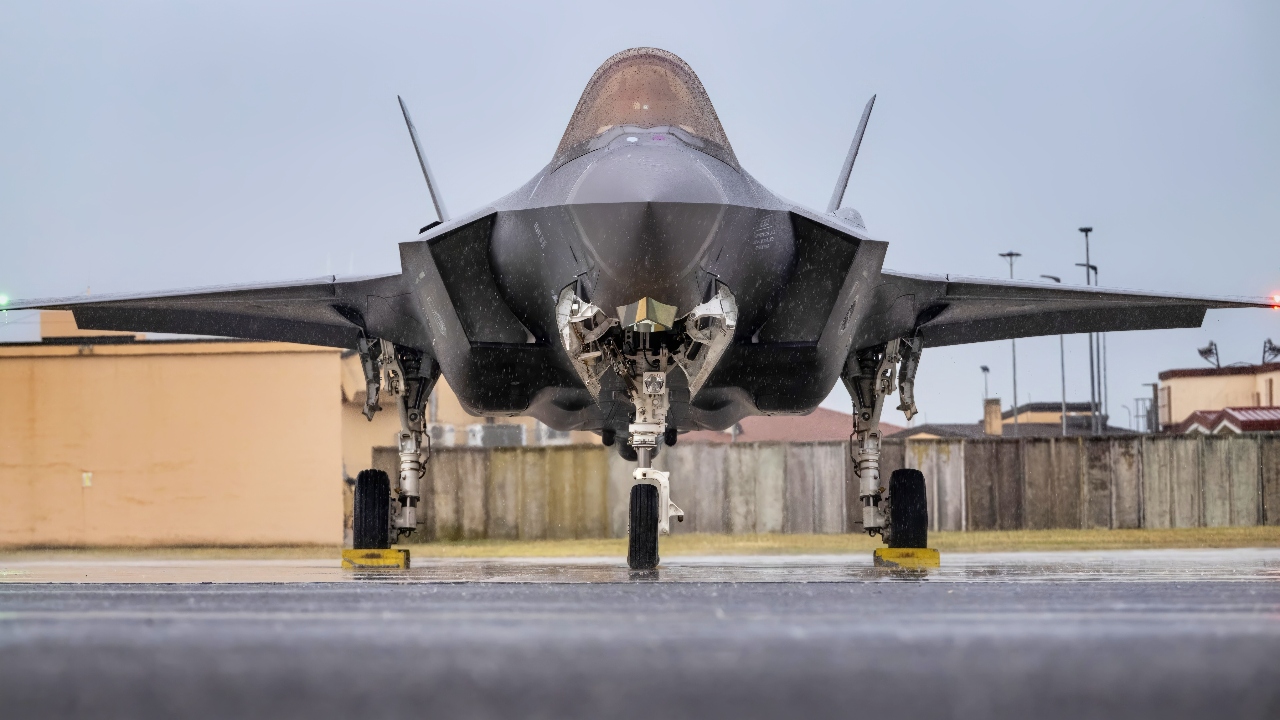
A U.S. Air Force F-35 Lightning II assigned to the 495th Fighter Squadron taxis pre-flight during exercise Combined Strike 25 at Aviano Air Base, Italy, Aug. 20, 2025. Combined Strike 25 is a readiness training with RAF Lakenheath’s 48th Fighter Wing F-15s and F-35s alongside Aviano’s 31st Fighter Wing F-16s. (U.S. Air Force photo by Senior Airman Joseph Bartoszek)
Why It Could Be Dangerous In The Indo-Pacific
Danger is a function of fit to mission. The J-20S’s danger arises from five converging threads:
Theater Reach: With long legs and stealth, it can get within useful sensing and strike distance of carrier groups, bases, and logistics nodes without screaming its presence.
Cognitive Overmatch: A second crew member may manage a larger portion of the fight—drones, decoys, jammers, and missiles—faster than a single pilot can under stress.
Kill-Chain Resilience: If one path to a target is cut (jamming, deception, attrition), the back-seater can re-route the chain in real time, pulling from a wider toolset of sensors and shooters.
Saturation At Scale: By coordinating with unmanned systems, the J-20S can help generate more simultaneous problems for U.S. and allied defenses—more tracks, more angles, more timing conflicts.
Maritime Targeting: Over water, where clutter is sparse and targets move, a stealthy controller with persistent sensors can make anti-ship salvos smarter and deadlier.
This is less about one jet winning a duel and more about a jet amplifying the lethality of a strike package across hundreds of miles.
Tactics You Should Expect To See
If the J-20S is fielded in numbers, watch for patterns:
Distributed Penetration With Off-Axis Control: A pair of J-20Ss may operate on the fringes of threat rings, quietly managing non-stealth shooters and drones that make the obvious approach while the stealth pair shapes the less obvious one.
Stealth Escort-Jamming: Rather than classic EA platforms blasting power from afar, the J-20S could provide close-in, tailored EW against specific radars in a carrier group—timed to missile launches and feints.

China J-20S Fighter. Image Credit: Creative Commons.
Dynamic Retargeting: As maritime or land targets move, the back-seater updates weapons in flight and reallocates drones, preserving salvo coherence against evasive defenders.
Sensor Triangulation With Passive Means: Two-ship formations may perform silent geo-location of emitters, using angle-of-arrival and timing differences to build targeting without turning on bright radars.
Vulnerabilities And Tradeoffs of J-20S fighter
No design is free. A second canopy and extended dorsal volume can complicate signature control; more electronics stress thermal margins; and adding a crew member raises training costs and sortie manning requirements. If engines lag their design targets, a heavier mission fit can shave acceleration and ceiling. Network dependence—central to the concept—creates a target set: jam or deceive the links, and you reduce the J-20S’s edge. Finally, to be decisive, the jet needs scale—enough airframes, trained back-seaters, and loyal-wingman inventories to matter across a theater.
How The U.S. And Allies Might Counter
Countering the J-20S is not only about better dogfighters; it’s about breaking its team game:
Kill The Links: Focused electronic attack and deception against the data pathways that bind drones, missiles, and shooters into a coherent whole.
Counter-ISR And Counter-C2: Deny the J-20S reliable targeting with decoys, emissions discipline, and rapid relocation of high-value nodes; strike the airborne relays that extend its reach.
Layered Air And Missile Defense: Force the J-20S to spend time and tools cracking outer layers, reducing the weight that reaches inner rings.
Own The Drones: Field and protect allied loyal-wingmen with robust autonomy and resilient links so that the teaming advantage doesn’t run one way.
Human Overmatch: Train mission commanders and EW officers to thrive in fast, ambiguous spectra—because the J-20S’s key bet is on human cognition; that bet can be met.
Industrial And Strategic Implications
A two-seat stealth fighter signals confidence in production maturity and doctrinal clarity. It suggests China believes it can build not just stealth shells but the electronics, software, and training frameworks that make a second crew member worth the cost. It also hints at a broader investment in uncrewed teammates—because a conductor without an orchestra is wasted steel. If you see more J-20S airframes, expect more drones, more mission pods, and more experimentation at the squadron level.
The Road Ahead for J-20S: What To Watch
Three markers will separate concept from reality:
Back-Seater Curriculum: If China develops a distinct mission commander syllabus—EW, teaming, and strike management—then the J-20S is more than a conversion trainer.
Loyal-Wingman Fielding: Real-world pairing of stealth fighters with capable, survivable unmanned partners is the acid test of the J-20S thesis.
Software Velocity: The platform’s value scales with updates. Rapid iteration in fusion, autonomy aids, and EW libraries will show whether industry can keep the jet’s “brain” ahead of the threat.
J-20S Final Appraisal: A Different Path To Air Superiority
The J-20S does not try to beat Western fifth-gens at their own specialty—pure air-to-air kinematics or single-pilot fusion. It tries to change the problem, making air combat about orchestration at range, not duels at the merge. That is strategically coherent for a country that must contest long sea lines and multi-island chains against a coalition of capable air forces and navies.
If fielded with robust networking, sharp EW, and a credible drone wing, the J-20S could force U.S. and allied planners to rethink timelines, packages, and protection for high-value assets. If engines, software, or training lag, it becomes an expensive way to do what a single-seat J-20 already does. The most likely outcome sits between: a platform that amplifies China’s strike complexes and complicates Western operations—not unbeatable, but undeniably dangerous if ignored.
About the Author: Harry J. Kazianis
Harry J. Kazianis (@Grecianformula) is Editor-In-Chief and President of National Security Journal. He was the former Senior Director of National Security Affairs at the Center for the National Interest (CFTNI), a foreign policy think tank founded by Richard Nixon based in Washington, DC. Harry has over a decade of experience in think tanks and national security publishing. His ideas have been published in the NY Times, The Washington Post, The Wall Street Journal, CNN, and many other outlets worldwide. He has held positions at CSIS, the Heritage Foundation, the University of Nottingham, and several other institutions related to national security research and studies. He is the former Executive Editor of the National Interest and the Diplomat. He holds a Master’s degree focusing on international affairs from Harvard University.
More Military
USS Constellation Was the Workhorse Aircraft Carrier
Aircraft Carrier USS Independence: Summed Up in 4 Words
Russia’s Tu-95MS Bear: Moscow’s B-52 Bomber?


