

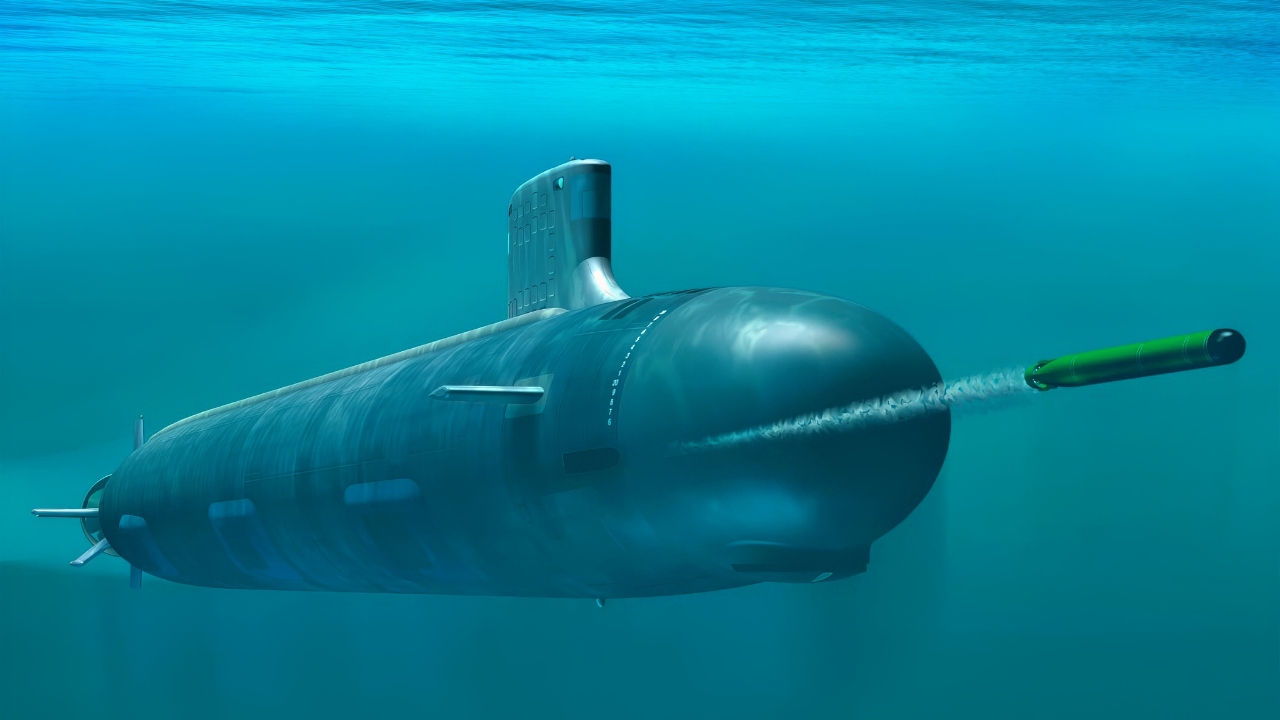
Key Points and Summary – The U.S. Navy is transitioning from its current Virginia-class Block V attack submarine to the next-generation SSN(X).
-While the Block V is an evolutionary, versatile multi-mission platform serving as a “bridge to the future,” the SSN(X) is a revolutionary new design focused on ensuring dominance in a future peer conflict.
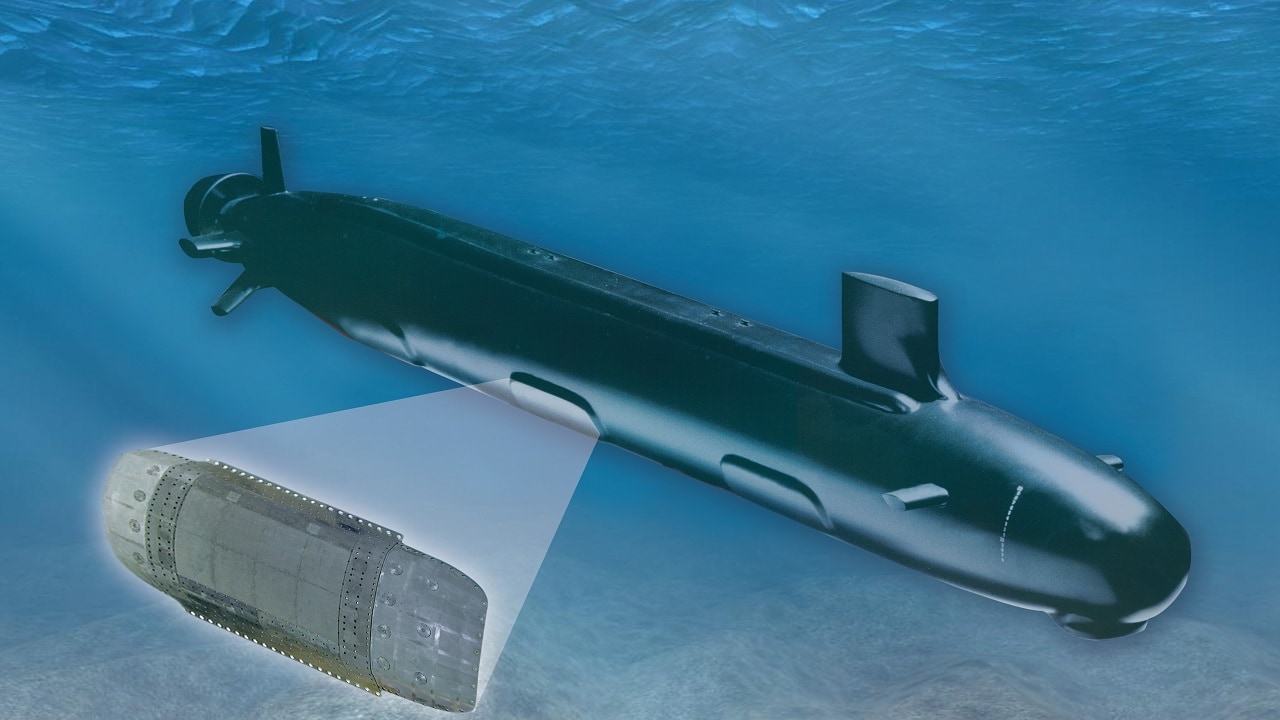
Image of Virginia-Class Submarine. Image Credit: Creative Commons.
-The SSN(X) is expected to be larger, faster, and the “quietest submarine ever built.”
-It will carry a more advanced payload, including hypersonic missiles, and act as an underwater “mothership” for unmanned systems, consolidating the roles of multiple submarine classes into one superior platform.
SSN(X) Submarine Could Change Naval History
The U.S. Navy is currently undergoing a significant transformation in its undersea warfare capabilities, transitioning from the highly capable Virginia-class Block V submarines to the next-generation SSN(X) program. While both are nuclear-powered attack submarines, they differ significantly in their design philosophies and characteristics. The Virginia Block V is the culmination of decades of experience, while the SSN(X) is intended to redefine and revolutionize submarine warfare.
Virginia-Class vs SSN(X)-Class: What’s the Difference?
The Virginia-class was developed in the post-Cold War era as a more cost-effective and versatile alternative to the Seawolf-class. The Block V variant, the latest and most advanced, reflects a steady evolution of the class. It incorporates lessons learned from earlier blocks and adapts to emerging threats, particularly in the Indo-Pacific region. Its design emphasizes multi-mission flexibility, modularity, and affordability.
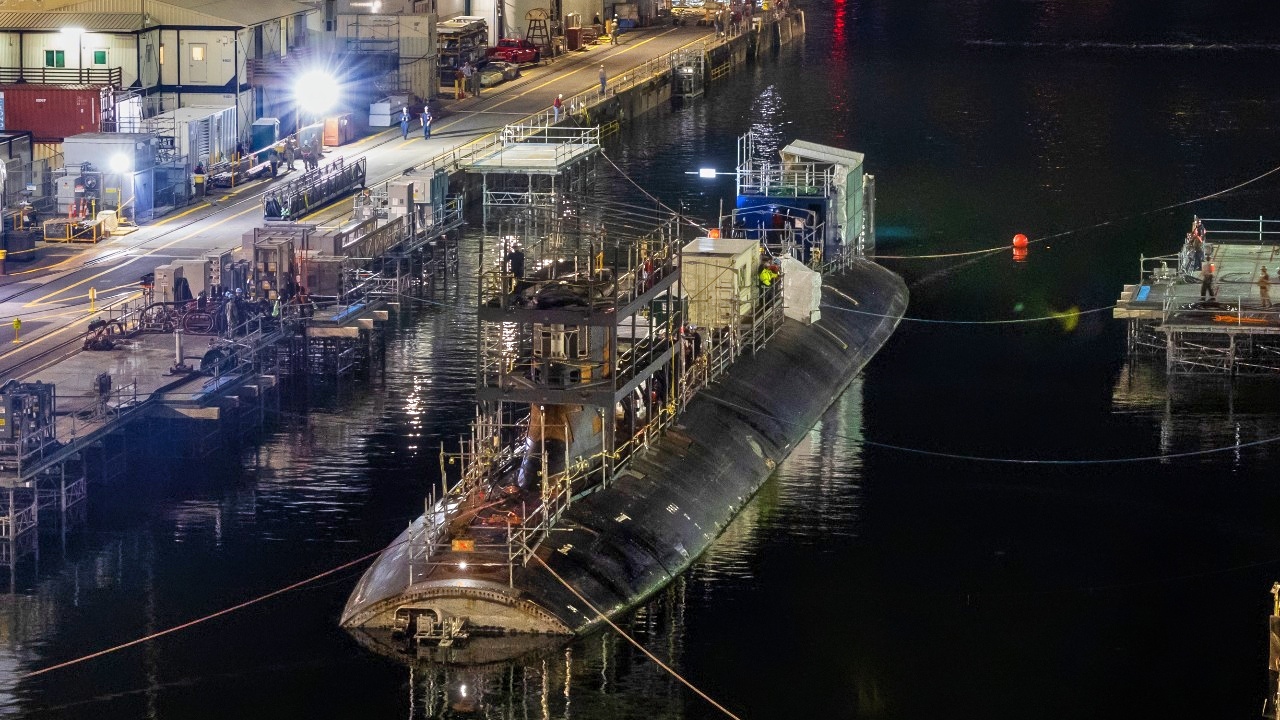
USS Connecticut (SSN 22) is docked for its Extended Docking Selected Restricted Availability July 12, 2023 at Puget Sound Naval Shipyard; Intermediate Maintenance Facility.
Strategically, the Block V serves to replace the aging Los Angeles-class submarines and supplement the Ohio-class guided missile submarines (SSGNs) with enhanced capabilities for cruise missiles. A key feature of the Block V is the Virginia Payload Module (VPM), which significantly increases its missile capacity and overall firepower.
In contrast, the SSN(X) is an entirely new platform designed to ensure the next generation of American undersea dominance. It aims to combine the best attributes of the Seawolf-class (noted for its speed and stealth), the Virginia-class (known for its versatility), and the Columbia-class (recognized for its endurance and survivability). The SSN(X) is being developed with a focus on peer conflict readiness, stealth superiority, and advanced sensor integration. It is designed to operate in contested environments against near-peer adversaries like China and Russia. While still in early development, the first SSN(X) is expected to be procured around 2040.
Design and Weaponry
In terms of physical characteristics, the Virginia-class Block V measures approximately 460 feet in length and displaces around 10,200 tons when submerged. The S9G nuclear reactor powers it and uses a pump-jet propulsor for quieter operation.
Its top speed exceeds 25 knots, and its endurance is limited only by food and maintenance requirements. The SSN(X) is projected to be similar in size or slightly larger, with an estimated displacement of 11,000 to 12,000 tons.
It is expected to feature a next-generation nuclear reactor and possibly a hybrid or electric drive system, which would further reduce its acoustic signature. Its speed is anticipated to exceed 30 knots, and it will likely have longer maintenance intervals, enhancing its operational availability.
When it comes to armament, the Virginia-class Block V is well-equipped. It features four 21-inch torpedo tubes capable of launching Mk-48 torpedoes.
It also includes two Virginia Payload Tubes that can carry six Tomahawk cruise missiles each, and four VPMs that can carry seven Tomahawks each, bringing the total missile capacity to 40. Combined with torpedoes, the Block V can carry up to 65 weapons. The SSN(X), while still in the conceptual phase, is expected to retain or expand upon this configuration. It will likely include vertical launch systems with modular payload bays capable of deploying a wide range of advanced munitions, including hypersonic missiles, unmanned underwater vehicles (UUVs), and potentially directed energy or electromagnetic weapons. Its total payload capacity is projected to exceed 70 weapons, offering greater flexibility and lethality.
Technological Capabilities
Sensor and stealth capabilities are another area where the SSN(X) is expected to surpass the Virginia-class. The Block V is equipped with the Large Aperture Bow sonar array, flank arrays, and towed arrays, providing comprehensive acoustic coverage. It also features a photonics mast with high-resolution cameras, replacing the traditional periscope. Its stealth is enhanced through advanced anechoic coatings and quieting technologies.
The SSN(X), however, is being designed to be the quietest submarine ever built. It will likely incorporate next-generation conformal sonar arrays, AI-assisted signal processing, and enhanced passive detection systems. Its hull design, coatings, and propulsion system will be optimized for ultra-quiet operation. Additionally, it is expected to include cyber-hardened systems and electronic warfare capabilities, allowing it to operate effectively in contested and electronically denied environments.
In terms of mission flexibility, the Virginia-class Block V is highly capable. It supports special operations forces (SOF) through lock-out chambers and dry deck shelters and has growing capabilities for deploying UUVs.
It is also designed for operations in littoral, or near-shore, environments. The SSN(X) will build on these capabilities with enhanced support for SOF, including dedicated UUV bays, multi-mission modules, and underwater docking capabilities. It is designed to deploy and control multiple autonomous systems simultaneously, acting as a mothership for distributed undersea operations. While optimized for blue-water, or deep-ocean, warfare, it will retain the adaptability to operate in littoral zones as needed.
Cost and Industrial Considerations
Cost and industrial base considerations are also significant. The Virginia-class Block V has a unit cost of approximately $4.3 billion and is being built by General Dynamics Electric Boat and Huntington Ingalls Industries’ Newport News Shipbuilding.
The SSN(X), due to its advanced capabilities and new design, is expected to cost between $6.7 and $8.0 billion per unit. It will be built by the same shipbuilders, but with expanded research and development teams and facilities. While more expensive, the SSN(X) is intended to replace both the Virginia and Seawolf classes, consolidating their roles into a single, more capable platform.
The Virginia-class Block V serves as a bridge to the future. It provides enhanced firepower and flexibility while the SSN(X) is being developed. It also plays a key role in international partnerships, such as the AUKUS agreement, under which the U.S. will export Virginia-class submarines to Australia. The SSN(X), on the other hand, is being designed with future peer conflict in mind. It is intended to operate in highly contested environments, leveraging its stealth, speed, and advanced systems to maintain undersea dominance. It will also serve as a force multiplier, acting as a hub for unmanned systems and networked warfare.
About the Author:
Isaac Seitz, a Defense Columnist, graduated from Patrick Henry College’s Strategic Intelligence and National Security program. He has also studied Russian at Middlebury Language Schools and has worked as an intelligence Analyst in the private sector.
The Best Tanks on Earth
AbramsX: The Tank the US Army Wants


Pingback: SSN(X): The New Navy Attack Submarine That Could ‘Break’ Russia or China in a War – National Security Journal – JAMES KEDZE BLOG
Robert Riddell
August 3, 2025 at 7:01 pm
Nancy Must drive a Subaru🥴