


Summary and Key Points: National security columnist Steve Balestrieri analyzes the U.S. Army’s strategic cancellation of the M1A2 SEPv4 Abrams and the M10 Booker programs.
-Facing a “weight-gain crisis” where platforms reached a prohibitive 80-ton threshold, the Pentagon is pivoting to the M1E3.

Soldiers with 1st Battalion, 68th Armor regiment, 3rd Armored Brigade Combat Team, 4th Infantry Division execute platoon live fire exercises Dec. 7, 2021, Fort Carson, Colorado. Platoon live fire exercises prove a platoon’s ability to engage targets and maneuver together on their M1A2 Abrams main battle tanks. (U.S. Army photo by Capt. Tobias Cukale)

Marines with Bravo Company, 4th Tanks Battalion, fire the M1A1 Abrams tank during a live-fire exercise as part of Exercise Arrow 18 in Pohjankangas Training Area near Kankaanpaa, Finland, May 15, 2018. Exercise Arrow is an annual Finnish multi-national exercise with the purpose of training with mechanized infantry, artillery, and mortar field training skills in a live-fire exercise. This is the first year the Marine Corps is participating in this exercise and the first time the M1A1 Abrams tanks have been in Finland. (U.S. Marine Corps photo by Staff Sgt. Marcin Platek/Released)

U.S. Army soldiers assigned to Bravo ‘Bad Bet’ Company, 2nd Battalion, 12th Cavalry Regiment, 1st Armored Brigade Combat Team, 1st Cavalry Division, conduct Table V exercises with the M1A2 Abrams Tank at Bemowo Piskie Training Area, Poland, July 12, 2024. The purpose of the training is to ensure the Abrams were fully functional and fit to fight. The 1st Cavalry Division’s mission is to engage in multinational training and exercises across the continent, strengthening interoperability with NATO allies and regional security partners, which provides competent and ready forces to V Corps, America’s forward-deployed corps in Europe. (U.S. Army photo by Spc. Kali Ecton)
-Unveiled at the 2026 Detroit Auto Show, the M1E3 features a Caterpillar hybrid diesel-electric engine, a 3-person crew with an unmanned turret, and a Fanatec-designed cockpit.
-This shift addresses Army Science Board concerns regarding 2040 survivability, prioritizing C-17 deployability and integrated protection against FPV drones over traditional “bolt-on” armor upgrades.
Why The Army Canned The M1 SEPv4 Abrams Tank
The Army’s M1 Abrams System Enhancement Package Version 4 (SEPV4) was a proposed impressive modernization of the long-standing American M1 Abrams main battle tank (MBT). These upgrades offered numerous improvements over the previous SEP3 configuration.
However, the M1 Abrams SEPv4 upgrade was cancelled because it was too heavy, logistically demanding, and insufficient against future, post-2040 threats. The platform was pushing nearly 80 tons, limiting mobility and failing to address modern battlefield needs, such as advanced drone threats. The Army is shifting to the lighter M1E3 tank
The Army decided to focus on a more radical modernization effort, the M1E3, which will incorporate lessons learned from the SEPv4 and address the evolving threats on future battlefields.
The Army Science Board Says The Abrams Is No Longer Dominant
The Army Science Board (ASB) published a report that cited several factors the Army considered. The ASB is concerned that the M1 Abrams SEPv4 will no longer be a dominant tank by 2040 and will be inadequate in future warfare.
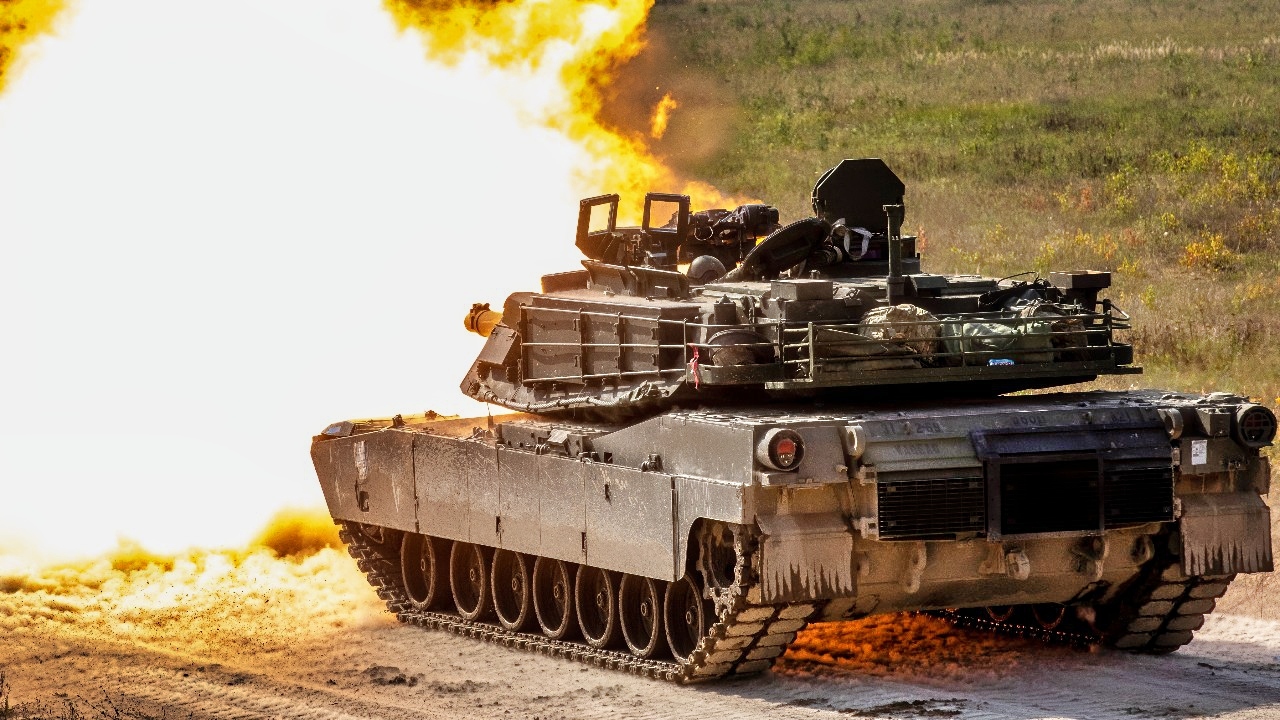
U.S. Army tank crews with Alpha “Animal” Company and Bravo “Barbarian” Company, 2nd Battalion, 69th Armor Regiment, 2nd Armored Brigade Combat Team, supporting 3rd Infantry Division, fire rounds from M1A2 Abrams tanks at Bemowo Piskie Training Area, Poland Sept. 12. The 3rd Infantry Division’s mission in Europe is to engage in multinational training and exercises across the continent, working alongside NATO allies and regional security partners to provide combat-credible forces to V Corps, America’s forward-deployed corps in Europe. (U.S. Army photo by Alex Soliday)
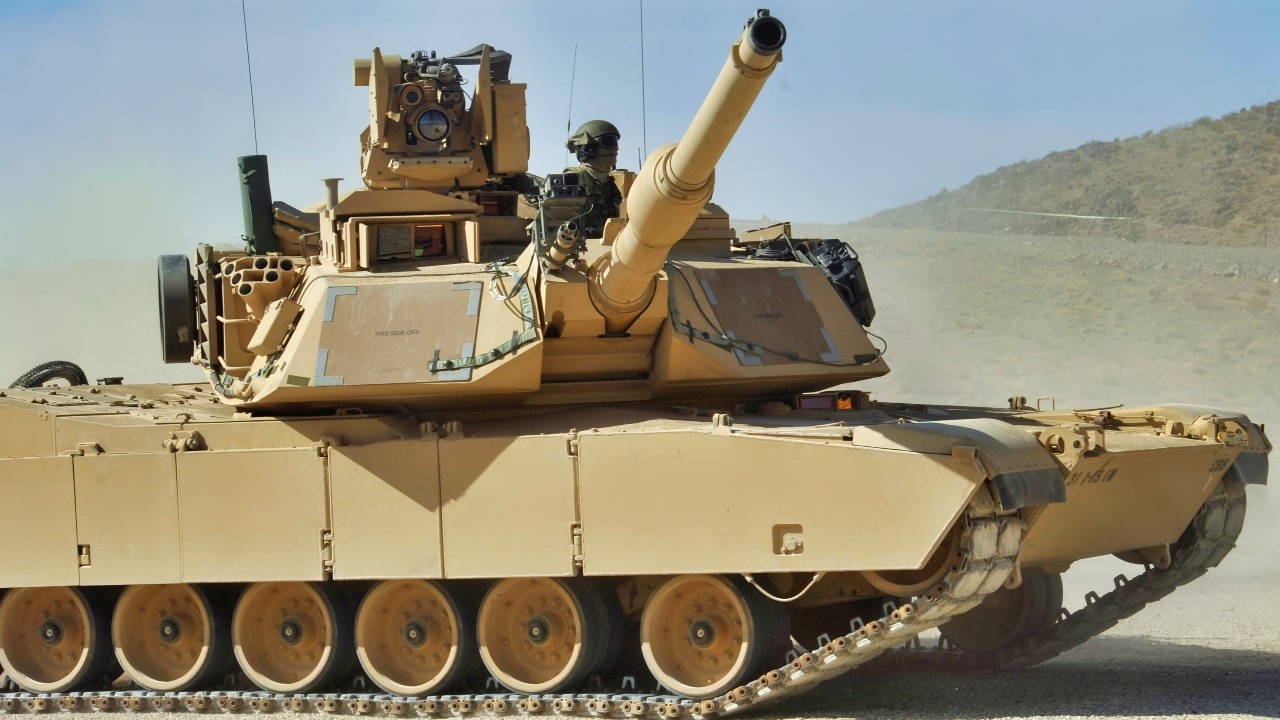
Australia is sending 49 of its retired M1A1 Abrams tanks to Ukraine, a move that bolsters Kyiv’s armored firepower but raises significant questions about survivability on the modern battlefield. While the donation is a welcome gesture, US officials have reportedly expressed private frustration, warning that Ukraine struggles to sustain the complex tanks and highlighting their vulnerability to cheap, top-attack FPV drones. The war in Ukraine has become a “drone war,” where even advanced main battle tanks are at constant risk. The effectiveness of these donated Abrams will ultimately depend on Ukraine’s ability to counter this pervasive threat.
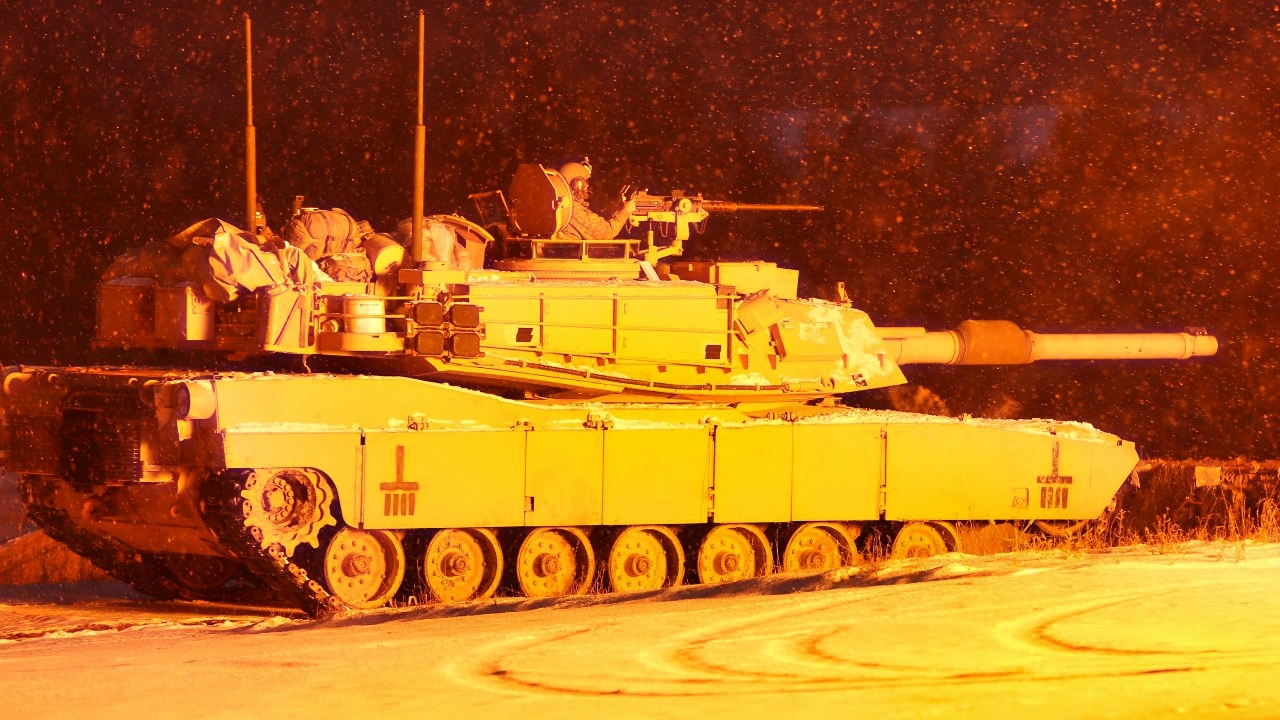
U.S. Soldiers assigned to 1st Squadron, 7th Cavalry Regiment, 1st Armored Brigade Combat Team, sit ready to engage targets in an M1 Abrams Main Battle Tank during Combined Resolve XV live fire exercise at Grafenwoehr Training Area, Germany, Feb. 9, 2021. Combined Resolve XV is a Headquarters Department of the Army directed Multinational exercise designed to build 1st Armored Brigade Combat Team, 1st Cavalry Divisions’s readiness and enhance interoperability with allied forces to fight and win against any adversary. (U.S. Army photo by Sgt. Randis Monroe)
The report cited the M1’s declining advantages in mobility, firepower, and protection against evolving threats. The ASB recommended developing fifth-generation armored vehicles. Meanwhile, the Army will continue to fund the M1 Abrams SEPv3 (System Enhancement Package Version 3) variant.
The M1A2 SEPv3 tank features advanced technologies, including enhanced infrared detection and a more powerful 120mm cannon. It will also include some of SEPv4’s features and have a modular design, making it easier to incorporate new technology into an older weapon system.
Once testing is complete, it will be named the M1A3 Abrams.
The Army has stated that the M1E3 Abrams will be the service’s first hybrid-electric combat vehicle.
The objective of this revolutionary change in basic armored vehicle propulsion technology will be to reduce the Army’s armored corps’ fuel consumption and extend the battlefield endurance of the entire M1 fleet.
Some Enhancements And Upgrades of the M1 Abrams SEPv3:
A weight reduction of approximately 10 tons from the current SEPv3.
A hybrid-electric diesel engine that will produce some 50 per cent improved fuel efficiency.
An unmanned turret similar to those in contemporary MBT designs is seen in both Europe and Russia. This could reduce crew size from 4 to 3 by incorporating an autoloader. The three crewmen will be seated in the hull.
An advanced set of armor protection developments designed to defeat drone-deployed munitions.
A command and control system that permits Integration with unmanned aerial vehicles (UAVs)
An AI-powered threat detection and fire control system.
The Army Science Board Said The Abrams Is Inadequate:
The Army Science Board, a sanctioned independent group of experts that advises the Secretary of the Army, was candid in its report. The ASB explained in detail why the planned SEPv4 variant is inadequate for future warfare.
The study, which took several years to complete, concluded that the Abrams tank would not be usable in operations after 2040 and recommended developing additional fifth-generation armored vehicles.
“Based on our findings, the M1 Abrams will not dominate the 2040 battlefield. All of the M1’s advantages in mobility, firepower, and protection are at risk.
“The M1A2 SEP V3&4 upgrades will improve effectiveness but will not restore dominance. Near transparency in all domains will significantly increase the lethality our forces will experience. China and Russia have studied our forces and doctrine and are fielding countermeasures.”

A U.S. Army M1A3 Abrams tank fires a round during a live fire training exercise at Smardan Training Area, Romania, April 19, 2017. The combined exercise had U.S. and Romanian armored crewmen taking commands from a Romanian commander to prove the cohesion between units in support of Operation Atlantic Resolve, a NATO mission involving the U.S. and its European Allies and partners in a combined effort to promote regional stability and deter aggression in Europe. (U.S. Army photo by Army Pvt. Nicholas Vidro)

Soldiers from 2nd Battalion, 70th Armor Regiment, 2nd Armored Brigade Combat Team, 1st Infantry Division, fire at a target while conducting the defensive position live fire portion of the Strong Europe Tank Challenge at the Grafenwoehr Training Area, Germany, on June 5.The Strong Europe Tank Challenge is an annual training event designed to give participating nations a dynamic, productive and fun environment in which to foster military partnerships, form Soldier-level relationships, and share tactics, techniques and procedures. The participating nations this year are Austria, France, Germany, Poland, Sweden, Ukraine, United Kingdom and the United States.
The ASB report added, “[W]e will continue to be outnumbered, which is exacerbated by a low MBT operational readiness rate and an aging fleet.”
“The Abrams Tank can no longer grow its capabilities without adding weight, and we need to reduce its logistical footprint,” said Major General Glenn Dean, Program Executive Officer for Ground Combat Systems.
“The war in Ukraine has highlighted a critical need for integrated protections for Soldiers, built from within instead of adding on.”
Key Reasons For The Cancellation Of The SEPv4:
The Abrams already suffered from excessive weight and mobility issues. The continued “bolt-on” upgrades for armor and drone protection made the M1A2 SEPv4 too heavy, creating logistics, bridge-crossing, and transport challenges.
The Abrams is already too heavy for most of Ukraine’s bridges, making transporting the tank overseas even more difficult.
Insufficient future dominance on the battlefield. The Army Science Board report indicated that the SEPv4 would not ensure battlefield dominance by 2040, as it didn’t adequately address improvements in enemy capabilities.
Lessons learned from Ukraine. The war in Ukraine highlighted the need for integrated, built-in protection against top-attack munitions and drones, rather than adding more weight to the existing, aging design.
The Army is shifting to M1E3. Instead of investing in a, at best, marginal upgrade (SEPv4), the Army decided to prioritize a lighter, more sustainable, and radically upgraded tank—the M1E3 Abrams, aiming for roughly 60 tons
The Newer Abrams Tanks Are Too Heavy:
The SEPv3, with all of the platform’s added components, increased the tank’s weight from 76 to 78 tons; the SEPv4 weighs even more, about 80 tons. There are just too many add-ons to make it feasible.
This increased weight will have a serious negative impact on the tank’s mobility and survivability – both of which were central considerations in the Army’s cancellation.
By comparison, the M1A1 Abrams that the United States sold to Ukraine weighed 63 tons. Those tanks are already too heavy for most of the bridges in Ukraine.
General Dynamics, which has built Abrams tanks for more than 40 years, developed another tank in the Abrams family called the “Abrams X.” Currently, however, there are no plans to produce it.
Still, some of the tank’s designs could eventually reach the M1 Abrams SEPv3/M1A3. This model is less armored, more mobile, and weighs 59 tons.
The Army is struggling to transport its troops to a modern war in the Indo-Pacific region. The Abrams was already a heavy tank, but the 80-ton SEPv4 is too heavy. The upgrades and additional protection systems require more weight to be bolted to the hull or turret.
The M10 Booker was supposed to be a lighter tank that would provide infantry units with a highly mobile armored support vehicle, but the final design was plagued by add-ons that made it much heavier than the stated requirements. It was too heavy for the C-130 and not air-droppable, which it was supposed to do.
Like the M1A2 SEPv4, it turned into a logistical nightmare for the Army.
The Army is looking to develop a 5th-generation tank; until then, the M1 Abrams SEPv3 remains “King of the Hill,” but its days are now numbered.
Steve Balestrieri is a National Security Columnist. He served as a US Army Special Forces NCO and Warrant Officer. In addition to writing on defense, he covers the NFL for PatsFans.com and is a member of the Pro Football Writers of America (PFWA). His work was regularly featured in many military publications.


Charlie Roscoe
March 25, 2026 at 10:52 pm
Add this upgrade ASAP…
A turret drone well containing Radar that can detect threats and launch Ukrainian Interceptor Drones to protect the Tank.