

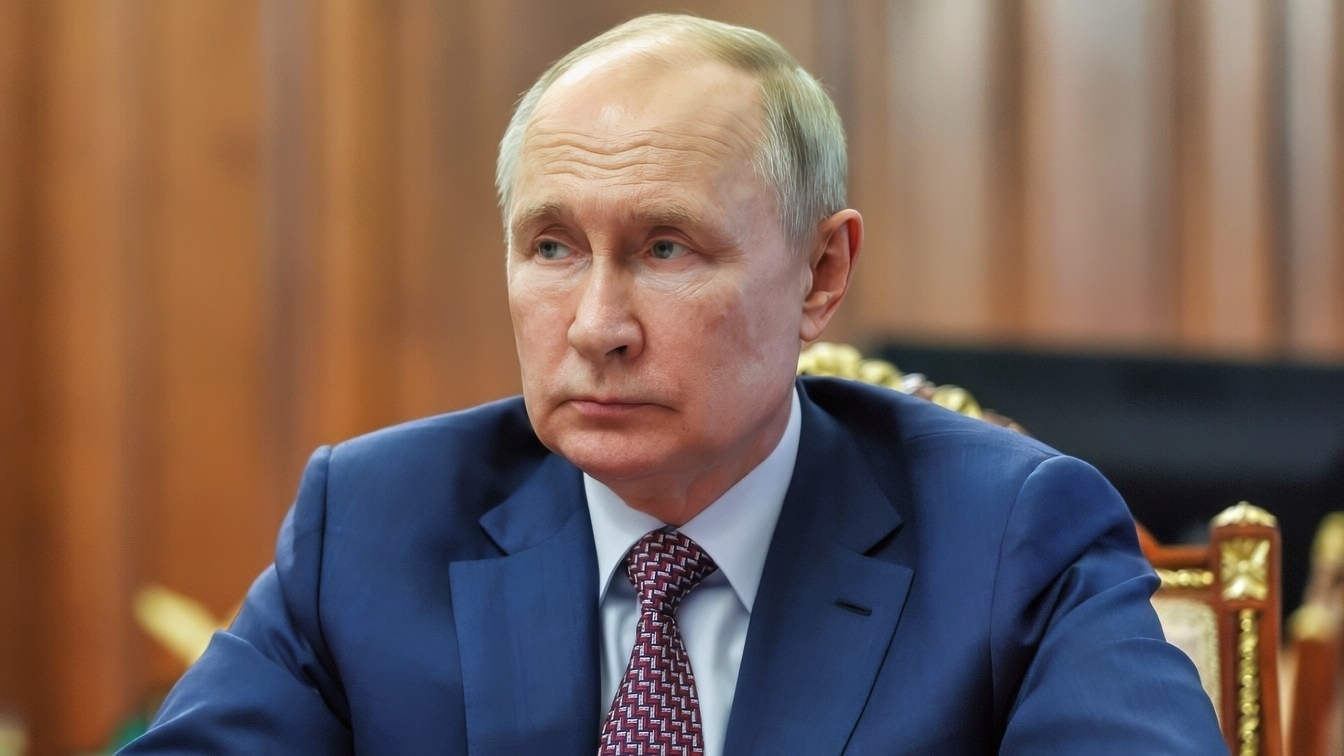
Since the Ukraine war began four years ago, Putin has issued dozens of explicit or implicit nuclear threats. Depending on the methodology used, some analysts estimate that Putin’s nuclear threats have exceeded fifty instances.
Naturally, the way the rest of the world receives Putin’s threats has changed.
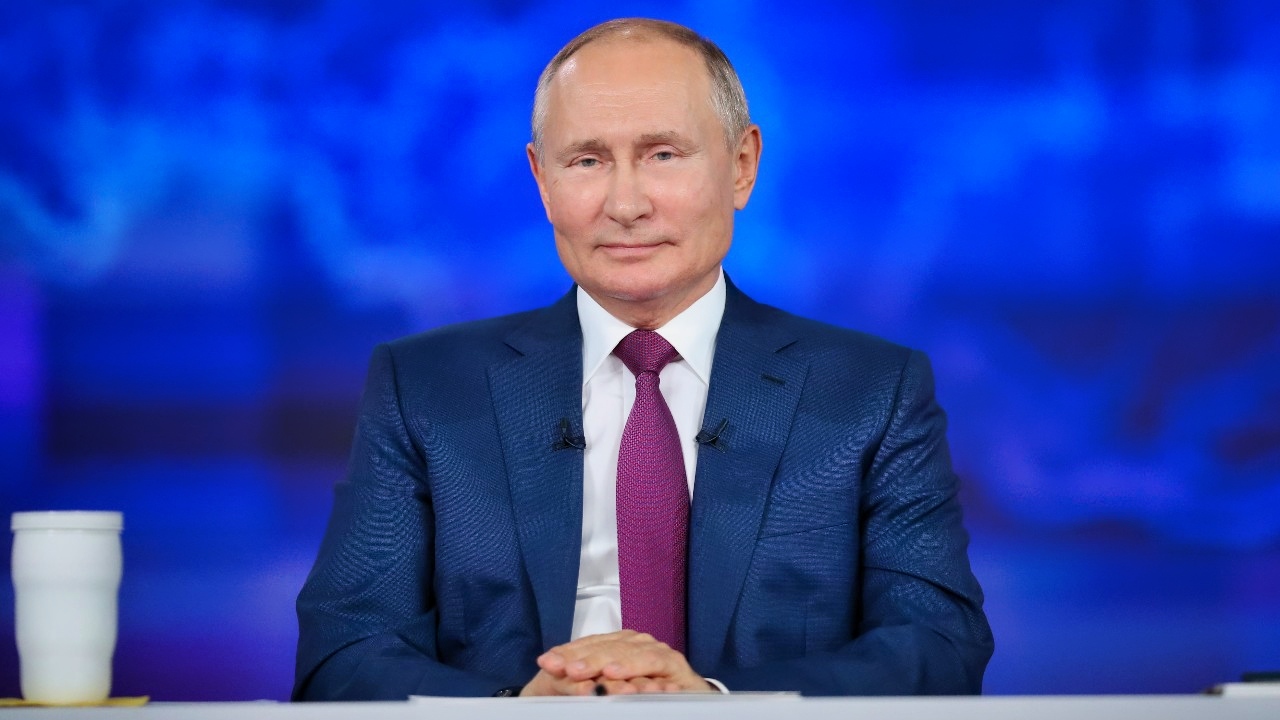
Vladimir Putin of Russia. Image Credit: Creative Commons.
Early in the war, every nuclear comment dominated headlines and shook markets.
Now, however, fifty instances later, a Putin nuclear threat barely moves either the news or markets; overuse has reduced the shock value.
But Russia still has the world’s largest nuclear arsenal, and meaningful incentive to use it, meaning the nuclear fatigue Putin’s rhetoric has inspired among the Western world may have created a dangerous kind of disregard.
Ukraine War Drama: History of Nuclear War Threats
In February 2022, Putin warned outside powers against interference in the newly initiated Ukraine War and placed strategic forces on heightened readiness. Again in September 2022, Putin warned that Russia would use all available means to defend its territory.
The trend continued. In February 2023, Russia suspended participation in New START, the last remaining major arms-control framework with the US. In May 2024, Russia conducted tactical nuclear exercises near Ukraine that were publicly linked to Western discussions of deeper involvement in the war.
More recently, Russia revised its nuclear doctrine, complete with lowered thresholds for potential use, while suggesting that attacks by non-nuclear states backed by nuclear powers could be treated as joint aggression. Over the years, a pattern has emerged in which the West escalates, Putin issues a nuclear warning, the West proceeds unhindered, providing aid, and Putin does not use nuclear weapons. Of course, this pattern has eroded Putin’s credibility, at least in terms of nuclear deployment.

Russian Mobile ICBM Nuclear Weapons. Image Credit: Creative Commons.
Tuning Out the Rhetoric
Over the course of the war, Western governments have repeatedly worried about providing military aid, i.e., HIMARS, Patriots, Abrams, ATACMS, F-16s, and Gripens. Each new donation was initially feared to be an escalation trigger—Putin’s red line. But each step happened—and never resulted in a nuclear response.
The market reaction speaks to the West’s growing apathy; in 2022, Putin’s nuclear comments moved oil, wheat, and gold. But in 2026, Putin’s comments often result in minimal market reactions. Clearly, repeated warnings conditioned audiences to tune out. Still, the threat remains credible.
Credible Threats
Putin may have over-relied on empty nuclear rhetoric. But Russia still holds the world’s largest nuclear arsenal, with an estimated stockpile of 5,580 warheads, 1,700 of which are strategically deployed. Russia also enjoys a complete nuclear triad. Land-based options include the RS-24 Yars and RS-28 Sarmat ICBMs.
At sea, the Borei-class SSBNs are loaded with Bulava missiles.
And from the air, Russia has both the Tu-160 and Tu-95 strategic bombers. So when Putin threatens a nuclear strike, he is threatening something he is fully equipped to execute.
With a fully operational second-strike capability, the question isn’t whether Russia can use nuclear weapons, but when Russia would decide to use nuclear weapons.
The Danger Zones
The assumption that Putin will never use his nuclear arsenal is a dangerous assumption. Western overconfidence, born of years of successful bluff-calling, could encourage behavior that finally prompts Putin to act. Or it could inspire the West to ignore a warning that, for once, is entirely real.
Another scenario in which the nuclear risk heightens is a conventional defeat. Russian doctrine, historically, has placed a greater reliance on nuclear weapons than Western doctrine.

TOS-1. Image Credit: Creative Commons.
And because Russia has struggled on conventional terms in Ukraine, and because Russia fundamentally cannot defeat NATO on conventional terms, the Russian nuclear arsenal offers a viable fallback option.
And of course, there’s always the risk of accidental escalation. As the war increasingly revolves around the use of long-range missiles, drones, and strikes deep into Russia, the possibility exists that attacks could intentionally or unintentionally threaten Russia’s nuclear infrastructure, which would increase instability.
Russia also possesses roughly 1,500–2,000 tactical nuclear weapons designed for battlefield use, operational shock, coercive signaling, etc. Weapons like the Iskander-M and Kalibr systems could be considered more politically usable than a full-blown strategic exchange, making tactical nukes a more likely option.
While the West understandably suffers from nuclear fatigue, it’s important to recognize that Putin’s nuclear capability is unique; his threats so far have been bluffs—but they are still backed with the world’s largest nuclear arsenal.
About the Author: Harrison Kass
Harrison Kass is a writer and attorney focused on national security, technology, and political culture. His work has appeared in City Journal, The Hill, Quillette, The Spectator, and The Cipher Brief. He holds a JD from the University of Oregon and a master’s in Global & Joint Program Studies from NYU. More at harrisonkass.com.


Dr. Hujjatullah M.H.B. Sahib
May 29, 2026 at 3:57 pm
Kass has typed off a highly objective write-up on Putin’s rather sober nuclear rhetorics that is relatively free of the usual Western propagandistic content. Still, despite rightly identifying the empty-threat pattern that has emerged and the lack of credibility that has set in as a consequence, Kess has misread it as lack of resolve on the part of Putin. One must remember here that Putin from the begining, like most previous Russian and Soviet leaders, has had a soft spot for the West and was from Yeltsin’s camp. Despite repeated and protracted betrayals by the West on Ukraine, Putin, thus, has been hesitant on nuclear use even after taking heavy casualties. This shows that he is a highly rational actor not given to hoodwinking his generals to have a grab at the nuclear trigger like Trump. But if the U.S. can overnight produce characters such as Biden and Trump to give an irrational geopolitical push, so could Russia down the line. So, the Doomsday clock needs to remain exactly where it is ; no one can guarantee that a nut may not emerge in Russia too as it has in both Israel and the USA !
bobb
May 29, 2026 at 8:50 pm
I predict that sometime, at a point very, very shortly in the days ahead, Russia will employ nuclear explosions to curtail the Ukrainian nazis and their backers.
That’s because Russia, with or without Putin, can never ever forget the nazis’ bold foray into kursk.
In August 2024, with active encouragement from western intelligence and participation of foreign mercenaries, the nazis swiftly penetrated into Russia’s kursk region with extreme confidence.
They quickly captured a large swathe of territory, including sudzha, with help of US-made Stryker vehicles and british-made challenger 2 tanks.
That was an exact repetition of the nazis swift bloody strike into USSR territory in 1941.
But in the end after inflicting much damage and destruction, the nazis were defeated.
The lesson learned here, is, that the nazis will try again, for a third time, if Russia fails to liquidate them now, using nuclear weapons.
Russia must employ nukes against the nazis, just like how the US employed nukes against Japan during the pacific war. To finish off the hated enemy.
Swamplaw Yankee
May 31, 2026 at 4:30 am
Wow. What a blather.
The Kremlim Muscovy Putin had a real soft spot for the US dollar. As soon as Epsteins shoulder rubbing buddy POTUS Obama capitulated in 2014 to PRC vassal Putin, Obama ignored the evident re-start of the 1000 year old Muscovy ethnic sex-slave trade in Ukrainian children.
Putin immediately had his ‘little green groomers’ trade “LOLITA” packages for military gear with local Muscovy human traffickers.
Putin had the LOLITA packages re-identified, renamed, + FREE expressed to very needy Russian language men who had large table tops suitable for children.
So, as of 2014 Putin allowed any Epstein flight to land at very obscure Muscovy airport with “special” guests aboard Epstein’s private jet. New stock of children from Ukraine’s hinterland was a Putin specialty.
In these non-Epstein days, times are tougher. The hub of 6 nuclear reactors in the middle of Ukraine is ready for detonation. Anarchist Muscovy live in the nuclear facility structures as well as in armour vehicles inside the grounds.
Any tank, artillery, UAV/drone anarchist Muscovy can destroy these 6 nuclear reactors anytime and at their own free will. No Muscovy General from the Kremlin is going to fly down there to arrest or clean out the anarchist Muscovy rabble.
Blowing this complex is easy. Watch the Caolan Robertson pod cast as to how fast the nuclear radioactivity will destroy Europe.
The above op-ed is interesting. But, it will not, can not, give the reader a clue as to the real nuclear threat bubbling close to a blow onto the population of Europe and Israel.