

Summary and Key Points: While Xi Jinping publicly calls for peace between the U.S. and Iran, American intelligence says China is quietly arming Tehran — reportedly funneling shoulder-fired anti-aircraft missiles through third countries to hide its hand.
-Analysts see it as proof that the “CRINK” axis of China, Russia, Iran, and North Korea is tightening against the West.
-China needs Iran’s oil and the Strait of Hormuz, and it’s studying the war closely — with Taiwan in mind.
China Might Be Fueling the Iran War

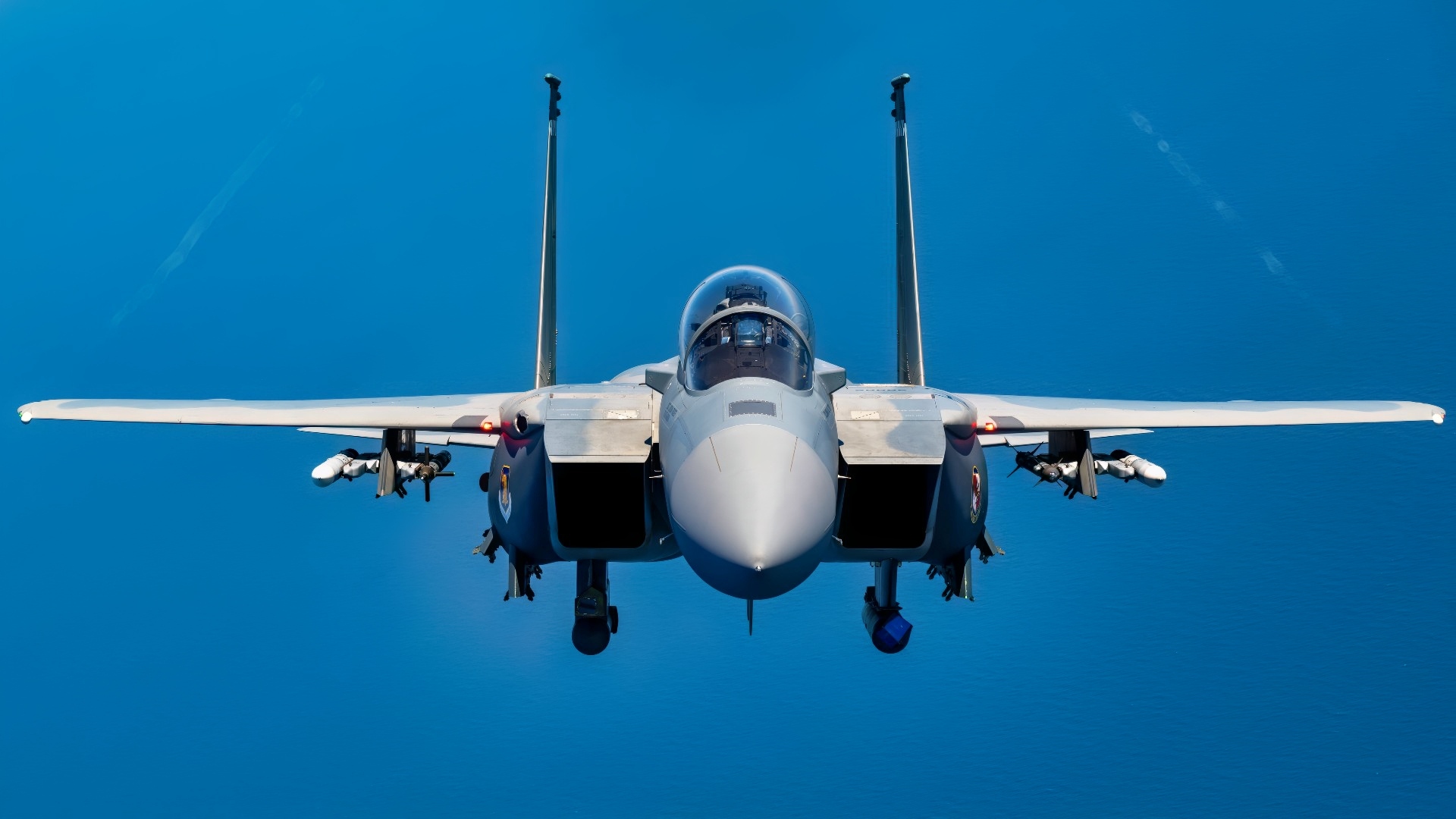
Lt. COl. Stephen ‘Steagle’ Mindek, 104th Fighter Wing pilot, takes off in an F-15C Eagle for Maj. John “Space’ Stout’s fini-flight, January 10, 2025, at Barnes Air National Guard Base, Westfield, Massachusetts. Following the fini-flight, Maj. Stout was greeted with cheers from his fellow Airmen, friends, and family. Maj. Stout’s final ride in the F-15C Eagle resulted in over 1100 hours flown in the legendary aircraft. (U.S. Air National Guard photo by Jay Hewitt)

A 96th Test Wing F-15E Strike Eagle flies during a test mission May 22, 2025 over Eglin Air Force Base, Florida. The 96 TW and the 53rd Wing teamed up to test AGR-20F Advanced Precision Kill Weapon System II laser-guided rockets on the F-15E in May in an effort to get the capability to the warfighter as quickly as possible. (U.S. Air Force photo by Staff Sgt. Thomas Barley)

An F-15 Eagle fighter jet launches from the runway during RED FLAG-Alaska 11-2 July 15, 2011, Eielson Air Force Base, Alaska. The F-15 Eagle forms part of the Japan Air Self Defense Force fighter-interceptor aircraft inventory used to engage hostile aircraft. (U.S. Air Force photo by/Staff Sgt. Miguel Lara)
It seems that whenever there is a geopolitical development involving the “CRINK axis” (China, Russia, Iran, and North Korea), defense analysts wonder whether this group has emerged as the one critical alliance that will be destructive to the global order in the coming years.
For example, China seems to have lurked behind Iran during the ceasefire following Operation Epic Fury. Beijing denies that it is supplying Iran with weaponry or dual-use technology, but there are reports that Xi Jinping’s arms industry is giving Tehran certain air defense systems to take out American warplanes.
U.S. intelligence reports that China has sent shoulder-fired MANPAD anti-aircraft systems to Iran. Based on those facts, China’s weaponry may have been used to shoot down an F-15E Strike Eagle during the war.
This Does Not Look Like the Chinese Are Praying for Peace
In addition to the MANPADs, China may have also sent “chemicals, fuel, and components” used in warfighting to Tehran. Meanwhile, Xi Jinping has publicly said that he supports a robust ceasefire and a path to peace between the United States and Iran.
China still sees Iran as an ally that can suck the life out of the Americans as Washington tries to create a defense strategy for the 21st century that can outlast the influence of the CRINK axis.

A F-15 Strike Eagle, assigned to the 4th Fighter Wing, approaches a KC-135 Stratotanker, assigned to the 6th Air Refueling Wing, for refueling over the southeastern United States, Aug. 29, 2024. A multi-mission avionics system sets the F-15 apart from other fighter aircraft. It includes a head-up display, advanced radar, inertial navigation system, flight instruments, ultrahigh frequency communications, tactical navigation system and instrument landing system. (U.S. Air Force photo by Staff Sgt. Lauren Cobin)
China may be helping Iran re-arm during the ceasefire. The Iranians are working hard to replace the number of ballistic missiles and one-way attack drones that they lost to the United States’ shock and awe bombing campaign during Operation Epic Fury. China could be working in the background to help the Iranians resupply components that could be used in drone or missile warfare.
Iran and China Are Becoming Closer Friends
While no other exports of weapons from China are likely forthcoming in substantial numbers, Tehran must be happy that Beijing appears to support it during the war against the United States.
China is, of course, using ingenious methods to ensure Iran receives the MANPADs by relying on third-party countries to ship the anti-aircraft systems. This makes weapons shipments more difficult to track and gives the Chinese plausible deniability that they are involved with arms exports to Iran.
To be sure, a small shipment of shoulder-fired missiles will not be decisive should the fighting start again between Iran and the United States. But it shows that the CRINK axis is as strong as ever.
China’s Global Energy Strategy
China looks at Iran as an important supplier of oil and natural gas. This is important because the crisis in the Strait of Hormuz has removed about a billion barrels of oil from the global energy market. China needs Iran to control the Strait to ensure it can receive energy products from the Middle East.
A Truly Global Chinese Foreign Policy
Beijing also wants to take a more muscular approach to foreign affairs. While Taiwan is its main international security concern, China still surveys the global scene and looks for ways it can shape events. Sending small amounts of weapons to a CRINK ally can help the Chinese gain more friends and partners to counter the West.
“If the Chinese government did allow the shipment of missiles, it would be a significant escalation and an indication that at least some of China’s leaders are working actively to bring about an American military defeat in a war that has engulfed the Middle East,” according to the New York Times.
Lessons Learned from the U.S.-Iran War
China is also monitoring the number of missiles and defensive interceptors the United States has in its inventory. The Americans are concerned that their stock of Tomahawk cruise missiles and Patriot and THAAD air defenders is dwindling quickly. These are expensive and time-consuming to produce. It may take years for the United States to replace them.
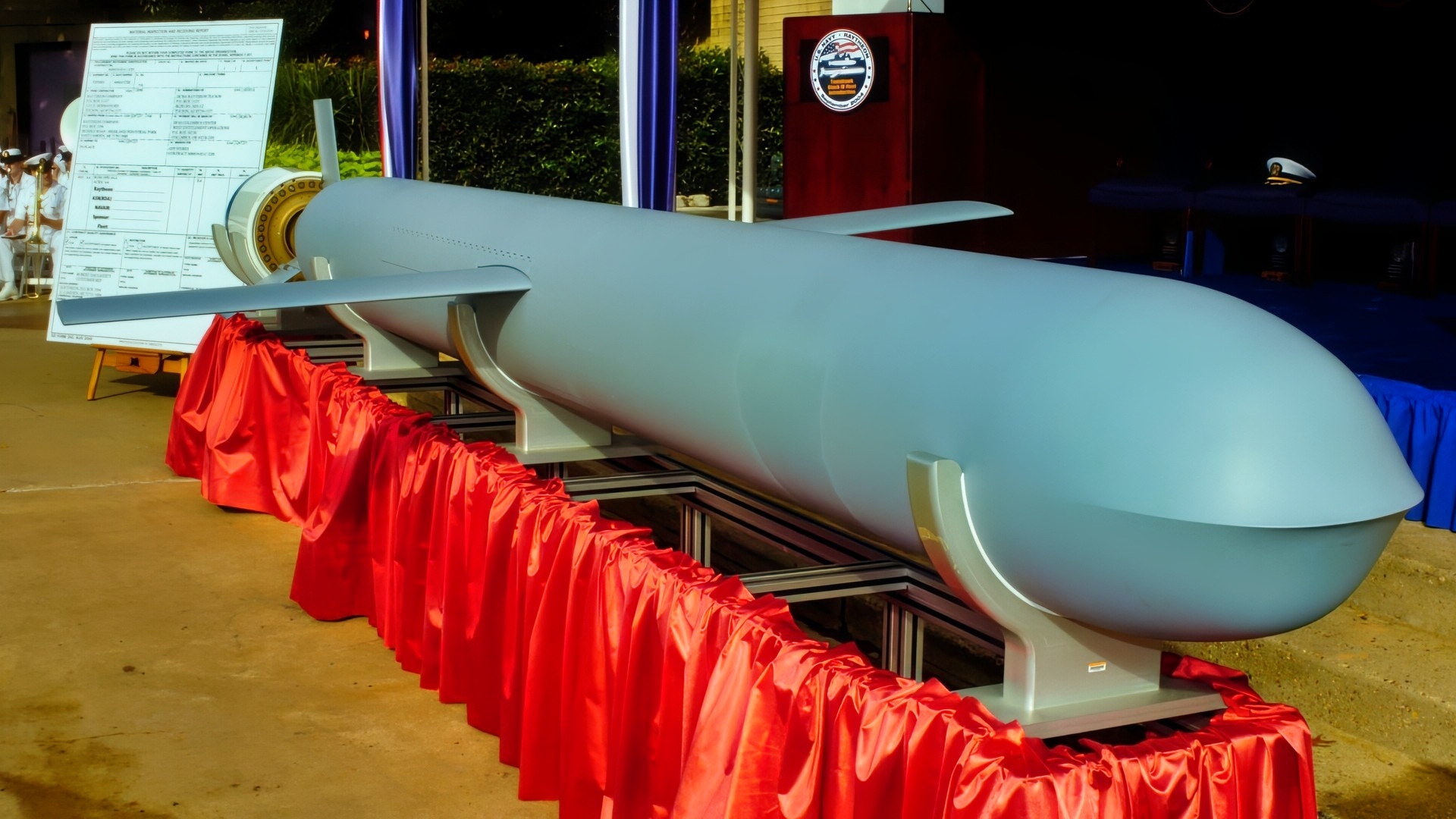
Tomahawk Block IV Missile. Image Credit: Creative Commons.

Tomahawk Launch. Image Credit: Creative Commons.
Xi Jinping’s generals are likely briefing him about the number of U.S. airplane losses during Operation Epic Fury. Forty-two aircraft have been taken out of action by Iranian efforts – many of these were destroyed on the ground, including several tankers and an AWACS early warning aircraft.
China Is Not Scared of the Kinetic Missile Fight
China continues to look for ways to win what I call the Kinetic Missile Fight.
Intelligence gleaned from the American-Iranian war can provide new insights into the strengths and weaknesses of the U.S. military. China has also noted that a decentralized, autonomous “Mosiac” network of air defenses, buried underground or in caves, makes them difficult to remove with precision-guided munitions.
Don’t expect China to export any major end items to Iran, such as new warplanes or drones. The delivery of MANPADs is more a way for China to test the waters and see whether anyone is paying attention to its activities.
The People’s Republic is looking for ways to increase the influence and power of the CRINK alliance. This is what Xi wants.
It’s a new world order that the Chinese want to lead, and helping partners with even the most minor levels of defense exports is a way that Chinese foreign policy can graduate from simply emphasizing regional homeland security to a global strategy of influence and power.
About the Author: Brent M. Eastwood, PhD
Author of now over 3,500 articles on defense issues, Brent M. Eastwood, PhD, is the author of Don’t Turn Your Back On the World: A Conservative Foreign Policy and Humans, Machines, and Data: Future Trends in Warfare, plus two other books. Brent was the founder and CEO of a tech firm that predicted world events using artificial intelligence. He served as a legislative fellow for US Senator Tim Scott and advised the senator on defense and foreign policy issues. He has taught at American University, George Washington University, and George Mason University. Brent is a former US Army Infantry officer. He can be followed on X @BMEastwood.


telangpu chuanpu
May 29, 2026 at 3:25 pm
The claim that china is now supplying missiles to Iran is just pure conjecture, or calculated guess. Grabbed out of empty air.
NYT is just as bad as CNN, when it comes to making claims about china. China has done this, done that, is now busily furiously doing a lot, and planning to do even more, according to these people.
Xi jinping has helped NYT and CNN, in their endeavours, absolutely no doubt about this, with his grand stupidity and great globalism dream.
But people like NYT and CNN have always and always gotten it all wrong.
They feed on false info carefully doled out by intelligence officials from warlike agencies such as the CIA, ASIO, and DIA and associated parties.
What is most surprising is that the Chinese foreign ministry hasn’t singled out this timeless outrage or insult from those warlike parties.
Iran has been making Manpads long before trump attacked Iran, and vital components are sourced from everywhere, not just china.
NYT & CNN and others, including BBC, guardian and Reuters are always targeting china and trying to cruxify it over Taiwan, but their aim will never succeed.
That’s because china is full of very brainy people, the stupid xi jinping notwithstanding.
Get on with the FOBS.
Anthony
May 30, 2026 at 2:00 am
Good for China and its military industry. Their weapons first took down French fighter jets, and now American ones. They couldn’t buy this kind of publicity even if they tried. More buyers are sure to come!
God's Dead
May 30, 2026 at 10:17 am
The author sounds like a brat who thinks anything the USA does is righteous, and anything Chinese is “evil”. Typical Conservative propaganda and rhetoric in this failed state and dying empire. Too bad the US will be destroyed from within, and China will only have to show up and help whatever is left of the MAGA movement/destruction of an empire