

On November 12, U.S. President Donald Trump declared that the United States no longer needs a deal with Iran and instructed Vice President JD Vance to abandon his diplomatic efforts with Iran and instead focus his time and energy on tackling corruption in Democratic-run states.
The president suggested that the administration may be preparing to maintain its economic sanctions and naval blockade against Iran indefinitely rather than pursuing a deal or even new military strikes.
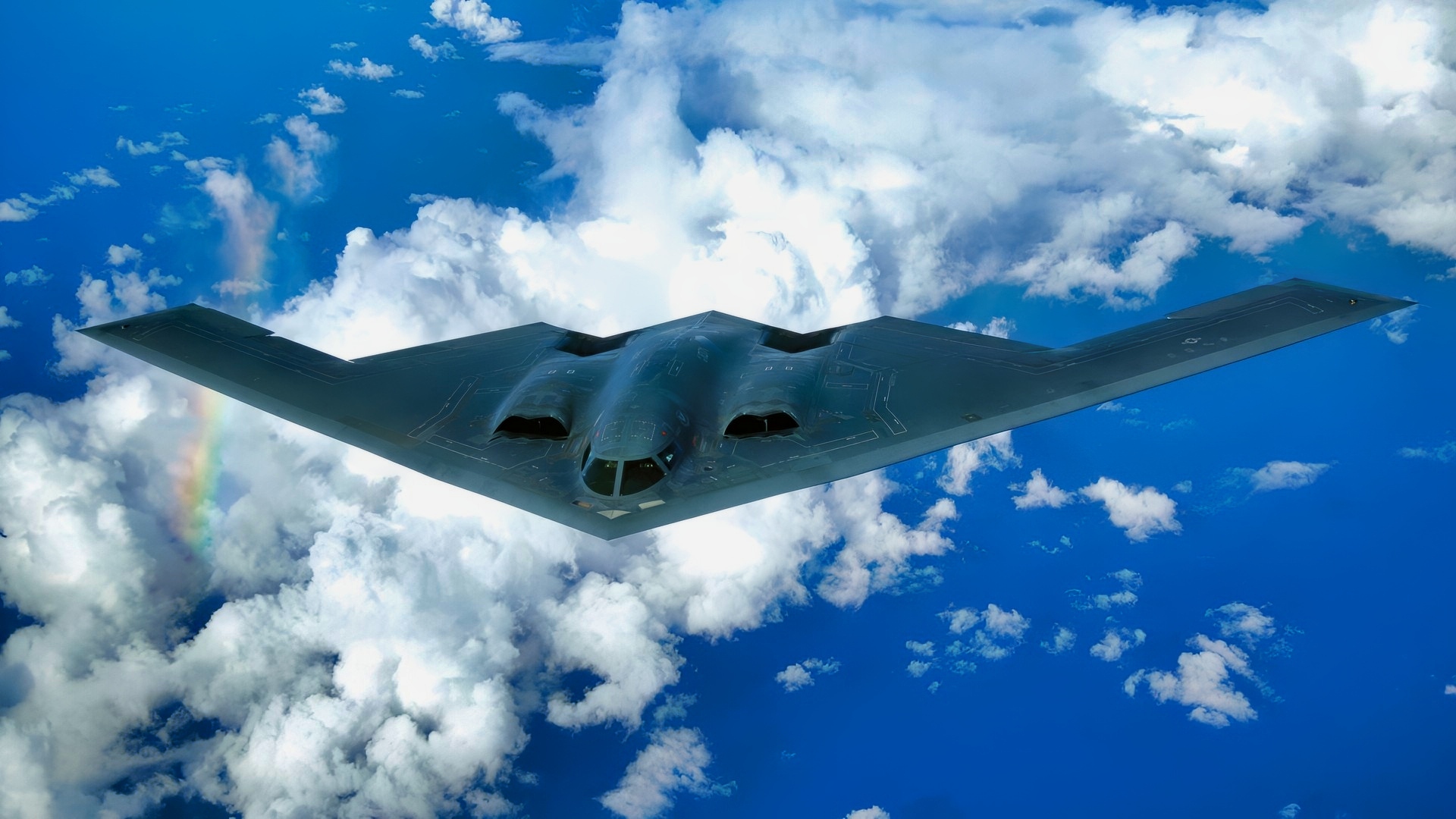
A B-2 Spirit soars after a refueling mission over the Pacific Ocean on Tuesday, May 30, 2006. The B-2, from the 509th Bomb Wing at Whiteman Air Force Base, Mo., is part of a continuous bomber presence in the Asia-Pacific region. (U.S. Air Force photo/Staff Sgt. Bennie J. Davis III)
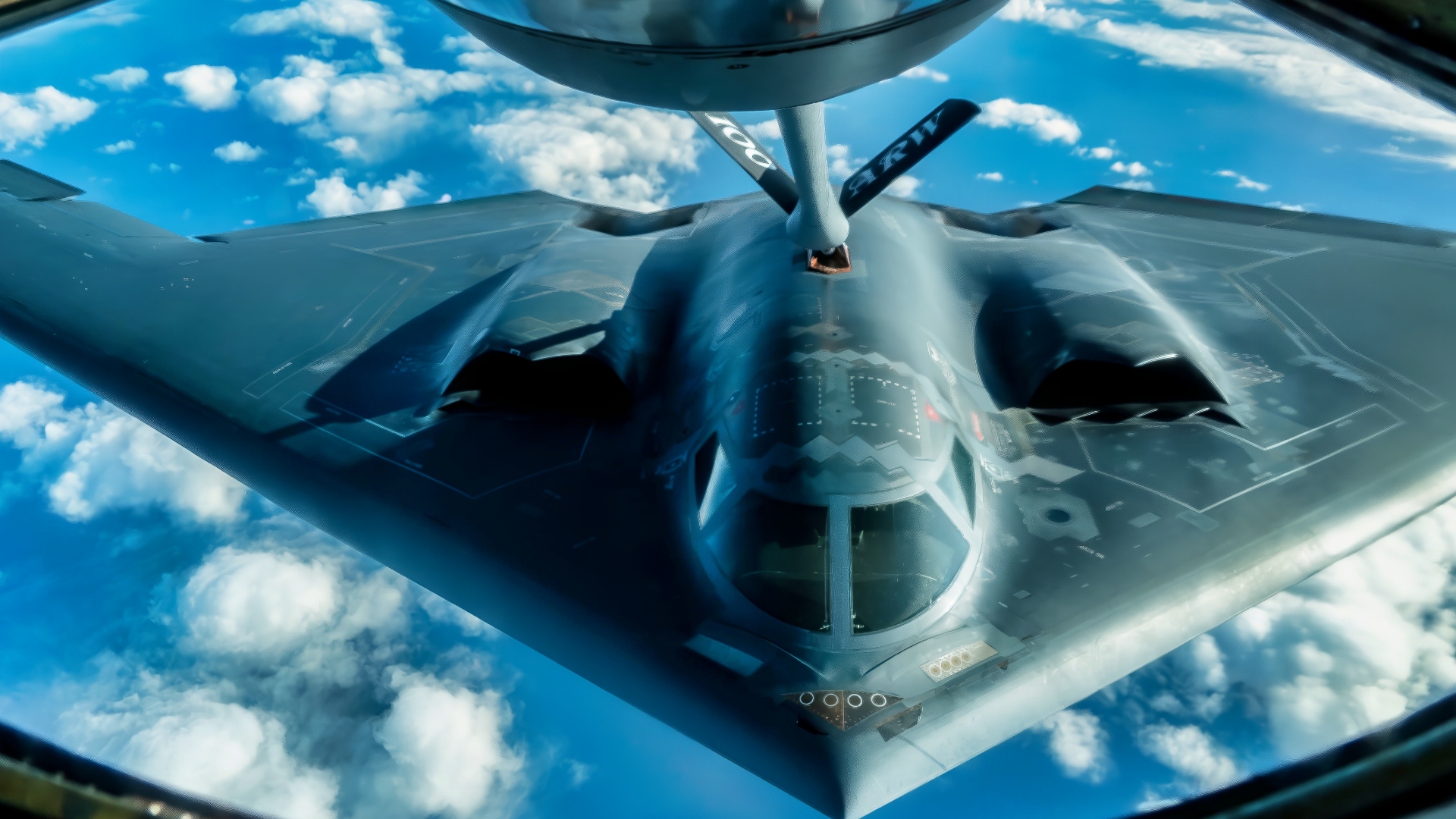
A U.S. Air Force B-2 Spirit assigned to the 509th Bomb Wing from Whiteman Air Force Base, Missouri, receives fuel from a 100th Air Refueling Wing KC-135 Stratotanker during Global Thunder 20, Oct. 28, 2019. Global Thunder is an annual command and control exercise that provides training opportunities for all of U.S. Strategic Command’s mission areas, tests joint and field training operations, and has a specific focus on nuclear readiness. (U.S. Air Force photo by Staff Sgt. Trevor T. McBride)
“I have asked Vice President Vance to focus his complete and total attention on the Massive Corruption and Crime taking place in Democrat run Cities and States throughout the U.S.” Trump wrote on Truth Social. “The Blue States, such as Minnesota, California, Illinois, and many more, are all poorly run, corrupt disasters.”
He went on to explicitly state that “We don’t need a deal with Iran.”
“Those days have long since passed. We’ve got their money, Hundreds of Billions of Dollars, and we’ve got their Strait!” he continued.
The comments come as the U.S. builds on its naval blockade with new land-based restrictions on trade with Iran, but as the Islamic Revolutionary Guard Corps continues strikes on commercial vessels moving through the Strait of Hormuz.
And while the White House insists that economic pressure is achieving its objectives, many observers and analysts are still questioning whether the White House’s logic is truly sound.
Does America really not need a deal with Iran?
Why Some Believe A Deal Is Necessary
On Friday, November 13, the Bloomberg editorial board published a piece arguing that, while American military operations have significantly weakened Iran, the United States has still not resolved the fundamental problems that prompted Trump to begin the war in February.
The most important issue, the piece notes, is Iran’s nuclear program.
Before the U.S. and Israeli strikes in June 2025, the International Atomic Energy Agency assessed that Iran possessed approximately 440.9 kilograms of uranium enriched to 60% — approaching weapons-grade material.
The exact amount that has survived the strikes is still unclear.
It’s also entirely possible that Iran is unaware precisely how much is left, or indeed where it is.
And without new inspections, Washington has practically no way of independently verifying the status of Iran’s remaining nuclear material.

A B-2 Spirit assigned to the 419th Flight Test Squadron, conducts flight tests above Rogers Dry Lake on Edwards Air Force Base, California, August 3, 2023. (Air Force photo by Giancarlo Casem)
Any eventual settlement with Iran, Bloomberg and others argue, must include access for international inspectors and restrictions on enrichment.
In fact, that’s precisely what President Trump and his administration want, with the administration already insisting that Iran either dilute its highly enriched uranium or move it to another country.
Then there’s the matter of how long the United States can realistically maintain its blockade. In a separate September Bloomberg piece, defense analyst Becca Wasser of the Center for a New American Security and others noted that the American naval deployments in the region had already cost more than $7.1 billion in ship operating expenses alone.
The operation also requires warships, personnel, and other military resources to be diverted away from other commitments.
Continuing that blockade indefinitely would be expensive and impact American preparedness elsewhere.
The Argument Against A Deal
The Trump administration, however, believes that its economic sanctions campaign and blockade are working well enough that there is little reason to offer concessions to Tehran while its economy continues to deteriorate.
Speaking after meetings with G7 allies in Paris on November 10, U.S. Secretary of State Marco Rubio explained why Washington sees maintaining pressure as a viable and realistic alternative to military strikes.
“We don’t need to conduct military strikes if we’re achieving the same objective through economic means and economic pressure. That’s not stalemate,” he said. “Never has Iran ever faced inability to sell energy in the global market like they are today.”
Rubio’s argument, and indeed the Trump administration’s argument more broadly, is that the Iranian economy will only continue to deteriorate.
Iran’s floating offshore oil reserves have been sold, and analysts expect that revenues from sales of its remaining reserves will end by December at the latest.
And with trade restricted across its land borders, it’s only a matter of time before its export revenues disappear, thereby potentially forcing the regime to reconsider its position without any further American casualties or escalation.
There are also concerns that entering negotiations now would require Washington to make concessions without securing meaningful restrictions on Iran’s nuclear activities, effectively making the strikes against Iran purposeless.
After all, President Trump himself said that the Iranian strikes were conducted with the express purpose of ensuring that Iran never obtains a nuclear weapon.
And Iran’s own officials have said that they are unwilling to compromise on critical issues. Over time, that position may well change, but given the theocratic nature of the regime in Tehran, it still seems unlikely that hard-liners in government will be willing to make that deal.
The Trump administration is betting that public pressure and a failing economy will be enough to force the regime to change its mind — or indeed encourage the Iranian people to overthrow it.
About the Author: Jack Buckby
Jack Buckby is a British researcher and analyst specializing in defense and national security, based in New York. His work focuses on military capability, procurement, and strategic competition, and he produces and edits analysis for policy and defense audiences. He brings extensive editorial experience, with a career output spanning over 1,000 articles at National Security Journal, and has previously authored books and papers on extremism and deradicalization.


