

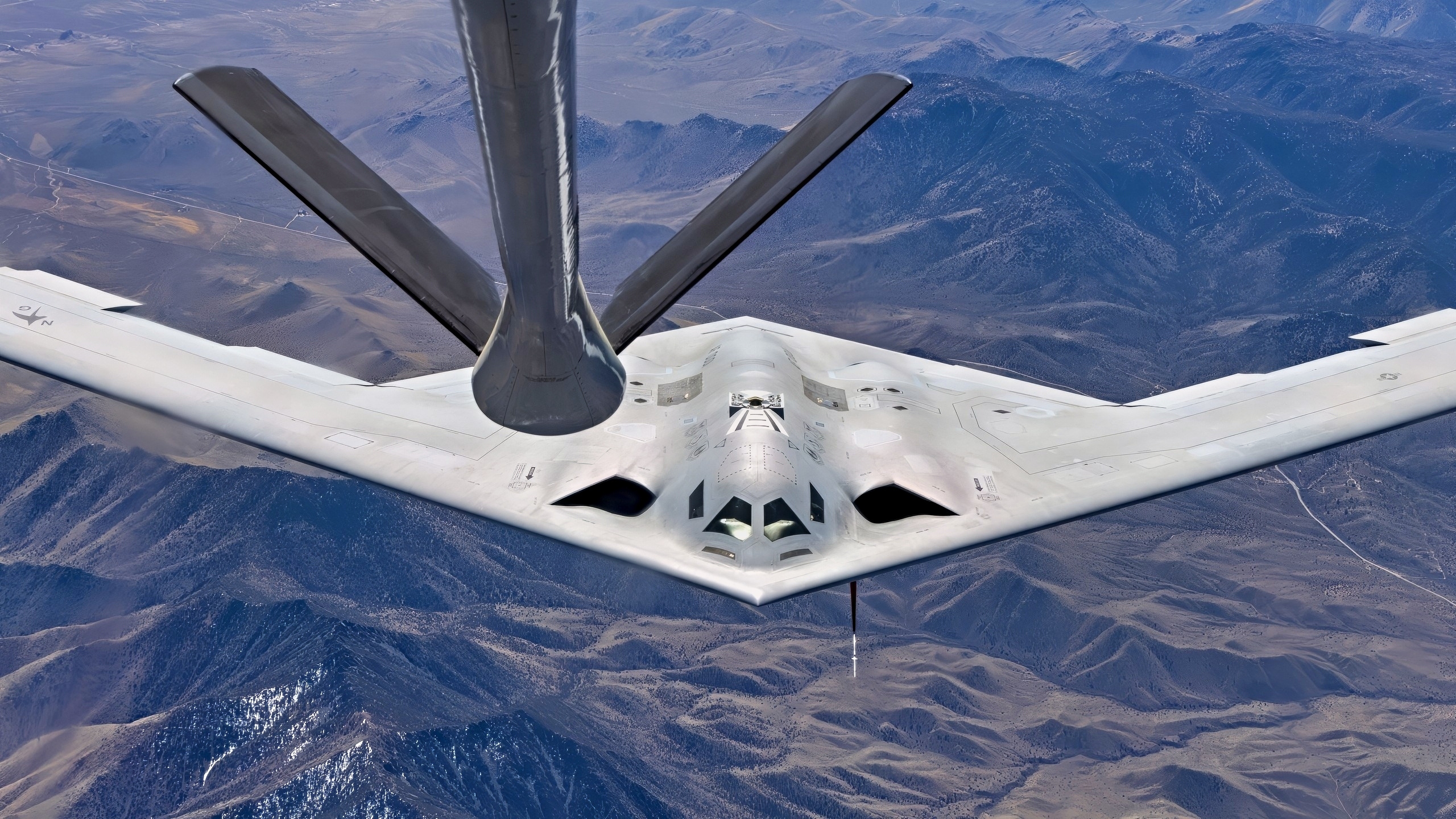
Northrop Grumman is increasing production capacity for the B-21 Raider, hoping that the Air Force ultimately decides to buy more than the original projection of 100 aircraft. For years, 100 B-21s have been treated as the procurement benchmark, but now everyone from the Pentagon to Congress to Northrop Grumman is openly discussing larger procurement numbers. The prospective increase in B-21s reflects growing anxiety over the strategic picture in the Indo-Pacific, which may require a larger number of nuclear-capable stealth bombers.
Importance of the B-21
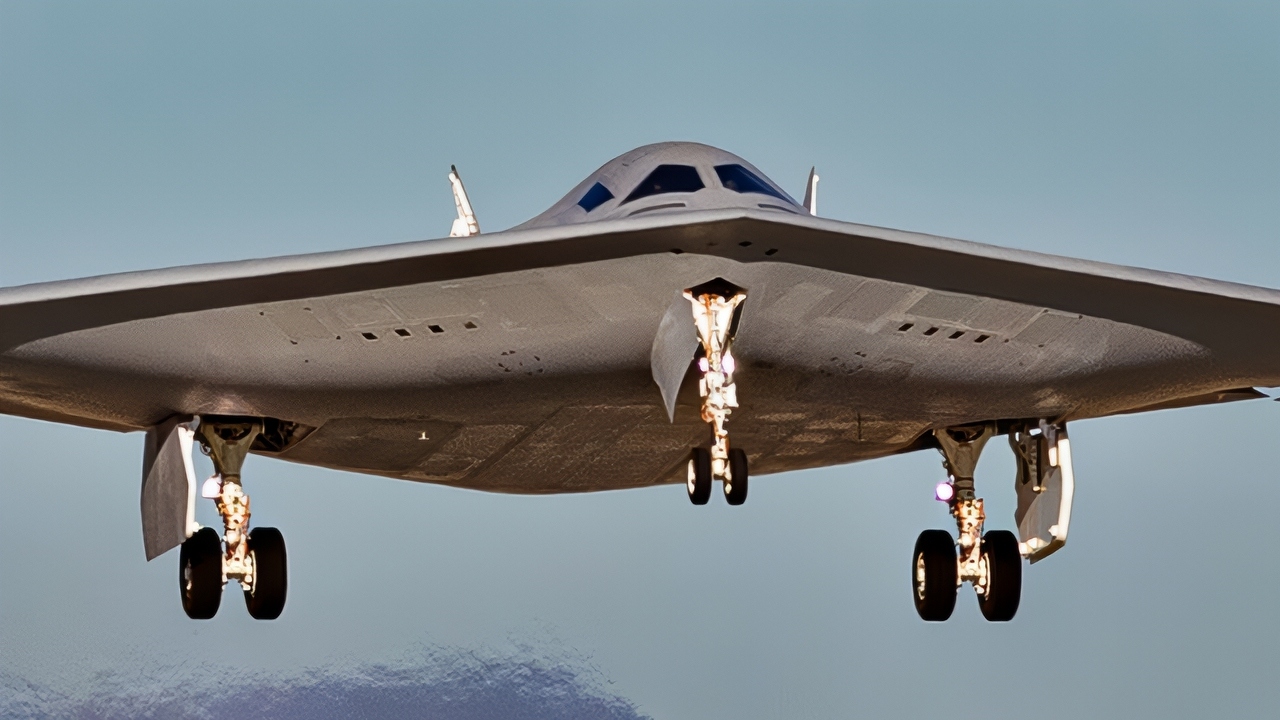
A second B-21 Raider test aircraft takes off, Sept. 11, from Palmdale, Calif., to join the Air Force’s flight test campaign at Edwards Air Force Base, Calif. The addition of the second test aircraft expands mission systems and weapons integration testing, advancing the program toward operational readiness. (Courtesy photo)

U.S. Air Force Airmen with the 912th Aircraft Maintenance Squadron prepare to recover the second B-21 Raider to arrive for test and evaluation at Edwards AFB, Calif., Sept. 11, 2025. The arrival of a second test aircraft provides maintainers valuable hands-on experience with tools, data and processes that will support future operational squadrons. (U.S Air Force photo by Kyle Brasier)
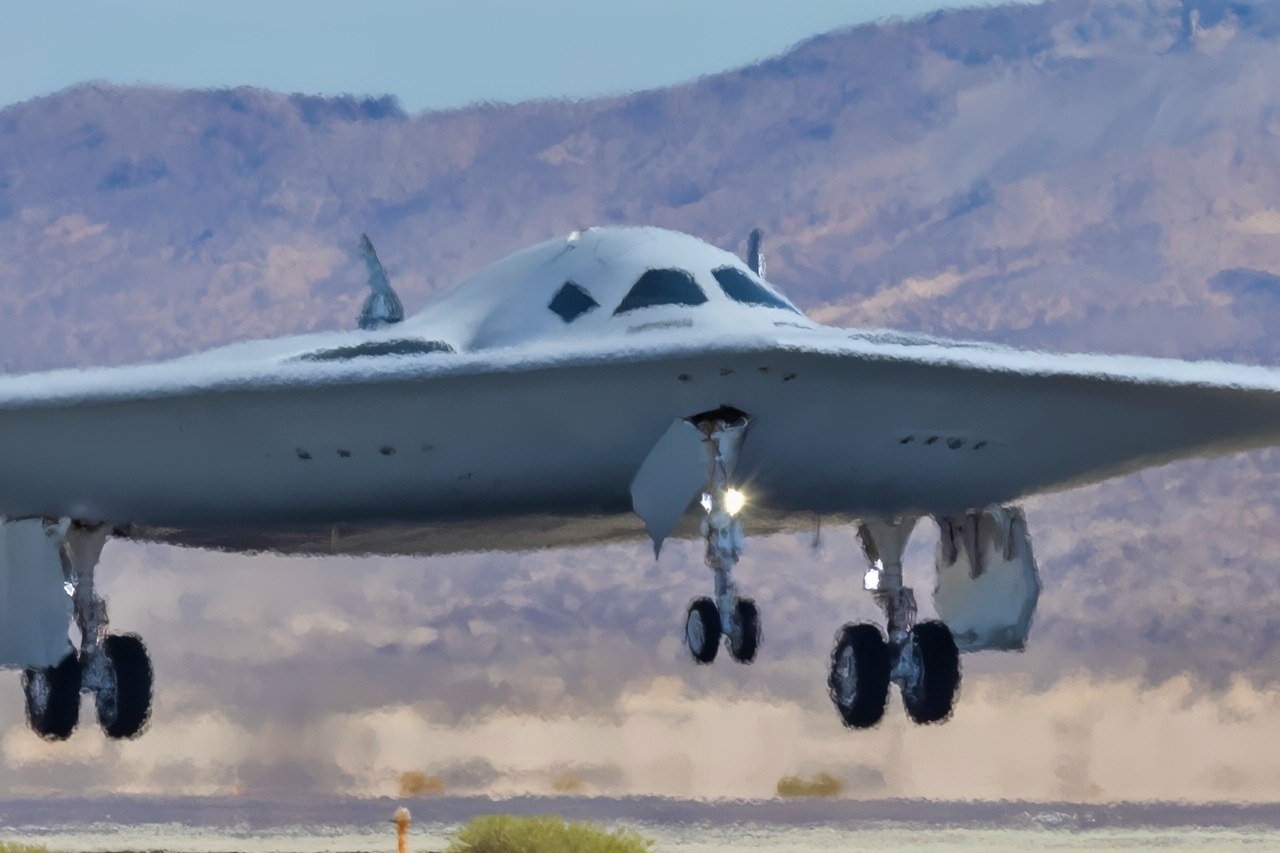
A B-21 Raider test aircraft lands at Edwards Air Force Base, Calif., during ongoing developmental flight testing, Sept. 11, 2025. The B-21 will be the backbone of the bomber fleet; it will incrementally replace the B-1 Lancer and B-2 Spirit bombers. (U.S Air Force photo by Todd Schannuth)

A second B-21 Raider, the nation’s sixth-generation stealth bomber, joins flight testing at Edwards Air Force Base, Calif., Sept. 11, 2025. The program is a cornerstone of the Department of the Air Force’s nuclear modernization strategy, designed to deliver both conventional and nuclear payloads. (Courtesy photo)

A second B-21 Raider, the world’s sixth-generation stealth bomber, test aircraft arrives at Edwards Air Force Base, Calif., Sept. 11, 2025. The addition of the second test aircraft expands mission systems and weapons integration testing, advancing the program toward operational readiness. (Courtesy photo)
The B-21 was designed as America’s next-generation stealth bomber, a replacement for both the B-1B Lancer and, more directly, the B-2 Spirit.
Key capabilities of the B-21 are expected to include nuclear and conventional strike, penetrating missions, long-range operations, advanced networking and data sharing, and an open-architecture design.
These capabilities are expected to be vital to operations in the Indo-Pacific, as tactical fighters have relatively limited payload and range. The B-21, by comparison, will have an enormous payload and intercontinental range, and, of course, stealth capability.
The B-21 could potentially strike targets that cruise missiles can’t reach, or that naval aviation may struggle to access for either lack of range or stealth.
And as forward airbases—fixed and easy to find—are expected to be vulnerable, the B-21 may provide a more enduring asset.
100 or More
The long-standing goal of the B-21 program was to procure 100 units. But that number was established in 2015.
Things have changed. Russia invaded Ukraine. And notably, China’s military capability has improved markedly while state rhetoric over territorial claims has intensified.
Now the House Armed Services Committee is explicitly questioning whether 100 B-21s are sufficient for National Defense Strategy requirements. The force structure assumptions built in 2015 may no longer reflect the realities of 2026.
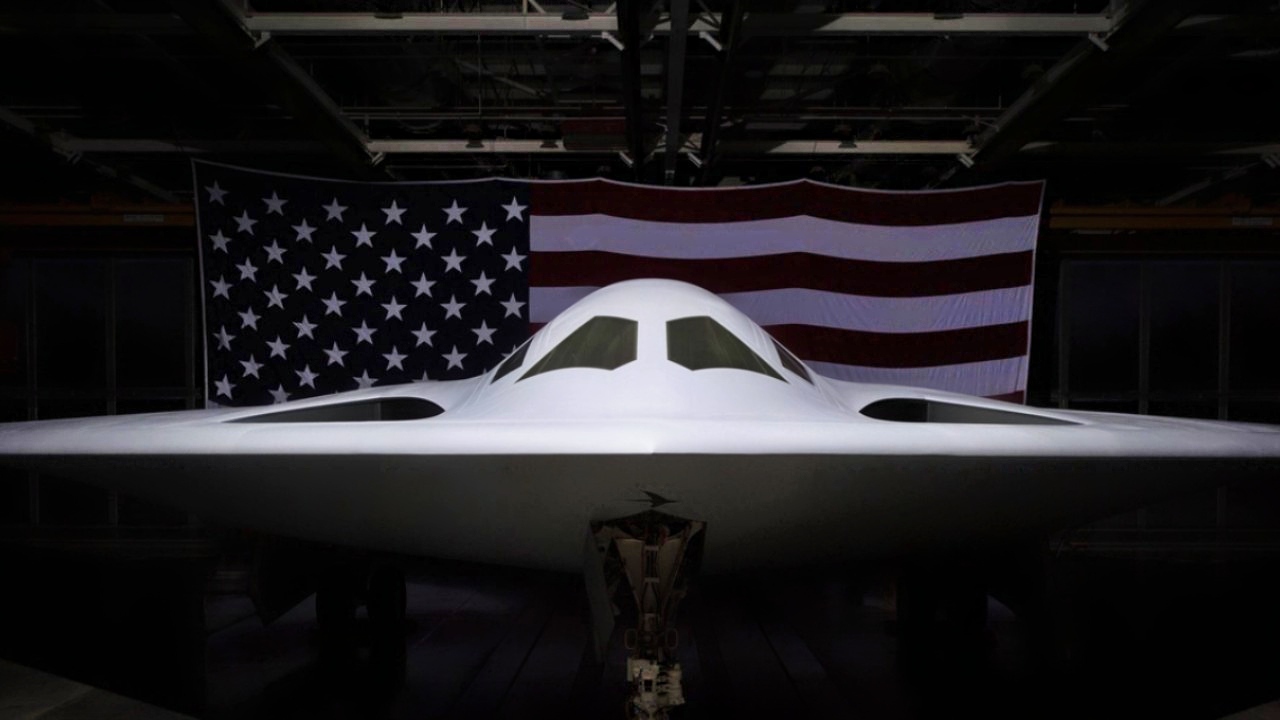
B-21 Raider Bomber. Image Credit: Creative Commons.

B-21 Raider. Image Credit: Creative Commons.
Admiral Richard Correll publicly suggested that 145 B-21s would be more appropriate. The larger fleet is more attractive to some because bombers are increasingly pulled in multiple directions to uphold various responsibilities.
The Raider will be integral to the nuclear triad, of course, and a set number of bombers will be required at all times to perform nuclear deterrence. Simultaneously, the B-21 could be called to action in China, Europe, or the Middle East—prospectively at the same time. So as long as the US grand strategy of liberal intervention remains intact, the demands on the B-21 bomber could remain immense.
And the reality is, not every aircraft in the fleet will always be deployable or combat-ready. Some are always used for training, or down for maintenance or upgrades. One hundred bombers on paper does not mean 100 bombers are available for war.
Arguing for a Larger Fleet
Advocates for a larger Raider fleet—say, 120–150 bombers—recognize that the larger fleet will allow for greater global coverage, more simultaneous strike packages, higher survivability through numbers, less stress on individual airframes, stronger conventional deterrence, etc.
The implications are especially important for the Pacific, where distances are enormous, and conflict with China may require sustained deep strikes against hardened targets, launched from beyond the range of Chinese missile threats.
The Raider is uniquely suited for this demanding role because of its stealth, range, and payload. Having more B-21s would mean a higher ability to generate sustained combat power across multiple theaters simultaneously.
Procuring a smaller B-21 fleet creates the risk of an overworked force with reduced surge capacity and greater operational strain. But resources are finite. Money spent on the Raider cannot be spent elsewhere.
So the question isn’t really whether there is value in a larger B-21 fleet, but whether procuring one is an absolute priority.
Northrop Harbinger
Northrop has announced a $2.5 billion investment in company funds to improve B-21 production capacity.
The Air Force is also funding an expansion of production capacity.
But the real signal is Northrop’s investment: defense contractors aren’t in the habit of aggressively expanding production capacity at a cost of $2.5 billion if they don’t see a corresponding increase in demand. Northrop clearly believes that its ten-figure investment in production capacity will eventually pay dividends.
About the Author: Harrison Kass
Harrison Kass is a writer and attorney focused on national security, technology, and political culture. His work has appeared in City Journal, The Hill, Quillette, The Spectator, and The Cipher Brief. He holds a JD from the University of Oregon and a master’s in Global & Joint Program Studies from NYU. More at harrisonkass.com.


telangpu chuanpu
May 30, 2026 at 1:04 am
This article’s headline is truly a numbskull’s description of a present situation.
The b-21 is a subsonic plane, or slow-flying plane.
Which means it’s gonna be mincemeat or chewmeat for space observers.
Faster planes, like the f-22, have event fallen prey to china’s eyes in space, namely its jilin, yaogan, ludi and gaofen spy-in-earth’s-orbit satellites.
The b-21’s bases are all well-known, in Missouri, Texas, and south Dakota.
Thus, b-21s flying toward china (from their bases) are assuredly flying dead ducks, in any high-end war against china.