


PUBLISHED on August 6, 2025, 15:31 PM EST – Key Points and Summary – The central promise of the AUKUS security pact—to provide Australia with nuclear-powered submarines—is reportedly no longer viable due to a severe crisis in the U.S. and UK defense industrial bases.
-The U.S. Navy is struggling to build and maintain its own submarine fleet and cannot spare any Virginia-class boats, while the UK’s industry has no surplus capacity to make up the shortfall.

SSN-AUKUS. Image Credit: Creative Commons.
-This leaves Australia facing a dangerous capability gap.
-As a result, Canberra is now forced to upgrade its aging Collins-class submarines and fast-track its own domestic submarine production, a process that will take over a decade.
The AUKUS Submarine Deal Looks RIP
The central element of AUKUS was always the promise to provide Australia with nuclear-powered submarines. According to the terms of the agreement, the US would provide Australia with at least three Virginia-class boats, and the UK and Australia would begin development on their own SSN-AUKUS platform. This plan is no longer viable.
The United States can’t provide the submarines; the United Kingdom can neither make up for the shortfall nor co-develop such a submarine in a reasonable timeframe; and Canberra must now face the unpleasant truth that the promises made in 2021 were more fantasy pledges than realistic commitments.
The original thinking behind AUKUS was hard to fault—at least in strategic terms. China’s military posture in the Indo-Pacific has developed over the past decade to such an extent that Australia needs a capability that is survivable, stealthy, and with a long-range strike capacity. Nuclear submarines fit that description. The Virginia-class submarine would offer a short- to mid-term option, and the SSN-AUKUS could meet Australia’s long-term needs. But there was a tacit acknowledgement all along that a nuclear submarine program was more than a propulsion system—it was an entire industrial ecosystem. It needs an industrial base, a trained workforce, a secure supply chain, and, most critically, decades of institutional memory. AUKUS made the assumption that the United States could build Virginia-class submarines for itself and its AUKUS partners. That is no longer a reasonable assumption.
The US Navy is two boats short of its target force, it’s fielding a rate of barely 1.2 boats a year (far short of a two-per-year benchmark), and it has a chronic maintenance backlog that leaves a third of its force in port. It is unable to uprate its skilled labor pool, reactor modules, or dry dock capacity, and there is no margin in the shipyards even with billions in new money being injected into the program. Canberra had pledged US$2bn by the end of 2025 to help build up US industrial capacity. The yards at Groton and Newport News have no space to spare even for that investment. The bottleneck is a systemic one.
Admiral Daryl Caudle was frank in testimony last month. The US industrial base, he testified, would have to double its attack submarine output for America to meet its obligations under the AUKUS agreement with Australia and the United Kingdom. In April, the Pentagon initiated a 30-day review to see if it could simultaneously meet the needs of the US Navy and the Australian demand. Four months later, the review is still not public, but the answer is already clear: the US cannot do both. It cannot, even if it wanted to, turn over one or two boats to Australia, because the Navy has none to spare. Even if it did, the optics of transferring high-end submarines to another country while its own force contracts would be impossible for Congress to accept.
And the UK simply cannot provide subs in place of the promised but undeliverable American boats. The Royal Navy has already made an in-principle commitment to the SSN-AUKUS program. Still, Britain’s existing submarine program, which produces the Astute-class submarine, has suffered from years of delays, budget overruns, and production shortfalls since it was first launched. And BAE Systems, the prime contractor in the British submarine industry, has minimal spare capacity to increase the rate of production beyond its existing domestic orders. In short, there are no surplus subs—and, more importantly, no realistic possibility of any near-term export of nuclear-powered boats to Australia before the 2040s. Political will aside, industrial capacity isn’t there. The UK cannot bail out the US shortfall, and the AUKUS partnership as a viable trilateral supply chain has effectively ceased to exist. That, in turn, leaves Australia with no option but to fast-track its submarine industrial base; a process which it is already doing, quietly but steadily.
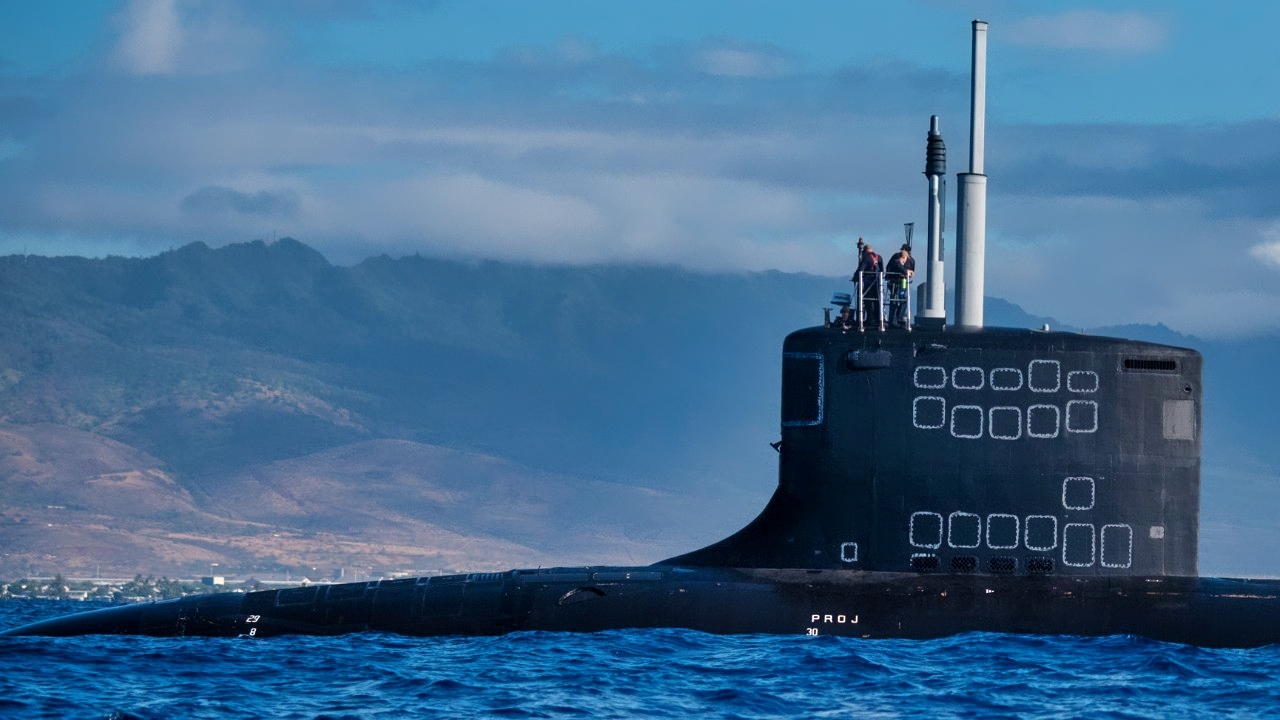
180709-N-KC128-1131 PEARL HARBOR (July 9, 2018) – Multi-national Special Operations Forces (SOF) participate in a submarine insertion exercise with the fast-attack submarine USS Hawaii (SSN 776) and combat rubber raiding craft off the coast of Oahu, Hawaii during Rim of the Pacific (RIMPAC) exercise, July 9. Twenty-five nations, 46 ships and five submarines, about 200 aircraft, and 25,000 personnel are participating in RIMPAC from June 27 to Aug. 2 in and around the Hawaiian Islands and Southern California. The world’s largest international maritime exercise, RIMPAC provides a unique training opportunity while fostering and sustaining cooperative relationships among participants critical to ensuring the safety of sea lanes and security of the world’s oceans. RIMPAC 2018 is the 26th exercise in the series that began in 1971.` (U.S. Navy photo by Mass Communication Specialist 1st Class Daniel Hinton)
Canberra is already responding. The Collins-class submarines, at more than 20 years old, are being upgraded and their lifespan extended. The Osborne Naval Shipyard in South Australia is being massively expanded. The Australian Submarine Agency is now working to develop nuclear-certified workers, strip out regulatory duplication, and build a domestic component manufacturing base. All of this is the first movement to build submarines domestically, and Canberra is doing this under low-key, but with unmistakable determination. Even with this head start, Australia will not be launching a domestically built nuclear submarine before the late 2030s. That is a decade away. The capability gap is real, and the risk profile is increasing.
The idea that the US could transfer a Virginia-class boat or two to make good the gap was floated early on. The politics have since moved against it. Congress is increasingly dubious about hardware transfers when the state of American readiness is already so poor. The Navy itself is against anything that would take boats from its already underpowered undersea fleet. The situation is not in flux: it is set. Washington cannot deliver what it promised. The internal Pentagon review, which has already been provided to Congress, reportedly makes that clear. The language might be diplomatic; the reality is not.
Australia is recalibrating. The publicly stated timeline still envisages a U.S.-built Virginia-class submarine becoming operational in the early 2030s. It is hard to see that coming to pass. The more likely scenario is that Australia will have to sustain the Collins-class submarines and their capabilities until the domestic build program can go online. That industrial build will have to start from where it is now, accelerating rapidly over the coming decade.
Canberra has also reportedly already started reaching out to other potential partners. Both Japan and South Korea have capable, exportable, diesel-electric submarine designs that are on Canberra’s radar already.
That will disappoint AUKUS purists, but realism trumps dogma.
AUKUS is not ending. The alliance itself remains important. Pillar Two of the AUKUS agenda, which covers cybersecurity, AI, hypersonics, and quantum, has real momentum and is already well developed. But the keystone of AUKUS was always to be submarines. If that does not work, the whole edifice comes into question. No amount of public relations can paper over the fact that hard power needs to be on the water to make strategic alignments more than words. Australia signed up for submarines. If they do not materialize, the credibility of the entire enterprise is at risk.
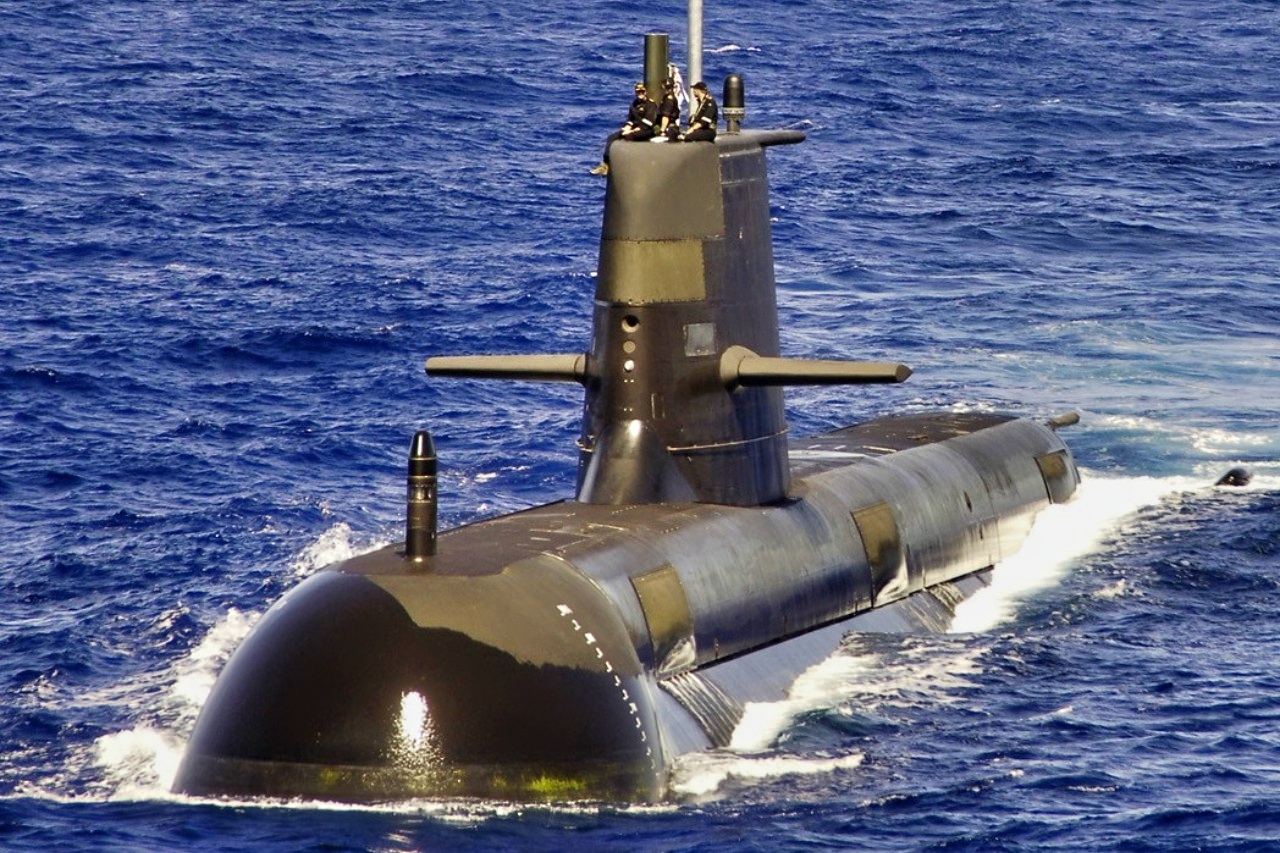
(July 25, 2006)- The Australian Submarine HMAS Rankin (Hull 6) and the Los Angeles Class attack submarine USS Key West (SSN-722) prepare to join a multinational formation with other ships that participated in the Rim of the Pacific exercise. To commemorate the last day of RIMPAC, participating country’s naval vessels fell into ranks for a photo exercise. RIMPAC includes ships and personnel from the United States, Australia, Canada, Chile, Japan, Peru, the Republic of Korea, and the United Kingdom. RIMPAC trains U.S. allied forces to be interoperable and ready for a wide range of potential combined operations and missions. Abraham Lincoln Carrier Strike Group are currently underway on a scheduled Western Pacific deployment. U.S. Navy photo by Mass Communications Specialist Seaman James R. Evans (RELEASED)
AUKUS was always a leap of faith. Canberra is now finding that good intentions will not make up for industrial realities. Submarines do not have a switch that a press release can activate. They turn up on the order of welders, steel, uranium, and dry docks. The partnership will not fail, but only because its rhetorical reach does not need to match its capacity to deliver. Australia will now have to become not just an AUKUS partner, but an industrial sovereign in its own right.
What Happens Next?
Time is short. The Pentagon review will soon be made public in a few months. In the form in which it is released, it may be hedged with diplomatic language, but its conclusions will likely be quite stark. The findings, which are already known to Congress, make it clear that the United States is not in a position to deliver. Australia must now look beyond the empty promises of AUKUS3—at least with respect to acquiring American or British nuclear-powered subs.
Because, in the Indo-Pacific—where naval power is a key determinant of strategic credibility—the submarine is not just a symbol. It is both a sword and a shield. And if neither Washington nor London can provide Canberra the subs it needs, then the Aussies must seek out those who can—or perhaps build their own.
About the Author: Dr. Andrew Latham
Andrew Latham is a non-resident fellow at Defense Priorities and a professor of international relations and political theory at Macalester College in Saint Paul, MN. You can follow him on X: @aakatham. He writes a daily column for National Security Journal.
More Military
Today Marks 80 Years Since Hiroshima


bobb
August 7, 2025 at 8:23 am
The deal is at present half-dead in the water, as much depends on UK having the dough to support the deal.
But in the UK, they’re facing very serious problems. The Brit war machine is right now tuned to do just one thing – ensure a defeat for Russia in Donbass.
That’s like trying to make it rain in hades. What a foolish foolish enterprise.
Another thing, the royal navy has something like 15 derelict nuclear submarines at davenport shipyard. Awaiting dismantling.
The waiting seems to be going on forever.
Clearly, submarines, like aircraft carriers are passe.
Better to spend $300 bil on spaceplanes (space shuttles).
JohnDiren
August 7, 2025 at 1:08 pm
and the French are building and delivering to french navy 1 sub per 16 mounth!
SK and Japan doesn’t master nuke sub, neither 5000t subs