


PUBLISHED on August 11, 2025, 6:42 PM EDT – Key Points and Summary – The U.S. Air Force’s ambitious B-52J modernization program, designed to keep the venerable bomber flying into the 2050s, is facing significant trouble.
-According to a recent Government Accountability Office report, the program is now three years behind schedule, with a ballooning price tag that has triggered a Nunn-McCurdy breach, forcing a report to Congress.

B-52D Bomber at USAF Museum. Image Credit: National Security Journal.
-The primary bottleneck is the bomber’s new advanced AESA radar, which is experiencing slow production and challenging software integration.
-These mounting challenges have cast serious doubt on the future of the entire B-52J upgrade.
The B-52J Nightmare Has Arrived
The B-52J is the latest modernization project to keep the old, reliable B-52 Stratofortress in the skies for a bit longer.
The package includes a new set of engines that are more fuel-efficient and an improved radar to enhance the bomber’s tracking and situational awareness.
Additionally, the package includes new communications and navigation equipment to keep the B-52 up to date.
However, the B-52J had been plagued by numerous delays and escalating price tags, leaving the project’s fate uncertain.
The B-52J is Delayed… Again…
The B-52J has faced significant hurdles throughout the years, from technical difficulties to cost overruns.
Earlier this year, the USAF ran into some trouble with Congress over the program’s ballooning costs.
The price hike was so significant that it triggered the Nunn-McCurdy Act, a law that requires the military to report to Congress if a program’s cost exceeds its approved baseline.
The Air Force categorized the cost increase as “significant,” which under the law means a deviation of at least 15%.
According to a report from the Government Accountability Office (GAO), the B-52J is not expected to arrive until around 2030, which is three years later than the Army’s goal of 2027.
According to the report, the bottleneck is being caused by the new radar. Production on the new and improved radar is progressing much slower than anticipated due to “challenges related to environmental qualification, parts procurement, and software,” according to GAO’s report. In short, production is slow, and integrating the radar has proven more difficult than previously thought.
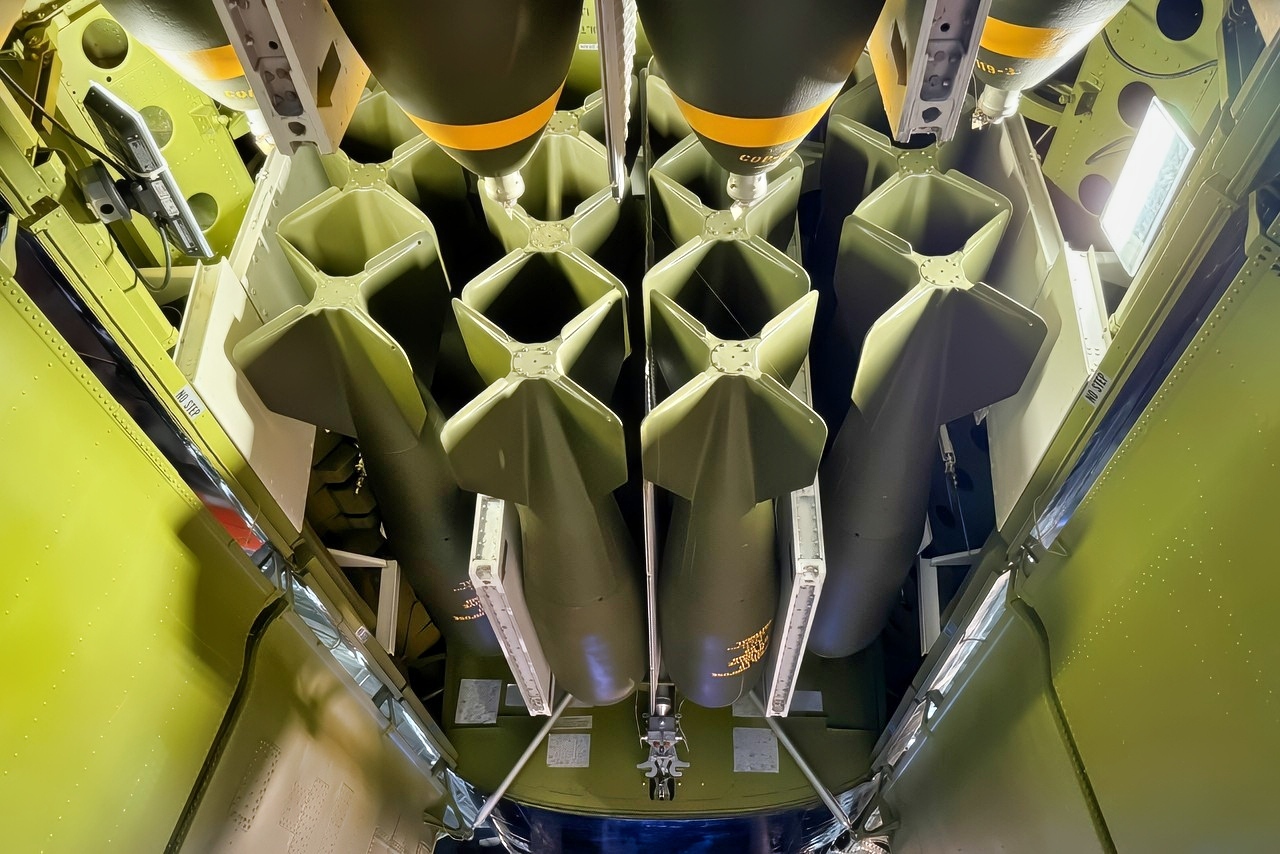
Bombs Inside the B-52 Bomber. Photo taken by Harry J. Kazianis/National Security Journal.
This most recent report from GAO, along with the pressure from Congress because of the Nunn-McCurdy Act, put the future of the B-52J in doubt.
The program has faced numerous criticisms due to its high price tag; now, it is further delayed by slow radar production and software issues.
With all these roadblocks, it remains unclear whether the USAF will continue with the project or if it will be further delayed and eventually cancelled altogether.
Why the USAF Wanted the B-52J
At the heart of the B-52J upgrade is the replacement of the aircraft’s aging Pratt & Whitney TF33 engines with new Rolls-Royce F130 turbofan engines.
These engines, derived from the commercial BR725, offer significantly improved fuel efficiency, up to 30 percent better than the TF33s. This translates into increased unrefueled range, reduced maintenance requirements, and improved reliability. Notably, the B-52J retains its iconic eight-engine configuration, featuring four twin-engine pods, which preserves the aircraft’s distinctive silhouette while enhancing its performance and sustainability.
Another significant component of the B-52J modernization is the Radar Modernization Program. The aircraft will be equipped with a new active electronically scanned array (AESA) radar system, replacing the outdated mechanically scanned radar.
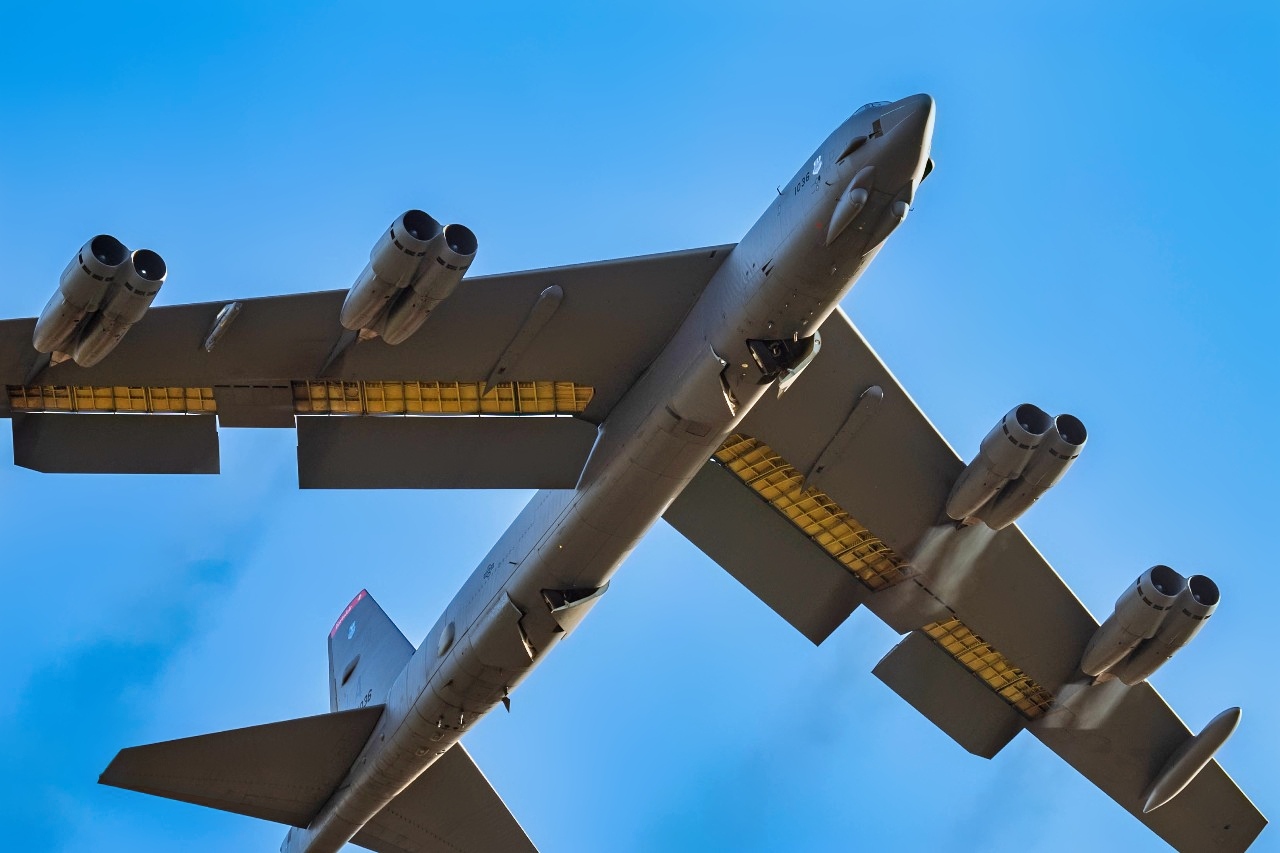
A B-52H Stratofortress assigned to the 20th Expeditionary Bomb Squadron takes off from RAF Fairford, England, for a training mission with the Royal Moroccan Air Force during Bomber Task Force 25-1, Nov. 22, 2024. The U.S. and Morocco’s strategic partnership is based on mutual interests in regional peace, security and prosperity, and we remain dedicated to working together on shared concerns. (U.S. Air Force photo by Senior Airman Mary Bowers)
This new radar, based on the APG-79 used in the F/A-18E/F Super Hornet, offers greater target detection and tracking range, improved weather penetration, enhanced resistance to electronic warfare, and precision targeting capabilities.
The radar upgrade alone is a massive investment, with over $845 million allocated for the procurement of 74 radar kits and associated training systems.
The B-52J is also receiving a complete overhaul of its digital infrastructure. This includes the installation of a digital backbone that supports advanced communications and navigation systems, as well as cybersecurity enhancements and open-architecture systems that facilitate easier future upgrades.
These changes ensure that the aircraft can integrate seamlessly with modern command-and-control networks and joint force operations. The cockpit is being updated with new displays and controls, and the internal wiring is being replaced to accommodate the increased electrical and cooling demands of the latest systems.
Keeping the Stratofortress in the Skies
In terms of armament, the B-52J retains its massive payload capacity of up to 70,000 pounds but is being adapted to carry next-generation weapons.
These include hypersonic missiles, such as the Hypersonic Attack Cruise Missile (HACM) and the Long-Range Stand-Off (LRSO) nuclear cruise missile, as well as advanced precision-guided munitions.
Although the Air-Launched Rapid Response Weapon (ARRW) program is being phased out, the B-52J remains a key platform for deploying future hypersonic systems. Its ability to carry a wide variety of weapons makes it a flexible and formidable component of the U.S. strategic arsenal.
The B-52J program is a major driver of defense spending and industrial activity. The Air Force has allocated nearly $3 billion for B-52 procurement over the next several years, with significant investments in radar systems, engine production, and aircraft modification facilities.
This investment supports thousands of jobs across multiple states and ensures the continued vitality of the U.S. aerospace sector. The program also reflects a broader trend in defense acquisition, prioritizing the modernization of proven platforms over the development of entirely new systems.
Is the Project Worth the Price?
The B-52J is more than just a modernization effort; it is a reaffirmation of the aircraft’s enduring value. By extending the life of the B-52 into the 2050s, the U.S. Air Force ensures a credible long-range strike capability that complements newer platforms, such as the stealthy B-21 Raider and the B-2 Spirit.
The B-52J offers a relatively cost-effective alternative to developing entirely new bombers, while still providing a platform that can integrate with future technologies and missions. Its presence in the fleet ensures a diverse and flexible bomber force capable of addressing a wide range of threats.
The B-52’s legacy began during the Cold War, when it was designed to deliver nuclear payloads over intercontinental distances. Over the decades, it evolved into a versatile platform capable of conventional bombing, maritime surveillance, and electronic warfare. The last production model, the B-52H, entered service in the early 1960s.
Despite its age, the aircraft’s robust design and adaptability have allowed it to remain relevant through numerous conflicts and technological shifts. The B-52J designation marks the most comprehensive upgrade in the aircraft’s history, ensuring its continued relevance in a rapidly changing strategic environment.
About the Author:
Isaac Seitz, a Defense Columnist, graduated from Patrick Henry College’s Strategic Intelligence and National Security program. He has also studied Russian at Middlebury Language Schools and has worked as an intelligence Analyst in the private sector.
Defense Watch
F/A-XX Is the YF-23 on a Carrier?


