


Key Points and Summary – Washington and Ankara are quietly exploring a way for Turkey to rejoin the F-35 program—if it somehow “neutralizes” its Russian-made S-400 air defense system.
-For the U.S., Turkish F-35s would offer major strategic benefits: fifth-generation jets on Iran’s border, deeper NATO integration via shared F-35 data links, and a powerful deterrent presence in both the Middle East and Black Sea.

F-35A Lightning II’s from the 34th Fighter Squadron at Hill Air Force Base, Utah, land at Royal Air Force Lakenheath, England, April 15, 2017. The aircraft arrival marks the first F-35A fighter training deployment to the U.S. European Command area of responsibility. (U.S. Air Force photo/Tech. Sgt. Matthew Plew)
-But the risks are real.
-Any lingering S-400 ties or political drift toward Moscow raise fears that sensitive F-35 technology could leak to Russia.
-The core question for the Pentagon is simple: are those strategic gains worth the security gamble?
F-35 for Turkey?
There could be a world in which a country operates the F-35 and Russian-built S-400 simultaneously, given that President Trump is reported to have a cooperative relationship with Turkish President Tayyip Erdogan.
In 2020, Turkey was “kicked out” of the F-35 program due to its decision to acquire Russian-made S-400 air defense systems.
The ongoing war in Ukraine and Western concerns about the Russian threat likely informed the previous administration’s decision to remove Turkey from the program.
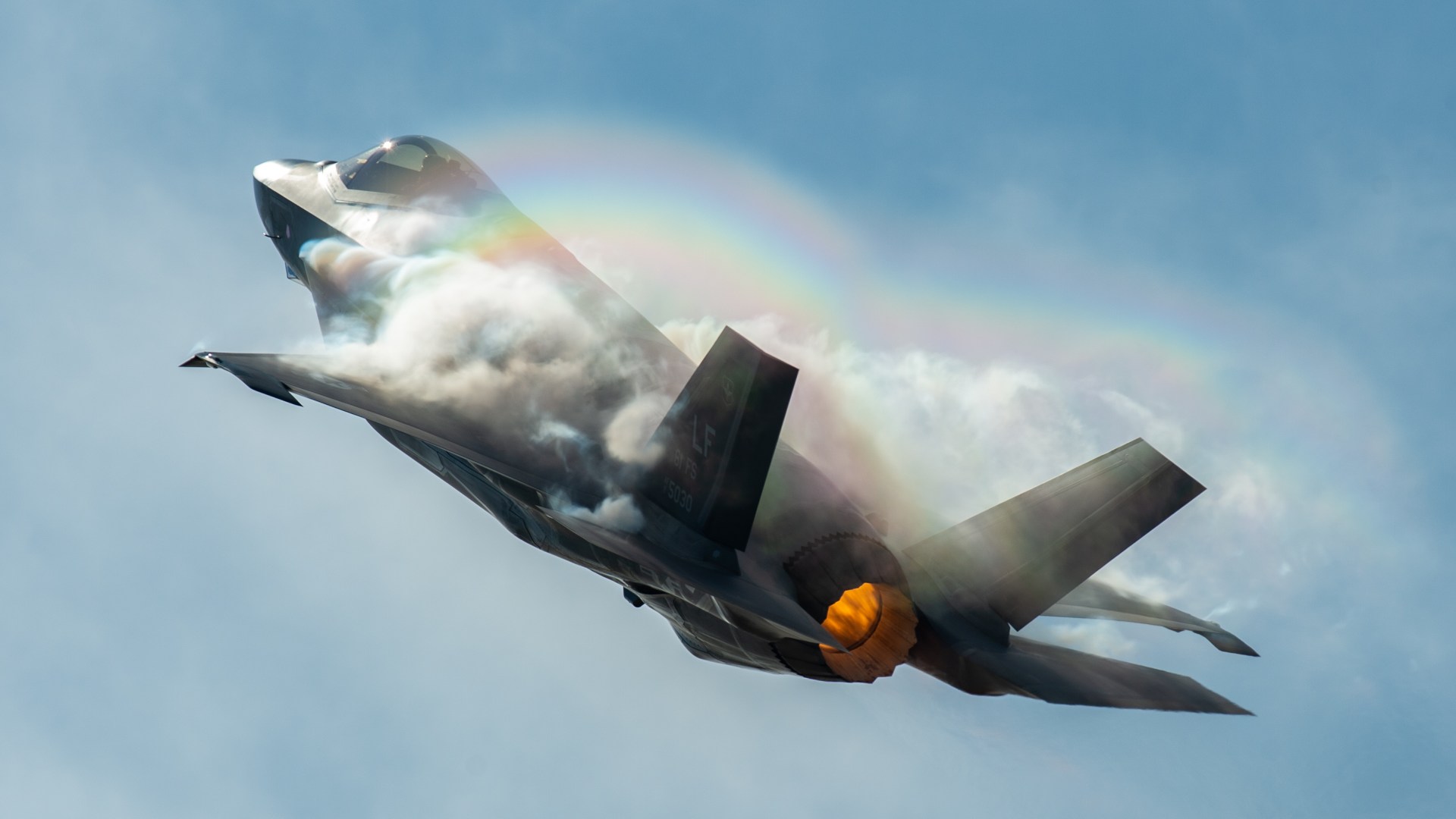
Capt. Andrew “Dojo” Olson, F-35 Heritage Flight Team pilot and commander performs a vertical climb in an F-35A Lightning II during the Bell Fort Worth Alliance Air Show Oct. 14, 2018, in Fort Worth, Texas. The F-35A Lightning II’s F-135 single-engine contains 43,000 pounds of thrust. (U.S. Air Force photo by Senior Airman Alexander Cook)
However, the possibility is now being revisited in the Trump administration, and a report from Defense Security Asia says Turkey appears willing to neutralize its Russian-made S-400s.
“The United States is in ongoing discussions with Türkiye regarding their desire to rejoin the F-35 program and their possession of the Russian-made S-400 air defense system,” US Ambassador Tom Barrack said in a post on X, as cited in Reuters.
US-Turkish Cooperation
Barrack said US law will not permit Turkey to operate or possess the S-400 system if it wants to return to the F-35 programme, Reuters reported, adding that new options may now be possible due to the cooperative relationship between the two Presidents.
There are many variables impacting this equation, to be sure, as it seems an F-35-armed Turkey presents both possible advantages and risks or liabilities.
An allied F-35 presence in Turkey introduces clear geographical advantages, as it places potential adversaries in the Middle East at risk of a 5th-generation air assault from the North.
Israel has F-35s, but Turkish F-35s could potentially hold Iran or ISIS at risk without needing to involve Israel. This presence offers the West additional strategic and tactical options for projecting 5th-generation air power throughout the Middle East.
F-35-Armed NATO
An F-35-armed Turkey could strengthen the US and allied posture and presence in the Middle East, with great significance in a potential conflict with Iran.
Turkey shares a border with Iran and would be positioned to potentially launch F-35s from close to its border to enable maximum dwell time and mission scope.
There is also the advantage of multinational F-35 networking, given that F-35s from all member countries operate with a secure, common datalink called Multi-functional Advanced DataLink.
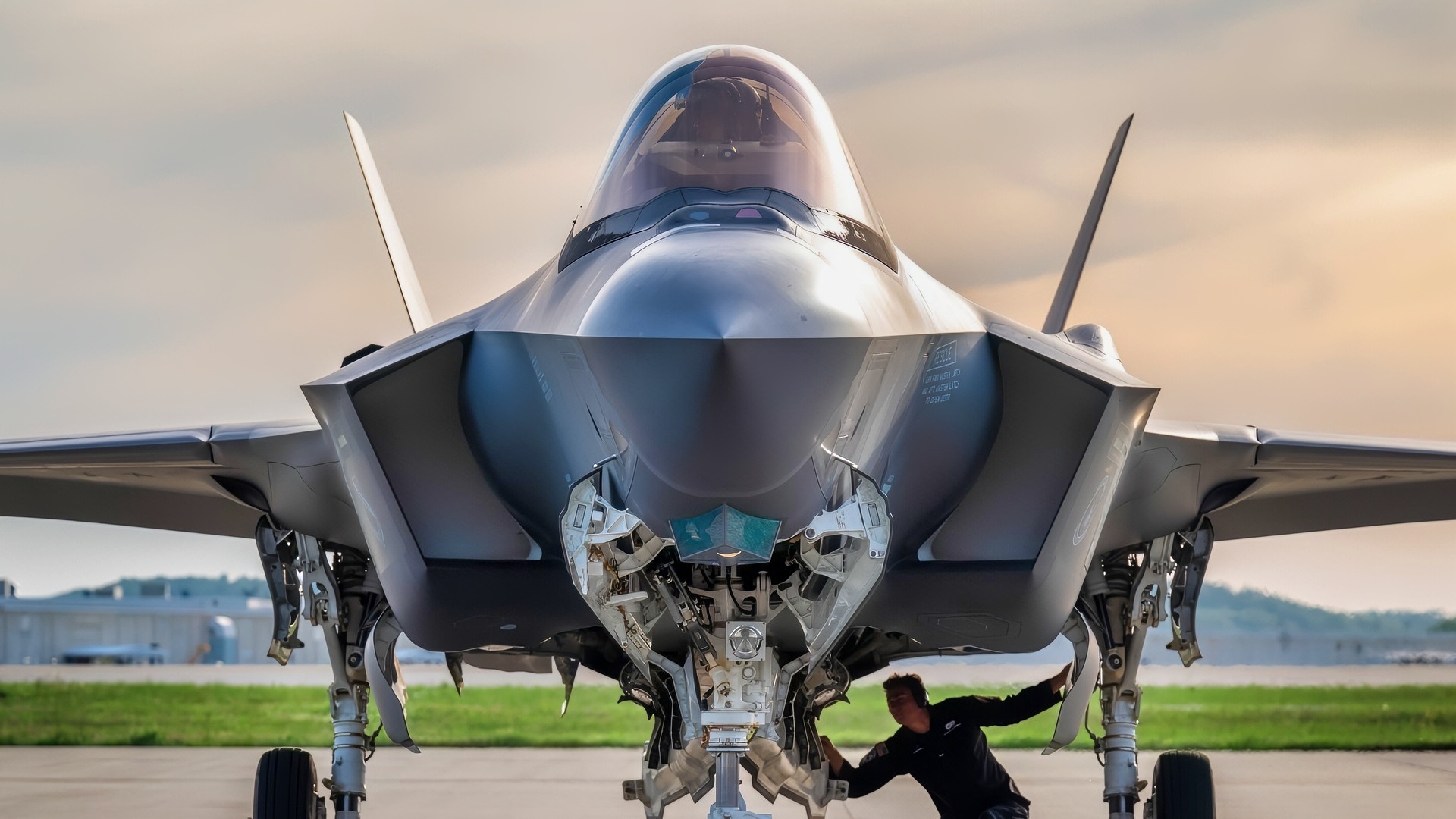
An aircraft from the U.S. Air Force F-35 Lightning II Demonstration Team arrives at the Kentucky Air National Guard Base in Louisville, Ky., April 19, 2023, in advance of the Thunder Over Louisville air show. The annual event, to be held along the banks of the Ohio River on April 22, will feature more than 20 military and civilian aircraft. (U.S. Air National Guard photo by Dale Greer)
This enables real-time intelligence information sharing across multinational formations and could prove critical in the event of a coordinated allied operation.
Turkey’s presence along the Black Sea is also of great significance, as it could provide a southern angle of attack against Russia should a large-scale NATO 5th-generation strike be needed.
Turkey-based F-35s could also hold Russian warships at risk in the Black Sea, should there be a need for a NATO operation against Russia.
In this capacity, Turkish F-35s could operate as a deterrent against any possible offensive Russian military action in the Black Sea or into Ukraine.
Turkish F-35s would have the ability to operate in airspace over Ukraine, as Ukraine is roughly 600 miles from the Turkish coast.
Risk of Turkish F-35s
The risks of an F-35-armed Turkey are also considerable, given the prospect of Turkish-Russian collaboration.
Acquiring S-400s from Russia indicates a measure of technological cooperation in the realm of weaponry, something which presents risks for the West.
How can the Pentagon be assured that Turkey will not share information about F-35 systems, capabilities, and technologies with Russia?
Even if the Turkish President reassures the West that he will not allow it, there is still the question of whether the Pentagon should take the risk.
Although Turkey would get an export version of the F-35, the platform will include computing, stealth coating materials, engine technologies, and avionics, all likely to be of great interest to the Russians.
About the Author: Kris Osborn
Kris Osborn is the President of Warrior Maven – Center for Military Modernization. Osborn previously served at the Pentagon as a highly qualified expert in the Office of the Assistant Secretary of the Army—Acquisition, Logistics & Technology. Osborn has also worked as an anchor and on-air military specialist at national TV networks. He has appeared as a guest military expert on Fox News, MSNBC, The Military Channel, and The History Channel. He also has a Masters Degree in Comparative Literature from Columbia University.


Tim
December 13, 2025 at 11:58 am
Why should we trust Turkey? This sounds like a make-believe work around.