


Key Points and Summary – In a war with China, the U.S. must prepare to absorb a massive opening punch of over a thousand missiles and drones aimed at paralyzing its forces.
-The key to victory is not preventing this first strike but building a resilient force that can “fight hurt.”

F-15EX Eagle II’s from the 40th Flight Test Squadron, 96th Test Wing, and the 85th Test and Evaluation Squadron, 53rd Wing, both out of Eglin Air Force Base, Florida, fly in formation during aerial refueling operations with a KC-135 Stratotanker from the 370th Flight Test Squadron out of Edwards Air Force Base, California, May 14. The Eagle II’s participated in the Northern Edge 21 exercise in Alaska earlier in May. (Air Force photo by Ethan Wagner)
-This requires a radical shift to strategies like Agile Combat Employment, which disperses aircraft across many smaller bases, and developing resilient command networks.
-It also demands “magazine depth”—surging production of key munitions and operationalizing at-sea reloading—and fully integrating allied firepower.
-The goal is to survive the opening hours and win the longer campaign.
‘Disperse or Die’: The Air Force’s Survival Plan for a War With China
America’s next war will probably start with a number, not a speech.
Imagine a first day with perhaps a thousand inbound missiles and drones: craters on airbases, fuel farms in flames, runways closed, command posts jammed, warships bracketed, aircraft trapped on the ground.
That’s the tempo Beijing wants to impose, compressing the timeline until decision-making stumbles and recovery falters.
The United States can’t wish that away.
The test is brutally simple: can the US military absorb the first punch, fight through the second, and make sure there’s still a joint force on day three that can find, fix, and finish at scale?
Airpower Under Fire: Disperse or Die
A decline in forward airpower would mark the worst day. Precision ballistic and cruise missiles targeting a handful of familiar airfields would try to turn sortie generation into a math problem America can’t solve quickly enough.

An F-15E Strike Eagle stands static on the flightline before morning takeoffs at Royal Air Force Lakenheath, England, Jan. 5, 2021. The 48th Fighter Wing conducts daily flying operations in order to ensure the Liberty Wing can deliver unique air combat capabilities when called upon by its NATO allies. (U.S. Air Force photo by Senior Airman Madeline Herzog)
Massed salvos, not one-off shots, create persistent denial, and even rapid runway repair can be outrun by repeated strikes that cycle faster than recovery crews can work.
This is why the Air Force’s migration toward Agile Combat Employment—spreading aircraft across many austere locations, moving often, refueling hot, and loading munitions under pressure—isn’t a buzzword but a survival scheme.
This year’s theater-wide REFORPAC 2025 exercise in the Pacific was built to practice exactly that: shifting from a few exquisite hubs to dozens of good-enough spokes that keep generating combat power when the big bases go dark.
Dispersal alone won’t save the force if it can’t command itself under fire. China’s opening play will not only target runways and fuel; it will pry at the synapses of command and control—satellites, data links, radar nodes, and the electromagnetic seams where kill chains are stitched together.
The shift to more resilient C2—mesh networks, line-of-sight relays, and mission command that pushes initiative down—is overdue but finally moving from slides to sorties. REFORPAC’s dispersal vignettes were paired with logistics, communications, and air-defense stressors designed to make units operate at the edge of the network. That is what “taking losses and getting back into the fight” actually looks like: degraded operations, not paralysis; a fractured picture, not blindness.

China J-20 Fighter Yellow. Image Credit: Creative Commons.
China’s theory of victory is no mystery. The Rocket Force exists to hold U.S. and allied militaries at risk across a wide arc, from fixed bases to moving ships. A large inventory of conventional systems gives Beijing many ways to stress U.S. posture and tempo on day one and day two.
None of this guarantees a bolt-from-the-blue win; it guarantees a miserable, highly kinetic opening in which the side that regenerates faster and targets smarter gains the initiative. That is precisely why the United States is hardening Guam, expanding access in the Philippines, and changing the geometry of presence in Japan and across the first and second island chains. Distributed posture complicates Chinese calculus because saturation attacks must now be larger, more sustained, and more accurate to achieve the same suppression.
Salvo Arithmetic at Sea
The sea fight will be contested just as fiercely. Salvo arithmetic matters: every Vertical Launch System cell fired is one you must reload.
The Navy’s push to reload at sea—still experimental but no longer hypothetical—matters because it reframes the question from “How many shots can you take?” to “How quickly can you rearm under threat?” In parallel, production ramps for key interceptors and long-range strikes—SM-6, LRASM, JASSM, and others—are rising from a low base. Magazine depth is strategy by other means; you either have the weapons to sustain weeks of combat at pace or you don’t.
America was late to this reality but is no longer sleepwalking.
Landward, the Marine Corps’ new littoral regiments are the quiet disruptors. Small, mobile, missile-armed, and paired with new sensing and deception kits, they exist to make narrow seas and straits hazardous to a blue-water fleet that expected sanctuary under its own umbrella.
Deployed with allies along key maritime chokepoints, they complicate Chinese targeting and create a web of cross-domain fires that forces the People’s Liberation Army Navy to respect coastal arcs it once discounted. This is not a silver bullet; it is scaffolding for joint kill chains when traditional formations are suppressed.
Long-range strike is the insurance policy when forward posture is degraded. The B-21 test fleet expanding at Edwards AFB underscores that survivable bombers—teamed with standoff munitions and supported by a revitalized tanker force—will carry a disproportionate share of the opening counterpunch.
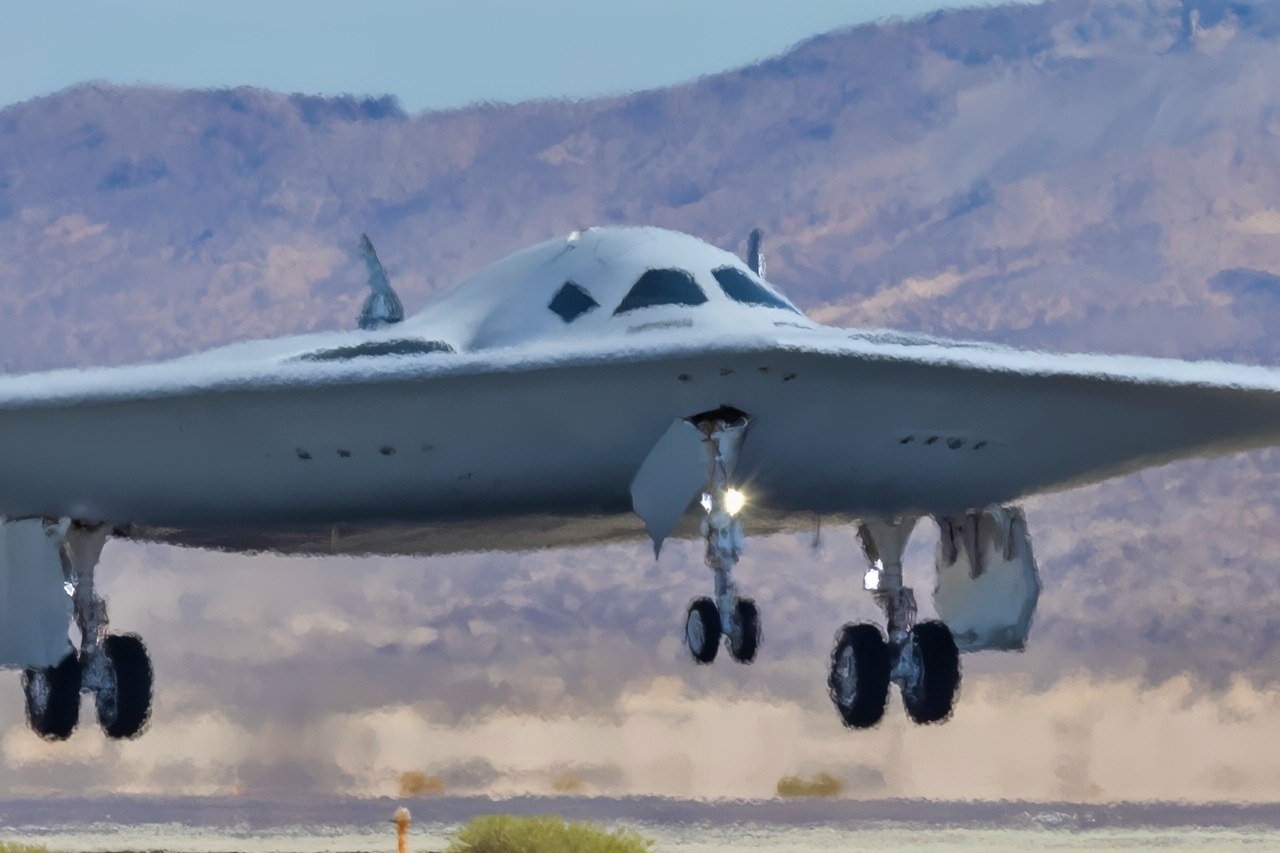
A B-21 Raider test aircraft lands at Edwards Air Force Base, Calif., during ongoing developmental flight testing, Sept. 11, 2025. The B-21 will be the backbone of the bomber fleet; it will incrementally replace the B-1 Lancer and B-2 Spirit bombers. (U.S Air Force photo by Todd Schannuth)

A second B-21 Raider, the nation’s sixth-generation stealth bomber, joins flight testing at Edwards Air Force Base, Calif., Sept. 11, 2025. The program is a cornerstone of the Department of the Air Force’s nuclear modernization strategy, designed to deliver both conventional and nuclear payloads. (Courtesy photo)
Their value is not only in stealth; it is in campaign endurance—launching from depth, bending routes around degraded air defenses, and holding at risk the command nodes, air-defense radars and logistics depots that sustain Chinese tempo. Base defense and recovery, however, must keep pace, especially on Guam, where timelines, integration and sustainment remain the true bottlenecks even as construction begins.
Allied Firepower as a Force Multiplier
Allied capacity is the other lever that changes the first-week math.
Japan’s rapid pivot to long-range strike—Tomahawks now, upgraded domestic systems next—signals a move from a purely defensive posture to one that can trade salvos and contribute to theater-wide targeting.
The quantity matters because it multiplies launch points; the politics matter because it normalizes allied participation in deep-strike campaigns.
The United States should nurture this shift with integrated planning, shared magazines, and training that treats allied shooters as part of the same fire network from day one. The more launchers and launch sites the alliance fields, the less plausible any decisive opening becomes.
None of this erases risk. The first forty-eight hours could be ugly: supply chains strained, command nodes degraded, some ships damaged, some squadrons displaced, and some runways counted in craters rather than feet.
The goal is not to make that go away; it is to prevent those losses from cascading into strategic defeat. That is why resilience beats perfection. A force able to fight hurt—because it planned to be hit, trained under friction, and stocked the magazines to keep shooting—denies an adversary the quick win and drags the contest into a longer campaign on terms more favorable to the United States and its allies.
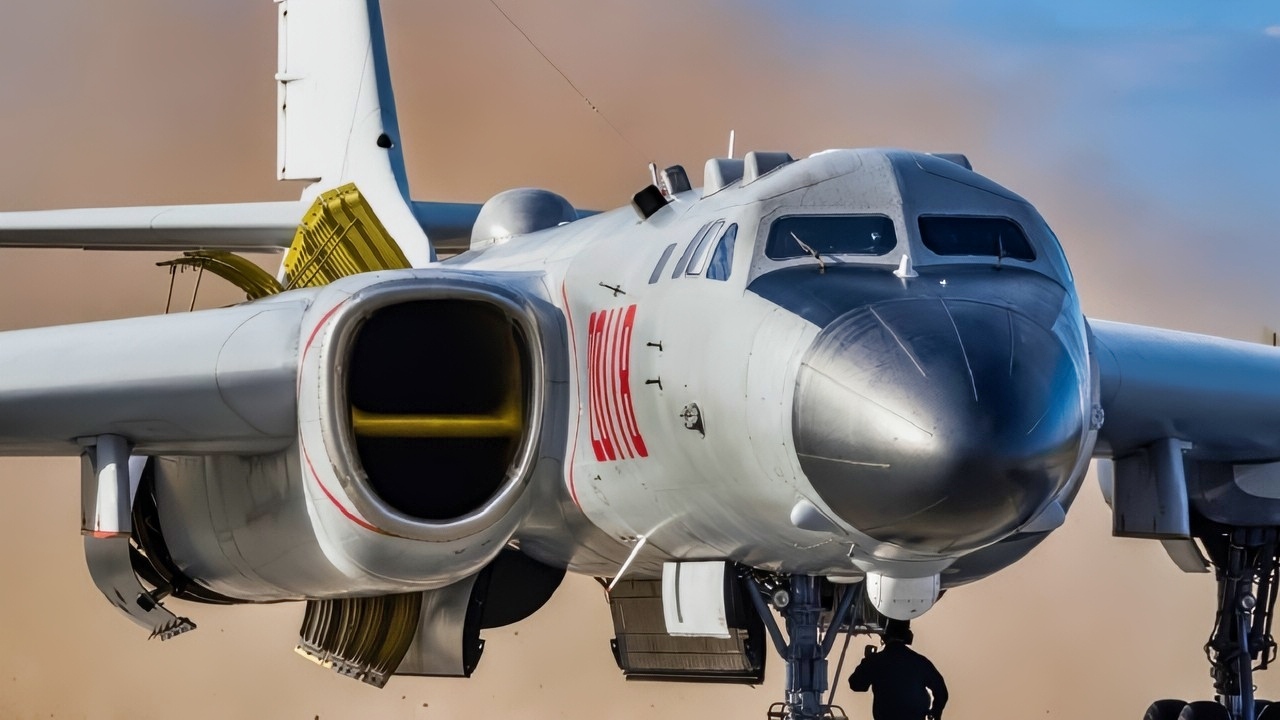
H-6 Bomber from China. Image Credit: Creative Commons.
So would China win with a massive bolt from the blue? Only if the United States clings to a peacetime way of war.
The emerging posture—dispersed, networked, allied, and magazine-rich—points in the right direction, but the to-do list is non-negotiable: surge munitions harder and earlier, operationalize at-sea reloads, thicken base defenses, deepen fuel and parts stocks, and cement command constructs that assume attrition and still function.
A battle decided in a day rewards the side that breaks things; a campaign decided over weeks rewards the side that fixes them faster.
Plan to lose the opening hours—and then win the rest.
About the Author: Dr. Andrew Latham
Andrew Latham is a non-resident fellow at Defense Priorities and a professor of international relations and political theory at Macalester College in Saint Paul, MN. You can follow him on X: @aakatham. He writes a daily column for National Security Journal.
More Military
Russia’s T-14 Armata Super Tank Mistake Still Stings
SR-72 Darkstar: The Mach 6 Mothership for the F-35 and F-47
China’s J-20 Mighty Dragon Fighter Can Be Summed Up In Just 4 Simple Words
The MBT-70 Tank Still Haunts the U.S. Army
Russia’s ‘New’ MiG-35 Fighter Is Officially ‘Circling the Drain’


