


Key Points and Summary – Despite its incredible age, the B-52 Stratofortress is undergoing a massive modernization to remain a cornerstone of U.S. airpower into the 2050s.
-Key upgrades include replacing its eight original engines with fuel-efficient Rolls-Royce F130s, new avionics and digital communications (CONECT), and enhanced electronic warfare systems.
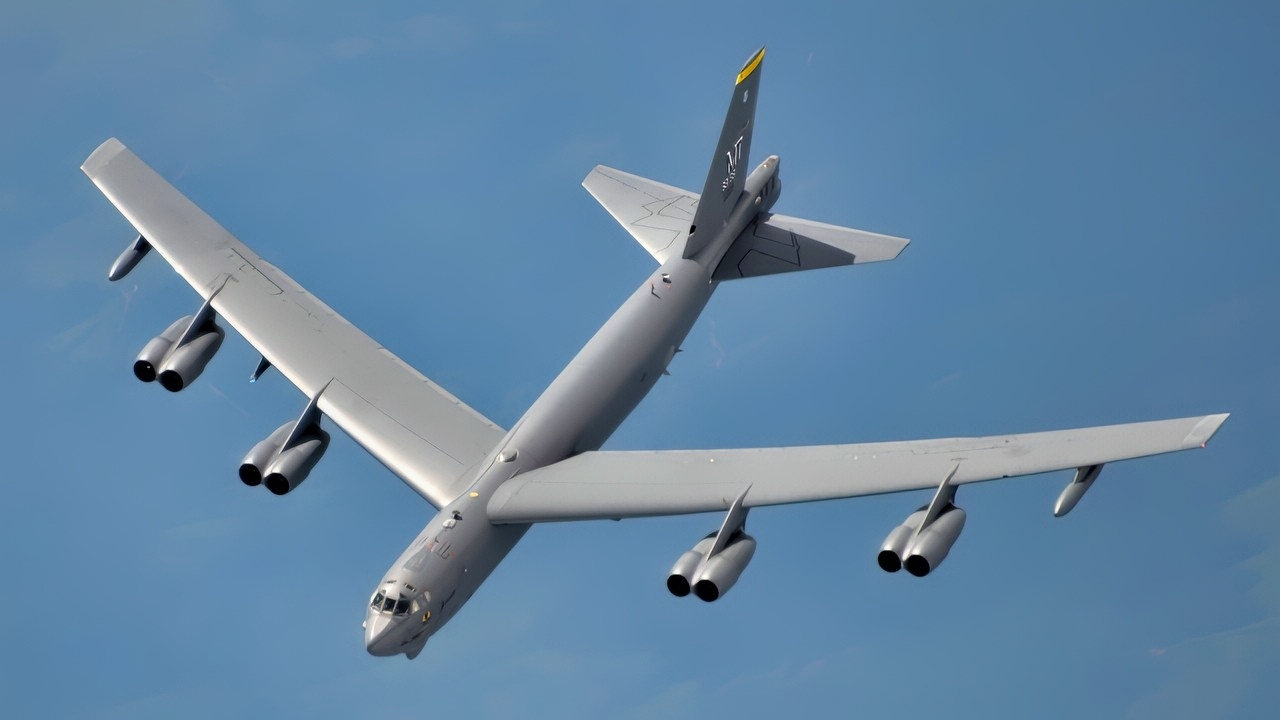
A B-52 Stratofortress assigned to the 5th Bomb Wing, Minot Air Force Base, North Dakota, completes refueling behind a KC-135 Stratotanker assigned to the 134th Air Refueling Wing, Tennessee Air National Guard, during exercise Saber Guardian 19, June 17, 2019. The bombers participated in three exercises in the Baltic and Black Sea regions, providing opportunities for training with our allies and partners. Strategic bomber missions enhance the readiness and training necessary to respond to any potential crisis or challenge across the globe. The USEUCOM, NATO exercise promotes regional stability and security while increasing readiness, strengthening partner capabilities and fostering trust. (U.S. Air National Guard photo by Tech. Sgt. Daniel Gagnon)
-The updated B-52J will serve in a “high-low mix” alongside the stealthy B-21 Raider, leveraging its enormous payload capacity and long range to act as a standoff “missile truck,” launching cruise missiles, hypersonic weapons, and potentially even drones from safer distances.
Inside the B-52’s Massive Upgrade Program: New Engines, Avionics, and Weapons
Despite its incredible age, the United States Air Force thinks that keeping the B-52 around is worth the continued investment. And if America’s flying branch gets its way, the long-range bomber will remain in service until the 2050s.
Despite the strategic bomber’s age, it possesses several qualities that few other platforms can rival. Among these are the bomber’s long range and its incredibly heavy payload capacity.
In the Air Force of the future, the B-52 will be just one of two bombers operated by the United States, the other being the cutting-edge, sixth-generation B-21 Raider stealth bomber, still in development.

U.S. Air Force B-52H Stratofortress aircraft fly by the 81st Liberation Day Parade, leveraging a training sortie during the U.S. Air Force’s 2025 Department-Level Exercise series in Guam, July 21, 2025. The flights consisted of 13 waves of aircraft from the U.S. Air Force, Royal New Zealand Air Force, Japan Air Self-Defense Force and Republic of Korea Air Force, showcasing the U.S. and its allies’ commitment to a free and open Indo-Pacific region. The DLE encompasses all branches of the Department of Defense, Allies, and partners, employing over 400 joint and coalition aircraft and more than 12,000 personnel across more than 50 locations spanning 3,000 miles. (U.S. Air Force photo by Senior Airman Jade M. Caldwell)
Operating in tandem, these two platforms would be part of a high-low mix of boomers, where the new B-21 Raider will tackle missions deep in enemy and contested airspace.
Leveraging its sophisticated stealth capabilities, the Raider would hold a wide variety of targets under threat. The B-52, on the other hand, will provide a great deal of missile mass, able to bring significant firepower to a fight and operate from stand-off ranges.
Modernizations and Upgrades
The B-52 Stratofortress is in the throes of a deep modernization program.
Aimed at giving the B-52 a quantitative leap forward in capabilities, it is one of the most significant updates to the Cold War-era bomber. It will keep the fleet aloft until the middle of this century—at which point the United States Air Force’s B-52s will be nearly a century old.
The first component of the B-52’s modernization is the Commercial Engine Replacement Program, or CERP. As part of that initiative, the B-52’s original Pratt & Whitney TF33 engines—eight in total, housed inside four engine pods—will be replaced with higher-output Rolls-Royce F130 engines.

A B-52H Stratofortress assigned to the 419th Flight Test Squadron is undergoes pre-flight procedures at Edwards Air Force Base, California, Aug. 8. The aircraft conducted a captive-carry flight test of the AGM-183A Air-launched Rapid Response Weapon Instrumented Measurement Vehicle 2 at the Point Mugu Sea Range off the Southern California coast. (Air Force photo by Giancarlo Casem)

A U.S. Air Force B-52H Stratofortress assigned to the 2nd Bomb Wing prepares to depart for a Bomber Task Force mission at Barksdale Air Force Base, La., May 18, 2025. These bomber missions are representative of the U.S. commitment to our allies and enhancing regional security. (U.S. Air Force photo by Airman 1st Class Jaiyah Lewis)
Late last year, the engines passed a Critical Design Review ahead of their integration into the B-52 fleet.
A comprehensive overview of the B-52’s modernization is available here.
The new Rolls-Royce engines offer thrust levels similar to those of the older RF33s, raising the question of why they were selected. Their benefits stem from about 30 percent better fuel efficiency, much better maintainability and reliability, significantly fewer maintenance hours, and much quieter operation.
Cumulatively, these factors give the bomber greater range, increased loiter time on station, greater payload feasibility, and lower demand on the Air Force’s tanker fleet, despite similar thrust-to-weight ratios. Cumulatively, these factors give the B-52—redesigned as the B-52J—superior combat effectiveness.
B-52s selected for engine upgrades will also have their avionics and digital infrastructure modernized via the Combat Network Communications Technology update. CONECT will provide Link-16 data line upgrades, moving map displays, cockpit updates, and modernized communications.
Another significant upgrade to the B-52 platform is modernizing its electronic warfare self-protection to boost survivability in semi-contested airspace, despite advancements in adversary missile and air defenses.
But one of the most significant updates to the B-52 program will modernize its payload: that is, the weaponry the B-52 is tasked with deploying—though still experimental—will include long-range cruise missiles, hypersonic weapons, and loyal-wingman-type aircraft deployed from the B-52J mothership en masse.
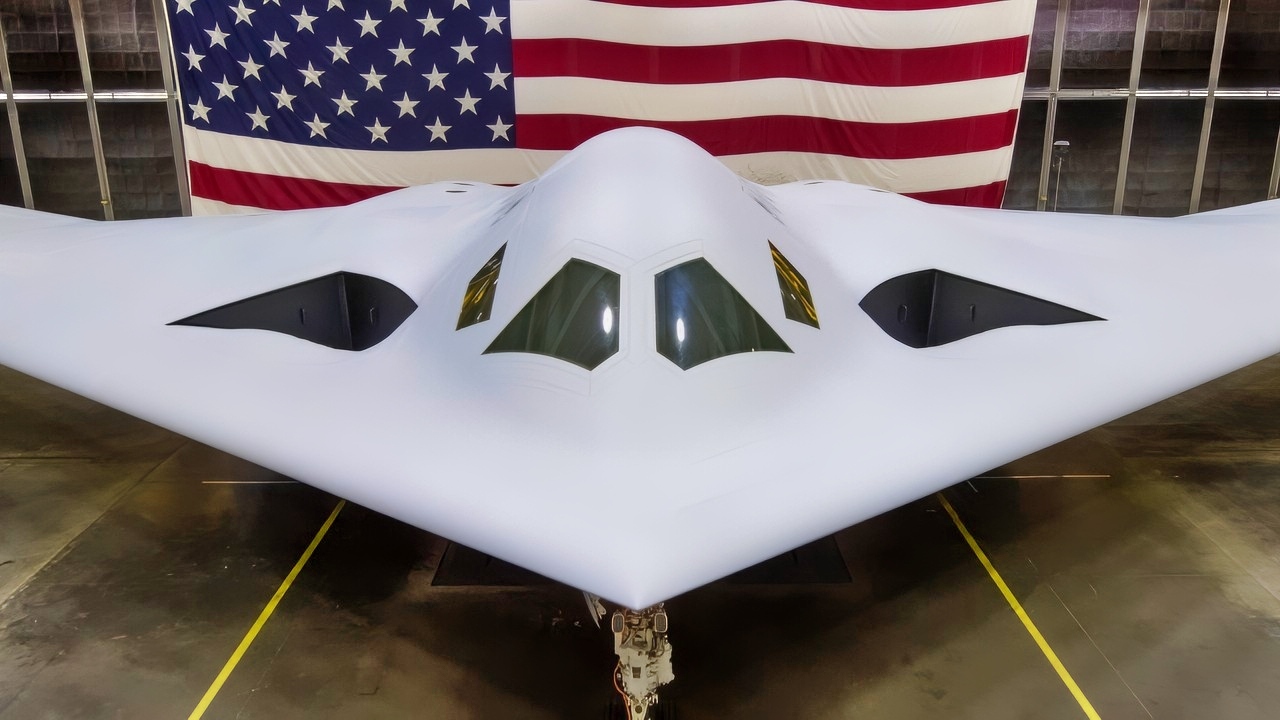
The B-21 Raider was unveiled to the public at a ceremony Dec. 2, 2022 in Palmdale, Calif. The B-21 will provide survivable, long-range, penetrating strike capabilities to deter aggression and strategic attacks against the United States, allies, and partners. (U.S. Air Force photo)
Most recently, B-52s demonstrated the deterrent effect they still have, particularly toward adversaries whose capabilities are not on par with those of the United States.
Scrambled to Barksdale Air Force Base, part of U.S. Southern Command’s area of responsibility, the bombers threaten a range of targets across Latin America, and in Venezuela in particular.
B-52 Bomber: What Happens Next?
With the B-52 upgrades, the U.S. Air Force has decided to double down on the Cold War platform for the long term.
Thanks to the comprehensive engine update program, the bomber’s avionics and other digital upgrades, combined with a deep weapons modernization and sustainment initiative, the B-52J is slated to serve well into the 2050s.
Though the jet cannot match the capabilities of its high-end counterpart, the upcoming B-21 Raider stealth bomber, the B-52’s combination of long range, increased loiter time, and high payload capacity makes it a potent platform nonetheless.
In combination, these upgrades ensure the Stratofortress will remain one of the pillars of the United States’ strategic deterrence objectives.
About the Author: Caleb Larson
Caleb Larson is an American multiformat journalist based in Berlin, Germany. His work covers the intersection of conflict and society, focusing on American foreign policy and European security. He has reported from Germany, Russia, and the United States. Most recently, he covered the war in Ukraine, reporting extensively on the war’s shifting battle lines from Donbas and writing on the war’s civilian and humanitarian toll. Previously, he worked as a Defense Reporter for POLITICO Europe. You can follow his latest work on X.
More Military
3 U.S. Navy Ohio-Class SSGN Missile Submarines Surfaced As A Warning To China
Why the U.S. Navy Legally Needs 11 Aircraft Carriers
China’s Mystery H-20 Stealth Bomber Can Be Summed Up Simply in Just 1 Word
RANKED: The U.S. Army’s 5 Best Handguns Of All Time
Why It’s Almost Impossible for the Houthis to Sink a U.S. Navy Aircraft Carrier


Drew B. Williams
November 16, 2025 at 8:33 am
B-52’s are fine in a combat/contested environment “if” it has F-22/F-35’s to keep it company (escort protection). It’s a radar “noise-maker”…it “draws” SAMs…people say that’s a “bad” shortcoming…but remember, we want to destroy/diminish the enemy’s SAM capabilities which threaten our air assets…well, B-52’s kick the bushes and draw out the SAMs. B-52’s with their ECM equipment, are putting out a lot of radar signature and “noise” (rustling the bushes)….but escorting F-35’s may never be seen/identified on enemy radar…those escorting F-35’s can hunt down those SAM sites that are busy being drawn to the B-52s. B-52s “do” have SAM flares to go along with their ECM equipment for protection…down the road (with time) I believe B-52s will have laser (offensive/defensive) systems. Destruction of those SAM sites are “golden” in value in achieving air supremacy…B-52’s can play a role helping to make that happen. If you use B-21’s, the goal is to sneak in without being seen and destroying the mission target (ie nuclear facilities in Iran). They are not designed to “rustle” those bushes and draw SAM fire. Changing topic…over time, the AF could do some serious R&D work and see if improvements in wing design and engines are possible to reach a performance goal of say, 700 miles per hour (nudging supersonic) and improving the operational ceiling of the B-52. As it stands now…the B-52 is faster than the B-2 stealth bomber, and they carry a much larger (lethal) payload.