

Key Points and Summary – Despite President Trump’s claims that U.S. strikes “obliterated” Iran’s nuclear program, a new analysis argues this is dangerously misleading.
-The strikes failed to destroy Iran’s crucial stockpile of highly enriched uranium, which was likely stored in deep, undamaged tunnels.

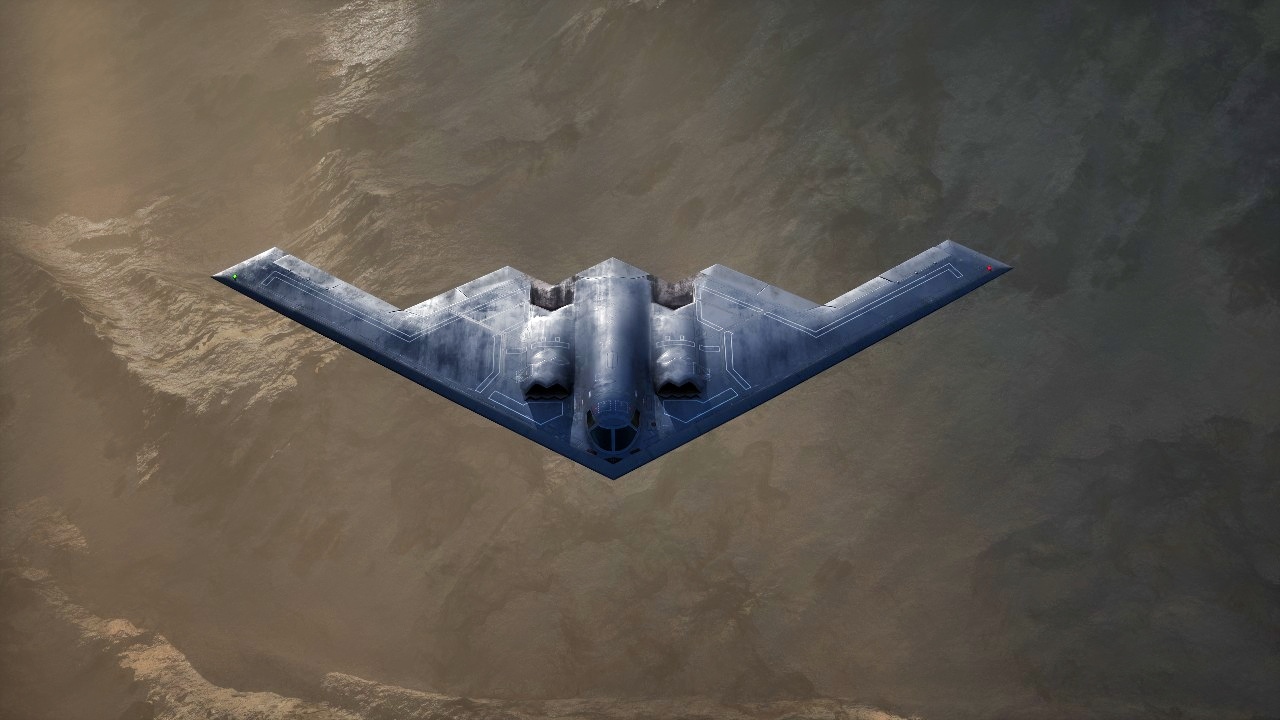
Really Up Close B-2A Spirit Bomber. Image Credit: Harry J. Kazianis/National Security Journal.
-With this material and its existing scientific know-how, Iran doesn’t need to rebuild its extensive facilities.
-Instead, it could use a small, hidden plant to enrich the surviving uranium and produce its first nuclear bomb in less than a year, rendering the expensive military operation a strategic failure.
The Iran Nuclear Crisis Is Far From Over
Ever since the U.S. attacked Iran’s nuclear facilities in June, President Donald Trump has been insisting that those facilities were completely “obliterated,” even as news reporting and intelligence reports have painted a much more ambiguous picture of what happened.
The idea, as promoted by the White House, is that following the strikes, the Iranian nuclear capability is not something to be concerned about, at least for the time being.
But one new op-ed argues that whether the facilities were destroyed is the wrong question to ask.
Writing for Foreign Policy, James M. Acton, the co-director of the Nuclear Policy Program at the Carnegie Endowment for International Peace, argues that “Iran doesn’t need to rebuild its damaged facilities to sprint for a nuclear weapon.”
Action argues that while Trump is arguing that it would take Iran “years” to rebuild its nuclear program after the attacks, this may be true, but that’s not what’s important.
Surviving Uranium
“Iran does not need to rebuild its previous nuclear program to build the bomb,” he writes. “Both the United States and Israel believe, with good reason, that most of Iran’s stockpile of highly enriched uranium (HEU) survived the attack. Tehran likely also retains the capability to further enrich and then weaponize this material to produce a handful of nuclear weapons. If Tehran decides to proceed down this route, it could likely manufacture its first bomb within a year, despite the Trump administration’s implication to the contrary.”
Acton also looked at the status of Iran’s stockpile.
“Prior to the onset of the Iran-Israel war, most of Iran’s HEU stockpile, which included about 400 kilograms of HEU enriched to 60 percent, was stored in tunnels under its nuclear complex at Esfahan. There’s apparently disagreement among intelligence agencies about whether Iran moved some or all of that material before the Israeli strikes, though Israel and the United States seem increasingly confident that it did not.”

B-2 Stealth Bomber at USAF Museum July 19 2025. Image Credit: Harry J. Kazianis/National Security Journal.
It does not appear that the U.S. or Israel succeeded in destroying the Esfahan tunnels.
The material is likely now “sitting unsquashed in intact tunnels.” He also described the idea, floated in a recent New York Times story, that Iran may not be able to dig the uranium out as “nearly comical.”
“In short, it is highly likely that most of Iran’s HEU survived the strikes and is accessible. Israel and the United States reportedly hope to deter Iran from removing it by the threat of further military action—but there’s no meaningful technical barrier to Iran’s doing so,” he writes.
How Iran Could Build a Nuclear Bomb
Acton looked at what Iran could do with its current uranium stockpile.
“If Iran decided to build the bomb, its next step would be to enrich this material further. Unfortunately, the more enriched uranium is, the easier further enrichment becomes. As a result, Iran could make do with a centrifuge facility much smaller than the now-destroyed industrial-scale plants at Fordow or Natanz (which were designed to accommodate thousands and tens of thousands of centrifuges, respectively). I estimate that with fewer than 200 centrifuges and using 60 percent HEU as feedstock, Iran could produce one bomb’s worth of 90 percent HEU in just 10 to 20 days.”
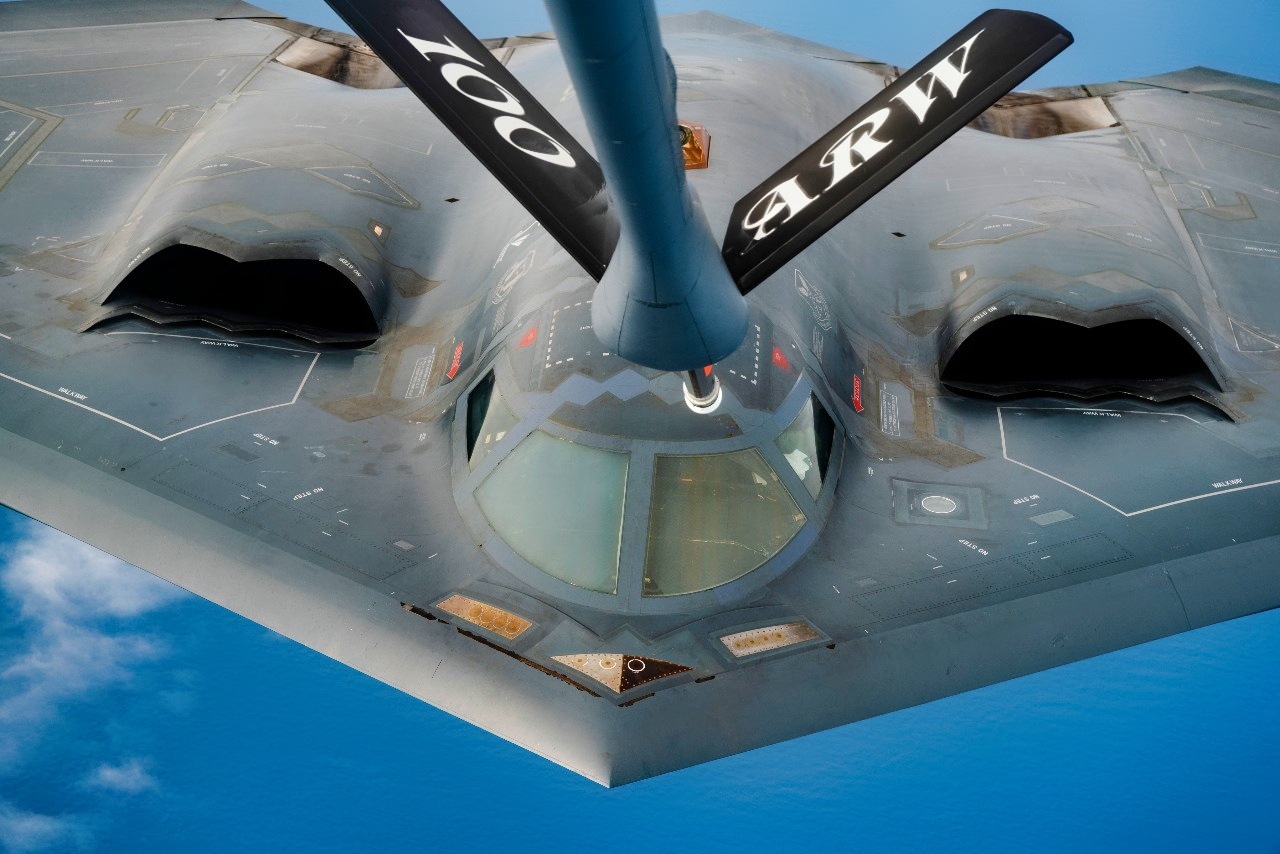
A U.S. Air Force B-2 Spirit assigned to the 509th Bomb Wing, conducts aerial refueling operations during a Bomber Task Force mission over the Atlantic Ocean, Sept. 6, 2021. Strategic bomber missions enhance the readiness and training necessary to respond to any potential crisis or challenge across the globe. (U.S. Air Force photo by Staff Sgt. Rachel Maxwell)
He also argues that Iran could have an enrichment plant already, either “hidden in plain sight in an anonymous industrial building” or possibly deep underground. Or they could set up a new one.
“Iran, for its part, has already conducted extensive experiments in this area and has probably perfected a recipe for producing pure uranium metal. In the unlikely event there is not a single laboratory in the entire country that is suitably equipped for this process, Iran could set one up rapidly and quietly. The necessary equipment (such as furnaces) and materials (such as high-purity calcium or magnesium) are widely available,” he writes.
About the Author: Stephen Silver
Stephen Silver is an award-winning journalist, essayist, and film critic, and contributor to the Philadelphia Inquirer, the Jewish Telegraphic Agency, Broad Street Review, and Splice Today. The co-founder of the Philadelphia Film Critics Circle, Stephen lives in suburban Philadelphia with his wife and two sons. For over a decade, Stephen has authored thousands of articles that focus on politics, national security, technology, and the economy. Follow him on X (formerly Twitter) at @StephenSilver, and subscribe to his Substack newsletter.
Fighter Jet Fails
Russia’s Su-57 Felon Stealth Fighter Is a Waste of Rubles


pagar
July 30, 2025 at 11:30 am
This topic is beyond stupid.
If iran indeed succeeds in building a bomb, and assuming they actually succeeded without blowing themselves up, they would still need to carry out a test.
As a test is needed to verify that it’s fully ticking and functioning.
Why go to all that trouble.
When the easier, cheaper and faster and far more convenient route would be to pick up the phone, call the friendly neighborhood salesman from Pyongyang or Moscow, and put in a request for an order of ten to fifteen miniaturized warheads. COD.