
Ukraine’s Long-Range Sanctions Are Changing Daily Life in Russia: Despite Moscow’s best efforts to mitigate the damage caused by Ukraine’s long-range strikes on energy infrastructure, Russia’s fuel crisis is only deepening, with regional authorities introducing restrictive rationing measures. While drivers struggle to access the fuel they need to live their daily lives, freight companies and businesses are also being forced to adapt to new and persistent fuel shortages.
In recent days, authorities in Russia’s Altai Republic announced that motorists would now be allowed to refuel only once every 24 hours, with Regional Prime Minister Alexander Prokopyev saying that the change was intended to distribute limited supplies more evenly across the region after drivers were discovered exploiting the previous system by filling up just before and immediately after midnight.
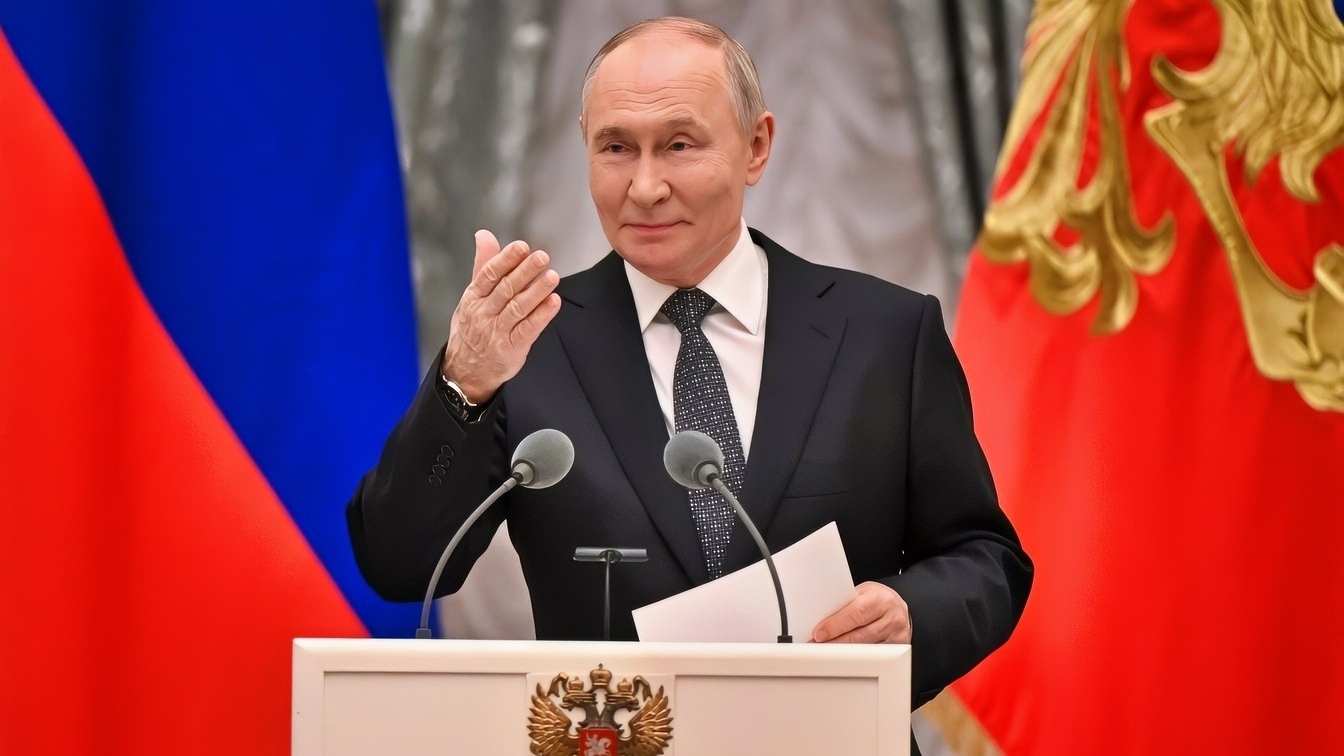
Putin in June 2026 Creative Commons Photo
The restrictions, which remain in effect through September 1, limit motorists in the hardest-hit districts to 30 liters of gasoline or 50 liters of diesel per day, with filling stations also required to record vehicle registration numbers in a centralized database to ensure the rules are followed.
Russian Deputy Prime Minister Alexander Novak also acknowledged on July 25 that fuel shortages are persistent and deeply problematic across parts of Siberia, despite federal efforts to stabilize the supply chain.
Ukrainian Strikes Continue Targeting Energy Infrastructure
Ukraine’s long-range strike campaign continues and shows no sign of slowing down. Ukrainian drones have struck or damaged major refineries across the country in recent weeks, spanning Omsk, Yaroslavl, Saratov, Moscow, Salavat, Afipsky, Syzran, and Ilsky. Depots and pumping stations have also been damaged alongside major export terminals. Strikes are becoming deeper all the time, too, with some now having reached more than 1,200 miles from Ukrainian territory, proving that range is no longer a limiting factor in Ukraine’s efforts.
One of the most significant recent attacks occurred on July 6, when Ukrainian drones struck the Omsk refinery in western Siberia. Reuters cited two industry sources who claimed that Russia’s largest refinery had halted processing following the attack. The facility was also the largest gasoline producer in the country, contributing to much of the disruption seen domestically.
As attacks continue, Russia has been forced to divert resources toward repairs to all of its top 10 refineries in an attempt to keep fuel flowing to customers. Moscow has also made moves to begin imports of gasoline and diesel from Belarus, India, and Kazakhstan.
On July 21, nationwide gasoline production had fallen to the equivalent of roughly 65% of average seasonal consumption by early July, after lagging behind demand for several months already.
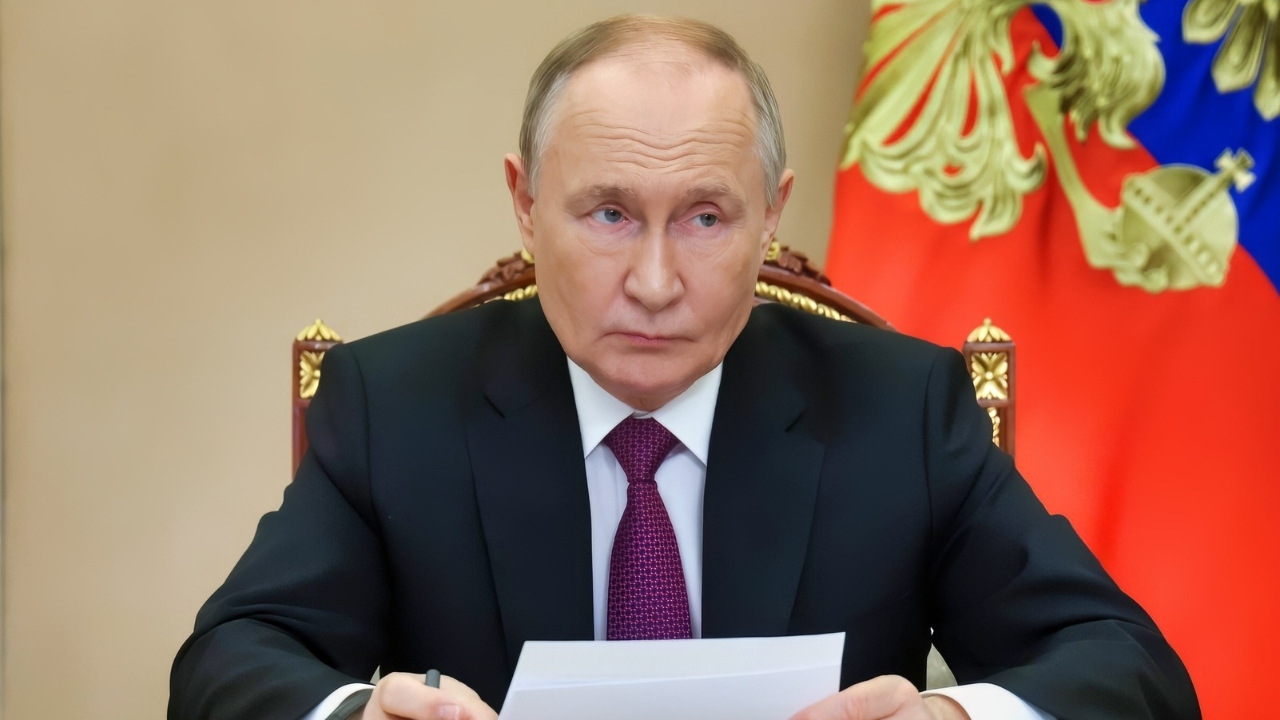
Russia’s President Putin Sitting at a Desk. Image Credit: Creative Commons.
Russia, then, can only hope to catch up by facilitating rapid repairs of its refineries and importing from friendly countries – but the problem may still worsen if Ukrainian strikes continue. And they almost certainly will.
Moscow Protects the Capital As Shortages Grow
While fuel rationing has been implemented throughout the country, the Kremlin has also begun moving fuel around the country to protect the most politically important regions. On July 21, reports described how Russian authorities had redirected gasoline from refineries in Siberia and the Urals toward Moscow. Industry sources claimed that the strategy of moving fuel and importing from foreign suppliers had largely stabilized fuel supplies in Moscow by mid-July, but shortages continued across Russia’s 11 time zones.
The same report also confirmed that Crimea is still one of the hardest-hit regions in the country, while additional supplies have also been drawn from facilities like the Achinsk refinery in Siberia.
Taxi Drivers Leave the Roads
The fuel shortages are changing how Russians travel to work and around their cities, too. In a July 27 report, independent outlet Kontur cited industry representatives and major taxi operators who said that drivers across several regions have started shortening their shifts and refusing longer journeys. Taxi drivers are also reportedly avoiding congested city centers because they cannot be certain of finding gasoline.
Sergey Privalov, a board member of Russia’s National Taxi Fleet Association, said that the shortages had made many fares unprofitable, while fleet operators estimated as much as 20% of active drivers had already left the industry.
Kontur also cited Sber Index data showing spending on taxis and car rentals fell by 3% during the final week of June, even as spending across most other consumer categories increased by 7.9%.
Supply Chains Feel the Pressure
The disruption is also spreading beyond motorists and affecting the wider economy as it becomes harder to transport goods. According to Kontur, a food manufacturer in Russia’s Ulyanovsk region, retailers in St Petersburg were warned that regional restrictions on gasoline and diesel sales risk delaying deliveries of its products.
Alexander Myshinsky, the head of the Real retail group and its St Petersburg supermarket chain, told the outlet that suppliers from outside the region are struggling to keep their delivery schedules, despite existing inventories having so far prevented shortages on store shelves. The outlet also reported that trucking companies expect freight rates to rise by at least 10%, with some carriers refusing longer contracts and limiting their operations to routes within 150 kilometers.
About the Author: Jack Buckby
Jack Buckby is a British researcher and analyst specializing in defense and national security, based in New York. His work focuses on military capability, procurement, and strategic competition, producing and editing analysis for policy and defense audiences. He brings extensive editorial experience, with a career output spanning over 1,000 articles at 19FortyFive and National Security Journal, and has previously authored books and papers on extremism and deradicalization.


