

Over the weekend, Ukrainian President Volodymyr Zelensky explained that his country had successfully struck a ship in the Caspian Sea that was transporting cargo of a military nature that was linked to both Iran and Russia — a move that underlines how intertwined the wars in Ukraine and Iran have become.
More emphatically, President Zelensky explained that Russian assistance to Iran would be considered unacceptable in the future. “I will instruct our intelligence to share with our partners the information we have regarding Russia’s new assistance to the Iranian regime,” the president wrote on X.

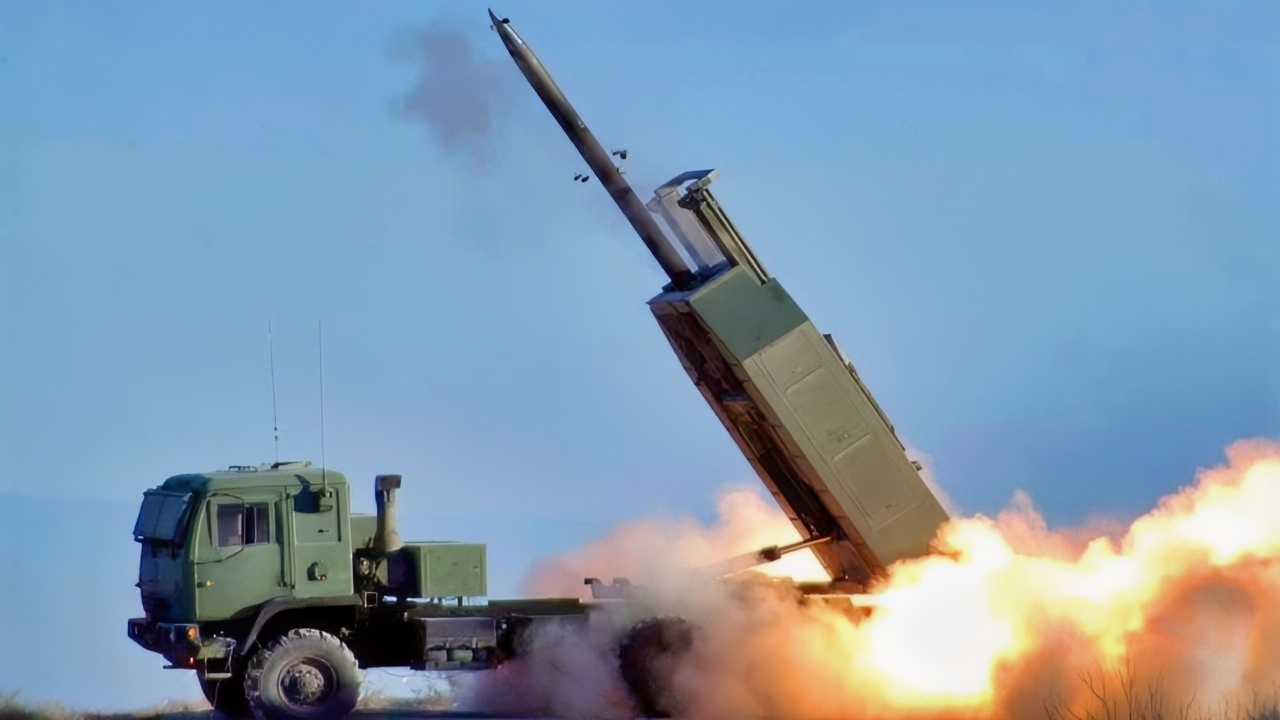
A M109A7 Paladin, assigned to 1st Battalion, 82nd Field Artillery Regiment, Division Artillery, 1st Cavalry Division, fires a round during Operator New Equipment Training on Fort Hood, Texas, Aug. 25, 2025. The First Team is fielding new equipment, as part of the Transforming in Contact initiative, and conducting training to increase familiarization and precision with the new vehicles. (U.S. Army Photo by Spc. David Dumas)
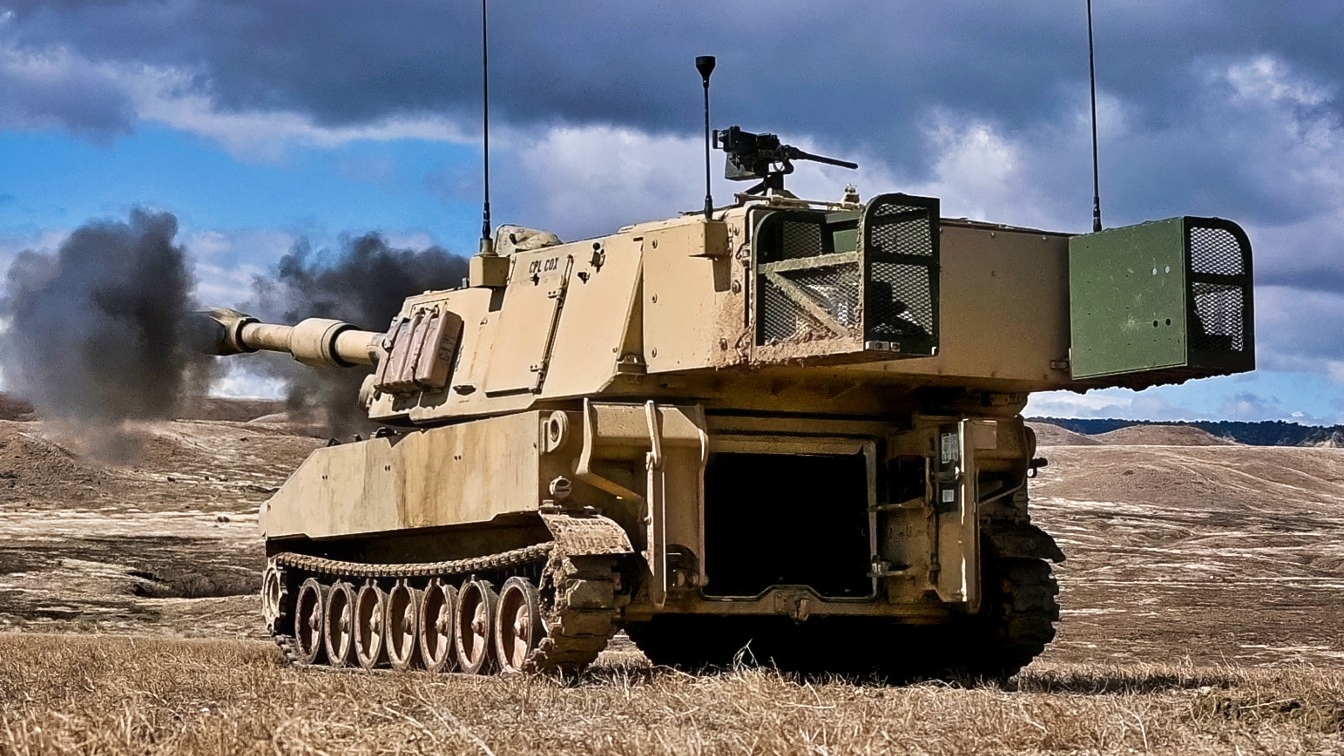
A U.S. Army M109A6 Paladin assigned to 3rd Battalion, 29th Field Artillery Regiment, 3rd Armored Brigade Combat Team, 4th Infantry Division fires during an artillery direct fire range at Fort Carson, Colorado, April 28, 2023. Direct fire ranges test gun crews’ abilities to engage threats at close range, one of the few times a gun crew can see their targets without a forward observer. (U.S. Army photo by Capt. Tobias Cukale)
“Since the beginning of July, we have recorded active Russian satellite surveillance of the Gulf states and U.S. military facilities located there. These images subsequently appear in Iran. At the same time, there is a clear correlation between Russia’s satellite imagery of these sites and Iranian strikes – both before the attacks, in preparation for them, and afterward, to assess the damage inflicted.”
But President Zelensky added that there were specific details about the Russian satellites worth mentioning. “On July 19 and 20 alone, four air bases fell within the area of interest of Russian satellites – two in Bahrain, one in Jordan, and one in Kuwait. The purpose is clear,” the president explained. “None of us in the world should turn a blind eye to one very simple fact: evil always seeks ways to make things worse and spread further. Russia must be stopped. This war must be stopped. Pressure on the aggressor must work.”
The War’s Expanding Fronts
Ukraine has deepened its involvement in the ongoing war in Iran as well, sending air defense personnel to many Gulf countries to bolster their capabilities against Iranian drone and missile attacks.
Though Ukraine has leveled accusations of complicity in Russia’s attack against Ukraine, the strikes in the Caspian Sea are believed to be the first time that Ukraine has brought an Iranian ship into its crosshairs.
The war in Iran is expanding in other directions as well. Though the Strait of Hormuz and its stoppering by the United States has flooded headlines, another important strait has become pulled into that war: the Bab al-Mandab Strait.
That narrow body of water separates the Red Sea and the Gulf of Aden, and has become a vital conduit for Saudi oil to flow outwards to international destinations.
But the Houthis, the rebel group that controls parts of Yemen, have declared a blockade on Saudi shipping, in essence corking up the Bab al-Mandab Strait and simultaneously opening up a new front to the war in Iran.
The Moscow-Tehran Axis
Russia and Iran’s relationship became significantly more substantial in 2022, when Iran supplied Russia with its Shahed drones, which Russia has since modified and manufactured en masse, leveraging the drone’s relatively simple design and explosive payload to attack infrastructure throughout Ukraine, much of which is civilian in nature. Iran may have supplied Russia with missiles and missile components as well.
Relations between Ukraine and Iran were prickly even before Russia’s full-scale invasion of Ukraine in February 2022.
Two years prior, in 2020, Iranian air defense operators fired on Ukraine International Airlines Flight PS752, hitting the commercial airliner, a Boeing 737, with two missiles. All 176 passengers and crew died following the strikes, which the IRGC called an accident.
The Caspian Sea Angle
The Ukrainian strike in the Caspian Sea may be part of a broader pressure campaign against Tehran, the Financial Times reports.
While Iran’s ability to import and export goods from the outside world via its southern ports has been severely restricted by the United States Navy’s presence there, the Caspian Sea to the north has increased in importance and allowed Iran to import some goods from its neighbors in the region there — including goods from China shipped via Central Asian states, the Financial Times notes.
Last week, Israeli forces struck an Iranian facility on the Caspian Sea, part of a larger maritime supply line that Russia and Iran have used to shuffle weapons, ammunition, and other goods between the two countries. The Israeli attack on Bandar Anzali, an Iranian port, hit a shipyard facility, Iranian warships, and a command post, according to reporting by The Wall Street Journal.
The Look Forward
What the outcome of the wars in Iran and Ukraine will be, and what their timelines ultimately are, remains to be seen.
But what is becoming increasingly clear is that two distinct wars are becoming more intertwined — an unusual case of two conflicts that seem to be slowly morphing into a single war involving a multitude of actors and disparate geographic fronts.
About the Author: Caleb Larson
Caleb Larson is an American multiformat journalist based in Berlin, Germany. His work covers the intersection of conflict and society, focusing on American foreign policy and European security. He has reported from Germany, Russia, and the United States. Most recently, he covered the war in Ukraine, reporting extensively on shifting battle lines in Donbas and writing on the war’s civilian and humanitarian toll. Previously, he worked as a Defense Reporter for POLITICO Europe. You can follow his latest work on X.


