

This past May, a senior economist at the Russian state-run economic development institution, Vnesheconombank (VEB), told a gathering of prestigious academic and business figures that Russia will not be able to win the competition in the “war of attrition” with the West. VEB is a major institution within the Russian governmental structure that finances national projects.
His remarks to this closed forum were finally made public this past Friday. Within two days, he was removed from this position he had held for 12 years. Ukrainian publications are not identifying who ordered his dismissal, but unconfirmed sources are stating that VEB head Igor Shuvalov fired the economist, Andrei Klepach, following a “call from above.”
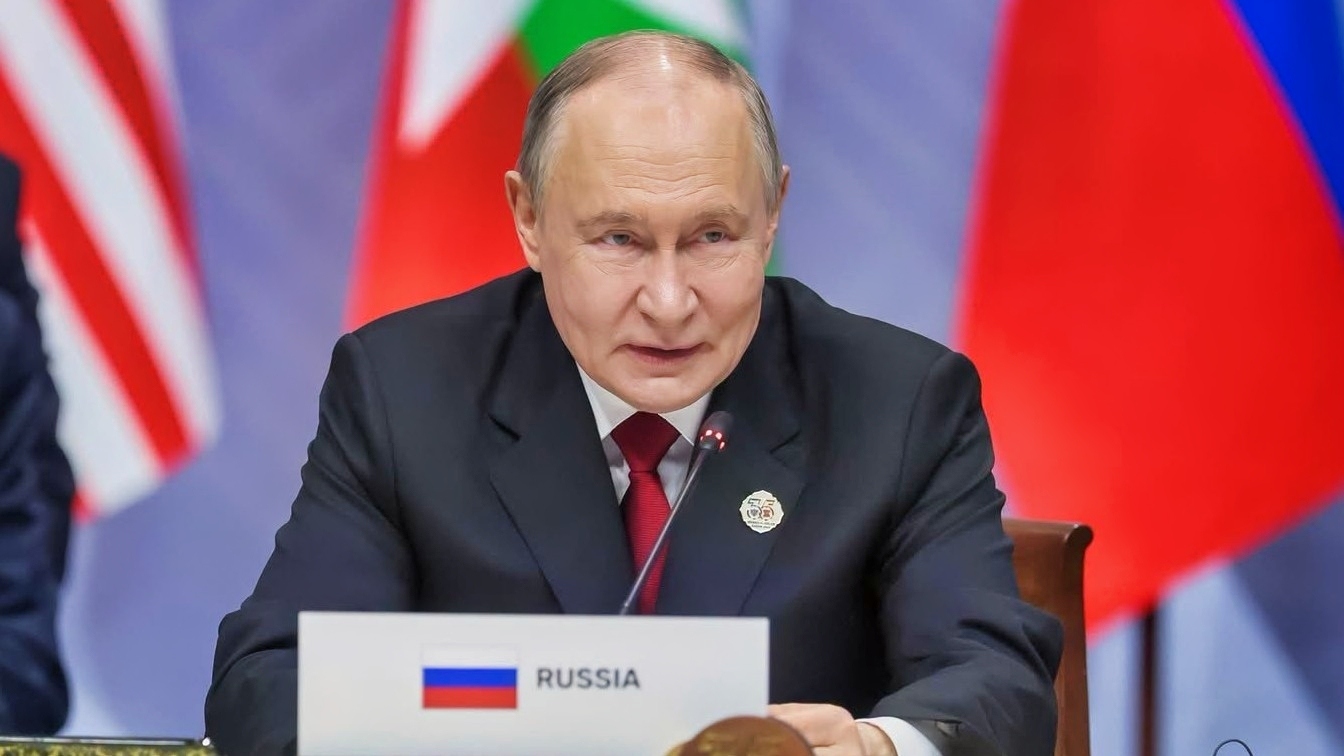
Putin at ASEAN Meeting June 2026 Russian Federation Handout Photo
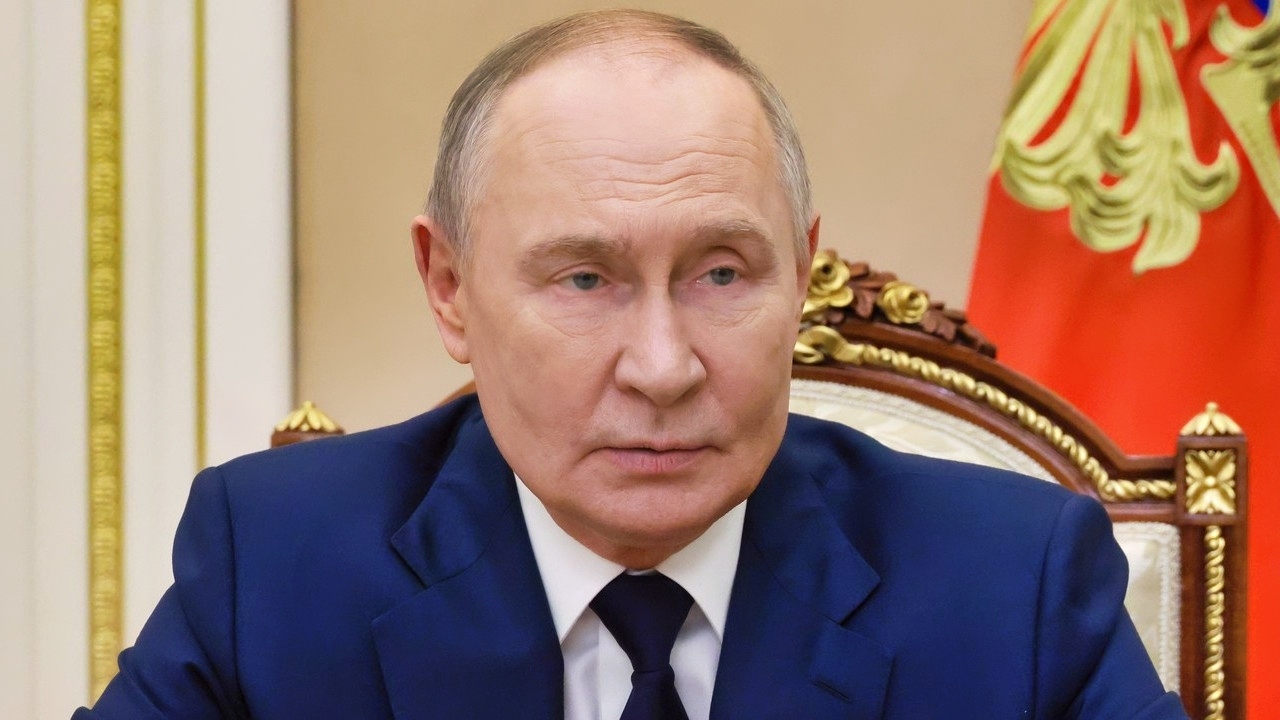
Putin in December 2025 Russian Federation Handout Image
This call was apparently a reaction after The Moscow Times published excerpts from Klepach’s remarks, which he delivered back in May and were then picked up by Russian media outlets. His address pointed out that the support the US and its allies – both within and outside of Europe – are providing Ukraine in its war with Russia is progressively degrading Russia’s overall economic well-being.
The gathering Klepach spoke at was the Nikitsky Club, described as an elite Russian interdisciplinary discussion club for academics and entrepreneurs. According to his analysis, the costs of the Russian economy from sanctions and Western blockades are growing.
These are then compounded by the increasing damage inflicted by Ukrainian strikes on ports, infrastructure, chemical and oil refineries. Furthermore, the opportunity cost of continuing to press ahead with the war in Ukraine is causing Russia to increasingly lag behind the world in the development of technologies.
Falling Behind
“We’re falling behind. We are losing both technological and economic competition in the world. And, I have already said, we lose it not only to China and the United States, we [also] lose it to Ukraine in some way. The economy of Ukraine, of course, is partly destroyed, a demographic catastrophe. But, once again, the Ukrainian economy, despite everything, survives. Of course, there is a huge financial help…With such assistance for military spending and their own expenses, it’s about 50 per cent of our budget,” Klepach said.
“We will not win the competition in this war of attrition. We have an illusion that everything will collapse there. It didn’t collapse and won’t collapse. Our costs are increasing,” Klepach continued.
He reminded those present that after the military spending-driven economic boom of 2023-24, the Russian economy has fallen back this year, investments have decreased precipitously, and civilian industries have fallen into recession. Those industries run the gamut from aviation and building materials to light and food industries.
Their situation is then exacerbated by the Central Bank of the Russian Federation’s policy, which prioritizes keeping a lid on inflation at the expense of, among other restrictions, extremely high interest rates. According to Klepach, this strategy is responsible for at least half of Russia’s economic downturn.
His comments echo the complaints of Russia’s chief industrialists, including Sergei Chemezov, a long-time ally of Russian President Vladimir Putin. Chemezov runs the massive industrial conglomerate Rostec that controls most of Russia’s defense industrial enterprises.
He reminded the Nikitsky audience that after the military boom of 2023-24, the Russian economy has fallen this year, investments have sharply decreased, and civilian industries have fallen into recession – from the aviation industry and the production of building materials to the light and food industries. The situation is aggravated by the Central Bank of the Russian Federation’s ultra-tough policy, which, according to Klepach, is responsible for at least half of the economic downturn.
“The conflict in Ukraine with the participation of NATO has been going on longer than the Great Patriotic War, and its completion has not yet been seen. Both sides are increasing the intensity of strikes, including on each other’s economies. Losses from strikes of the Armed Forces of Ukraine on our infrastructure – port, oil and gas, chemical complexes, logistics – are increasing and are already turning into a noticeable macroeconomic barrier to the growth of the Russian economy,” Klepach said.
Could There Be an Internal Revolt?
Klepach stated that in the immediate future, Russia will be hit by a new wave of sectoral sanctions and “increasing losses from strikes of the Armed Forces of Ukraine”.
The combined effect, he predicted, is that the Russian economy’s potential growth rate may not exceed 1-1.5 percent.
More alarming, he said, and this part of his address may very well be the comment that led to his dismissal, collectively these pressures will inevitably lead Russia to a “social crisis”, and that it will burst on the scene “when no one really expects it”.
Looking at Russian history, however, leads one to think that the unexpected is exactly what might transpire, as he pointed out.
“But no one expected, I remind you, the February [1917] Revolution. Lenin wrote in December 1916 that ‘we will not live to see it’, but he lived to see it in a few months. The situation in the [Soviet] Union of 1991 – we went to it for a long time and consistently, and everyone understood that we were going to a crisis, but there was no fatal inevitability for the Union to disintegrate,” Klepach said.
In comparison with the former USSR, “I believe that Russia will not collapse,” he said. “But I am almost sure that we will come to a social crisis. Economically, we will not collapse, but our backwardness will also increase with all the ensuing consequences,” he concluded.
About the Author: Reuben F. Johnson
Reuben F. Johnson has thirty-six years of experience analyzing and reporting on foreign weapons systems, defense technologies, and international arms export policy. Johnson is the Director of Research at the Casimir Pulaski Foundation. He is also a survivor of the Russian invasion of Ukraine in February 2022. He worked for years in the American defense industry as a foreign technology analyst and later as a consultant for the U.S. Department of Defense, the Departments of the Navy and Air Force, and the governments of the United Kingdom and Australia. In 2022-2023, he won two awards in a row for his defense reporting. He holds a bachelor’s degree from DePauw University and a master’s degree from Miami University in Ohio, specializing in Soviet and Russian studies. He lives in Warsaw.


