


Key Points and Summary – The B-58 Hustler was the U.S. Air Force’s first operational supersonic bomber, a delta-winged, nuclear-armed hot rod that shattered speed and altitude records in the 1960s.
-Powered by four J79 engines and built around advanced electronics and a detachable weapons pod, it looked like the future of strategic bombing.

Convair B-58 Hustler during takeoff. Note the landing gear is just beginning to retract. (U.S. Air Force photo)
-In reality, it was fragile, unforgiving to fly, maintenance-intensive, and tailored to a high-altitude mission profile that died with the rise of Soviet surface-to-air missiles.
-Never used in combat and plagued by accidents and soaring costs, the Hustler was retired by 1970—an audacious leap that arrived just a bit too early.
-BONUS – We recently visited with a B-58 Hustler bomber at the U.S. Air Force Museum. We have included photos from that visit in this article.
The B-58 Hustler Bomber: Futuristic, Fast, And Flawed
The B-58 Hustler was the US Air Force’s first operational supersonic bomber, and made its initial flight on November 11, 1956.
Convair built 116 B-58s, which were a direct successor to the subsonic B-47: 30 test and pre-production aircraft and 86 for operational service. B-58 Hustlers flew in the Strategic Air Command between 1960 and 1970, and set 19 world speed and altitude records. B-58s also won five different aviation trophies.
Many of the Hustler’s records are still intact today.

Close Up of the B-58 Hustler Bomber. Image Credit: Harry J. Kazianis/National Security Journal.

More B-58 Hustler Bomber. Image Credit: Harry J. Kazianis/National Security Journal.
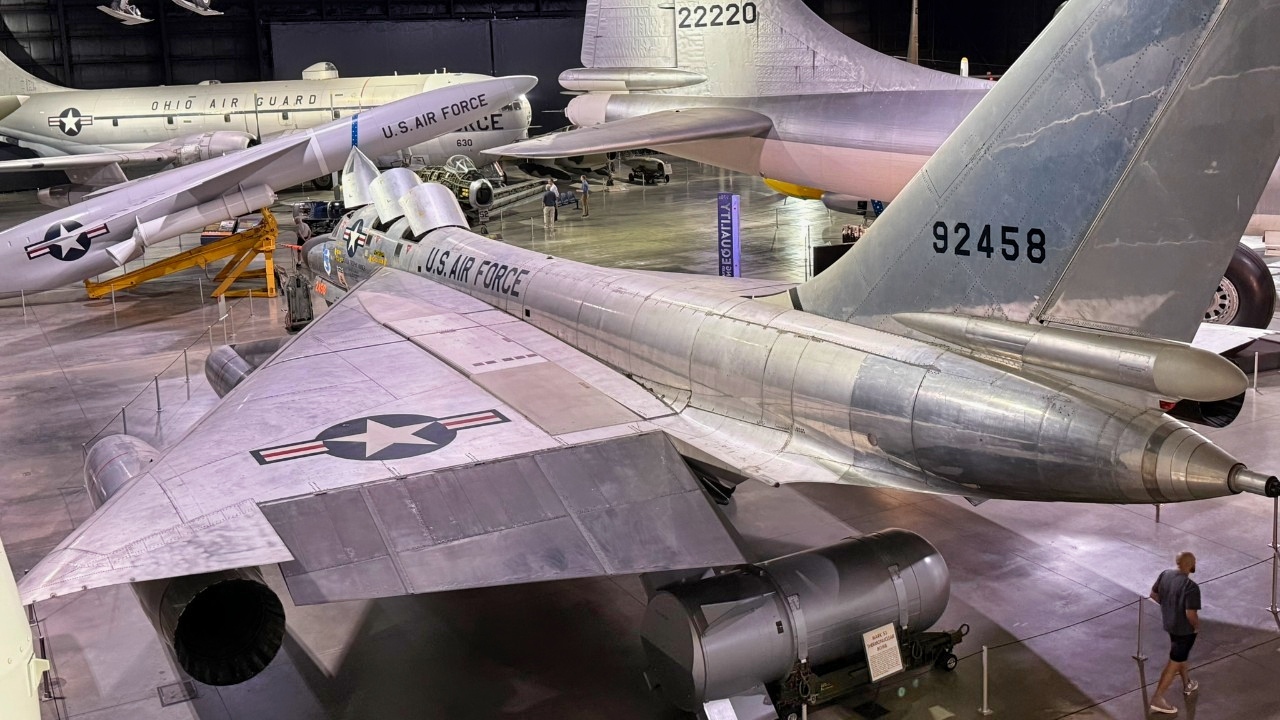
Top of B-58 Hustler Bomber. Image Credit: Harry J. Kazianis/National Security Journal.
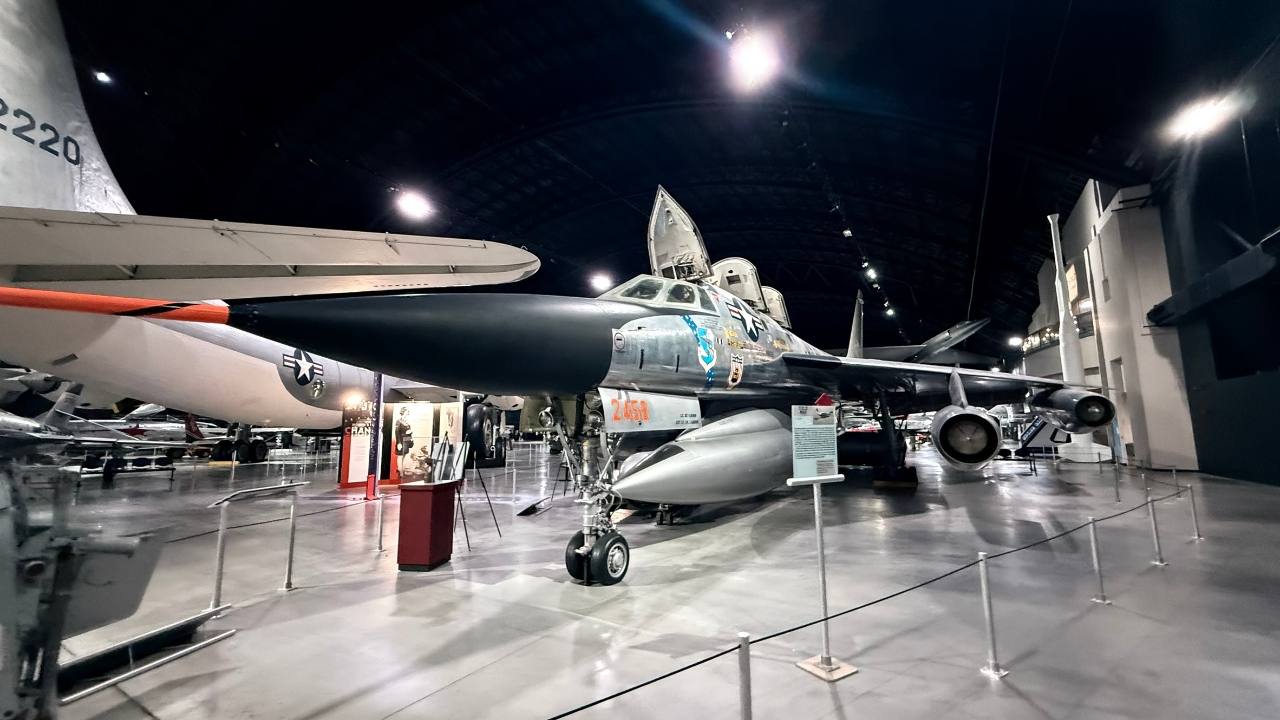
Side Angle of B-58 U.S. Air Force Museum. Image Credit: Harry J. Kazianis/National Security Journal.
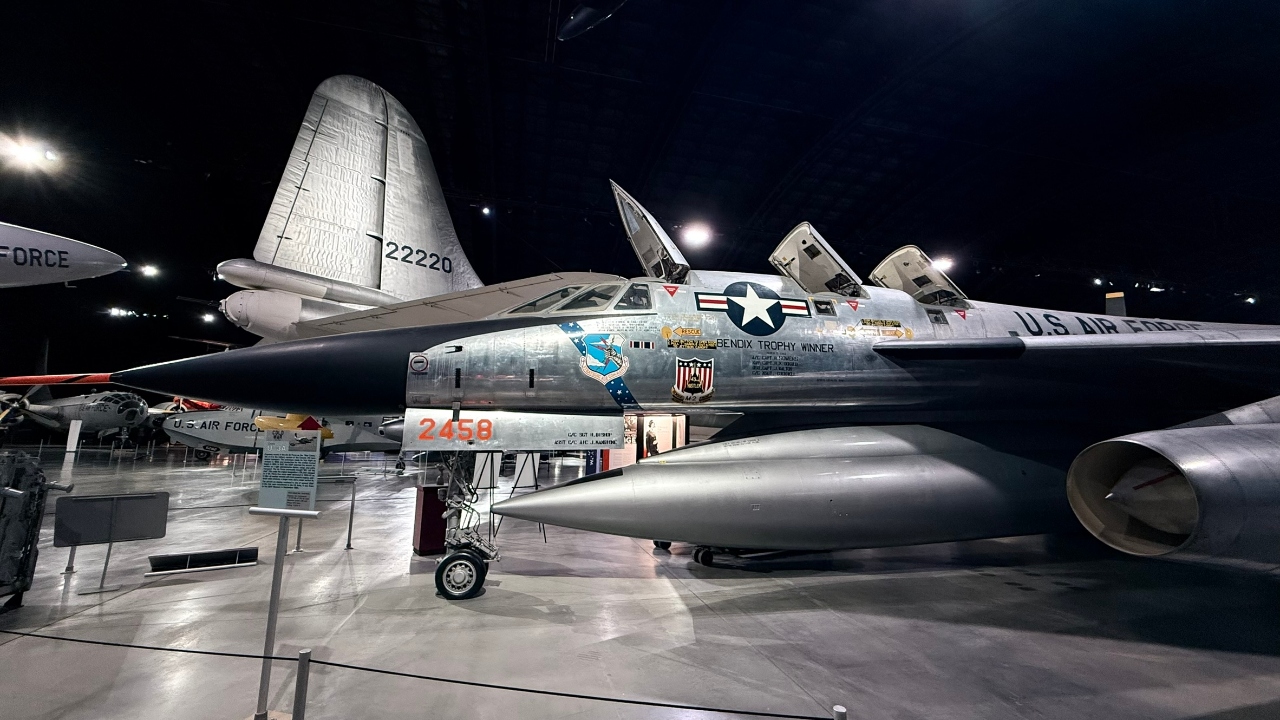
B-58 Hustler in the Air Force Museum. Image Credit: National Security Journal.
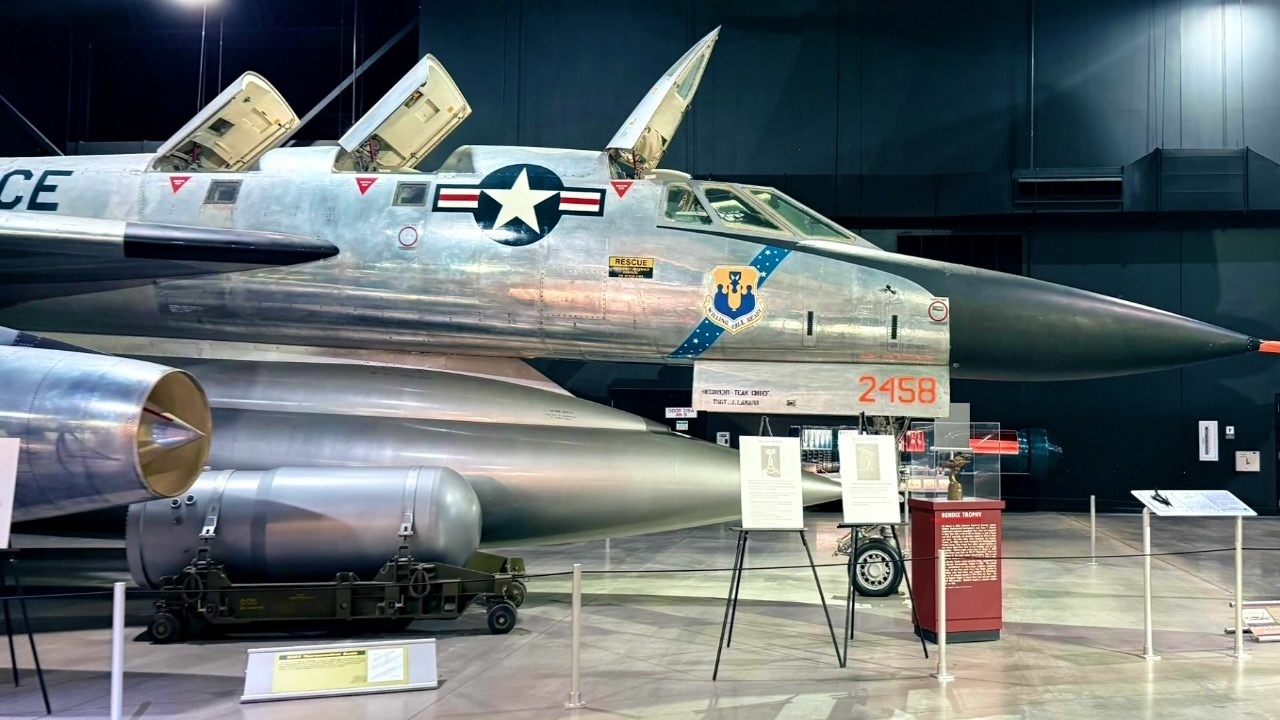
B-58 Hustler Bomber National Security Journal Photo All Rights Reserved.
Meet The B-58 Hustler
The visually appealing Hustler had a distinctive delta-winged shape, a sophisticated inertial guidance, navigation, and bombing system, a slender “wasp-waist” fuselage, and an extensive use of heat-resistant honeycomb sandwich skin panels in the wings and fuselage.
Since the thin fuselage prevented the carriage of bombs internally, a droppable, two-component pod beneath the fuselage carried a nuclear weapon—along with extra fuel, reconnaissance equipment, or other specialized gear. One 20mm cannon was carried in the tail for air defense.
Later, four external hardpoints were added, enabling it to carry up to five weapons, including one Mk 53 hydrogen bomb and four Mk 43 thermonuclear bombs, later redesignated as the B43.
The B-58 crew consisted of a pilot, a navigator/bombardier, and a defense systems operator.
The Hustler was powered by General Electric J79 engines of 15,000 lbs. thrust each (with afterburner). This allowed the bomber to reach a speed of 1,325 mph. The Hustler had a range of 4,400 miles without aerial refueling, and a ceiling of 64,800 feet.
With the 62,400 lbs of combined thrust from the four General Electric J79 turbojet engines with afterburners, it could climb at 46,000 ft/min or 235 m/s and attain an almost vertical climb.
The Hustler Had Several Major Drawbacks
However, the B-58 Hustler had a high accident rate, operational costs, and an obsolete mission profile. Despite its speed, the aircraft was difficult to fly, maintenance-intensive, and its high-altitude design was countered by the development of low-altitude surface-to-air missiles, making it a flawed and ultimately short-lived strategic asset.
The B-58 had a very high accident rate, with 26 of the 116 built being lost during its 10-year service life—a loss rate of 22.4 percent. Many of these occurred during the initial testing and service introduction phases.
One Air Force observer was quoted as saying that if the service hadn’t retired the aircraft, the entire fleet would have disappeared to nothing in an alarmingly short period of time due to its accident rate.
The B-58 was a complicated aircraft to fly. Its eccentric landing and takeoff characteristics made it a challenging aircraft for pilots to master. It was also less stable than its contemporaries and more prone to entering spins, with a dangerous difficulty in recovering from an engine loss at supersonic speeds.
The B-58 was significantly more expensive to operate than the B-52, partly because of the specialized, demanding maintenance required for its complex systems.
The B-58 was packed with the most advanced electronic navigational equipment, which allowed it to fly radio silent into enemy territory, and the bombing accuracy was also better than that of the B-52.
However, in the days of vacuum tube technology, it ran hot and needed air conditioning to keep it cool, which made it unreliable and gave the B-58 a reputation that it kept until its retirement in 1970 as an untrustworthy, expensive, and difficult-to-fly aircraft.
The B-58’s Timing Was Wrong; It Had An Obsolete Mission
The B-58 was designed for high-altitude, high-speed penetration. However, the development of Soviet surface-to-air missiles rendered this tactic obsolete, requiring a shift to lower-altitude flying.
The B-58 was not well-suited for this new low-altitude mission and was more expensive than other aircraft, like the B-52, that could perform it.
General Curtis LeMay wanted a replacement high-altitude bomber, the B-70, but that faster, high-altitude bomber was also deemed an ill fit due to the SAM threat.
The B-58 Never Saw Combat
The Hustler, like the B-36 and the B-47, was never used in combat and was configured only for nuclear attack missions, further reducing its strategic value. Therefore, it was never used in Vietnam, where the B-52 was used for strategic bombing missions.
Due to these issues, Secretary of Defense Robert McNamara ordered the retirement of the fleet in 1965, which the Air Force completed ahead of schedule in 1970.
David Cenciotti, a former Italian Air Force officer and founder and editor of The Aviationist, wrote that, “The phaseout of the fleet was ordered at the end of 1965, when the Soviets introduced highly accurate surface-to-air missiles, and it was felt that the Hustler’s high-altitude attack profile could no longer guarantee success against increasingly sophisticated Soviet air defenses.
“Moreover, the aircraft was substantially more expensive to operate than other bombers, such as the (almost immortal) Boeing B-52 Stratofortress, and also suffered from a high rate of accidental losses.”
Many of the B-58 Hustler pilots transitioned to the SR-71 Blackbird when it was accepted into the Air Force, due to their experience flying high-altitude s.
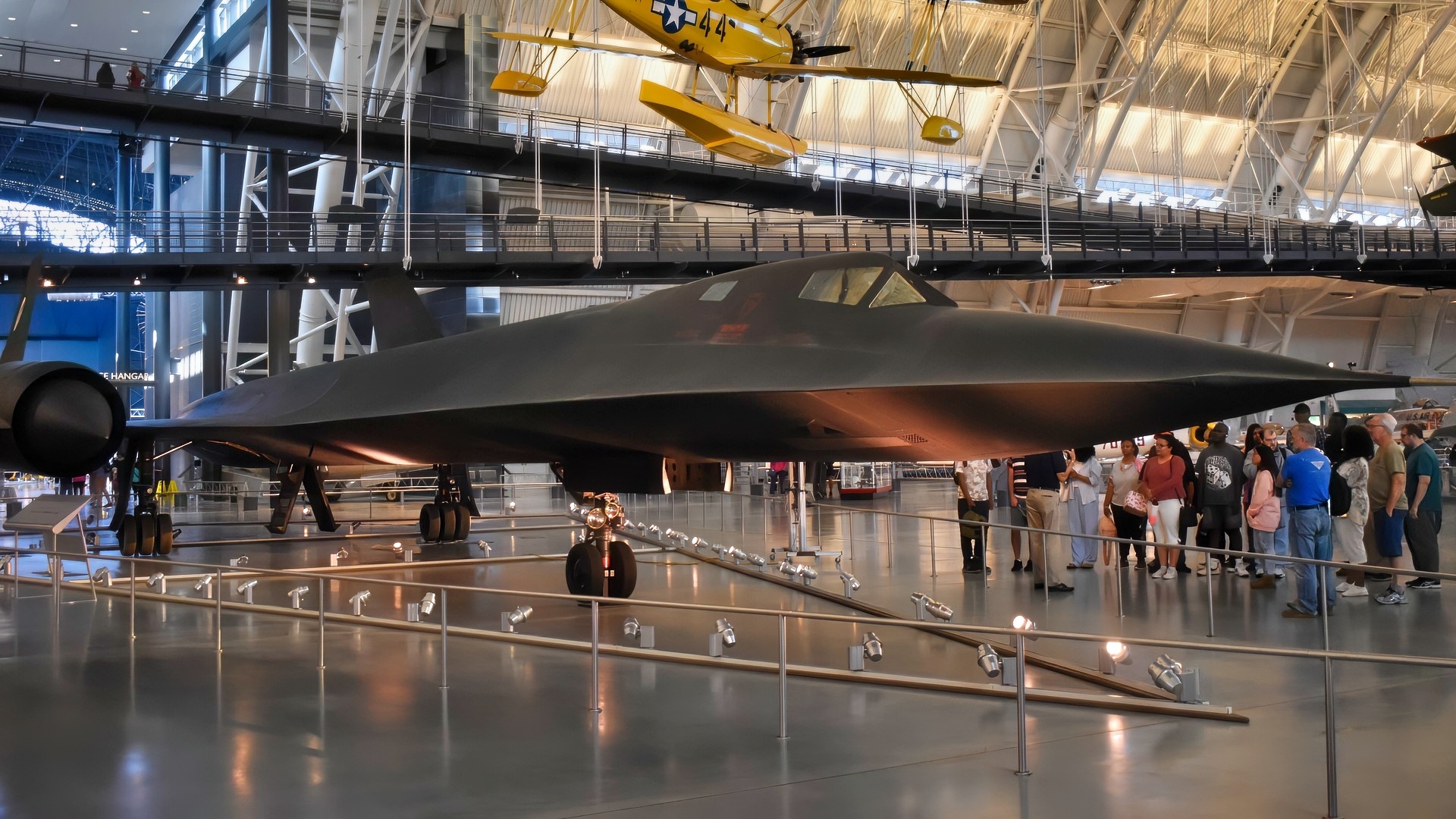
SR-71 Blackbird NSJ Photo. Image Credit: Dr. Brent J. Eastwood.
The B-58 Had Its Own “Top Gun” Cameo
In the 1964 film “Fail Safe,” a nightmarish nuclear war is averted after a B-58, named Vindicator, mistakenly bombs Moscow. To avert all-out nuclear war, the American president (Henry Fonda) agrees to bomb New York.
The B-58 wasn’t as bad as it was made out to be, but its issues were never fully resolved.
About the Author: Steve Balestrieri
Steve Balestrieri is a National Security Columnist. He served as a US Army Special Forces NCO and Warrant Officer. In addition to writing on defense, he covers the NFL for PatsFans.com and is a member of the Pro Football Writers of America (PFWA). His work was regularly featured in many military publications.
More Military
JASSM: The ‘Stealth’ Cruise Missile That Keeps Russian Generals Up at Night
The Day a B-2 Stealth Bomber Disintegrated on Takeoff
The U.S. Military’s Superpower Muscles Are Getting Old
The Mach 6.7 X-15 ‘Hypersonic Rocket Plane’ Has a Message for the U.S. Air Force


