

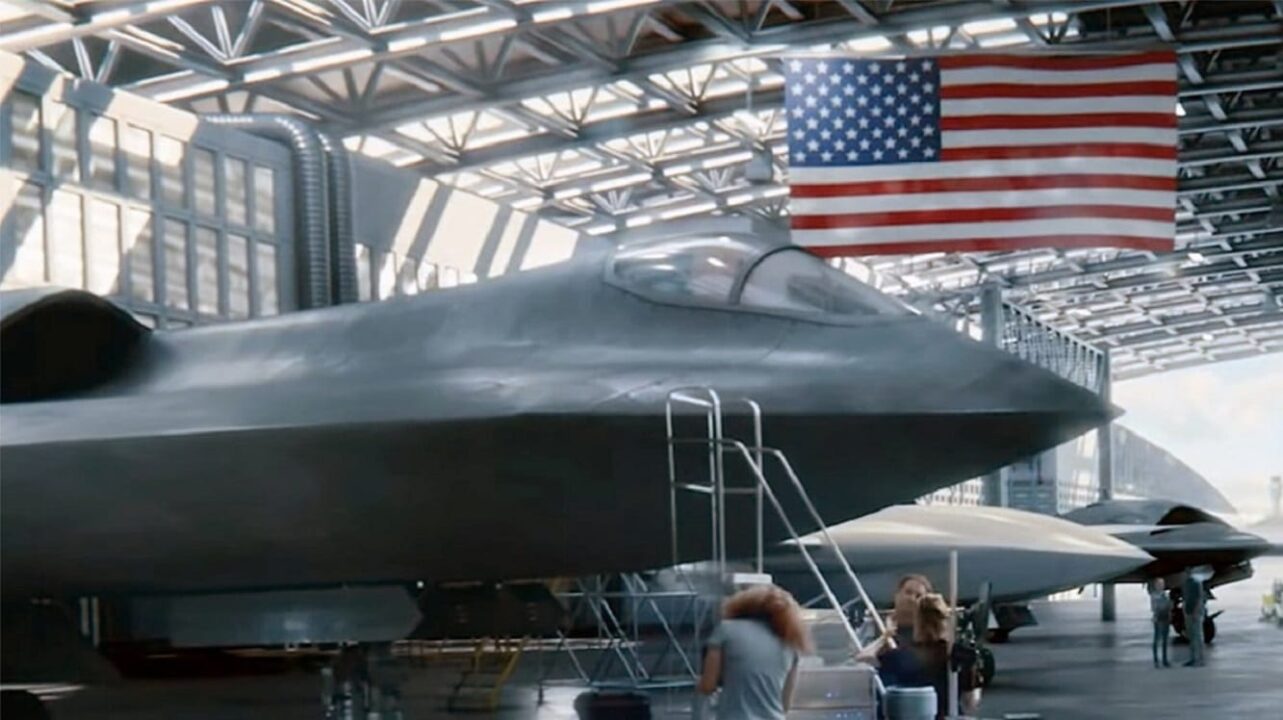
Key Points and Summary – A look at the F/A-XX, the U.S. Navy’s 6th-gen fighter, reveals it is being designed to solve the F-35C’s critical “range deficit.”
-China’s 2,000-mile-range DF-26 “carrier killer” missile makes the F-35C (1,300-mile range) “vulnerable,” forcing carriers too far from shore.
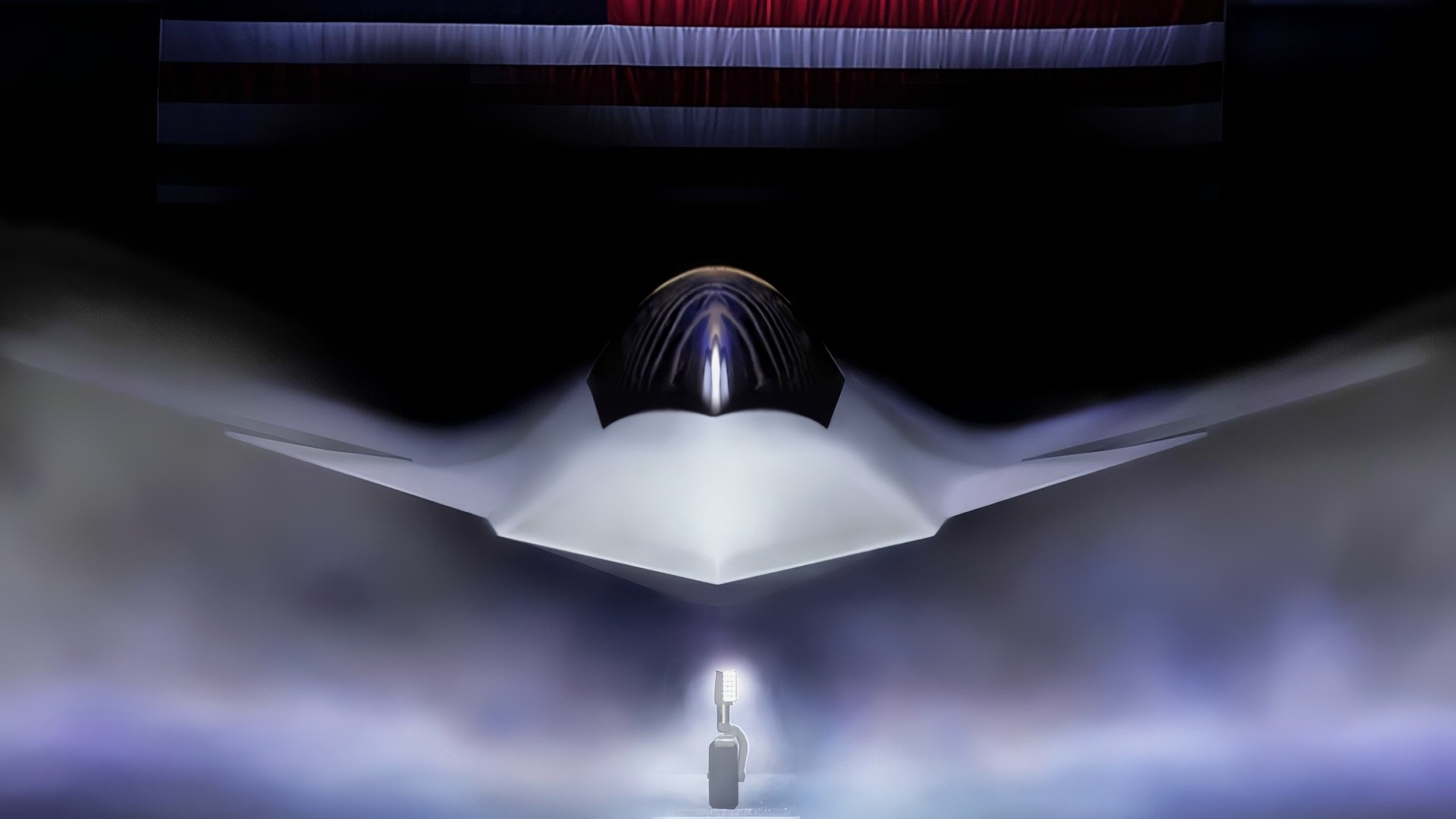
Shown is a graphical artist rendering of the Next Generation Air Dominance (NGAD) Platform. The rendering highlights the Air Force’s sixth generation fighter, the F-47. The NGAD Platform will bring lethal, next-generation technologies to ensure air superiority for the Joint Force in any conflict. (U.S. Air Force graphic)
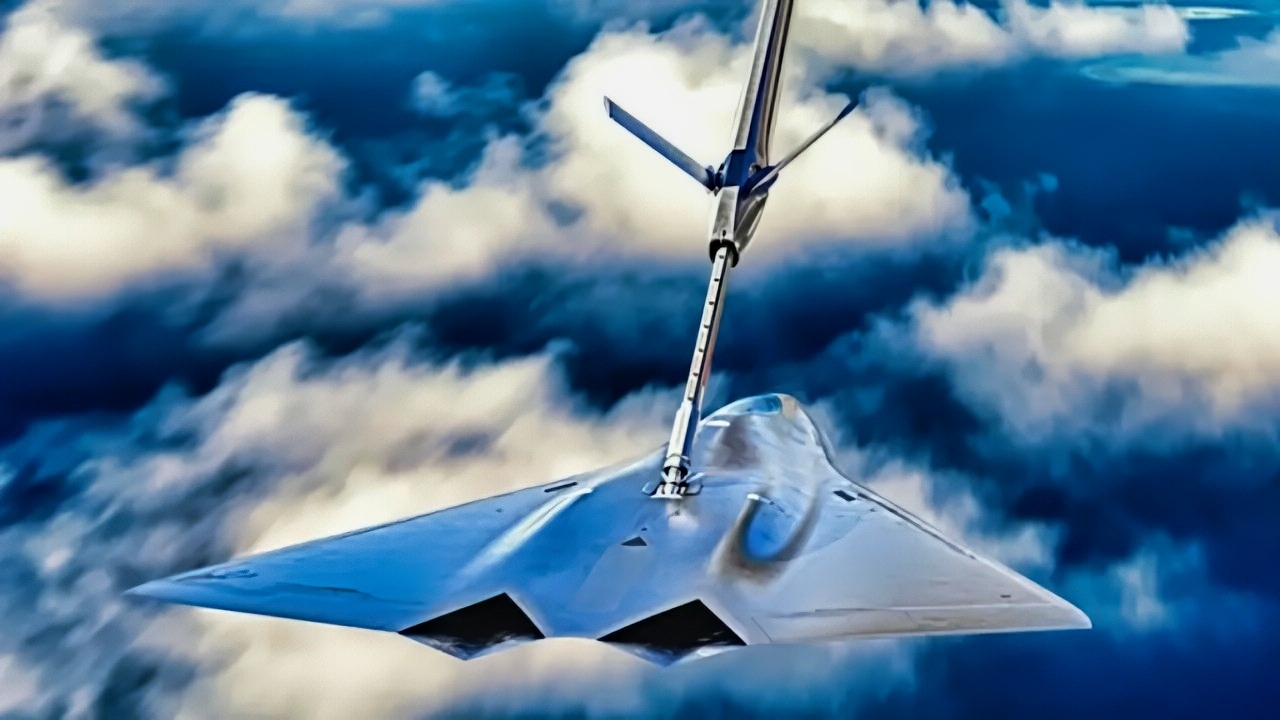
F-47 Lockheed Photo. Image Credit: Lockheed Handout.
-The F/A-XX is being engineered to have a much longer 2,000-mile range and “paradigm-changing” “bomber-like stealth” (like the B-21) combined with “fighter-like agility” (like the F-22).
-This is crucial as China is already fielding its own carrier stealth jet, the J-35, and two 6th-gen prototypes (J-36, J-50).
The F-47 Fighter Is Coming
Many key variables hang in the balance for the F/A-XX’s future, including questions of stealth, range, fleet size, service life, and, perhaps most significant, its ability to address the fast-evolving Chinese threat equation.
Nevertheless, the mysterious and still uncertain F/A-XX carrier-launched stealth fighter continues to inspire the imagination, as it may introduce the stealthiest, fastest, and most capable maritime fighter the world has ever seen.
There continue to be defining advances in stealth technology, fighter jet range capability, sensing and targeting fidelity, and AI-enabled computing and data processing, all factors likely to figure prominently in the 6th-Gen.
Stealth Breakthroughs
In terms of pure stealth, the available renderings of F/A-XX configurations indicate substantial breakthroughs in reducing the radar signature of a fighter jet.
An F/A-XX jet could be built to achieve fighter-like agility, speed, and performance with a fully horizontal, ultra-stealthy, bomber-like blended wing-body fuselage configuration.
Stealth bombers such as the B-2 and B-21 are regarded as the stealthiest in existence, thanks to their purely horizontal, smooth, rounded exteriors.

NGAD. Image Credit. Lockheed Martin.
The absence of protruding structures, tails, and vertical shapes offers ground-based enemy radar “pings” very few contours off of which to “bounce” and generate a return rendering. A B-21, for instance, is expected to appear like a small bird to enemy radar systems.
Fighter jets, while still stealthy, are considered less stealthy than high altitude bombers because they have historically needed fins, tails, sharp angles, and other protruding structures to “vector” and aerodynamically achieve air combat agility.
However, technological breakthroughs in aerial maneuverability may enable a purely horizontal stealth fighter, such as the F-47 or F/A-XX, to achieve F-22- and F-35-like air dominance with a much stealthier, bomber-like airframe.
In essence, the F/A-XX could have B-21-like stealth capability combined with F-22 speed and aerial maneuverability.
AI, Sensing, Range
The F-35 was deliberately engineered to accommodate sensing, computing, and weapons upgrades with technical standards designed to integrate new technologies as they emerge.
This will serve the aircraft well into the future and helps explain why the Pentagon plans to fly the F-35 into the 2070s.
However, advances in AI, sensing, targeting, and range could be sufficient to warrant a new jet, which would be yet another generation beyond the F-35. Despite the F-35’s upgrade potential, there could be limitations on the extent to which new mission systems, sensing, and AI-enabled computing can be accommodated by its hardware.
It might be necessary to engineer an entirely new aircraft to leverage the best of an altogether new generation of AI, long-range sensing, and weaponry.
F/A-XX Range?
For example, the F-35 arguably suffers from a range challenge in the Pacific. Parts of Southern Japan are a few hundred miles from Taiwan, and Manila in the Philippines is about 925km from Taiwan, distances potentially within reach of an F-35A should it be stationed there.
The F-35C has a range of roughly 1,300 miles, so it would need to operate approximately 500 miles from the coast of mainland China to project power with some dwell time and return to its carrier.
However, China’s famous DF-26 “carrier killer” missile can travel ranges out to 2,000 miles, so it is unclear if US Navy carriers could risk projecting power from only 500 miles offshore.
This is why the US Navy will deploy its MQ-25 Stingray carrier-launched refueling drone, which could double the strike range of an F-35C launched from an aircraft carrier.
A new F/A-XX might be engineered to travel much longer distances.
Therefore, with a massively extended attack range, longer-range sensors, and next-generation weapons, a new 6th-generation F/A-XX might have more success operating at greater distances offshore and be more survivable for carriers.
Chinese J-20 Threat
One initial question can be understood simply as the question of “mass,” meaning the US Navy would likely be at a large fleet deficit compared with China in the event of a conflict in the Pacific.
China is now believed to operate as many as 300 J-20 5th-generation fighters, a sizable available force in position to defend China’s coastal waters up to several hundred miles offshore.
Although China cannot launch the J-20 from the ocean as it is a land-launched fighter, it could indeed reach the waters around Taiwan and extend several hundred miles off the shore toward the first island chain.
Hundreds of J-20s could form a semi-circle off the Chinese coast, positioned to defend a sphere of PLA influence and security.
The Chinese threat equation extends far beyond the J-20 as well, given the rapid emergence of the now-operational carrier-launched J-35 stealthy 5th-gen aircraft.
Previously the J-31, the carrier-launched J-35 5th-gen stealth jet is already flying from PLA Navy carriers, and given that China is well known for its civil-military fusion in weapons and platform production, a sizeable fleet of J-35s is expected to arrive in the coming years.
The J-35 looks like the F-35C and may rival its capabilities, depending upon the performance of its computing, sensing, fire control, weapons, and agility.
Chinese 6th-Gen
Perhaps of even greater concern to the Pentagon, the PLA is accelerating the development of two new, previously unseen 6th-generation aircraft: the Shenyang J-50 and the triple-engine stealth fighter-bomber hybrid Shenyang J-36.
Many details and specifics about these 6th-gen aircraft are not yet available; however, it is entirely conceivable that one or both could be carrier-launched.
Range Deficit
Early speculation and some reporting related to the F-47 and F/A-XX indicate that the Pentagon’s emerging 6th-generation stealth fighters are being built with the ability to fly much longer ranges than existing 5th-gen aircraft.
This is of significant tactical relevance in the vast expanse of the Pacific, as the Pentagon has indicated that the F-47 will likely operate with a range of 2,000 miles.
Should the F/A-XX operate with a similar range, it would introduce new tactical and strategic considerations as it is considerably longer than an F-35C’s overall combat range of 1,300 nautical miles.
This means the F/A-XX could strike from greater distances, operate with longer dwell times, and attack from carriers farther offshore without needing a refueler.
About the Author: Kris Osborn
Kris Osborn is the President of Warrior Maven – Center for Military Modernization. Osborn previously served at the Pentagon as a highly qualified expert in the Office of the Assistant Secretary of the Army—Acquisition, Logistics & Technology. Osborn has also worked as an anchor and on-air military specialist at national TV networks. He has appeared as a guest military expert on Fox News, MSNBC, The Military Channel, and The History Channel. He also has a Master’s Degree in Comparative Literature from Columbia University.
More Military
Europe and Canada Are Finally Saying No to the F-35 Stealth Fighter
The Exact Day Navy Battleships Became Obsolete Is Clear
The X-44 Manta Has a Message for Every Air Force on Earth


