


Key Points and Summary – This analysis debates the U.S. Air Force’s need for the secretive, Mach 6+ SR-72 hypersonic aircraft.
-Proponents laud its game-changing speed, arguing it can penetrate any enemy airspace for reconnaissance and strike missions, providing a powerful deterrent.
-However, critics contend the SR-72 is a costly Cold War throwback, ill-suited for the long, attritional conflicts now expected against peers like China.
-They argue it’s vulnerable on the ground, its sheer speed no longer guarantees survival against modern defenses, and it poses a dangerous risk of escalation, blurring the line between spying and a first strike.
Does the Air Force Truly Need The SR-72 Darkstar?
Lockheed Martin’s supersecretive Skunk Works is working on the SR-72, Son of Blackbird (SOB). Despite going over budget by $335 million, the SOB seems close to going into production.
At least, as best as we can tell. There is very little information about the SR-72, so all we can do is make the best educated guesses we can. And that’s a shame.
The Skunk Works’ SR-72, a Mach 6+ intelligence, surveillance, reconnaissance, and strike aircraft, utilizes advanced turbine-based combined cycle engines, allowing unprecedented speed and global reach within minutes.
The SOB is the successor to the SR-71 Blackbird, which was retired in 1999. New production facilities at the Skunk Works lead many to believe that either production has already begun or soon will begin for the SR-72.

SR-71 Side Angle National Security Journal Original Photo.

SR-71 National Security Journal Image.
But if the Air Force, which already has several new irons in the fire, namely the F-47 stealth Next Generation Air Dominance (NGAD) fighter, the B-21 Raider stealth bomber, and is continuing to fund more F-35 aircraft, could the SR-72 program get cut?
And if so, what kind of capability is lost with it? Some analysts believe that the SR-72 program “is incoherent.” Does the Air Force truly need the SR-72?
Information On The SR-72 Is Still Murky So Far
In 2013, Aviation Week & Space Technology published an article, “Meet the Son of Blackbird,” on Lockheed Martin’s plan to develop a new high-speed multirole aircraft. Although it is strictly a film reference, the “Darkstar” name, used in several articles, is a really cool nickname.
Lockheed, the original developer of the SR-71, proposed an informally named replacement aircraft, the SR-72. The SR-72 was to be an all-new plane powered by a turbine and a scramjet. It would take off and land from runways under turbine power but transition to the scramjet once airborne.
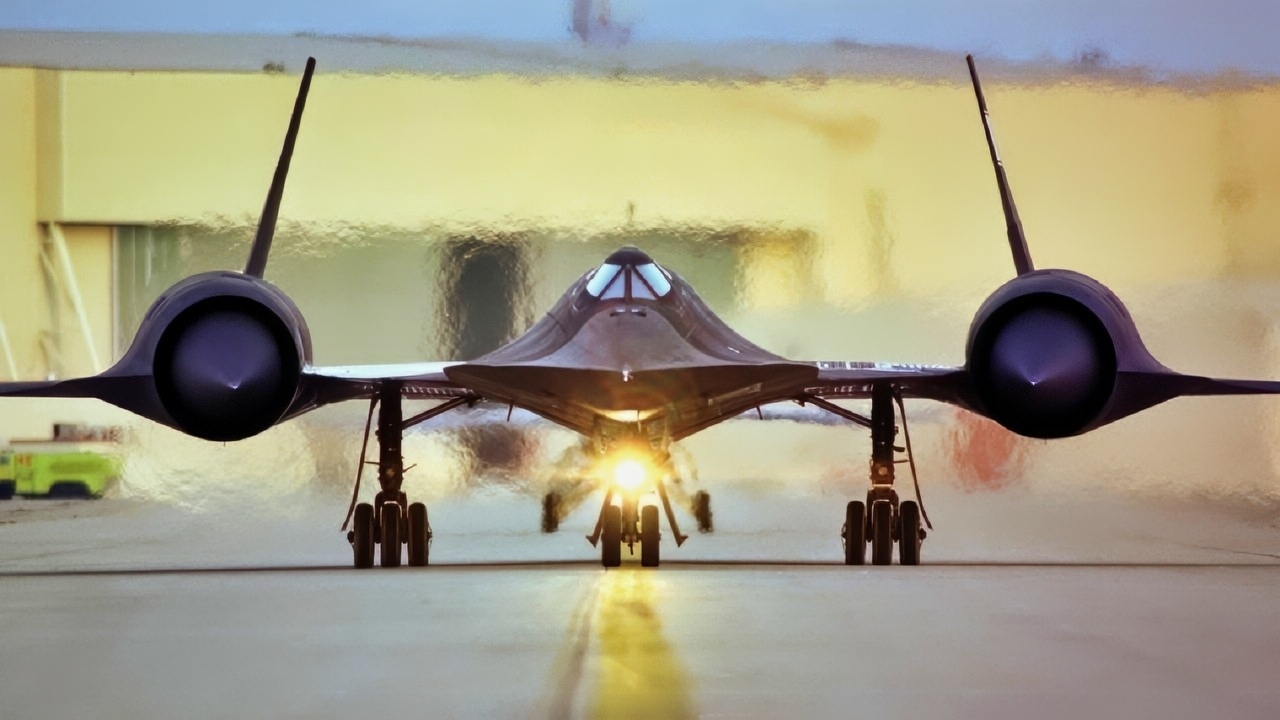
SR-71 Blackbird On Runway. Image Credit: Creative Commons.
The aircraft would travel at Mach 6 (4,600 mph), or twice as fast as the SR-71. Unlike the SR-71, whose air-to-ground attack capability was never realized, the SR-72 would be capable of reconnaissance and strike missions from the outset.
But while the SR-72 would be blistering fast and nearly invisible to the naked eye, is the program economically feasible, and even needed? Or is it a throwback Cold War platform that lacks a proper role in the modern air battlefield?
One argument is that many aviation enthusiasts and professionals sometimes get overwhelmed by the sheer speed of what promises to be a fast, sleek, and menacing bird capable of providing intelligence and removing the threat deep inside of China’s A2/D2 defense network.
Is The SR-72 Even Needed?
One argument against the SR-72 is that it is not a weapon built for the war we are going to fight; it is built for the war we want to avoid, according to a National Security Journal aviation expert, Andrew Latham.
He makes some excellent points, such as the war the SR-72 is built to fight: “a short, sharp, high-tech blitz in which speed, surprise, and precision decide the outcome in days.
“But that’s not how peer wars play out anymore. The future is attritional, defined by magazine depth, logistics, and redundancy. The Chinese aren’t going to fold because one hypersonic plane made it to Chongqing and back. If anything, that kind of platform tempts escalation.
“The SR-72 is a large, fixed-base-dependent aircraft with a massive logistics footprint. In the opening phases of any war with China or Russia, airbases will be under immediate threat. We’ve already seen in Ukraine what modern missile and drone strikes can do to concentrated infrastructure. The SR-72 may never get off the ground.”

SR-72. Creative Commons Artist Rendering.

SR-72 Darkstar. Image Credit: Creative Commons.
SR-72 Issues In A Modern Conflict
The SR-72 is designed to utilize its speed to streak across the sky, capture photos that can be interpreted in real-time, and conduct a strike with hypersonic weapons if the situation calls for it. It can not loiter in the sky for long periods if needed.
Latham makes another excellent point: If China sees an SR-72 streaking across the sky toward its homeland, it will blur the line between ISR and a first-strike capability. How would they respond?
However, in his assertion that the SR-72’s base would be hit, and the aircraft would never get off the ground, this begs the question: If China, or Russia launches an attack on an airbase in the United States, wouldn’t the US react the same way, a first-strike weapon streaking into our homeland; is it a conventional or nuclear strike?
The Debate Over Speed May Decide Its Fate
In June 2017, Lockheed Martin’s executive vice president and general manager for Skunk Works, Rob Weiss, told the media that testing was complete on the turbine-based combined cycle hypersonic propulsion system for the SR-72 and that they were “getting close” to beginning work on what he described as an SR-72 Flight Research Vehicle (FRV).
This single-engine technology demonstrator was said to be “about the size of an F-22 Raptor” and was meant to demonstrate the platform’s ability to take off under conventional turbofan power, accelerate up to supersonic speeds, and then transition from turbofan power to a much more exotic dual-mode scramjet that would allow the aircraft to achieve maximum speeds well above Mach 6.
“Hypersonic aircraft, coupled with hypersonic missiles, could penetrate denied airspace and strike at nearly any location across a continent in less than an hour,” Brad Leland, Lockheed Martin’s hypersonics manager, said in a Lockheed Martin press release that has since been taken down.
“Speed is the next aviation advancement to counter emerging threats in the next several decades. The technology would be a game-changer in theater, similar to how stealth is changing the battlespace today.”
Lockheed Martin is collaborating with Aerojet Rocketdyne (an L3Harris company) on a turbine-based combined cycle (TBCC) propulsion system that will enable the aircraft to achieve a cruise speed of Mach 6 (7,300 kilometers per hour), twice that of the SR-71 aircraft.

SR-72 from Lockheed Martin. Image Credit: Lockheed Martin.

SR-72 artist image. Image Credit: Creative Commons.
However, the counter-argument to this is that speed isn’t the decisive variable in high-end conflict. Today, unlike the Cold War, a Mach 6 aircraft doesn’t guarantee survival.
Hypersonic sensors and interceptors – like Russia’s S-500 or China’s expanding counter-space architecture – can detect and potentially engage even the fastest platforms. And then there’s the problem of thermal signature, which for an SR-72 is expected to be huge.
The Skunk Works developed the Hypersonic Technology Vehicle 2 (HTV-2), a rocket-launched aircraft, as part of the Defense Advanced Research Projects Agency (DARPA) Falcon project.
The Falcon HTV-2 is an unmanned, rocket-launched, maneuverable aircraft that glides through the Earth’s atmosphere at breakneck speeds—Mach 20 (approximately 13,000 miles per hour).
At HTV-2 speeds, flight time between New York City and Los Angeles would be less than 12 minutes. The HTV-2 vehicle is a “data truck” with numerous sensors that collect data.
The HTV-2 project was created to gather data on aerodynamics, guidance, navigation, control, and aerothermal effects.
The vehicle took its first flight in April 2010 and its second in August 2011. It achieved a maximum speed of Mach 20. The knowledge and data obtained from the HTV-2 are now being used to develop better designs for the SR-72.
It’s All About Hypersonic Speed
The speed generated by conventional turbofan power accelerates up to supersonic speeds. Then the aircraft transitions from turbofan power to a much more exotic dual-mode scramjet, which would allow the aircraft to achieve speeds in excess of Mach 5 or Mach 6. This would protect the aircraft without any stealth features.
During its unparalleled run as the best spy aircraft in the world, the SR-71 was fired at by more than 4,000 missiles, none of which hit it. The Blackbird could fly at Mach 3.56 (2,731.478 mph).
The original SR-71 was powered by the Pratt & Whitney J58 turbojet engine, which aviation experts often call a “turboramjet.” The SOB’s engine will have to be even more powerful to meet the airframe’s expectations.
Lockheed’s Costs Could Derail The Program
The SR-72’s first flight is predicted to be sometime in 2025. The design work, composite materials, new engines, and construction of one aircraft are expected to cost slightly less than $1 billion.
However, the fact that Lockheed Martin absorbed the $335 million cost overrun suggests that the Air Force or the Intelligence agencies have already decided they need this aircraft.
However, with the ongoing costs of the F-35 program, the F-47’s limited production, the B-21 Raider program, and the proposed F/A-XX program, securing the necessary funds will be challenging.
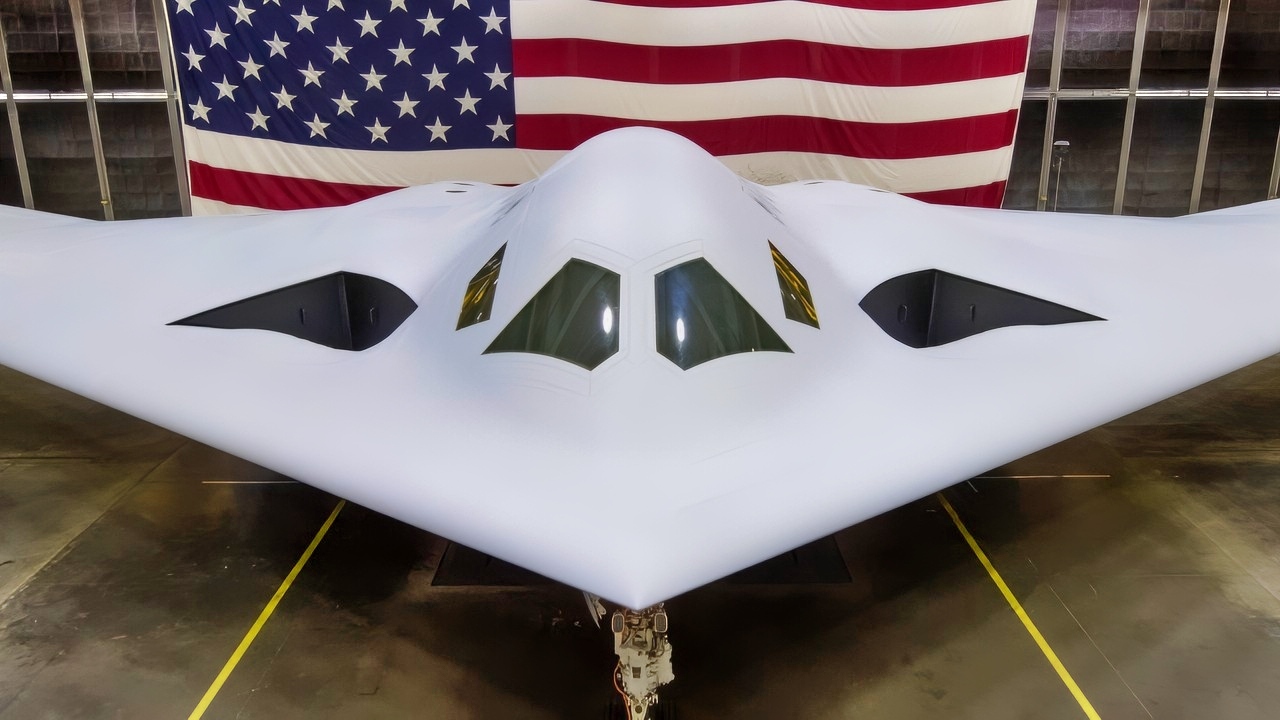
The B-21 Raider was unveiled to the public at a ceremony Dec. 2, 2022 in Palmdale, Calif. The B-21 will provide survivable, long-range, penetrating strike capabilities to deter aggression and strategic attacks against the United States, allies, and partners. (U.S. Air Force photo)
Given its speed, the SR-72, our Air Force and intelligence officials believe it can spy on our adversaries with impunity. If there is a war between the US and our adversaries, the SR-72 can then engage the targeted area with hypersonic missiles.
What Technology Could Be Lost If the Program Is Cut
In the immediate aftermath of the program’s cancellation, we would lose the ability to take advantage of its capabilities. However, those capabilities aren’t lost. Lockheed Martin could still use them on later projects or even to augment existing platforms.
They have already stated that their NGAD program prototype, which lost to the F-47 from Boeing, will be utilized to enhance existing airframes, such as the F-22 and F-35, or, as they described it, a “super” F-35.
However, the SR-72’s capabilities can also be used as a hypersonic test bed for future aircraft and weapons.
“With the SR-72 intended to go past Mach 5, the SR-72 is arguably a good testbed for what works and does not work at hypersonic speeds. Things that could be tested include aerodynamics, cockpits, construction materials, shapes, and more. If this sounds like Boom Supersonic’s XB-1, it is good because the XB-1 is intended to test new aerodynamics, cockpit technology, construction materials, and more.”
While the aircraft budget is already straining the development of many airframes, if the US can pull it off, Simple Flying argues that it would make an impressive deterrent, and it is entirely feasible.
“No sane national leader would want to provoke the employment of that fleet in anger, especially when the SR-71 was sometimes used to conduct supersonic overflights as a show of force. Additionally, imagine if the SR-72s packed hypersonic weapons.”
The joint Lockheed—Aerojet Rocketdyne engine will be a true game changer if it works like they have claimed. That could be the basis of several next generations of fighter and bomber aircraft.
There are compelling arguments both for and against building the SR-72. Is it a viable aircraft that will enhance the Air Force’s (Space Force?) ability to win in a modern war scenario, or is it just a shiny hood ornament that is living on in the Cold War minds of many?
It is probably not envisioned for an extensive production line, but it will be an expensive niche. There are several possibilities, which is why Lockheed continues to bleed its losses, hoping for a contract.
About the Author: Steve Balestrieri
Steve Balestrieri is a National Security Columnist. He served as a US Army Special Forces NCO and Warrant Officer. In addition to writing on defense, he covers the NFL for PatsFans.com and is a member of the Pro Football Writers of America (PFWA). His work was regularly featured in many military publications.
More Military
How Do You Replace the Main Battle Tank?
The F-35 ‘Ferrari’ Fighter Might Be ‘Coming Soon’ to a War Near You
The B-21 Raider Bomber Question We Keep Asking
KF-21: South Korea Wants Its Very Own F-35-Style Stealth Fighter
‘Go Home’: F-22 Raptor Flew Right Under Iran’s Old F-4 Tomcat (Unseen)


