
The MBT-70 Tank Was Built to Fight the Soviet Union. It Ended Up a Historical Footnote
Recent reports about Europe’s flagging next-generation fighter programs and the related industrial and political battles taking place show once more how complex multinational defense projects are. The intended platform frequently struggles under the weight of competing national priorities.
Take the Future Combat Air System (FCAS), for example—the joint effort between France, Germany, and Spain to build a next-generation fighter jet. It has been repeatedly delayed by disputes over design leadership and industrial share. Similar tensions are also seen in the Global Combat Air Programme (GCAP), though certainly not to the same extent—GCAP partners recognize that they have different requirements.
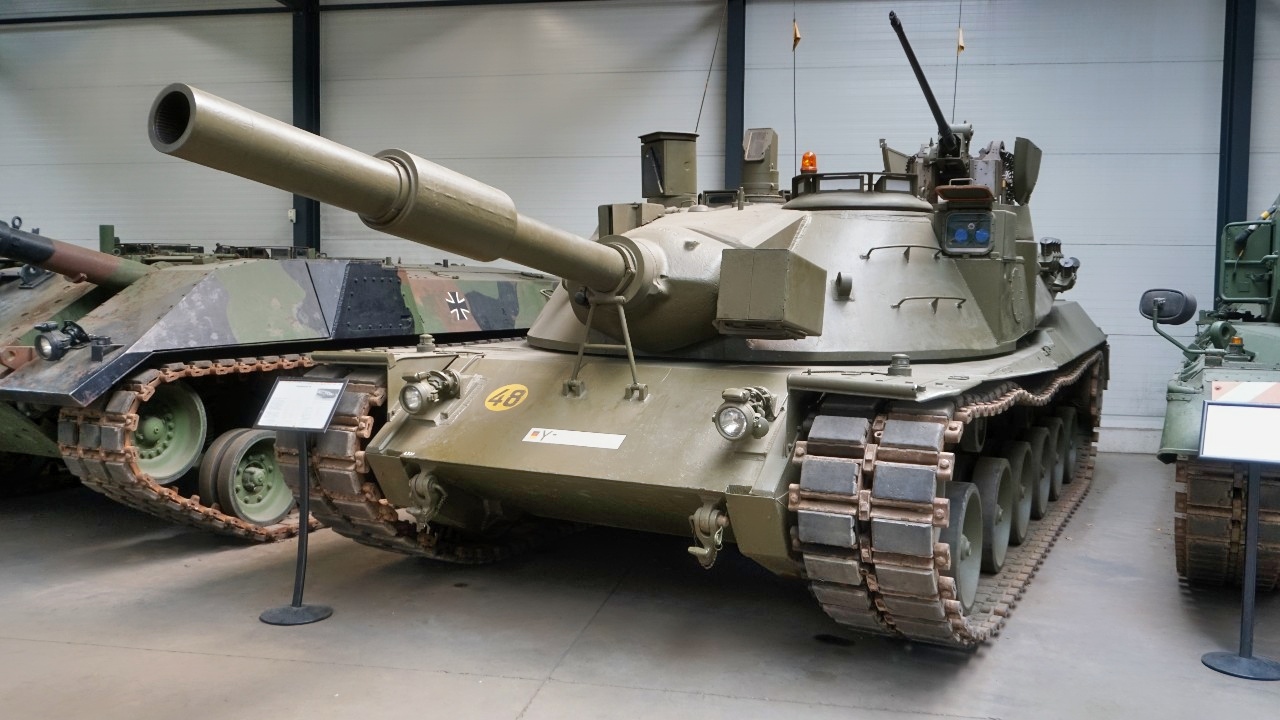
This problem is by no means new. NATO in the past attempted and failed to build a shared next-generation ground combat system under far more urgent circumstances. The result was the MBT-70, a joint U.S.-West German program in the 1960s intended to redefine armored warfare and standardize NATO’s tank fleet.
MBT-70. Image Credit: Creative Commons.
At the time, both countries operated different main battle tanks—the M60 Patton and Leopard 1—which created logistical inefficiencies and interoperability challenges across the alliance. The MBT-70 was intended to replace both with a single, advanced platform capable of countering emerging Soviet armored vehicles such as the T-62. What followed was one of the most ambitious armored vehicle programs of the Cold War. The MBT-70 did not fail because its design was flawed, but because the partnership couldn’t be sustained.
What the MBT-70 Was Designed To Be
The MBT-70 was not conceived as a simple incremental improvement over existing tanks. It was an attempt to leap an entire generation ahead. Development of the MBT-70 began in 1963 with a clear objective to build a tank that could dominate future battlefields, rather than simply compete with existing Soviet systems.
The result was a vehicle pushed to its limits in every aspect of tank design—a platform that, in many ways, was experimental. It weighed 50 tons, was powered by a 1,470–1,500 horsepower engine, and could reach speeds approaching 70 kilometers per hour, making it one of the fastest tanks of its time.
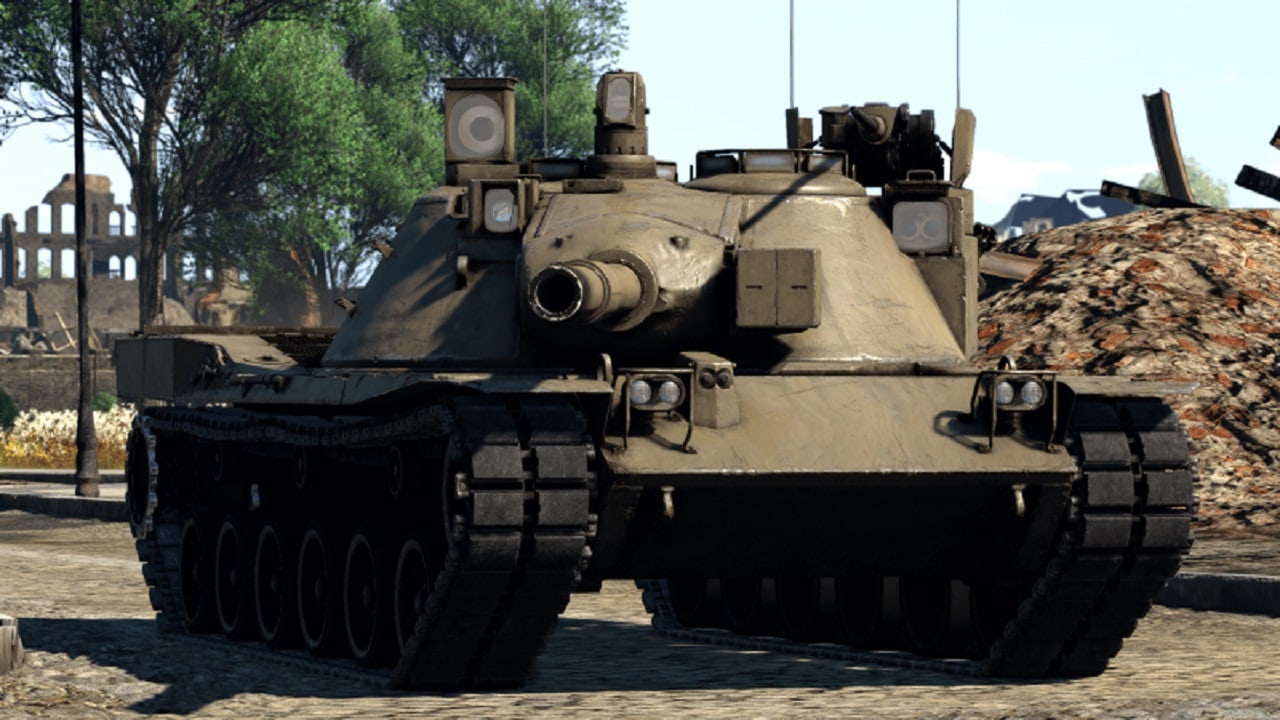
The armament was its most distinctive feature. Instead of a conventional gun, the MBT-70 used a 152-mm XM150 gun-launcher capable of firing both standard rounds and MGM-51 Shillelagh anti-tank guided missiles. The idea was to give the tank long-range precision engagement capability well beyond what traditional tank guns could achieve.

MBT-70. Image Credit: Creative Commons.
The vehicle also introduced hydropneumatic suspension that effectively allowed the tank to “kneel” and lower its profile. It had a three-man crew housed in the turret, with an autoloader and advanced fire control for improved accuracy. It was very much ahead of its time. Testing in the late 1960s showed the tank had significantly better mobility than the M60, including faster acceleration and reduced exposure time under fire. But this level of innovation came at a cost: complexity. The MBT-70 was packed with experimental systems that had never been integrated at this scale before, posing a challenge not only for development and production but also for maintenance and sustainment.
Why the MBT-70 Was Built
The MBT-70 was the product of NATO fragmentation, a widely recognized problem during the Cold War. In the early 1960s, NATO member-states fielded a wide range of incompatible weapons systems, often using different ammunition, spare parts, and logistical chains.
This made large-scale coordinated operations more difficult than they needed to be. The United States and its allies were effectively duplicating development costs across multiple programs, each producing capabilities broadly similar to those of the others, yet with different designs. The MBT-70 was intended to address both problems at once: Create a single platform that could be fielded across NATO, and reduce long-term procurement costs through shared development and production.
West Germany had its own incentives. For example, the Leopard 1 tank was successful with a design prioritizing mobility over protection. That reflected a belief that Soviet anti-tank weapons made heavy armor less viable.
But by the mid-1960s, that assumption was being reassessed as Soviet tanks became more capable. The MBT-70 was an opportunity to leap ahead technologically while strengthening the political and military relationship with the world’s greatest superpower, the United States. In theory, the program fit perfectly with NATO’s strategic needs—but in practice, it failed, exposing the limits of cooperation between two very different countries with distinct needs.

Soldiers with the Hellenic Army fire a 120mm round from a Leopard A2 tank while scanning their sector during offensive operations for the Hellenic Tank Challenge 2021 at Petrochori Range, Triantafyllides Camp, Greece, Nov. 2, 2021. The Hellenic Tank Challenge 2021 is a competition that allows partnership building between Greece and the United States of America while enhancing unit readiness through competition. (U.S. Army photo by Staff Sgt. Jennifer Reynolds/RELEASED)
Where It Broke Down
From the outset, the United States and West Germany disagreed on key elements of the design. One of the most significant points of contention was the choice of main armament. The United States pushed for the 152-mm gun-launcher system, which aligned with its interest in missile-based anti-tank warfare. West Germany, however, favored a more conventional high-velocity gun, reflecting a different operational philosophy.
The disagreements extended beyond weapons. The two countries also diverged in engine design and measurement systems (metric vs imperial), and even in basic engineering standards. Rather than converging on a single unified design, the program began to split into parallel development tracks, which increased the complexity of an already experimental tank. The cost also went up.
Then there was the matter of industrial competition, which further complicated matters. Much as the FCAS does today, both countries sought a significant share of production work, and neither was willing to cede control over critical components. That meant duplicated efforts and delays that undermined the program’s very rationale.
By the late 1960s, costs had escalated dramatically. Early estimates had placed the MBT-70 at roughly $200,000 per unit, but by 1969, projections had risen to around $1 million per tank—a fivefold increase. At the program level, total development spending had also surged from an initial estimate of about $80 million to more than $300 million. At the same time, technical challenges continued to emerge, particularly with the 152-mm gun-launcher system and the difficulty of integrating the tank’s many experimental subsystems into a single operational platform.
At this point, the MBT-70 program had reached its breaking point. The combination of rising costs and technical issues, added to persistent disagreements between the United States and West Germany, made the project untenable. The two countries formally withdrew from the joint program and pursued separate paths.
In the United States, the MBT-70’s experience directly informed the development of the XM803, a simplified, lower-cost version of the original design. Although that program was also eventually canceled, it laid the groundwork for what would become the M1 Abrams. Many of the concepts explored during MBT-70 development—such as advanced fire-control systems and improved mobility—were carried forward into the Abrams program.
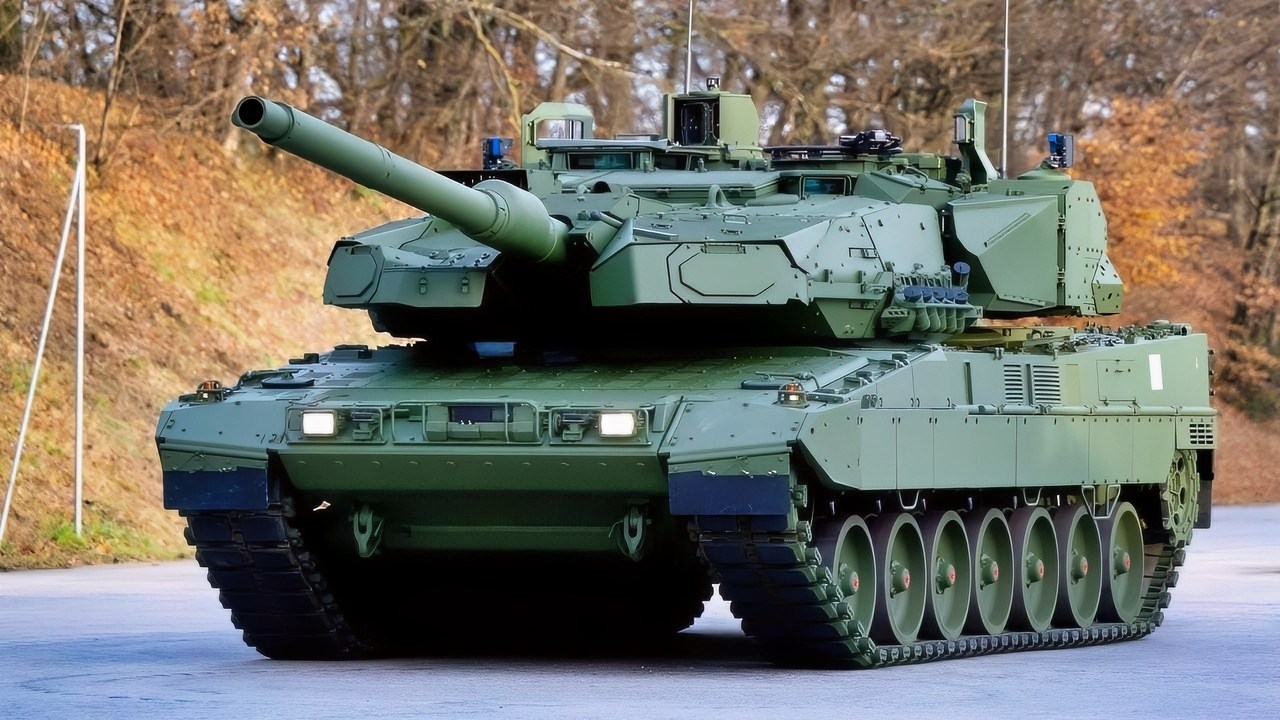
Leopard 2A8 Tank New. Image Credit: Creative Commons.
West Germany, meanwhile, moved ahead with its own design, which became the Leopard 2. Unlike the MBT-70, the Leopard 2 used proven technologies and adopted a more conventional approach to tank design, including a 120-mm smoothbore gun. The result was a platform that proved highly successful and remains in service today in multiple countries.
The MBT-70 remains one of the clearest examples of how multinational defense projects can struggle when political and industrial priorities are not fully aligned. As seen with the FCAS, disputes over workshare and intellectual property seem almost inevitable in programs like this—and with a renewed focus on sovereign capability in Europe, those tensions are becoming more pronounced.
About the Author: Jack Buckby
Jack Buckby is a British researcher and analyst specialising in defence and national security, based in New York. His work focuses on military capability, procurement, and strategic competition, producing and editing analysis for policy and defence audiences. He brings extensive editorial experience, with a career output spanning over 1,000 articles at 19FortyFive and National Security Journal, and has previously authored books and papers on extremism and deradicalisation.


