

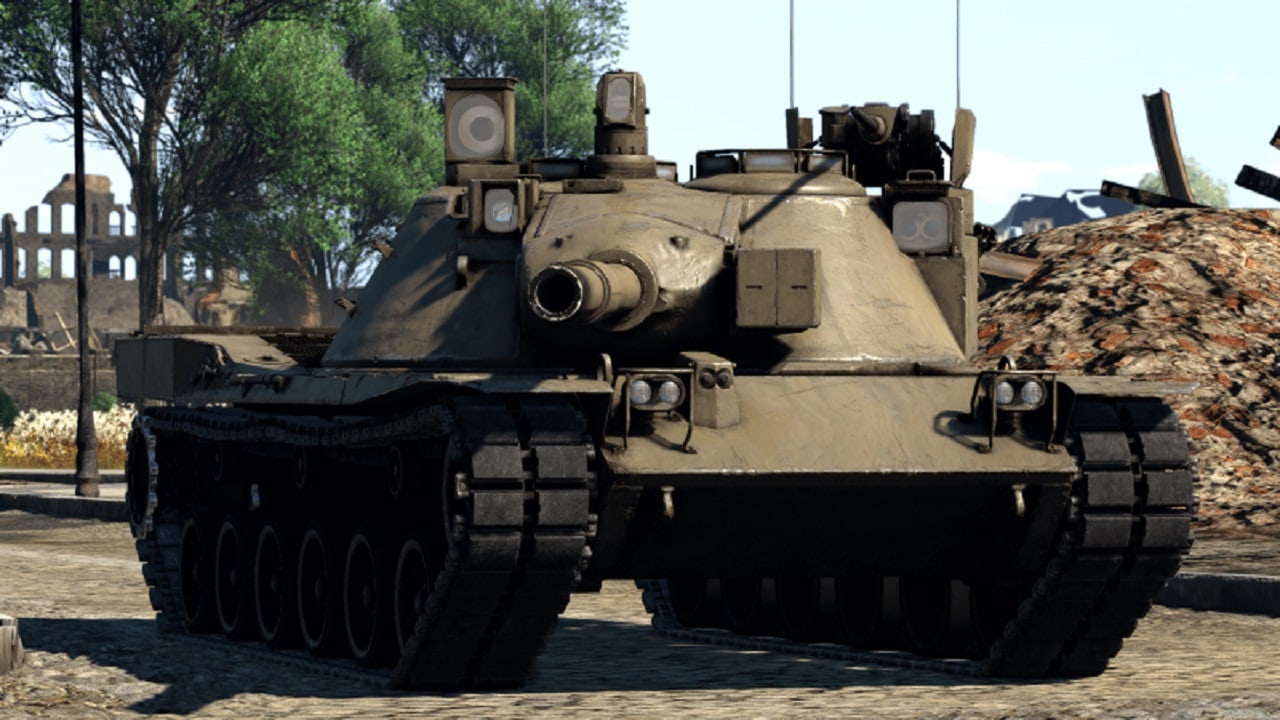
Summary and Key Points: National security analyst Steve Balestrieri evaluates the MBT-70 (KPz-70), a 1960s joint venture between the United States and West Germany designed to replace the M60 Patton and Leopard 1.
-The project collapsed due to fundamental disagreements: the U.S. insisted on a 152mm XM150 gun/launcher for Shillelagh missiles, while Germany prioritized the 120mm Rheinmetall smoothbore.

MBT-70. Image Credit: Creative Commons.
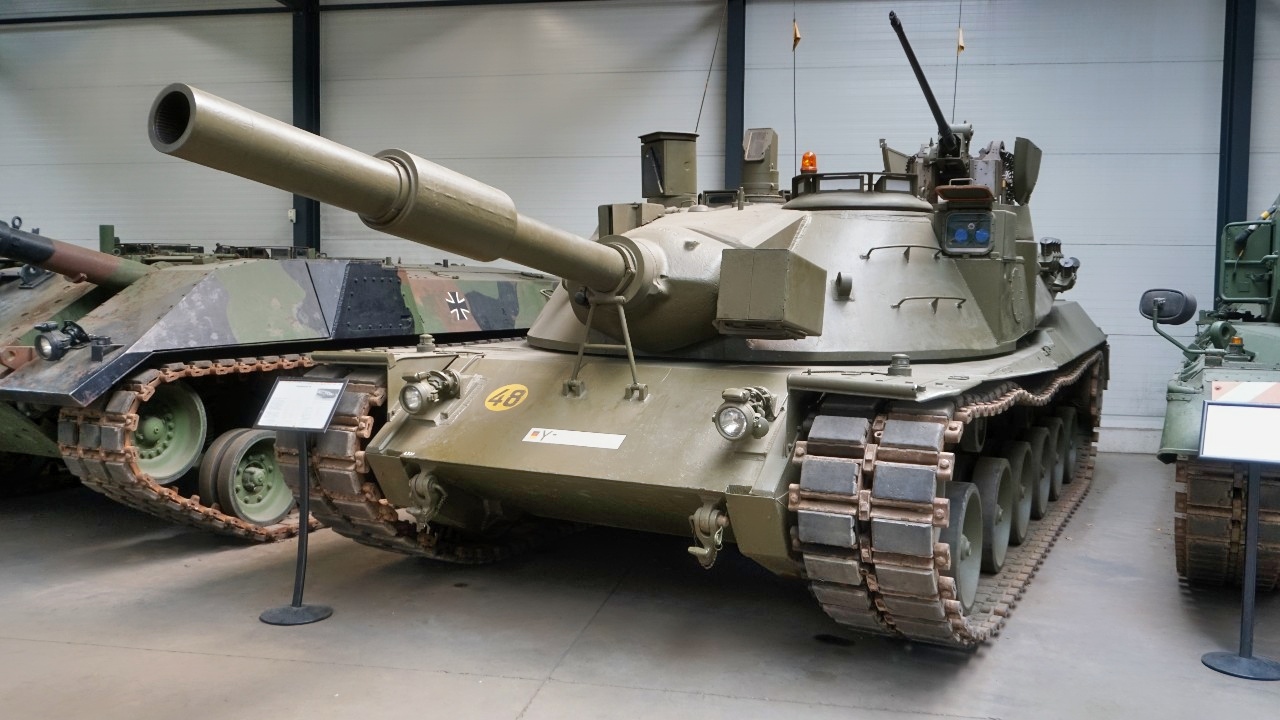
MBT-70 Tank. Image Credit: Creative Commons.
-Technical friction over SAE vs. Metric units and Continental vs. MTU engines drove unit costs to $1 million. Although canceled in 1971, the program provided the technological DNA for the M1 Abrams and Leopard 2.
What Were the US and Germany’s Differences With The MBT-70 Tank?
The MBT-70 tank program, developed jointly by the United States and West Germany, was a great idea born out of the Cold War. The program looked to replace both the American M60 Patton and the German Leopard I.
In the 1960s, tensions were rising between East and West, and there was a very real possibility that the Soviet Union, with its masses of armor, would attempt to blast its way through the Fulda Gap.
After WWII, the US gradually withdrew combat troops from West Germany and returned them to the United States. However, the Russians in East Germany stayed and fielded large numbers of motorized infantry and armored divisions with improved tank designs.
As the US gradually began to deploy more troops on West German soil to bolster NATO’s defense of Western Europe, numerical superiority posed a real threat.
American troops had the M60 main battle tank, and the West Germans operated the Leopard 1. Both tanks had their vulnerabilities. So, the US and West Germany decided to build a tank together in 1963; since they’d be fighting against the Soviets, the idea made perfect sense.
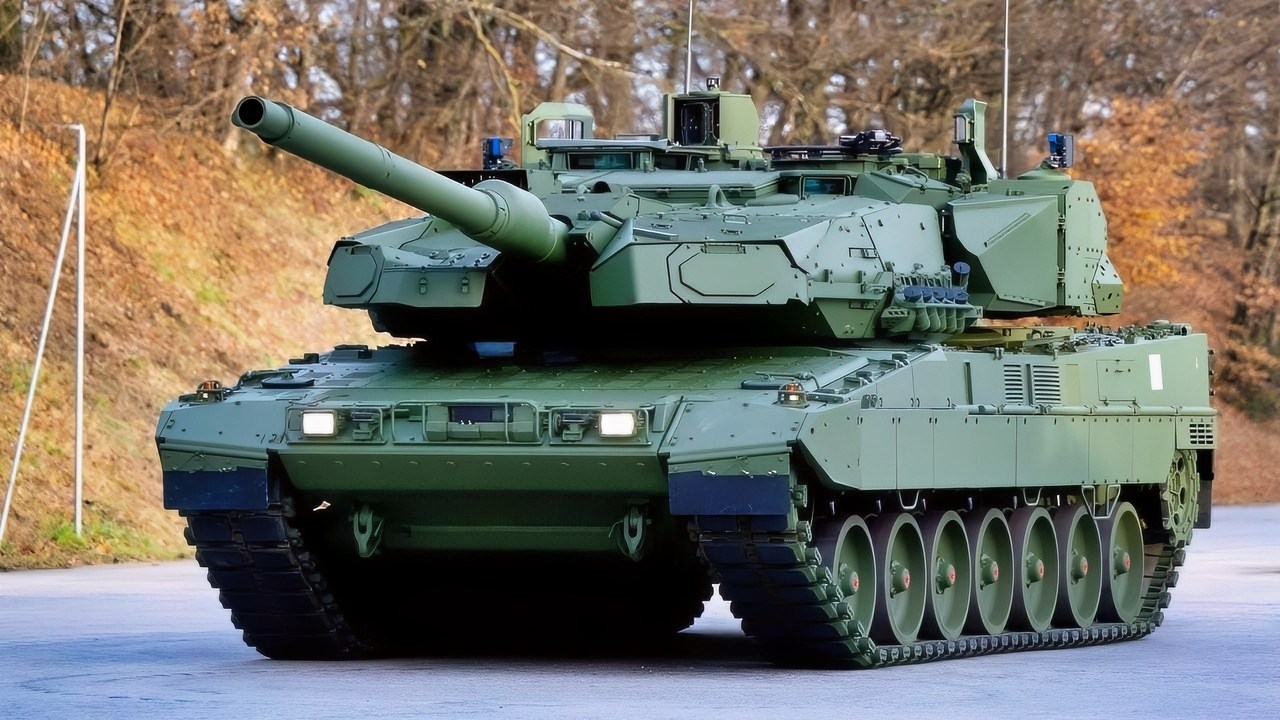
Leopard 2A8 Tank New. Image Credit: Creative Commons.
The MBT-70 project failed due to major design disagreements. The US prioritized a 152mm gun/missile system and specialized crew capsule for global deployment, while Germany favored a 120mm kinetic gun for European, short-range defense. Disagreements over metric/SAE units, engines, and rising costs (eventually $1 million/tank) led to a split.
Issues Cropped Up Almost Immediately
The joint project was called the “KPz-70” by the Germans and the ” MBT-70 by the Americans. The idea was to take two excellent tank-building countries, the US and Germany, and build a super tank that would rule the battlefield if the Soviets ever decided to cross the Fulda Gap.
Immediately, troubles began between the two countries. One was a language barrier that hindered the open communication of ideas. As a result, rather than working together, they began a rivalry between the two camps. Disagreements ensued over engine power plants, main gun calibers, and whether to use metric or “SAE.”
Each side built its own version of the tank, prolonging testing and driving costs higher.
The US viewed the tank as a global platform, requiring heavy air conditioning and specialized air filtration systems. The German team, focused on the European theater, regarded many of these features as unnecessary weight.
Agreements on Armor Protection and Suspension
The designers did agree on a couple of salient points. And several of the features were far ahead of their time. The armor would consist of two-layered spaces. The outer layer would be cold-rolled steel, and the inner layer of softer steel.
The inner protective shell would be “steel-layered tungsten alloy…with uniform rolled steel armor.” This would protect the tank crews from the current Soviet anti-tank ammunition and anti-tank missiles.

An M1A2 Abrams Tank fires a round at Fort Stewart, GA., June 23, 2025. (U.S. Army photo by Sgt. David Resnick)

Soldiers with 1st Battalion, 68th Armor regiment, 3rd Armored Brigade Combat Team, 4th Infantry Division execute platoon live fire exercises Dec. 7, 2021, Fort Carson, Colorado. Platoon live fire exercises prove a platoon’s ability to engage targets and maneuver together on their M1A2 Abrams main battle tanks. (U.S. Army photo by Capt. Tobias Cukale)

Marines with Bravo Company, 4th Tanks Battalion, fire the M1A1 Abrams tank during a live-fire exercise as part of Exercise Arrow 18 in Pohjankangas Training Area near Kankaanpaa, Finland, May 15, 2018. Exercise Arrow is an annual Finnish multi-national exercise with the purpose of training with mechanized infantry, artillery, and mortar field training skills in a live-fire exercise. This is the first year the Marine Corps is participating in this exercise and the first time the M1A1 Abrams tanks have been in Finland. (U.S. Marine Corps photo by Staff Sgt. Marcin Platek/Released)

U.S. Army soldiers assigned to Bravo ‘Bad Bet’ Company, 2nd Battalion, 12th Cavalry Regiment, 1st Armored Brigade Combat Team, 1st Cavalry Division, conduct Table V exercises with the M1A2 Abrams Tank at Bemowo Piskie Training Area, Poland, July 12, 2024. The purpose of the training is to ensure the Abrams were fully functional and fit to fight. The 1st Cavalry Division’s mission is to engage in multinational training and exercises across the continent, strengthening interoperability with NATO allies and regional security partners, which provides competent and ready forces to V Corps, America’s forward-deployed corps in Europe. (U.S. Army photo by Spc. Kali Ecton)
The armor also had a plastic polyethylene layer that could protect from radiation. And the tank could filter radioactive particles and chemical agents from the air entering the crew compartment.
The MBT-70’s suspension was far ahead of its time. It featured a hydropneumatic suspension that lowered the vehicle’s silhouette, making it difficult to target. The suspension could also be raised for better cross-country performance and on-road handling. This capability enabled the tank’s main gun to achieve higher elevation to target targets in built-up areas or cities.
Both agreed to power the tank with a rear-mounted diesel engine. The Americans opted for Continental AVCR 12 Cylinder Air-Cooled Diesel, which produced 1,475 horsepower, while the Germans wanted the MTU Diesel, which produced 1,500 horsepower. With either engine, the MBT-70 could race along roads at 43mph, making it the fastest tank in the world at the time.
However, crew and driver disorientation were issues. The driver’s capsule was fixed in place, causing motion sickness because the driver’s view was not always aligned with the tank’s direction of travel.
The Americans’ Choice Of The Main Gun Was Dangerous
The Americans chose a far larger and more intriguing main gun. The 152-mm auto-loading main gun had the range to engage enemy targets outside the range of Soviet anti-tank missiles. The 152-mm gun could also launch its Shillelagh anti-armor missiles. A 20-mm anti-aircraft cannon could protect against airplanes and helicopters.
However, the 152mm main gun had several deficiencies. The Shillelagh missile never worked well with the fire control system. And the ammunition, as we saw with the smaller 152mm in the Sheridan light tank, was dangerous.

A U.S. Army M1 Abrams, assigned to 4th Battalion, 6th Infantry Regiment, 3rd Armored Brigade Combat Team, 1st Armored Division, fully emerges from the tank firing point to engage the simulated enemy at Novo Selo Training Area, Bulgaria, March 5, 2025. 1st Armored Division, a rotational force supporting V Corps, conducts training with engineers and tank operators in the European Theatre to maintain readiness and instill fundamental Soldier skills that are vital in maintaining lethality. (U.S. Army photo by Spc. Kyle Kimble)
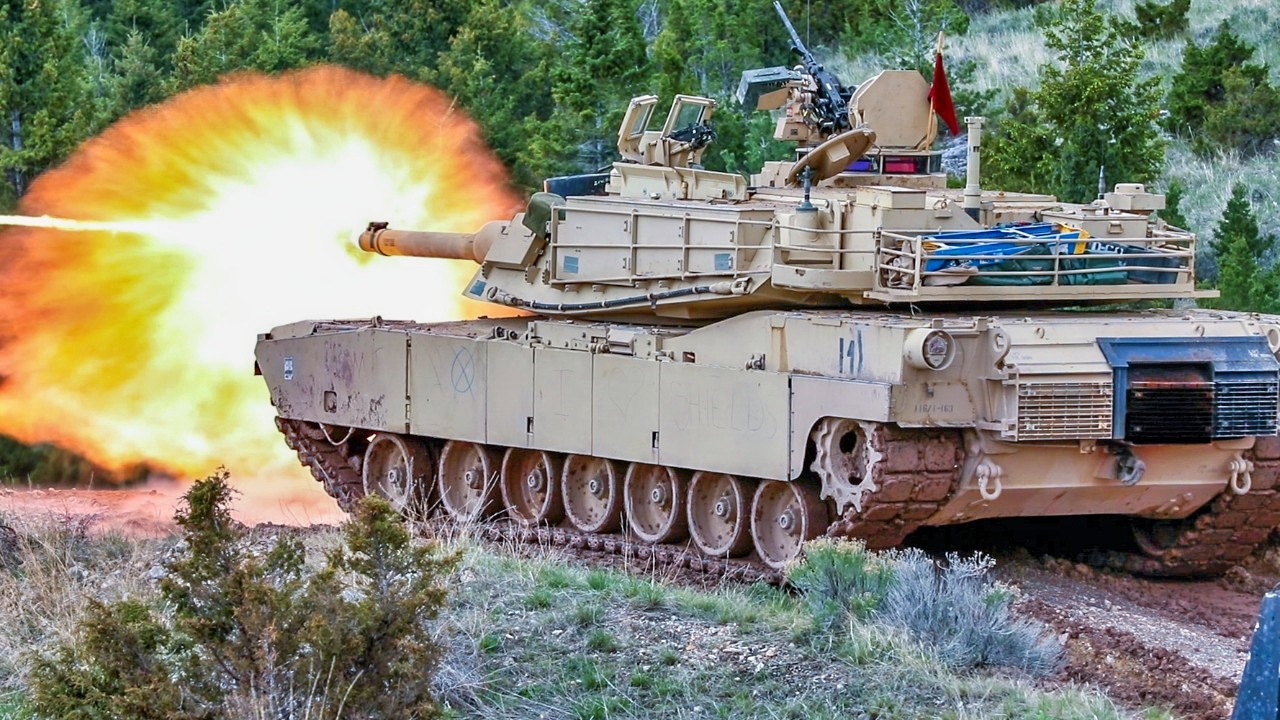
On May 16th 2025, Montana’s 1-163rd Combined Arms Battalion hosted over a dozen British Army Soldiers of the Royal Wessex Yeomanry (RWxY) at the Limestone Hills Training Facility in a joint training event to help their armored crewmembers transition to the Challenger 3 tank which is currently in production. Training involved British armored crewmembers serving in their assigned roles on the M1A2 Abrams alongside our Montana National Guard Soldiers.
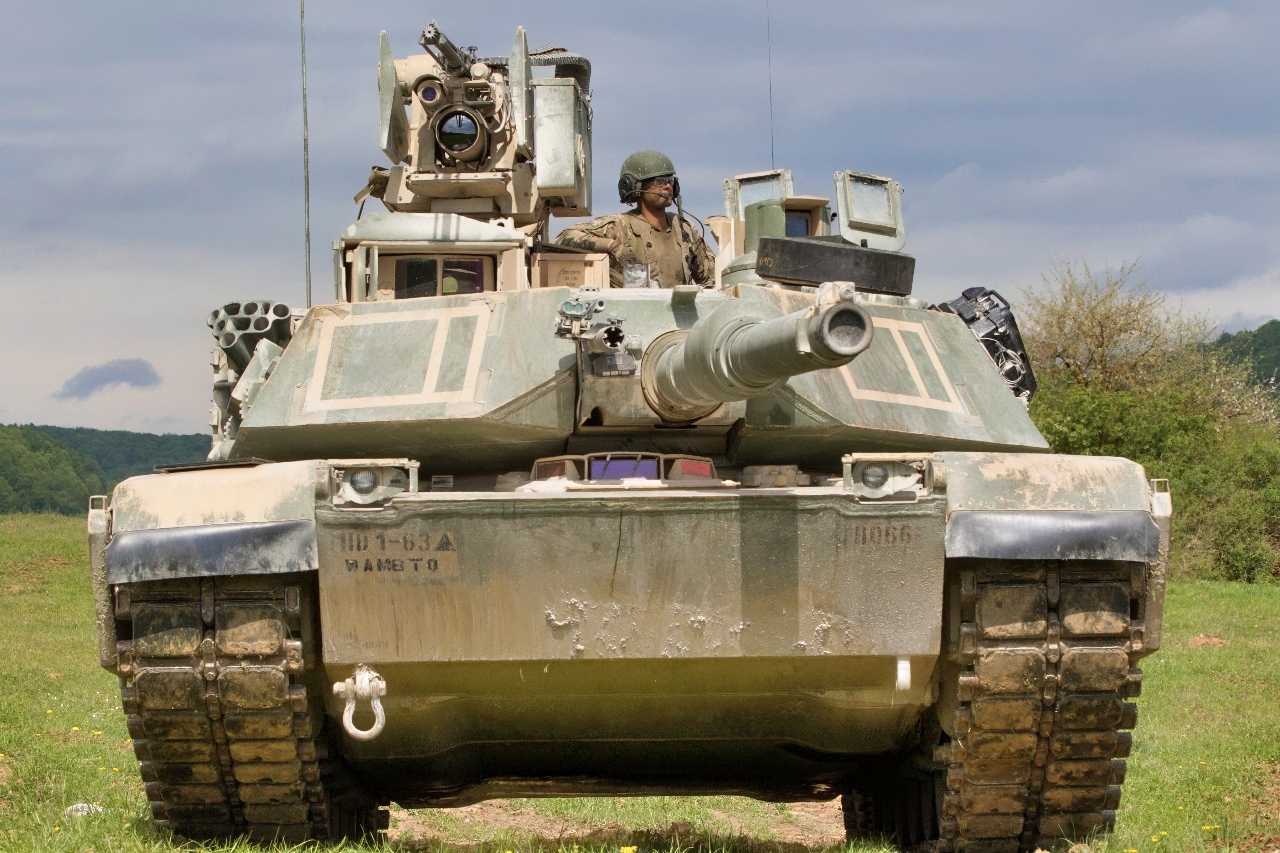
An M1A2 Abrams tank from 1st Battalion, 63rd Armor Regiment, “Dragons,” 1st Infantry Division, Fort Riley, Kansas, pulls during Combined Resolve X at the Hohenfels Training Area, Germany, May 1, 2018. Exercise Combined Resolve X is a U.S. Army Europe exercise series held twice a year in southeastern Germany. The goal of Combined Resolve is to prepare forces in Europe to work together to promote stability and security in the region. (U.S. Army photo by Spc. Andrew McNeil / 22nd Mobile Public Affairs)
The round was attached to the combustible propellant charge. Often, shells did not thoroughly burn through, leaving still-burning elements in the barrel—a dangerous condition that slowed follow-on firing. Heat and moisture adversely affected the rounds.
The Germans opted for the 120mm Rheinmetall. This was the better choice. Plus, the 20mm gun was too technical and never performed well enough as the designers had thought.
The tank did feature advanced sights. It also incorporated stabilized optics, new thermal/IR aids, a laser rangefinder, and a ballistic computer that promised first-round hits on the move, day or night.
Too Big, Too Heavy, And Too Expensive
Ultimately, the tank weighed 54 tons, far more than the 46 tons envisioned for the MBT-70. This was an issue for bridges, especially in Germany, where the domestic rail transportation infrastructure was not equipped to carry tanks of this size. This is a subject that is affecting the M1 Abrams tanks today.
The costs got out of control. The price rose to almost $1 million per tank, five times the original estimate. And with so many new pieces of equipment, problems with many of them ultimately arose, further driving up costs.
While the ideas were sound, all of the technology proved to be too much of a tech upgrade at once.
The Failure Spawned Two Outstanding Tanks
The MBT-70 program, while a failure, also served as the impetus for two outstanding tank designs that have served each country well. So, perhaps the program wasn’t a failure after all.
By 1969, the Germans had pulled out of the program in favor of developing the very successful Leopard 2.
Congress also had had enough and canceled the MBT-70 program at the end of 1971. The following month, the Army used the funds to begin developing the XM-1 tank, which became the iconic M1 Abrams tank. This tank and various upgrades have served the US Army for more than 40 years.
The M1 Abrams and the Leopard 2 are widely considered the two best tanks in the world and are more than a match for Soviet and now Russian armor.
About the Author: Steve Balestrieri
Steve Balestrieri is a National Security Columnist. He served as a US Army Special Forces NCO and Warrant Officer. In addition to writing on defense, he covers the NFL for PatsFans.com and is a member of the Pro Football Writers of America (PFWA). His work was regularly featured in many military publications.


