

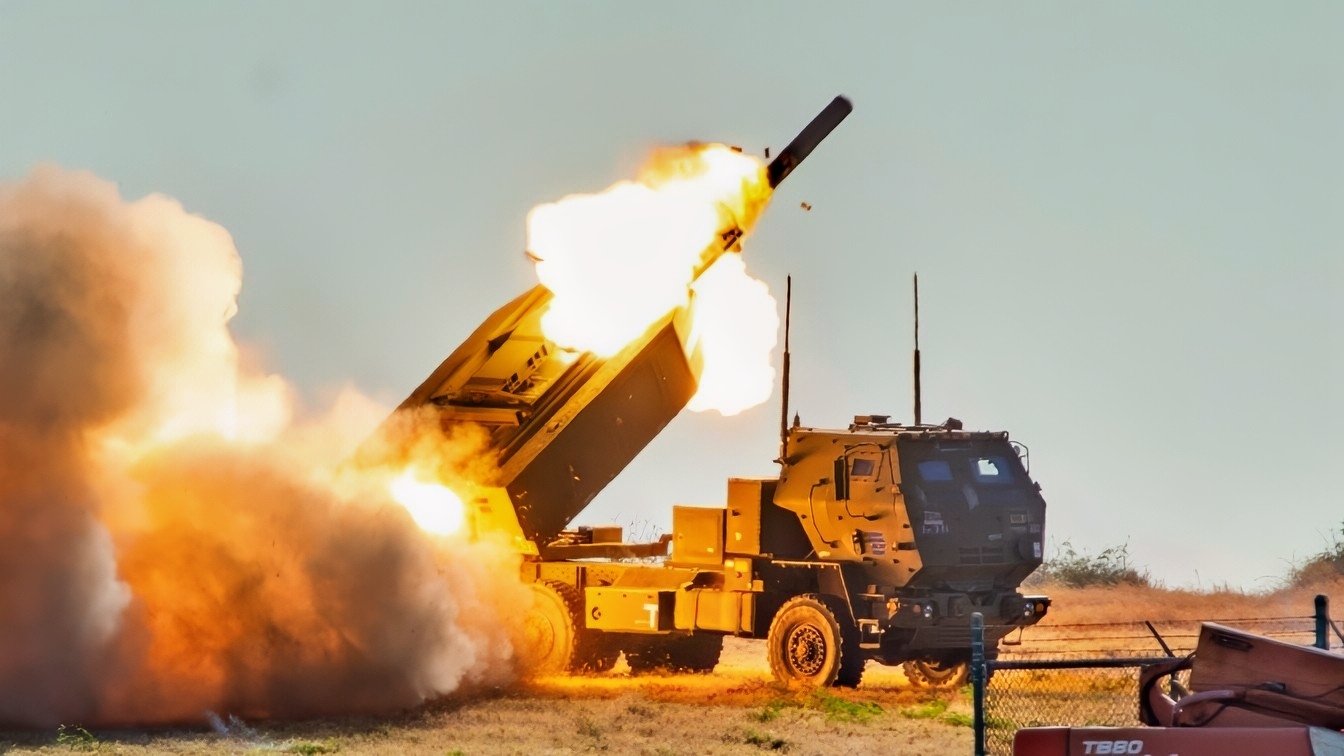
In the present day, Ukraine-made drones of their own design are hitting targets deep inside Russia on an almost daily basis.
So, it is hard to imagine that there was ever a time when the country lacked such capabilities and was forced to improvise a land-attack weapon based on a previous-generation, Cold War-era system.
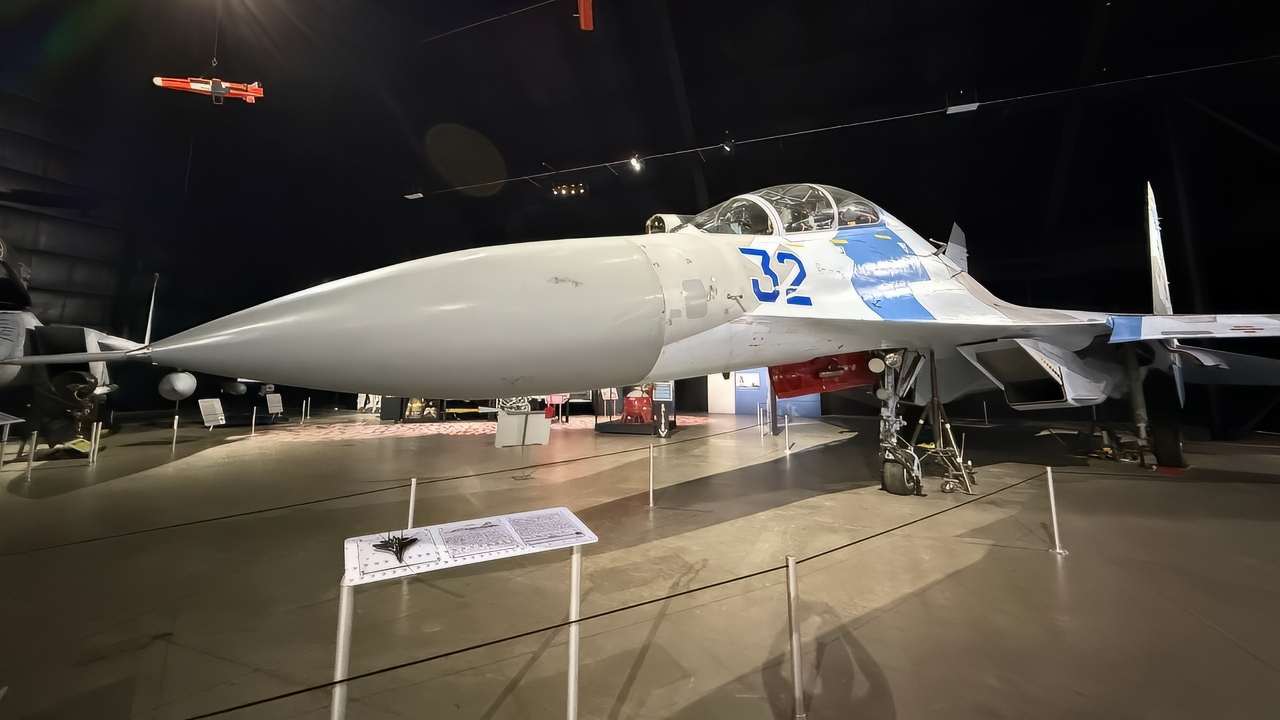
Su-27 Flanker Up Close. Image Credit: National Security Journal Taken on July 19, 2025.
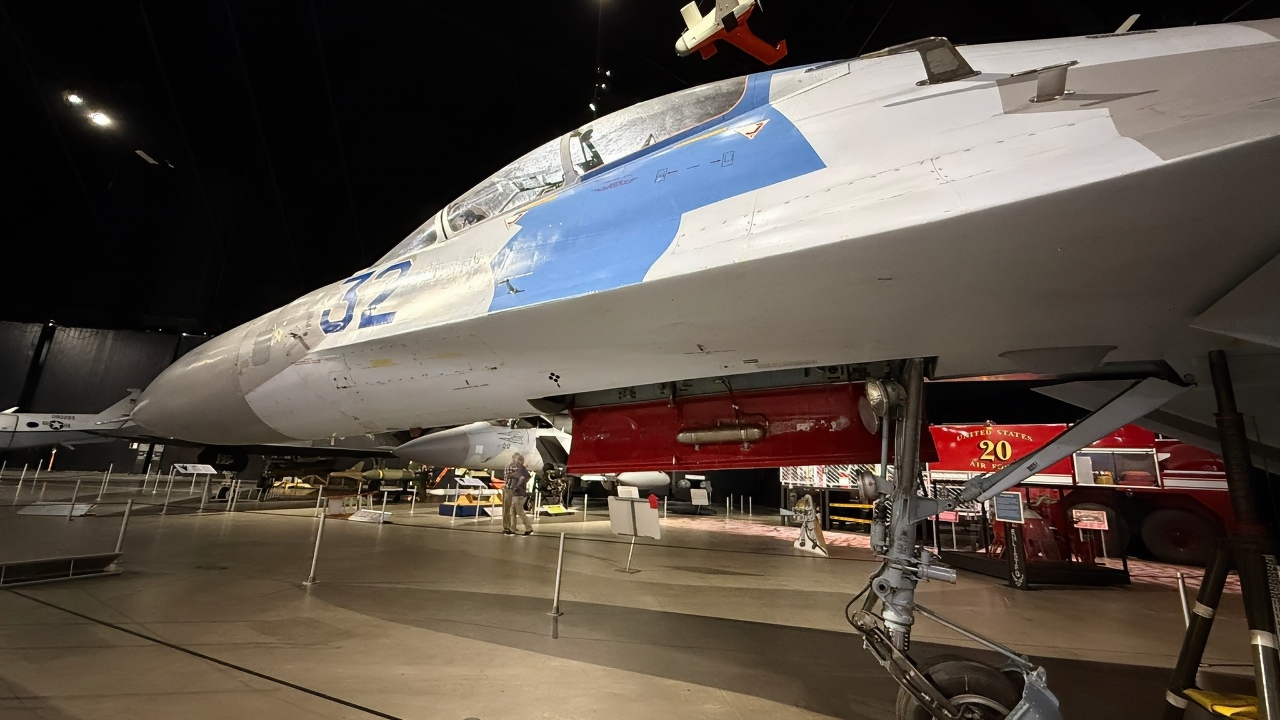
Russian Su-27 Flanker from USAF Museum. Image Credit: National Security Journal.
Back in 2022, before it became public knowledge, executives of Ukrainian defense industry enterprises were talking off-line about how they had repurposed some of the country’s considerable stockpile of S-200 (SA-5 Gammon) air defense missiles for land-attack use and were using them against targets in Crimea—among other locations.
Using the S-200 launch complex, Ukraine has employed the system’s 5V28 missiles. These are 10.8 meters (35.4 feet) long and weigh 7.1 tonnes (15,653 lbs) with a 220 kg (485 lbs) fragmentation warhead.
Primarily employed for special strike missions by the Ukraine Defense Intelligence Service (HUR), they have been effectively adapted for surface-to-surface strikes, operating as ballistic missiles.
The weapon’s range when modified for this mission is close to 200 miles. The HUR have employed it for attacks on targets not just in occupied Crimea, but also against other strategic facilities.
Experience With Soviet-Era Technology
Soviet engineers began developing the S-200 as a surface-to-air missile (SAM) system in the 1950s. The system was designed to hit targets at high altitudes, primarily the latest US strategic supersonic bomber of the day, the B-58 “Hustler,” and the famous U-2 spy plane, plus other reconnaissance platforms.
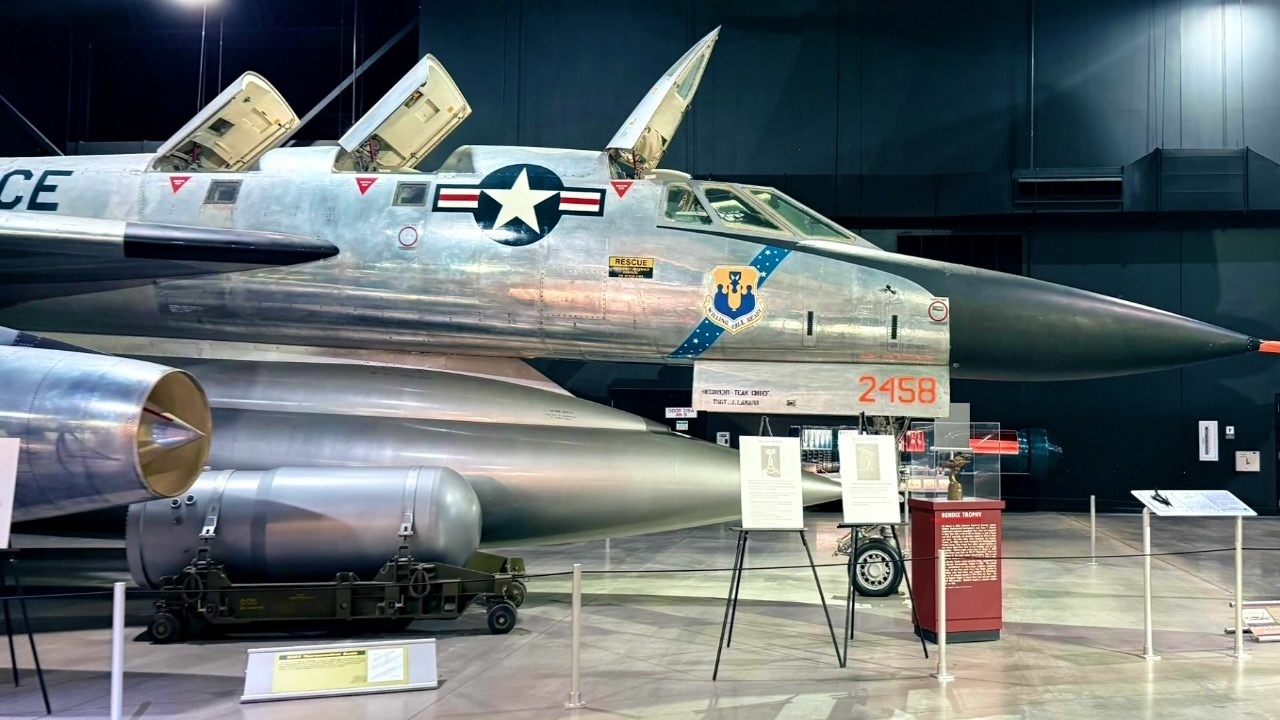
B-58 Hustler Bomber National Security Journal Photo All Rights Reserved.
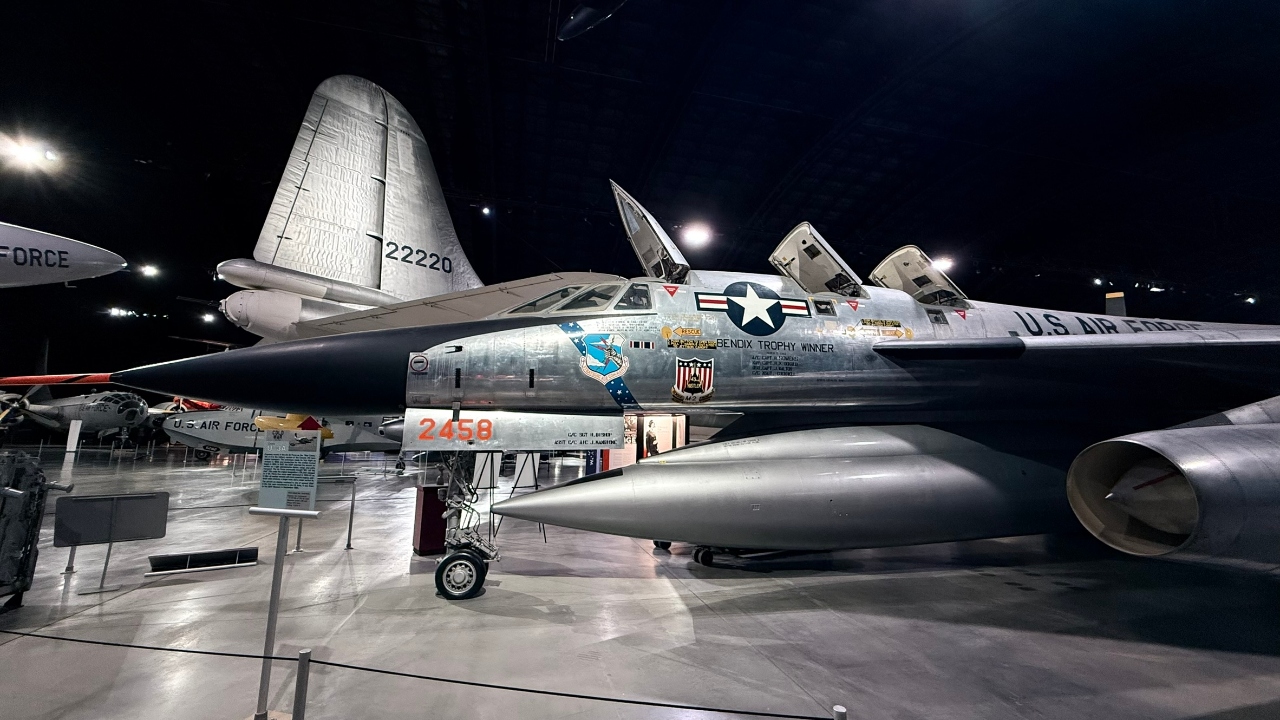
B-58 Hustler in the Air Force Museum. Image Credit: National Security Journal.
The SAM was operational by 1975 and was eventually fielded in several variants, including the S-200D “Dubna.” This was a nuclear-capable system that could launch the 5V28V missile with an expanded range of 300 km – equal to that of the conventional surface-attack version developed by Ukraine.
At its peak in 1985, the S-200V was deployed at over 130 launch sites throughout the Soviet Union for a total of 338 batteries that consisted of about 2030 launchers. The S-200 and an earlier system, the S-75, were replaced by earlier versions of the S-300 as the latter came online in the 1980s.
This created a sizable stockpile of surplus missiles stored in Ukraine.
These were being marketed back in the early 2000s as a component for an upgraded system.
Ukrainian air defense enterprises were proposing their innovations to export customers of the S-200 that were still operating this older SAM system.
Re-Birth As a Ballistic Missile
The S-200 was phased out of Ukrainian service by 2013, but the systems were kept in storage, and local industry continued to work on improvements to both the missile and the radar set.
Ukraine has not only modernized the missile itself but also upgraded older Russian radars by replacing Soviet-made vacuum-tube technology with solid-state components.
The Russian invasion in February 2022 forced Kyiv to reactivate its S-200s—and to place them into service in both their original air-defense role and the improvised ground-attack role they have been used for since the war began, to significant effect.
One of the more spectacular air defense successes of the S-200 since the Russian invasion was its use in the shootdown of a Russian A-50 Mainstay Airborne Early Warning & Control (AEW&C) platform in February 2024.
The Russian Aerospace Forces (VKS) have only a few of the A-50s that are modernized in their latest variant, which utilizes digital on-board systems and an advanced radar set.
Ukraine has also improved the missile’s performance with the use of advanced, modern radars.
Ukraine has been able to supplement its Soviet-era hardware using Western-supplied air defense equipment and has developed methods for data-linking targeting data between the two.
The original S-200 used semi-active radar guidance, as it was developed well before the generation of active-homing missiles and active electronic scanning array (AESA) radars.
However, unnamed Ukrainian defense officials have detailed how their industry was able to source modern-day radar and datalink hardware. These components are used in a modernized guidance system that incorporates GPS-based targeting aids and more precise radar tracking with higher scanning rates.
Ukraine defense industry specialists have said more than once that, in its improved version adapted for surface strikes, the S-200 missile has maneuvering characteristics very close to those of modern ballistic missile systems.
About the Author: Reuben F. Johnson
Reuben F. Johnson has thirty-six years of experience analyzing and reporting on foreign weapons systems, defense technologies, and international arms export policy. Johnson is the Director of Research at the Casimir Pulaski Foundation. He is also a survivor of the Russian invasion of Ukraine in February 2022. He worked for years in the American defense industry as a foreign technology analyst and later as a consultant for the U.S. Department of Defense, the Departments of the Navy and Air Force, and the governments of the United Kingdom and Australia. In 2022-2023, he won two awards in a row for his defense reporting. He holds a bachelor’s degree from DePauw University and a master’s degree from Miami University in Ohio, specializing in Soviet and Russian studies. He lives in Warsaw.


