
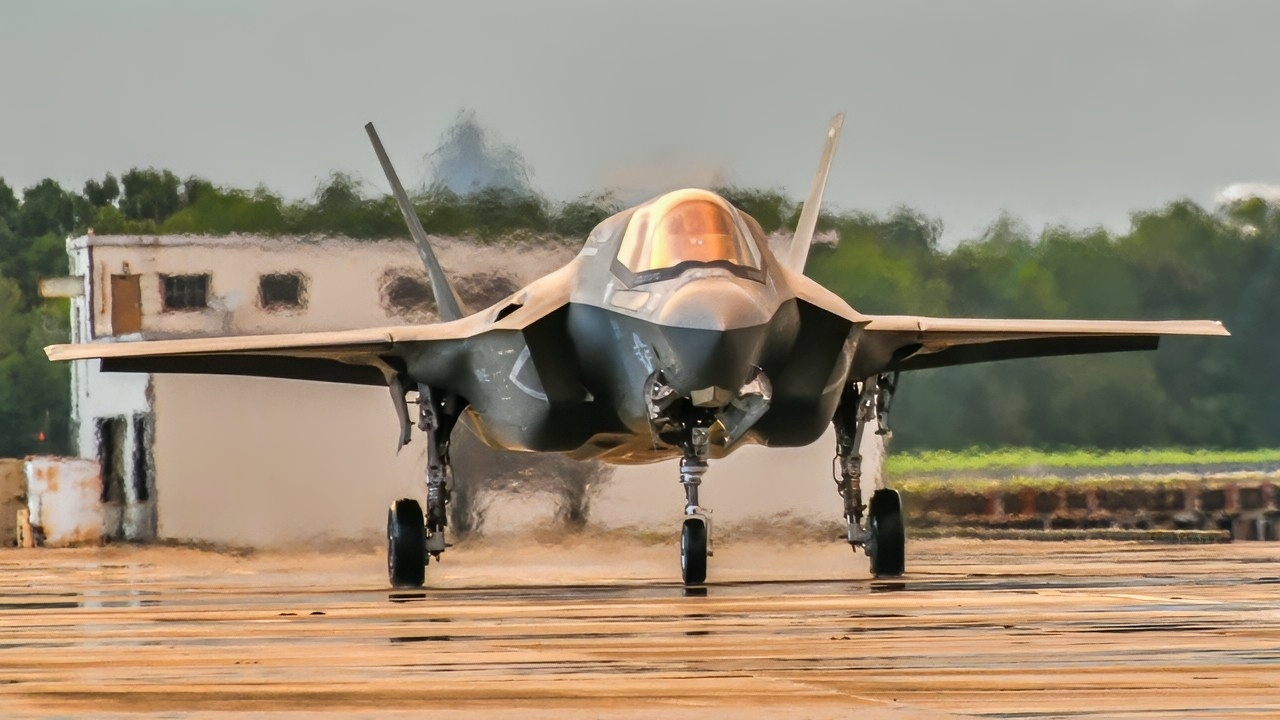
F-35 Full-Mission Readiness Falls to Just 25%: The Pentagon’s most expensive weapons program is under new scrutiny after a government watchdog report found that only one-quarter of the U.S. military’s F-35 fighter jets were fully mission-capable in fiscal year 2025, meaning they could fly any and all missions the stealth fighter was designed for.
According to a report published by the Government Accountability Office (GAO), America’s most advanced fighter jet may still be technically capable, but it is being bogged down by a series of problems that make it hard to maintain readiness.

Maj. Kristin Wolfe, F-35A Lightning II Demonstration Team pilot and commander, performs the “high speed pass” maneuver at the California International Air Show, Salinas, Calif., Oct. 30, 2021. The F-35A Demo Team performed alongside the U.S. Navy’s F-35C Demonstration Team, showcasing two different variants of the 5th-generation fighter aircraft. (U.S. Air Force photo by Capt. Kip Sumner)
The F-35 Lightning II is expected to remain the backbone of U.S. tactical aviation for decades, serving alongside upcoming next-generation fighter jets and drones, but a combination of maintenance challenges, software delays, spare parts shortages, and ever-rising sustainment costs continues to undermine its readiness.
F-35 Full Readiness Rates Keep Falling
According to a GAO report published on June 11, the F-35 fleet’s full mission-capable rate fell to 25% last year.
The figure shows the percentage of time during which the aircraft can perform all missions. The figure is remarkably low, representing a significant reduction from the 67% readiness rate reported in 2021. The figure appears to be steadily dropping.
The report described several factors contributing to the plummeting readiness rates, and cited Air Force officials who pointed to delays in integrating software updates into new aircraft deliveries and shortages of critical spare parts. Corrosion issues are reportedly affecting portions of the fleet as well.
“The F-35 is DOD’s most costly weapon system, but it hasn’t met performance goals, and costs to sustain the aircraft continue to increase,” the report notes.
Business & Industrial Issues: A Problem Years in the Making
The readiness challenges outlined in the latest report are nothing new. The GAO has issued dozens of recommendations on F-35 sustainment since 2014. Of the 46 recommendations made in that time, only 14 have been fully implemented as of March 2026.
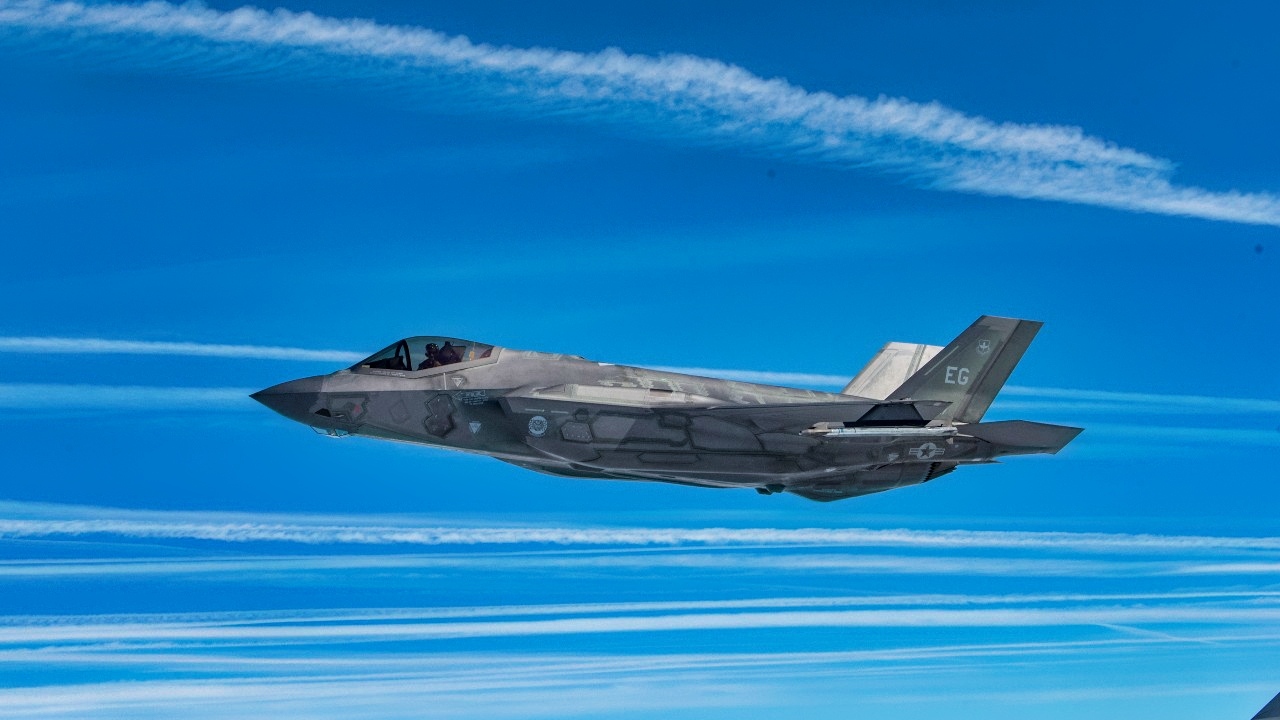
U.S. Air Force F-35 Lightening II with Eglin Air Force Base, Florida flies off the wing of a KC-135 Stratotanker with MacDill Air Force Base, Florida on December 16, 2021. The F-35 is the U.S. Air Force’s fifth-generation fighter and will replace the F-16 Fighting Falcon and the A-10 Thunderbolt II. (U.S. Air Force photo by Staff Sgt. Tiffany A. Emery)
Former Air Force Secretary Frank Kendall repeatedly warned that the F-35’s operating costs were so high that they posed a long-term threat to affordability and to the program as a whole. Speaking in 2023, Kendall said that sustainment was the F-35’s “biggest challenge” and said that the military needed to reduce operating expenses if it hoped to maintain the planned fleet size.
Annual assessments of the program have also repeatedly identified shortages of replacement parts and maintenance bottlenecks, problems compounded by ongoing software instability.
Despite the problems, however, the F-35 program has continued to expand, with more allied nations adopting the aircraft in recent years. That increased adoption – good news for the U.S. and NATO – has placed extra pressure on an already strained global sustainment network.
The program has received commitments from Germany, Switzerland, Poland, the Czech Republic, Finland, Belgium, Singapore, and Canada to either acquire the aircraft or expand planned purchases. And as more of these nations join the program, demand for spare parts and maintenance capacity will only grow.
The Stakes
The stakes are enormous here. The Pentagon currently operates over 800 F-35s and plans to purchase a further 1,700 aircraft by the mid-2040s. Lifetime U.S. sustainment costs for the aircraft were estimated to be $1.6 trillion in 2024, making it the most expensive weapons program in American history. Some put the total cost at over $2 trillion over the program’s expected lifetime.
In response, the Joint Program Office launched the Global Support Solution Reset Initiative (GSS), which was designed to raise mission-capable rates to 80% and full mission-capable rates to 65% by 2030. However, officials believe that readiness rates are likely to deteriorate further before any improvements materialize.
What the GAO Recommended
The GAO report offered a series of recommendations for the Department of Defense to rectify the problem, urging officials to “develop risk mitigation plans” to ensure that future incentives to increase readiness rates “better achieve the desired performance for sustainment contracts.”
Among those recommendations was a suggestion that the Secretary of Defense “should ensure that the F-35 Program Executive Officer proactively develops risk mitigation plans—including, but not limited to, for risks such as access to technical data, industry capacity, affordability, and alignment with service goals—associated with sustainment improvement initiatives such as the GSS Reset.”
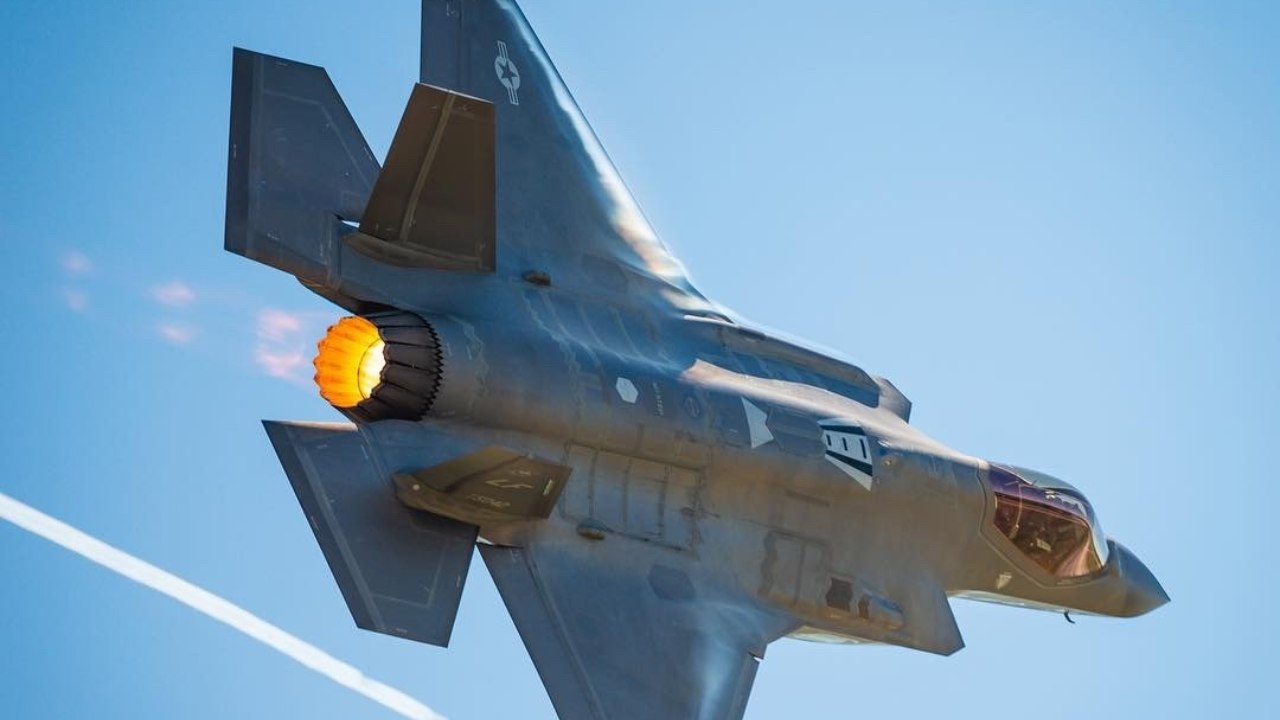
Capt. Andrew “Dojo” Olson, F-35 Demonstration Team commander and pilot performs a dedication pass in an F-35A Lightning II during the 2019 Wings Over Wayne Airshow April 27, 2019, at Seymour Johnson Air Force Base, North Carolina. The WOW Airshow marks the third public performance of the F-35 Demo Team’s new aerial demonstration during 2019 airshow season.
Additionally, the Secretary of Defense was encouraged to “ensure future incentive approaches better achieve the desired performance for sustainment contracts.” The report’s authors added that “such approaches could include adopting penalties for poor performance, reevaluating incentive threshold levels to improve performance to meet service requirements, or omitting performance incentives.”
Additionally, the Defense Secretary was encouraged to develop a system with quality-control safeguards in place to “store relevant, quality incentive fee metric and payment information,” ensuring that contractors working to maintain and improve readiness are held accountable. To achieve those goals, a further $13.7 billion in spending will be necessary by fiscal year 2031.
About the Author: Jack Buckby
Jack Buckby is a British researcher and analyst specializing in defense and national security, based in New York. His work focuses on military capability, procurement, and strategic competition, producing and editing analysis for policy and defense audiences. He brings extensive editorial experience, with a career output spanning over 1,000 articles at 19FortyFive and National Security Journal, and has previously authored books and papers on extremism and deradicalization.


