

Iran’s New Defense Minister Threatens Huge Attack On U.S. Forces – While Iranian Foreign Minister Abbas Araghchi urges Washington to accept its seven-day proposal to open the Strait of Hormuz, the country’s newly appointed defense minister has threatened to inflict enormous damage on the United States and its allies if President Trump continues his military campaign.
The warning comes as Washington considers the timing for another round of strikes against Iranian military, energy, and nuclear infrastructure, and as Washington resists efforts by Tehran to force concessions over its frozen assets and the ongoing naval blockade on Iranian ports.
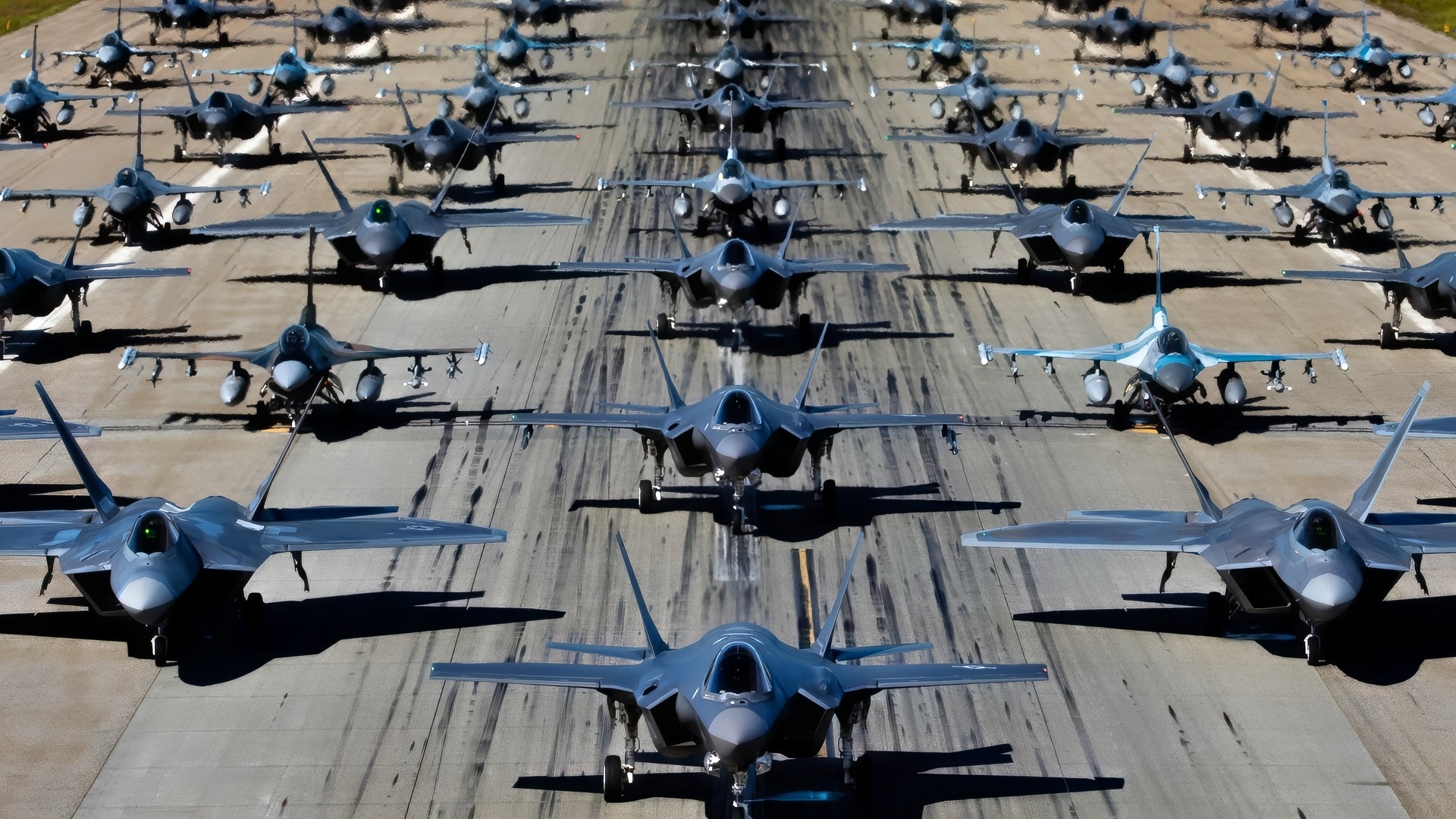
The 354th Fighter Wing conducts a 75-fighter jet formation at Eielson Air Force Base, Alaska, Aug. 12, 2022, in honor of the U.S. Air Force’s 75th Anniversary. This capabilities demonstration included F-35A Lightning II, F-16 Fighting Falcon and F-22 Raptor aircraft from across Pacific Air Forces. (U.S. Air Force photo by Senior Airman Gary Hilton)

Afterburners are lit as an F-22 Raptor performs an aerial demonstration at the New York Air Show at Montgomery, New York, Aug. 23, 2025. The rapid change in angle of attack causes visible vapor to form around the aircraft, giving spectators a clear view of the jet’s aerodynamic performance. This demonstration highlights the unique thrust-vectoring capabilities of the F-22, allowing it to achieve extreme agility unmatched by other fighter aircraft. (U.S. Air Force photo by Staff Sgt. Lauren Cobin)
Mehrdad Akhlaghi Ketabchi issued a warning on Sunday, October 18, shortly after the Iranian parliament approved his appointment as defense minister. The appointment means that Iran’s battered military and industrial infrastructure will now be overseen by a veteran of the Iranian missile and aerospace industries. According to Reuters, Akhlaghi warned that Tehran is preparing countermeasures against the possible use of the United States’ most powerful conventional weapon, the so-called “Mother of All Bombs.”
The comments from Ketabchi come just three days after reports said that the Pentagon is considering using the bomb, which is officially named the GBU-43/B Massive Ordnance Air Blast bomb, against Iran’s Pickaxe Mountain nuclear site.
What Iran Threatened
Speaking to reporters following his appointment on October 18, Akhlaghi warned that Iran would retaliate against U.S. forces and regional allies if Washington resumes its strike campaign or launches new attacks on its nuclear sites using the massive bomb.
Ahead of the vote that confirmed his appointment, Akhlaghi promised transparency.
“If I receive parliament’s vote of confidence, responsibility for the Ministry of Defense will fall to me at a sensitive juncture,” he said.
“Under such circumstances, defending the country requires an accurate understanding of the environment, an understanding of the logic behind developments, the identification of influential trends, and preparedness to face different possible futures.”
Akhlaghi also threatened to inflict “enormous damage” on the United States and its allies if the hostilities continue.
“People can rest assured that they will most likely not dare to attack us,” he told reporters. “If they do, they themselves and the region will suffer enormous damage.”
The New Defense Minister
Iranian lawmakers approved Akhlaghi’s appointment with 237 votes in favor and 15 against during a video-conference parliamentary session. Iranian state broadcasters said 277 votes were cast.
Akhlaghi replaces Aziz Nasirzadeh, who was killed during strikes on February 28, when the U.S. and Israel initiated the war. Nasirzadeh was killed during the same attack that killed the late Supreme Leader Ali Khamenei and several other senior Iranian military commanders.
Until the appointment, Majid Ebn al-Reza served as acting defense minister.
The appointment marks a major shift in Iran’s defense leadership: instead of selecting a commander known for battlefield experience, Tehran has chosen a hardliner and longtime official whose experience centers largely on weapons manufacturing and the development of missiles and new defense technology.
According to Al Jazeera, Iranian President Masoud Pezeshkian said that Akhlaghi has over 42 years of experience in the Defense Ministry and related organizations.
Who Is Mehrdad Akhlaghi?
Akhlaghi is 68 years old and has spent decades working in the Iranian defense industry. He has also held senior positions in the Aerospace Industries Organization, the Defense Industries Organization, and the Shahid Bagheri Industrial Group. Those three organizations play important roles in developing and manufacturing Iran’s ballistic missiles and other military hardware.
His involvement in the nation’s missile programs has also attracted international sanctions. In 2007, the United Nations sanctioned him. The United States also imposed its own sanctions targeting his involvement in the Iranian weapons industry.
Iran Plans to Rebuild Military
Iran’s new defense minister now faces the monumental task of rebuilding the country’s military capabilities following months of American and Israeli strikes.
According to Al Jazeera, Iranian Defense Ministry spokesman Reza Talaei-Nik said earlier this month that Akhlaghi’s nomination reflects Tehran’s determination to improve both the quantity and quality of its missile and drone arsenal.
Akhlaghi has also reportedly met with senior military commanders, including Islamic Revolutionary Guard Corps commander Ahmad Vahidi, to assess the military’s requirements. His priorities now include improving air defenses and accelerating weapons development to ensure that Iran can continue defending against U.S. strikes — and potentially even taking the fight back to the U.S. and its allies in the Gulf region.
Iran Demonstrates Its Capabilities
Iran is enduring incredible hardship as a result of the U.S. economic sanctions campaign, but it continues to prove its military capabilities. A Reuters investigation published on October 15 identified at least 135 Iranian and allied missile and drone strikes against 84 critical infrastructure sites across seven Gulf states since February 28.
And Tehran promises to escalate if the U.S. resumes its campaign.
About the Author: Jack Buckby
Jack Buckby is a British researcher and analyst specializing in defense and national security, based in New York. His work focuses on military capability, procurement, and strategic competition, and he produces and edits analysis for policy and defense audiences. He brings extensive editorial experience, with a career output spanning over 1,000 articles at National Security Journal, and has previously authored books and papers on extremism and deradicalization.


