
Iran launched another round of missile and drone attacks against American military facilities across the Gulf overnight into Thursday, September 3, continuing the sudden return of fighting that ended a month-long period of relative peace.
The strikes targeted American bases and U.S.-linked infrastructure and facilities.
The overnight attack also targeted commercial shipping infrastructure.
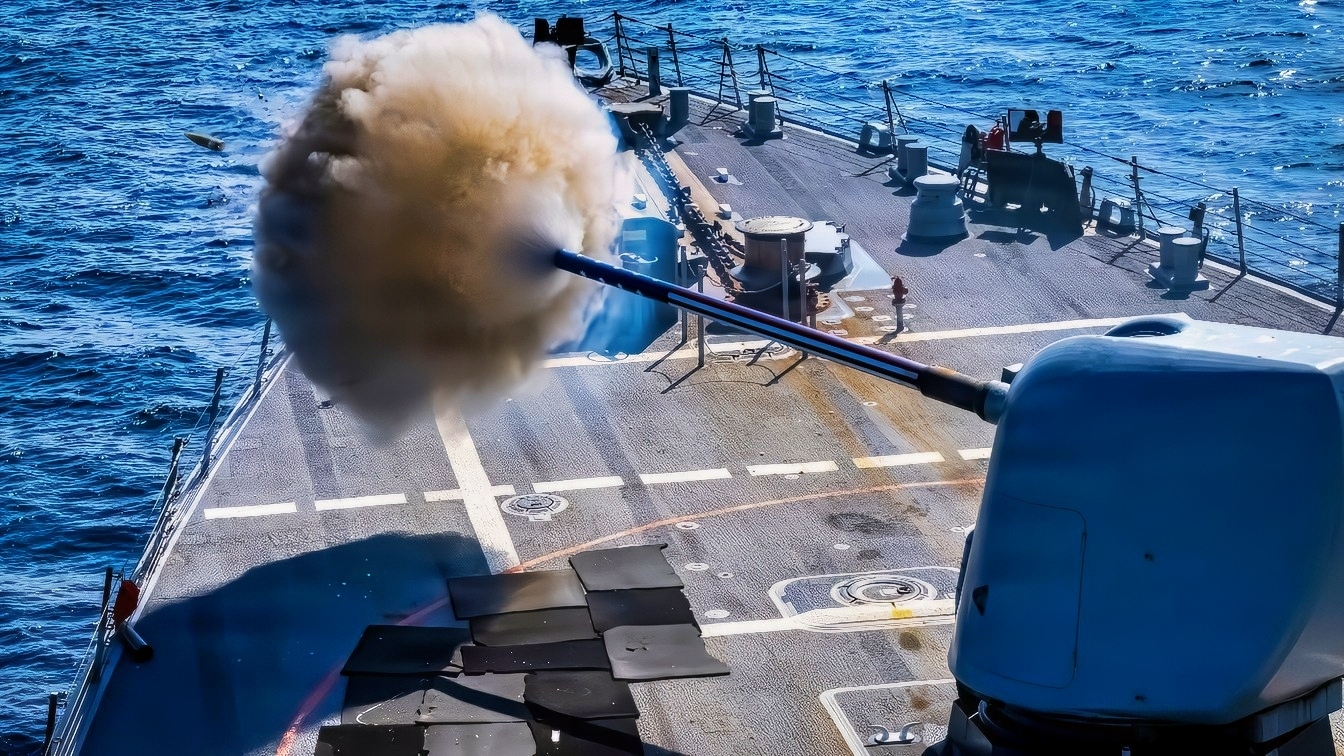
PACIFIC OCEAN (April 27, 2026) U.S. Navy Arleigh Burke-Class guided-missile destroyer USS John Paul Jones (DDG) 53, fires its Mk.45 5-inch deck cannon during a live fire exercise, April 27, 2026. John Paul Jones, part of the Theodore Roosevelt Carrier Strike Group, is underway in the U.S. 3rd Fleet area of operation conducting advanced training to bolster strike group readiness and capability. (U.S. Navy photo by Mass Communications Specialist 2nd Class Ryan Holloway)
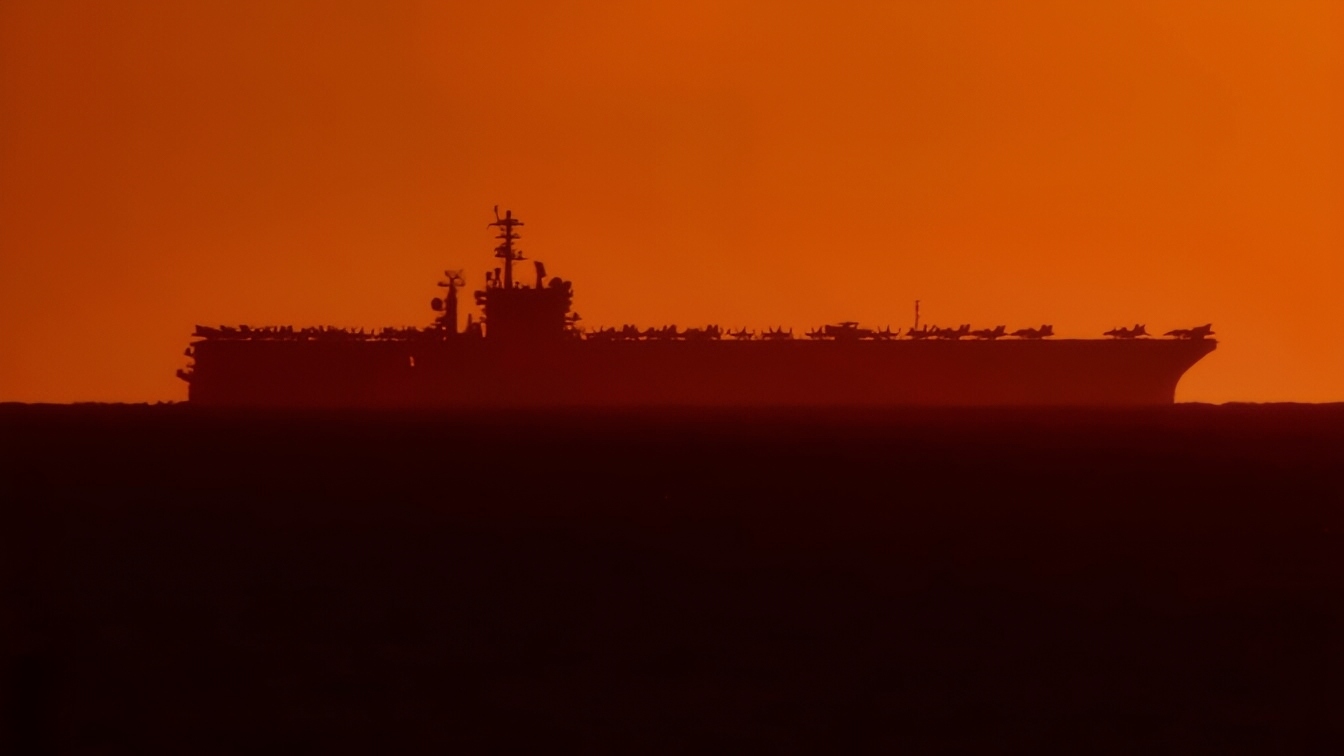
Indian Ocean (January 6th, 2021)
The aircraft carrier USS Nimitz (CVN 68) steams in the Indian Ocean, Jan. 6. Nimitz is the flagship of the Nimitz Carrier Strike Group and is deployed to the U.S. 5th Fleet area of operations to ensure maritime stability and security in the Central Region, connecting the Mediterranean and Pacific through the Western Indian Ocean and three critical chokepoints to the free flow of global commerce. (U.S. Navy photo by Mass Communication Specialist Seaman Drace Wilson)
Kuwait said that its air defenses engaged incoming Iranian missile and drone attacks in the early morning and described the attack as Iranian aggression.
Iran then said it had deliberately targeted facilities being used by American forces in Kuwait and the United Arab Emirates.
The sudden strikes built on a campaign that has already included attempted attacks on sites in Jordan, Bahrain, and Iraq.
It all follows several days of intensifying military conflict that the United States has been keen to avoid for some weeks.
The United States resumed strikes on Sunday against Iranian launchers near the Strait of Hormuz and followed with a substantially larger campaign against Iranian military infrastructure.
Tehran has responded by attempting to carry the war directly to American forces stationed around the region.
Iran Targets Kuwait and the UAE
Iran’s regular army took responsibility for the Thursday attacks in a statement released and carried by Iranian state television.
The army described the strikes as the 31st phase of Operation Saeqeh – its retaliatory campaign against U.S. forces in the region.
“Early this morning, the Army of the Islamic Republic of Iran struck the ‘satellite communication systems,’ ‘equipment warehouses,’ and ‘fighter jet hangars’ of the U.S. terrorist army at the Ahmad al-Jaber base in Kuwait using missiles and suicide drones,” the Public Relations Department of Iran’s Army said in a statement.
Iran’s army also said it attacked American troop positions and radar systems at Al Minhad Air Base in the UAE.
Iran claimed that the attack damaged communications equipment and aircraft hangars in Kuwait, though the claim has not been independently verified.
Neither Washington nor the Gulf governments have publicly confirmed the damage.
What Kuwait did confirm, however, is that the Iranian attack occurred.
The Kuwaiti Armed Forces announced on Thursday that its air defenses were engaging incoming “hostile missile and drone attacks.”
The Fighting Escalates Again
While the U.S. and Iran were actively in conflict, the strikes followed a period of relative calm that persisted for around a month.
U.S. Central Command said American forces started a new round of strikes at around noon Eastern time on Tuesday, September 1.
The strikes targeted Islamic Revolutionary Guard Corps (IRGC) facilities.
In its public statement announcing the strikes, CENTCOM said that they were conducted in response to “recent attempted attacks by the IRGC against commercial shipping in the Strait of Hormuz and against American service members deployed to the region.”
Those strikes followed more limited operations by U.S. forces on Sunday against two Iranian launchers on Larak Island.
Washington said that American forces had observed Iranian preparations to use the launchers to deploy rockets carrying sea mines.
The strikes, therefore, were intended to prevent further disruption to commercial shipping through the Strait of Hormuz.
There has been a human cost to the recent strikes, too, with Iranian Health Ministry spokesman Hossein Kermanpour claiming on X on Thursday that 18 people were killed and 142 wounded in U.S. attacks between August 30 and September 2.
Kermanpour said 61 of the wounded were women and 44 were minors.
Iran’s Tasnim news agency also identified at least 13 Iranian military personnel killed in this week’s American strikes, including three pilots.
Will the Escalation Continue?
Despite Iran escalating its attacks overnight, there were signs by Thursday that the latest exchange of fire might already be slowing down – and news that President Trump is considering formally declaring the Iran war over.
The Wall Street Journal reported on September 3, citing people familiar with the matter, that Trump has been discussing with aides whether to declare the war over and begin bringing American forces home.
That would be significant after six months of fighting, and President Trump failing to achieve the goals he stated were the entire original purpose of the conflict, including the end of Iran’s nuclear program.
Trump, however, may be preparing to argue that the economic isolation of Iran will be sufficient to prevent the rebuilding of the country’s nuclear program.
However, the Wall Street Journal also reported that Defense Secretary Pete Hegseth has extended deployments for some American forces in the Middle East into 2027.
Around 50,000 U.S. troops remain in the region, along with 19 warships, fighter squadrons, air-defense units, and paratroopers.
Those preparations serve a purpose, however.
They could allow Trump to declare the war finished and withdraw some personnel while maintaining enough military power in the Gulf to continue enforcing the blockade and respond rapidly if Iran launches further attacks.
About the Author: Jack Buckby
Jack Buckby is a British researcher and analyst specializing in defense and national security, based in New York. His work focuses on military capability, procurement, and strategic competition, producing and editing analysis for policy and defense audiences. He brings extensive editorial experience, with a career output spanning over 1,000 articles at National Security Journal, and has previously authored books and papers on extremism and deradicalization.


