

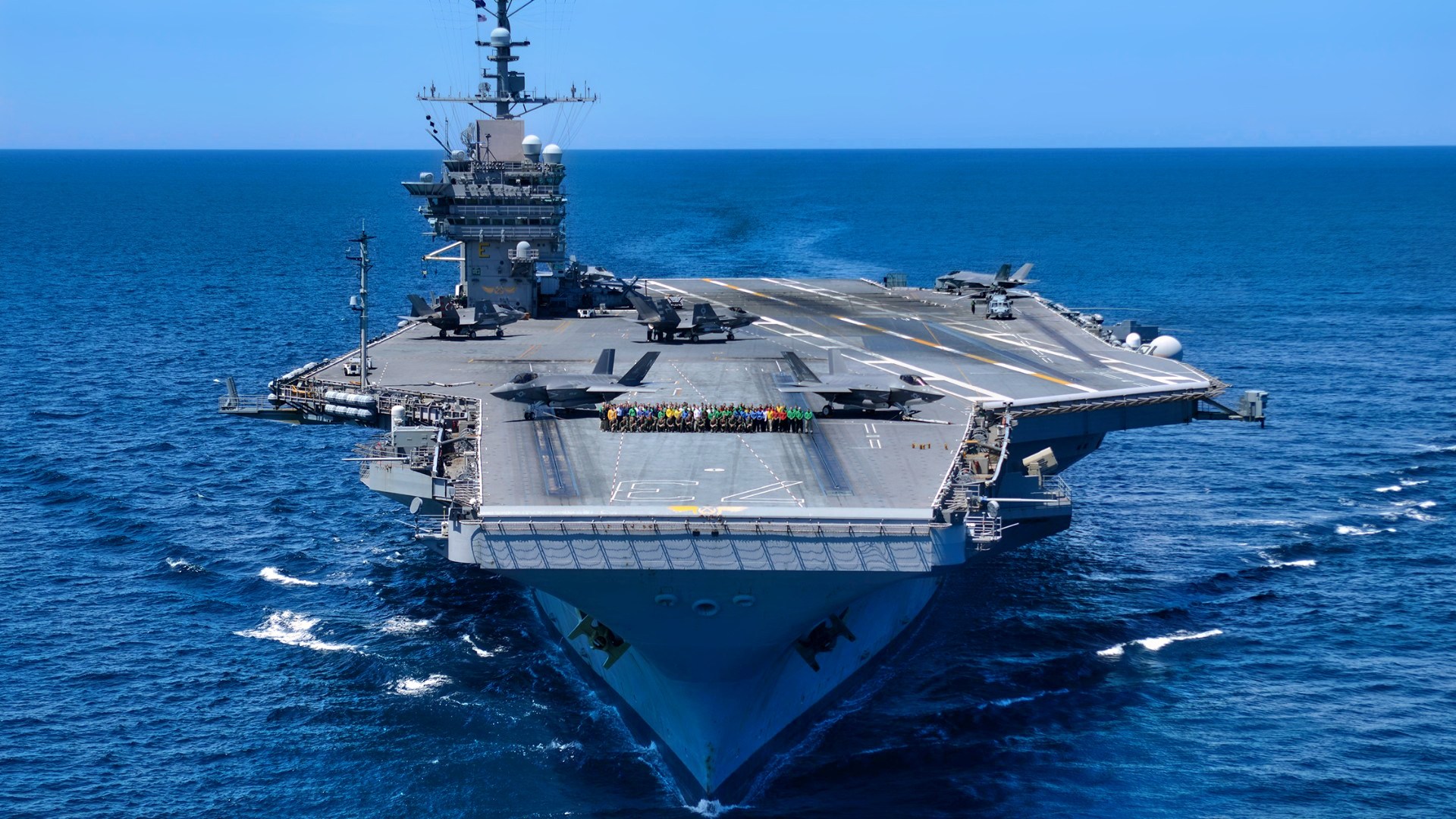
The United States and Iran spent the past three days shooting at each other around the Strait of Hormuz, and the ceasefire they signed barely a week ago looks like it is falling apart. Iran hit a cargo ship in the strait on Thursday, the US struck Iranian military sites on Friday, and early Saturday, Iranian drones hit Bahrain, home to the US Navy’s Fifth Fleet. President Donald Trump called Iran’s attack a foolish violation of the agreement, and Iranian hardliners are promising more. It has the shape of a slide back toward open war. A closer look at what each side actually did and what each side needs points to a more likely outcome: a dangerous short-term flare-up that both governments have strong reasons to contain rather than let it explode.
What Happened Around The Strait Of Hormuz
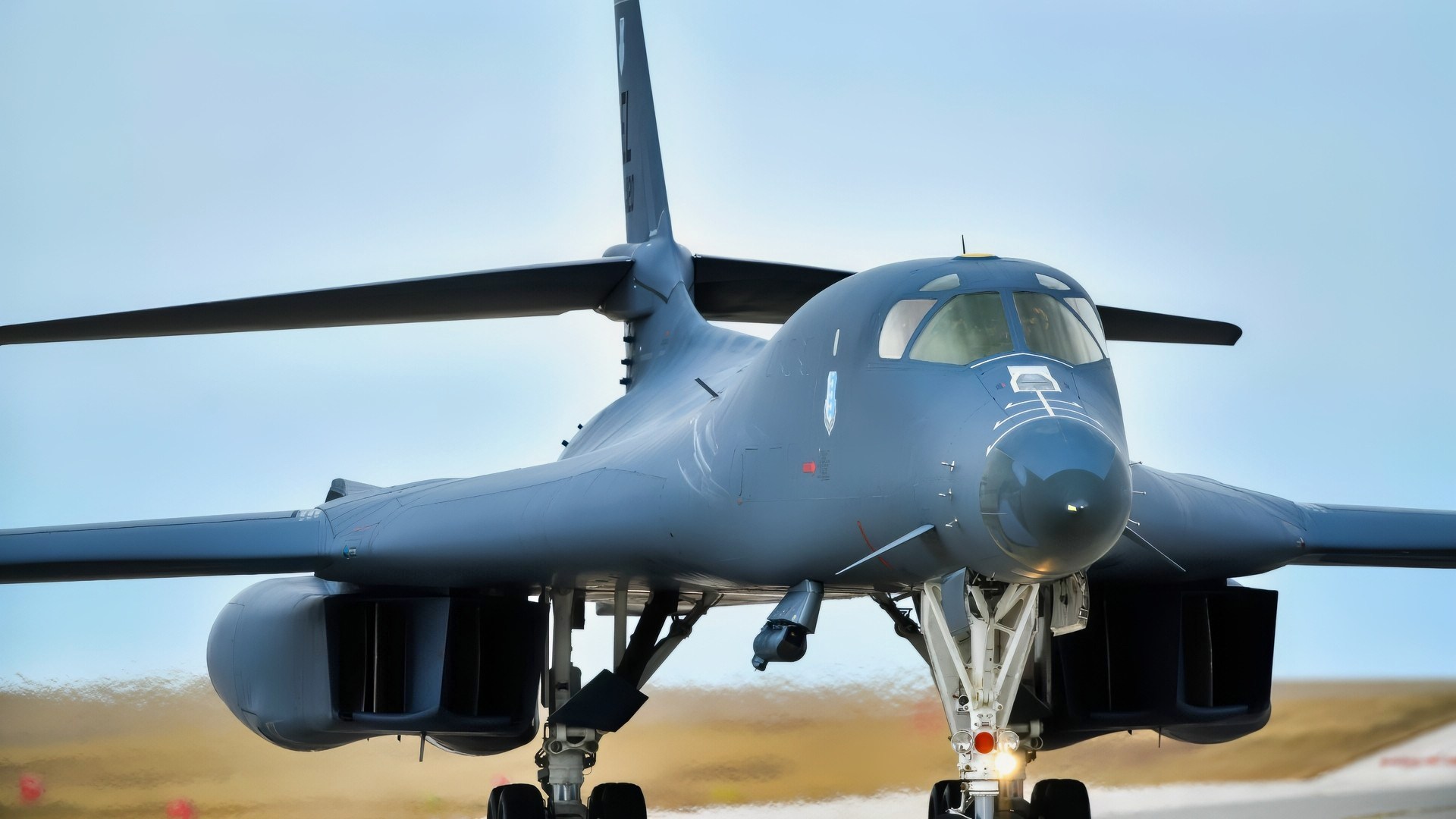
A U.S. Air Force B-1B Lancer assigned to the 37th Bomb Squadron taxis off the runway at Ellsworth Air Force Base, S.D., after completing a CONUS-to-CONUS mission, Nov. 03, 2024. All missions are closely planned with the appropriate Geographic Combatant Commands, Allies, and partners to ensure maximum training and integration opportunities as well as compliance with all national and international requirements and protocols. (U.S. Air Force photo by Airman Alec Carlberg)
The sequence began on Thursday, June 25. Iran launched what Trump said were at least four one-way attack drones at ships moving through the Strait of Hormuz, and one struck the upper deck of the Singapore-flagged cargo vessel M/V Ever Lovely as it exited the strait along the Omani coast. The other three were knocked down.
There were no injuries, and the ship remained operational despite some damage, according to the shipping company and Singaporean port officials.
Iran had been angered by vessels transiting outside a route through Iranian waters that Tehran insists on, and a senior Iranian lawmaker, Ebrahim Azizi, framed the strike not as an attack but as what he called ceasefire management.
On Friday, the US hit back. US Central Command said American aircraft struck Iranian missile and drone storage locations and coastal radar sites, calling Iran’s behavior a clear violation of the ceasefire. Iranian state media reported the strikes hit a telecommunications mast in the Sirik area of southern Iran. Trump posted the “foolish violation” line on Truth Social, and in the Oval Office, he was noncommittal about whether the truce still held, saying he did not like that Iran had taken a shot at a very expensive ship.
Then early Saturday, Bahrain said it was targeted by a number of Iranian drones, condemning the attack as a blatant violation of its sovereignty, with Kuwait quickly backing it. Iran’s Revolutionary Guard Corps said it had struck the US terrorist army positions in the region in retaliation for the American strikes, and tied its actions both to the Hormuz route dispute and to Israeli operations in southern Lebanon.

A U.S. Air Force B-1B Lancer assigned to the 34th Expeditionary Bomb Squadron, Ellsworth Air Force Base, South Dakota, flies over the United States, July 2, 2025. The B-1B is a heavy bomber with up to a 75,000 pound payload. (U.S. Air National Guard photo by Airman Spencer Strubbe)
The UK Maritime Trade Operations Centre said a tanker reported being hit by an unidentified projectile on Saturday, with bridge damage but the crew safe, and raised its Hormuz threat level from moderate to substantial.
As of this writing, Trump had not publicly responded to the Saturday strike.
Why The Strikes Were Calibrated, Not A War
The most important detail is how restrained the exchange actually was. A US official told CNN that Friday’s strikes did not reflect major combat operations, at least for now, and the operation concluded about an hour after Central Command announced it.
This was a measured, limited response aimed at specific military sites, not the opening of a broad campaign. Trump’s own language pointed the same way. He told a crowd in Washington that Iran retained some military capability and could still shoot, but framed it as a limited problem rather than a reason to restart the war.
Vice President JD Vance, who helped negotiate the agreement, delivered both a warning and an off-ramp in the same message, writing that if Iran had disagreements about how the deal was being applied, it could pick up the phone, but that violence would be met with violence.
The off-ramp is the revealing part. Even as it struck Iran, Washington was pointing Tehran toward talking rather than escalating. Iran and the US had in fact already established a communications line to prevent exactly this kind of incident from spiraling, according to Iranian state media. And through all of it, the strait stayed open, with marine data firm Windward calling the week’s events its first significant test and noting more than 40 transits continued after the incident, even as the pace of normalization slowed.

Tomahawk Launch. Image Credit: Creative Commons.
Both sides traded blows while keeping the door to the deal open.
Both Sides Need The Deal
Underneath the strikes, the incentives run heavily toward de-escalation. For the United States, the overriding interest in the Gulf is keeping oil flowing and prices stable, and Central Command stressed freedom of navigation as the reason for its response.
Roughly 20% of the world’s oil moved through the Strait of Hormuz before the war, and a genuinely closed strait would send energy prices climbing worldwide, which is the last thing Washington wants. The US has spent the week trying to keep commercial traffic moving, not choke it off.
Iran’s incentives cut in the same direction, arguably harder. The whole point of the memorandum of understanding, for Tehran, is economic relief, the unfreezing of funds, and the lifting of pressure that a final deal would bring. Iran cannot sell the oil on which its economy depends if the strait it sits astride becomes a shooting gallery.
A collapse of the deal means continued isolation and worsening conditions at home. Neither government gains from a wider war, and the agreement itself remains formally alive, having given the two sides 60 days to reach a permanent deal, with that clock still running. Under the terms, the US is to lift its naval blockade, and Iran is to reopen the strait and reaffirm that it will not build nuclear weapons.
Who Actually Ordered The Ship Attack
There is a question at the center of this that almost no one can answer with confidence, and it matters a great deal for how this plays out. Nobody outside Iran knows who actually ordered the strike on the Ever Lovely on Thursday.
The Revolutionary Guard Corps carried it out, but the memorandum of understanding was signed by Iranian President Masoud Pezeshkian, and the Guard and the elected government in Tehran do not always pull in the same direction. Iran’s chain of command is opaque; the IRGC runs its own foreign and military policy in ways that frequently cut against the diplomats, and Trump himself said nobody saw the strike coming.
That uncertainty leaves open a possibility worth taking seriously, though it cannot be proven. The ship attack may not have been a considered decision by Iran’s leadership at all, but a move by a faction with its own reasons to wreck a deal it never wanted. The IRGC’s own statement tied its actions partly to Israeli operations in Lebanon, a grievance separate from the strait itself, which hints at motives beyond a simple state-level escalation.
If a hardline element acted to sabotage the agreement rather than on orders from the top, then both the Iranian government and Washington share an interest in containing the damage rather than letting a spoiler set the agenda.
This is a hypothesis, not a conclusion, but it is a more plausible explanation of an otherwise self-defeating attack than the assumption that Tehran’s leadership decided to blow up its own deal a week after signing it.
The Diplomacy is Still Moving
The case for de-escalation is not airtight, and the contrary signals are real. Secretary of State Marco Rubio announced on Friday a trilateral framework among the United States, Israel, and Lebanon that he called a significant step toward regional peace, evidence that diplomacy elsewhere in the region is still advancing even as tensions flare in the Strait of Hormuz.
But Hezbollah, the most relevant armed actor, was not part of those talks and has rejected similar deals before, so that progress rests on shaky ground.
On the Iranian side, senior figures are talking tough, with former IRGC commander Mohsen Rezaei warning that any violation of the agreement would be met with a swift and decisive response, and the Guard vowing that its retaliation against US-linked targets would continue.
The balance of evidence still favors both sides pulling back. The strikes were limited and signaled that the communications line is open, the Strait kept functioning, and the economic stakes for Washington and Tehran alike argue against a war neither can afford. None of that guarantees calm. The strikes are real and have drawn in a US ally in Bahrain, the hardliners are loud, and an opaque Iranian chain of command means a miscalculation or a rogue order could still tip a contained flare-up into something larger.
The most likely path over the coming days is for both governments to step back through the channels they have deliberately kept open. It is the most likely path, not the certain one, and the next move out of Tehran will say a great deal about which way this goes.
About the Author: Harry J. Kazianis
Harry J. Kazianis (@Grecianformula) was the former Senior Director of National Security Affairs at the Center for the National Interest (CFTNI), a foreign policy think tank founded by Richard Nixon based in Washington, DC. Harry has over a decade of experience in think tanks and national security publishing. His ideas have been published in the NY Times, The Washington Post, The Wall Street Journal, CNN, and many other outlets worldwide. He has held positions at CSIS, the Heritage Foundation, the University of Nottingham, and several other institutions related to national security research and studies. He is the former Executive Editor of the National Interest and the Diplomat. He holds a Master’s degree focusing on international affairs from Harvard University.


