

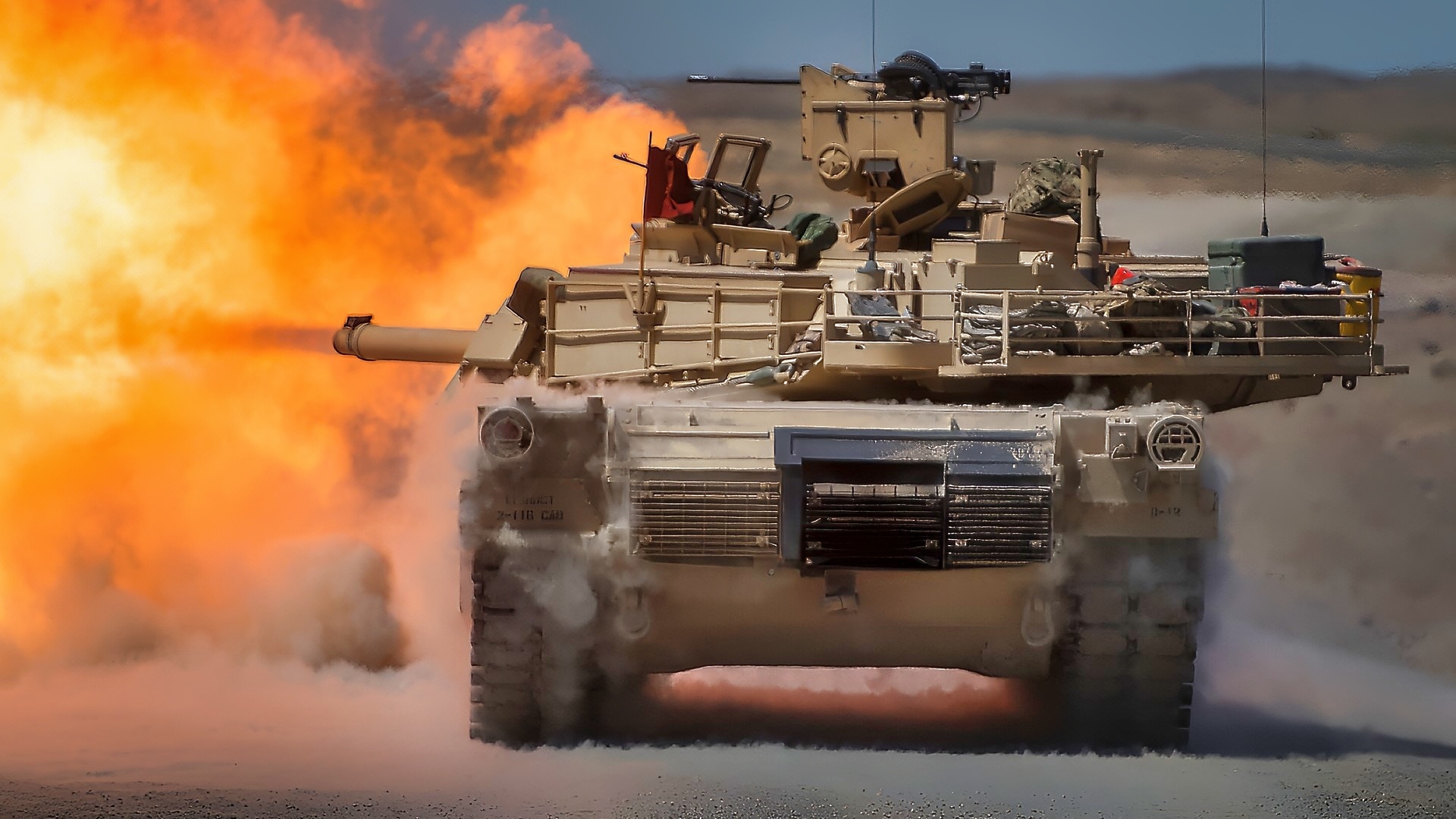
The U.S. Army’s next-generation M1E3 Abrams tank and XM30 infantry fighting vehicle prototypes will arrive at the 1st Cavalry Division at Fort Hood this fall for live testing. The M1E3 replaces the Honeywell AGT-1500 turbine engine with a hybrid power system, adds an unmanned turret with an autoloader, and reduces the crew to three soldiers in an armored capsule inside the hull — away from live ammunition. The XM30, developed by American Rheinmetall and Raytheon, replaces the M2 Bradley and swaps the long-serving M242 Bushmaster for a new XM913 50mm chain gun. Both platforms are designed for the drone-centric battlefield of the Ukraine war.
The U.S. Army Is Building the M1E3 Tank without A Turret Crew And An Infantry Vehicle to Replace The Bradley — Both for The Drone Age

A U.S. Army driver assigned to Alpha Company, 1st Battalion, 67th Armor Regiment, 3rd Brigade Combat Team, 1st Armored Division standbys in the drivers hull of an M1A2 SEPv2 Abrams waiting for further guidance prior to the start of Table VI Tank Gunnery at McGregor Range, New Mexico, Sept. 29, 2023. Gunnery Table VI evaluates crews on engaging stationary and moving targets while utilizing all weapons systems in offensive and defensive positions, ensuring our crews are trained and ready for any mission. (U.S. Army photo by Spc. David Poleski)
According to recent news reports, the Army is set to receive its first prototype tanks and infantry fighting vehicles (IFVs) for testing sometime this fall. The 1st Cavalry Division will test the new M1E3 Abrams along with the XM30, the expected replacement for the long-serving M2 Bradley.
The tests will provide valuable feedback for the development of both vehicles and also help the Army determine the new role of armored vehicles in the drone-centric era of war. As the war in Ukraine has revealed, drones are now a dominant force and pose a significant threat to armored vehicles, even Western ones.
The question on the Army’s mind is how the Army needs to change its armored doctrine to survive in this new threat environment.
New Prototypes for the Army
The new prototype vehicles are expected to arrive at Fort Hood, TX, where soldiers of the 1st Cavalry Division will begin training with them.
The crews will undergo a multi-month training course to familiarize themselves with the new vehicles before running a series of tests on the new platforms to assess how well they operate together and function in battlefield conditions.
The troops will provide feedback to the designers of both vehicles, who will adjust them as needed. The idea is to develop the next generation of armored vehicles that meet battlefield needs in a timely, cost-effective manner.

XM30. Image Credit: U.S. Army.
Both platforms, according to the Army, represent “a major shift forward in terms of technology.”
Both systems will incorporate the latest sights and sensors to increase situational awareness for crews. “As we fight through this very contested environment, just being able to shoot things that we can see is not enough,” Maj. Gen Thomas Feltry explained. “We’ve got to be able to detect beyond line of sight.”
Both vehicles are expected to work alongside unmanned vehicles, both ground-based and UAVs, and effortlessly link with other battlefield systems.
The Next Generation of U.S. Armor
The M1E3, the next iteration of the Abrams, incorporates several new design features to reduce its logistical footprint and improve crew survivability.
The tank features a new hybrid power system that replaces the gas-guzzling Honeywell AGT-1500 turbine engine. This makes the tank more fuel-efficient, increasing its overall range and reducing fuel costs.
Additionally, the M1E3 includes an unmanned turret with an autoloader, thereby reducing the crew to three and repositioning them in an armored capsule within the hull. This new crew configuration repositions the crew away from any live ammunition and reduces the threat from ammo cook-offs.
The XM30, on the other hand, is the newest attempt to replace the venerable Bradley.

Troopers with 3rd Armored Brigade Combat Team, 1st Cavalry Division firing the 25mm canon on a Bradley fighting vehicle in order to zero the vehicles weapons systems at a range in Poland. Ranges such as these familiarize troopers with the vehicles systems in order to ensure combat readiness.
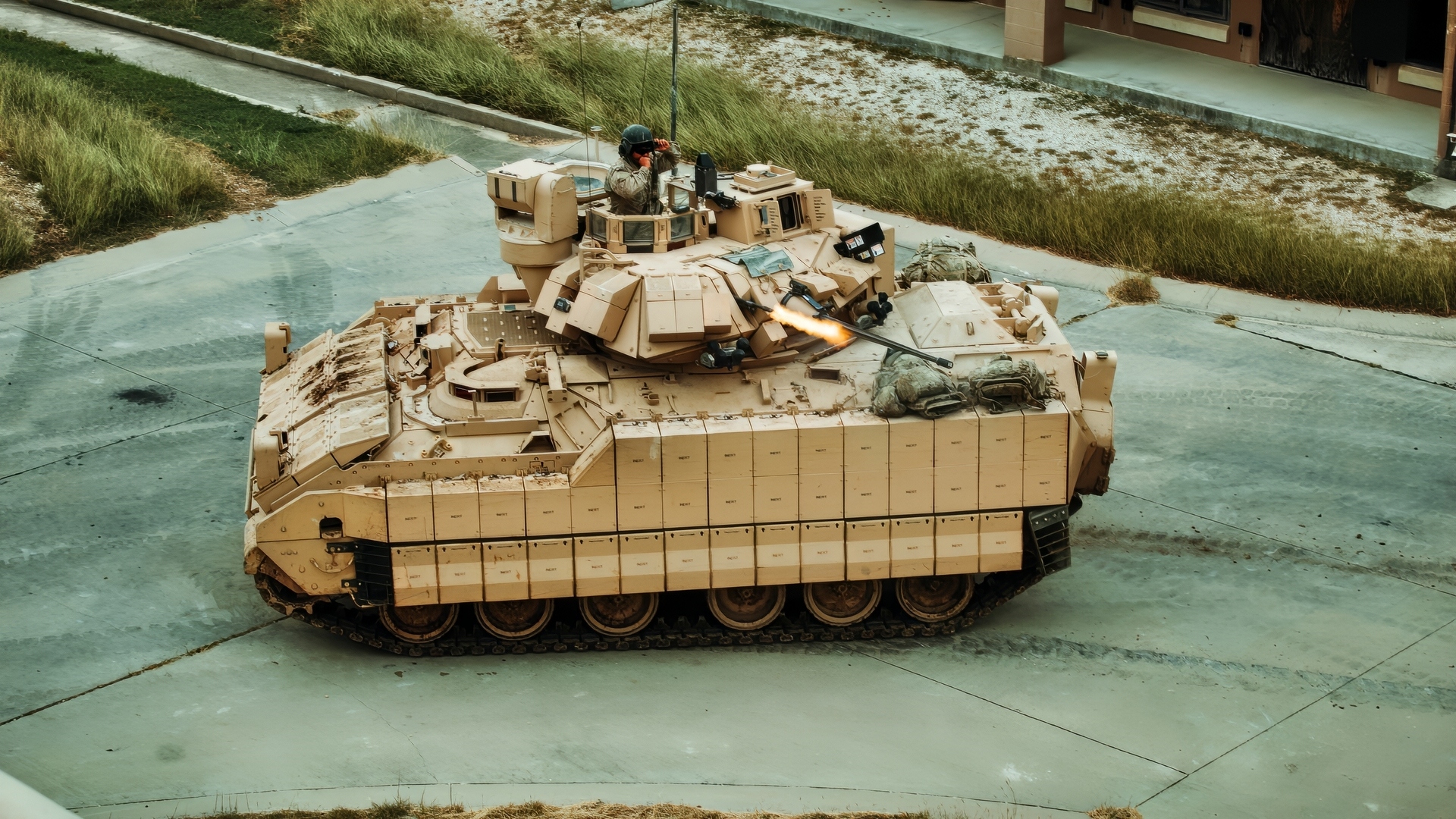
Troopers assigned to 1st Battalion, 12th Cavalry Regiment, 3rd Armored Brigade Combat Team, 1st Cavalry Division, engage an opposing force during the testing of the newest version of the Bradley Fighting Vehicle, Fort Hood, Texas, Oct. 24, 2020. Operational testing with the U.S. Army Operational Test Command (OTC), places First Team Troopers in a series of maneuvers and engagements where OTC can properly test the new vehicles. (U.S. Army photo by Sgt. Calab Franklin, 3ABCT, 1CD, PA NCOIC)
Developed by American Rheinmetall, along with Raytheon and several other contractors, the XM30 offers advanced capabilities to support troops on tomorrow’s battlefield.
The new IFV replaces the classic M242 Bushmaster with a new XM913 50mm Bushmaster chain gun for greater range, accuracy, and lethality.
The new vehicle is also equipped with the latest sensors and sights, which can be easily shared across the battlefield, enabling it to serve as a mobile command post. The IFV is the seventh attempt to replace the M2 Bradley, and there are still concerns that this attempt will fail as well.
All eyes will be watching the XM30 this fall to see how the troops react to the new vehicle.
Heavy Armor in the Drone Age
Both platforms are important pieces in the Army’s efforts to develop the next generation of armored fighting vehicles in the ever-evolving drone-centric threat environment. The war in Ukraine has brought about a return of WWI-era positional warfare.
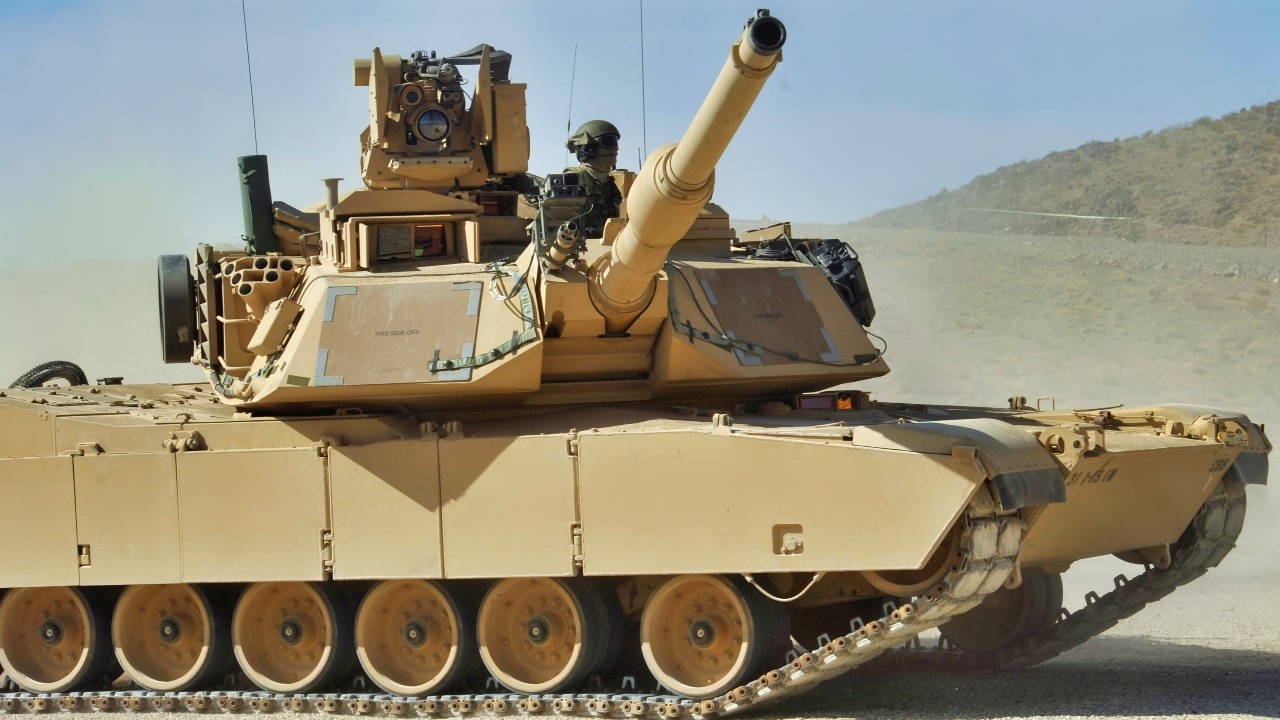
Australia is sending 49 of its retired M1A1 Abrams tanks to Ukraine, a move that bolsters Kyiv’s armored firepower but raises significant questions about survivability on the modern battlefield. While the donation is a welcome gesture, US officials have reportedly expressed private frustration, warning that Ukraine struggles to sustain the complex tanks and highlighting their vulnerability to cheap, top-attack FPV drones. The war in Ukraine has become a “drone war,” where even advanced main battle tanks are at constant risk. The effectiveness of these donated Abrams will ultimately depend on Ukraine’s ability to counter this pervasive threat.
The abundance of precision munitions and drones has made it exceedingly difficult for both sides to advance without taking heavy casualties.
The challenge for the Army is determining how to break through this “no man’s land” and maintain the offensive. “It’s not just a no-tank land. It’s like a no-anything land.” Feltey Said. “Tanks are vulnerable, but so are infantry. I mean, there’s been over a million infantry casualties in the last four years, and nobody’s saying the infantry are obsolete just yet.”
Throughout history, there has been a constant tug-of-war game between offensive and defensive capabilities.
In that sense, the war in Ukraine is not new but rather a continuation of a centuries-long competition between offense and defense. In the Cold War, the issue of the day was ATGMs; today, it is drones. “The problem we’re trying to solve is, how do we restore mobility to the armored brigade combat teams?” Feltey continued. How do we stay on the offense? How do we keep our tempo at a fast pace so that we don’t give the enemy a chance?”
Long Live the Tank
While Ukraine has demonstrated many of the tank’s limitations, it has also highlighted the ever-present need for armored vehicles.
The value of a 120mm/125mm mobile cannon has not diminished with the advent of drones, but it has made it more difficult for the tank to maneuver on the battlefield. The tank is unlikely to disappear anytime soon, but it will need to adapt to its current circumstances.
The Army’s tests this fall, among other things, seek to determine how much the tank will need to change.
About the Author: Isaac Seitz
Isaac Seitz, a Defense Columnist, graduated from Patrick Henry College’s Strategic Intelligence and National Security program. He has also studied Russian at Middlebury Language Schools and has worked as an intelligence Analyst in the private sector.


