

Key Points and Summary – To counter China’s formidable A2/AD threat, the U.S. is retooling its forces for a “fight and win” strategy in the Indo-Pacific.
-This includes deploying new, stealthy Long-Range Anti-Ship Missiles (LRASM) with 1,000-pound warheads, although this compromises the F-35’s stealth by requiring external carriage.
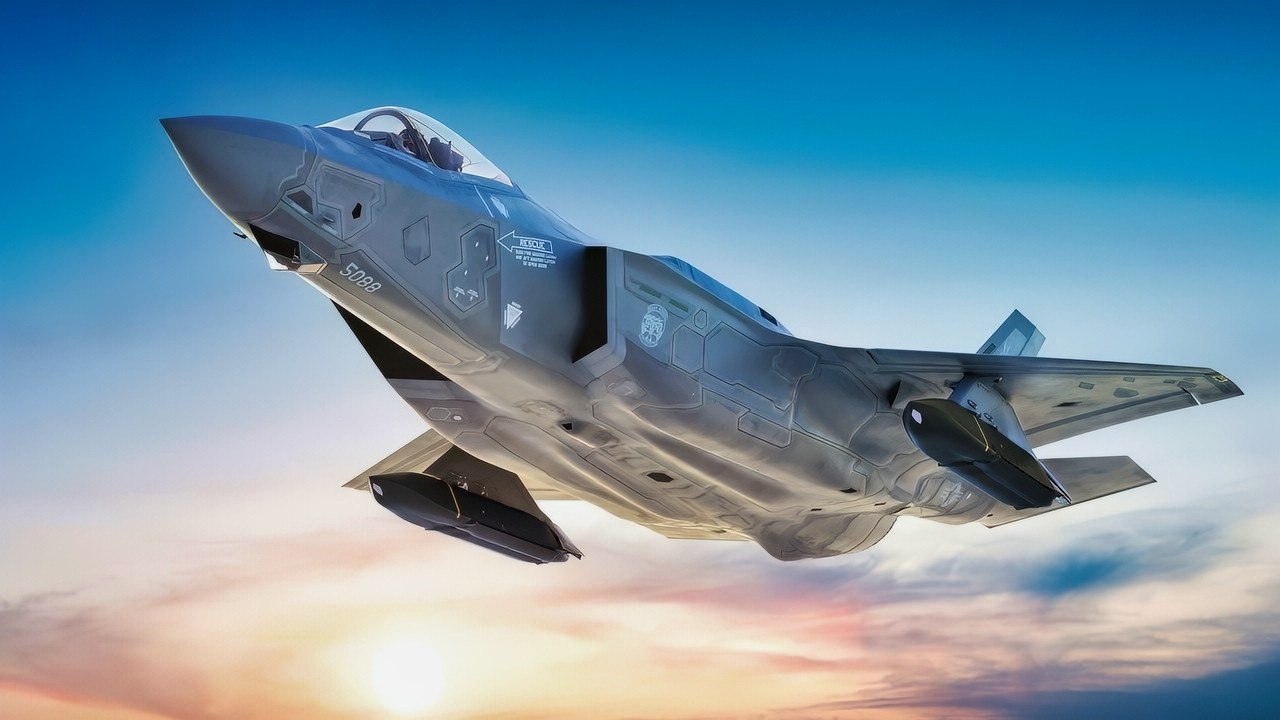
F-35 Fighter With LRASM Missiles. Image Credit: Lockheed Martin.

AGM-158 Extreme Range LRASM. Image Credit: Industry Handout.
-The Marine Corps is implementing “Force Design 2030,” creating small, dispersed, low-signature units for sea denial.
-The most significant pillar is the AUKUS pact, which will provide Australia with nuclear-powered submarines, representing a “massive leap” in allied undersea capability and industrial cooperation.
The U.S. Military Has Big Plans to Ensure it Can Fight China
It is so well known in defense circles that it’s almost a trope: China’s navy is the largest in the world; Beijing is intent on reinforcing its posture in the western Indo-Pacific; and the proliferation of People’s Liberation Army Navy (PLAN) weaponry, especially its anti-ship missiles, will greatly hamper the freedom of movement of the U.S. Navy and Marine Corps.
These themes are well-worn but ignore the adjustments that the U.S. services are making in response.
This is a time of great upheaval for the Navy and Marine Corps, but it is also a time of great opportunity, as the services retool to fight and win in the Indo-Pacific.
Forget the Torpedos, Full Speed Ahead
Speaking at the Mitchell Institute for Aerospace Studies, then-Commander of Pacific Air Forces and Air Component Commander, U.S. Indo-Pacific Command, General Kenneth S. Wilsbach, emphasized the need for air superiority to wear down PLAN ships in the Indo-Pacific. “A part of air superiority will be being able to attrite those [PLAN] ships,” the general said. “We need better and more weapons.”
The general—as well as other lawmakers and Pentagon leaders—explains that Navy warships operating east of Taiwan could find their freedom of maneuver significantly hampered by Chinese warships brimming with recently developed surface-to-air and anti-ship weapons.
But the United States is not standing still either. The centerpiece of the next generation of U.S. anti-ship weapons is the Long-Range Anti-Ship Missile (LRASM), an air-launched cruise missile with stealthy, radar-mitigating characteristics.
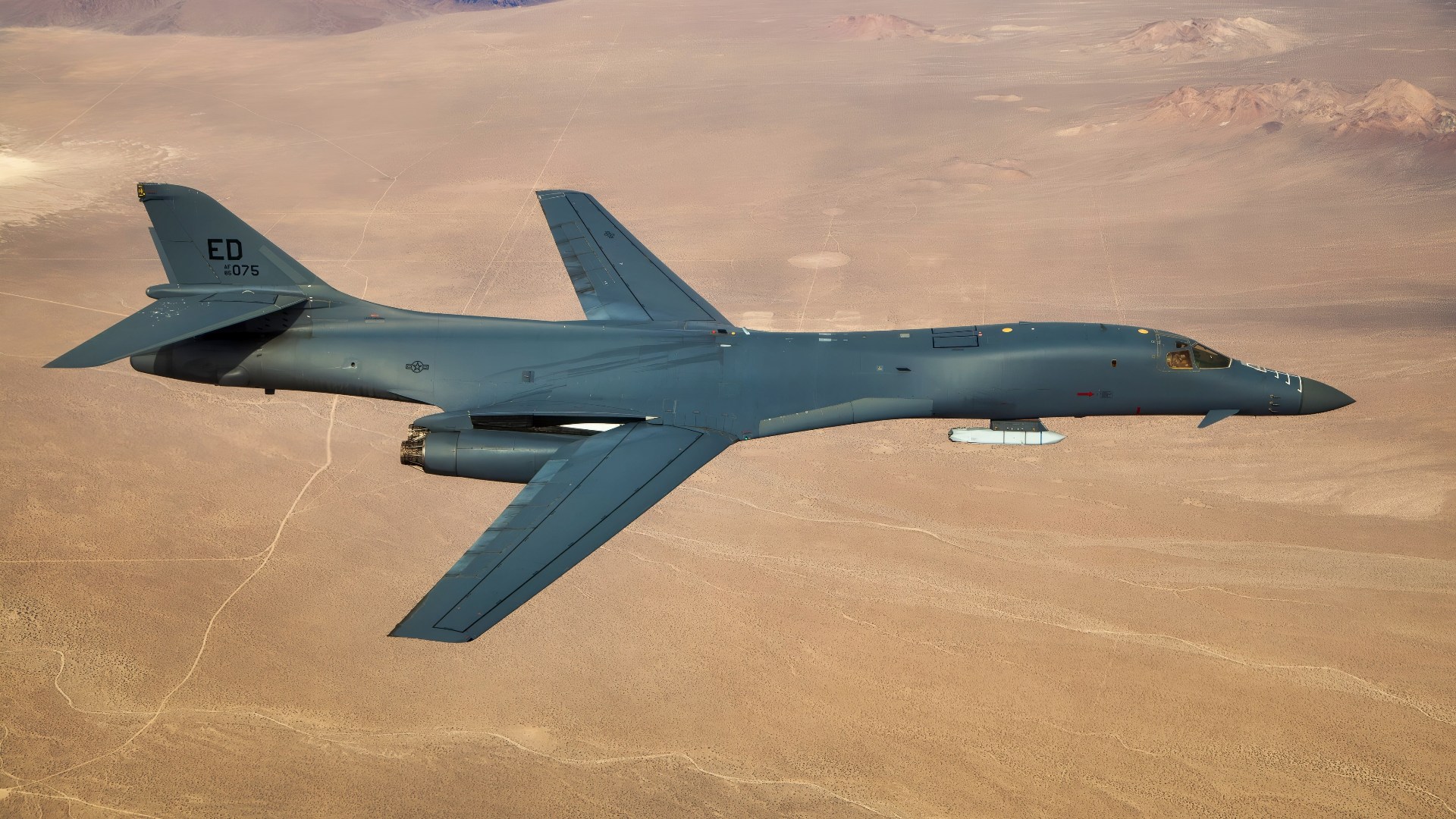
The LRASM is already certified for use with the Navy’s F/A-18E/F Super Hornet and the Air Force’s Rockwell B-1B Lancer, but the Navy would also like to see the missile mated to its F-35C stealth fighters.
Compared to Boeing’s AGM-84N Harpoon Block II+—the most advanced Harpoon anti-ship missile variant—the LRASM offers several distinct advantages. Not only does its 1,000-pound high-explosive warhead dwarf that of the Harpoon’s comparatively modest 500-pound warhead, but the LRASM’s approximate 230-mile range allows the missile to reach out further than Harpoon’s 155-mile range. However, the LRASM cannot be carried internally by F-35Bs and F-35Cs. Consequently, this missile, though powerful, will compromise the stealth characteristics of those aircraft.
First to Fight: The United States Marine Corps
Should a war erupt in the Indo-Pacific, the Marine Corps would be the first to fight. Cognizant of the growing challenge in that theater presented by an increasingly bellicose Chinese posture in the region, the Marine Corps developed a radical new force posture in 2020, presented by then-Commandant of the Marine Corps, General David H. Berger’s, Force Design 2030.
That guiding document identifies China as the United States’ pacing threat. Though it has been adjusted in content and scope several times since its first publication, the goal of fighting and winning in the Indo-Pacific has remained constant in the doctrine.
Just this month, the Marine Corps released its Force Design Annual Update, a document outlining the progress made toward transforming the force.
At 24 pages, the Force Design update document is not especially long, but it is replete with descriptions of the progress made toward transforming the Marine Corps.
Although a number of new weapon systems, including new vehicles, a remotely-controlled anti-ship weapon platform, and other firsts are described in the document, its essence is to describe a move toward expeditionary, low-signature units that can conduct sea denial operations, hampering the ability of enemy warships to operate freely in the Indo-Pacific. Small, dispersed units operating independently but cooperating toward that goal is a key component of Force Design 2030, as is the retooling to hold wide swaths of the Indo-Pacific at risk.
International Cooperation
A crucial component of any American response to aggression in the Indo-Pacific would be the reactions of allies.
The United States’ acknowledgement of this reality is perhaps best exemplified by Washington’s increasingly close relationship with Canberra under the AUKUS agreement.
That awkwardly named document is a tripartite agreement that will see nuclear-propelled submarines—the crown jewels of America’s nuclear deterrence—passed on to the Australians, with the assistance of the United Kingdom.
Under the terms of the agreement, the U.S. Navy and the Royal Navy will train Australian sailors on the intricacies of operating a nuclear-powered submarine by providing them with several ex-U.S. nuclear attack submarines ahead of yet-to-be-built AUKUS-class submarines that will also serve with the Royal Navy in the future.
Crucially, the submarines provided to Australia will not be nuclear-armed. But the protracted underwater endurance afforded by their onboard nuclear reactors will greatly expand Australia’s naval presence in the Indo-Pacific—a clear win for Washington.
To sweeten the deal, Australia is investing billions of dollars into U.S. shipyards to spark the submarine industrial base and preempt costly project overruns or delays.
Australia is also investing in its Henderson Defense Precinct, the site of a naval base, which will open access to its facilities to future U.S. Navy nuclear-powered submarines.
What Happens Now?
In addition to force posture adjustments; closer relations with friends and allies; and an anticipated offensive capability boost, particularly regarding anti-ship weaponry, both the Navy and Marine Corps are experimenting with strengthening logistics chains.
These can be bolstered via supply prepositioning and rearming at sea, as well as tighter cooperation with allies in the region. Doctrinal adaptations, tough procurement decisions, and budgetary limitations mean some of these capabilities will continue to change in the future.
About the Author: Caleb Larson
Caleb Larson is an American multiformat journalist based in Berlin, Germany. His work covers the intersection of conflict and society, focusing on American foreign policy and European security. He has reported from Germany, Russia, and the United States. Most recently, he covered the war in Ukraine, reporting extensively on the war’s shifting battle lines from Donbas and writing on the war’s civilian and humanitarian toll. Previously, he worked as a Defense Reporter for POLITICO Europe. You can follow his latest work on X.
More Military
‘Long Way from Production’: China’s J-36 Might Be ‘Paper Tiger’ Stealth Fighter
‘Mach 2’ JAS 39 Gripen Is a Rocket Fighter Plane
New ‘Ferrari’ F-35 Stealth Fighter Is Aimed Right at Russia and China
Putin’s Poseidon Nuclear “Doomsday” Torpedo Looks Like a Bluff
The Air Force’s B-21 Raider Stealth Bomber Plan Doesn’t Make Any Sense


bis-biss
October 31, 2025 at 10:26 am
The coming war in the western pac, also known as pacific war 2.0, or in US naval circles during biden’s time as project 33, will inevitably involve use of nuclear warheads.
Why.
That’s because strictly using only conventional weapons, whether they’re JSMs, JASSMs, ATACMs, tomahawks, NSMs, etc, won’t cut it.
To ensure victory, the DoD or war dept will have to resort to the use of nukes.
Not too long ago, there were plans to employ sending of ‘containerized’ nuke weapons to the Pacific, to the Philippines, guam, and nearby close proximity locations.
Presumably for b61-13 nukes.
B61-13 nukes are great or perfect to obliterate islands like Hainan, paracel and man-made outposts in one go.
So, the coming war, or 2027 war, or project 33 war, will be the nuke war to kickstart ww3.
Jim
October 31, 2025 at 12:54 pm
Readiness & preparation with armaments to meet a given assignment is the name of the game for military planners & strategists.
The Malacca Straight & environs is the western Indo-Pacific. That’s the choke point.
And the eastern Indo-Pacific is off the Taiwan coast.
Military scenarios must be made and forecasted as to possible success or failure.
The Rand Corporation has published a new report on China.
The Rand (often thought of as a ‘think tank’ with close association with the Pentagon) report offers a new view regarding China.
The Rand Corporation has a history of analysis suggesting aggressive actions will bring desired results across the World.
Not this time.
Might be worth a look…
Rand suggests getting along with China not pointing to a horrible war.
Imagine that.