

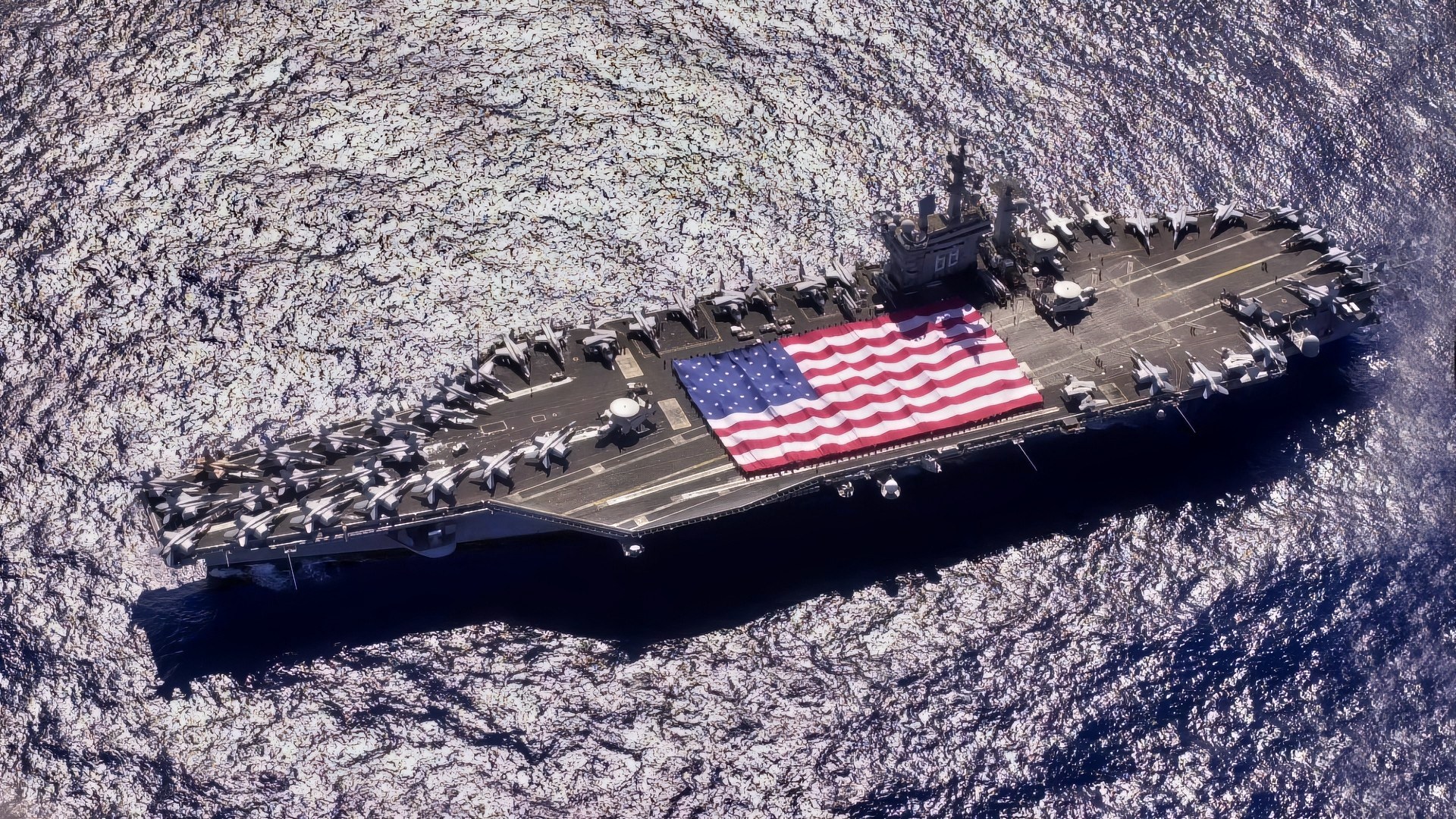
The U.S. Navy is required by law to maintain 11 aircraft carriers—more than the combined fleets of China, the UK, France, India, Spain, and Italy. But with a $1.8 billion maintenance backlog, the USS Gerald R. Ford battered after a 9-month deployment, the USS Harry S. Truman still operating with visible hull damage from a February collision, and the USS Nimitz now retiring in 2027, those 11 carriers are stretched dangerously thin.
The U.S. Navy’s Great Aircraft Carrier Shortage Is Real
The United States Navy currently has 11 aircraft carriers. That is impressive, to say the least.
That is more than the combined fleets of China, the UK, France, India, Spain, and Italy.
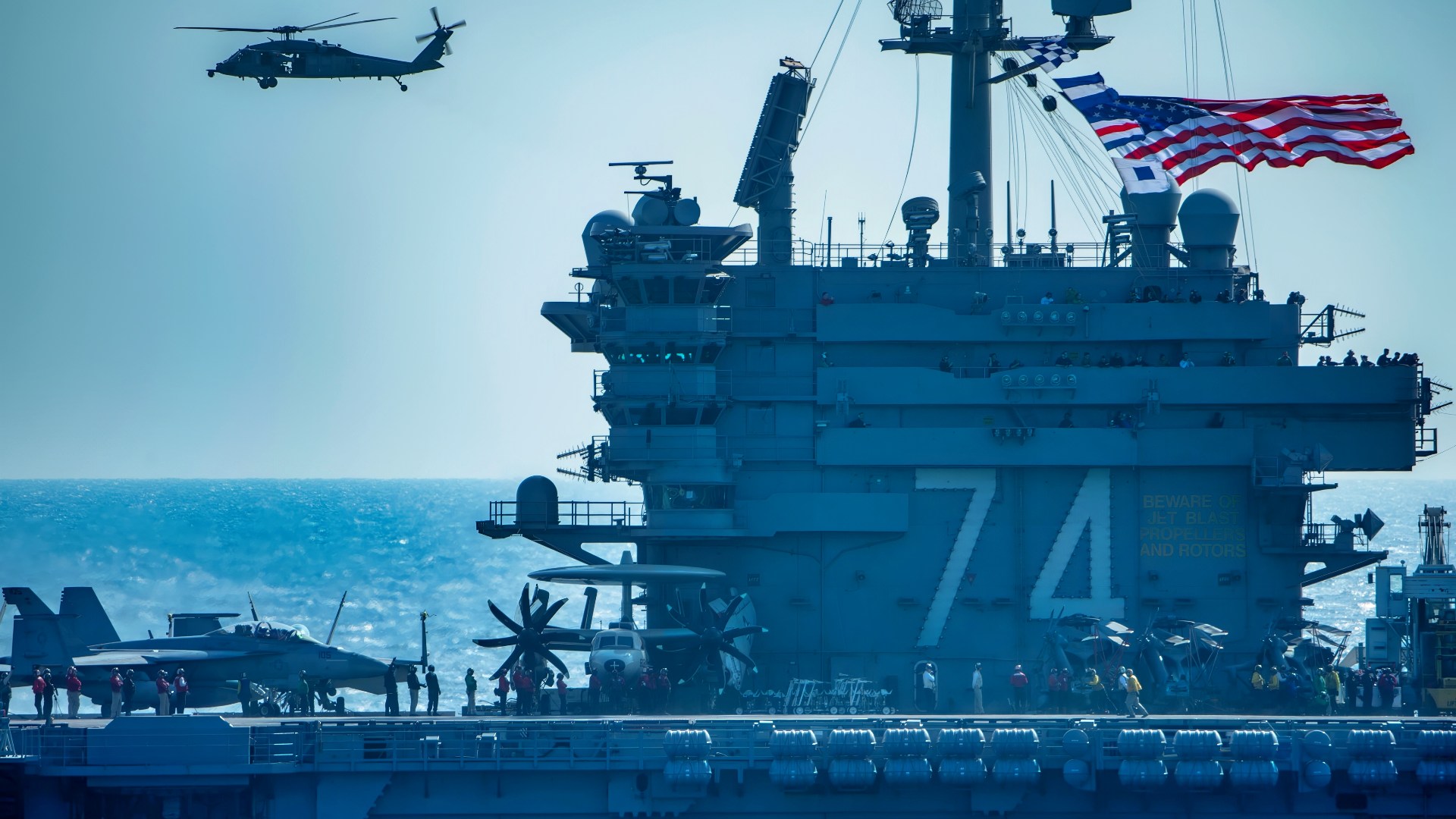
ARABIAN SEA (Dec. 14, 2018) The Nimitz-class aircraft carrier USS John C. Stennis transits the Arabian sea with the Essex Amphibious Ready Group (ARG) and 13th Marine Expeditionary Unit (MEU). The John C. Stennis Carrier Strike Group, Essex ARG, and 13th MEU are conducting integrated operations in the Arabian Sea to ensure stability in the Central Region, connecting the Mediterranean and the Pacific through the western Indian Ocean and three strategic choke points. (U.S. Navy photo by Mass Communication Specialist 3rd Class Tyler Diffie)
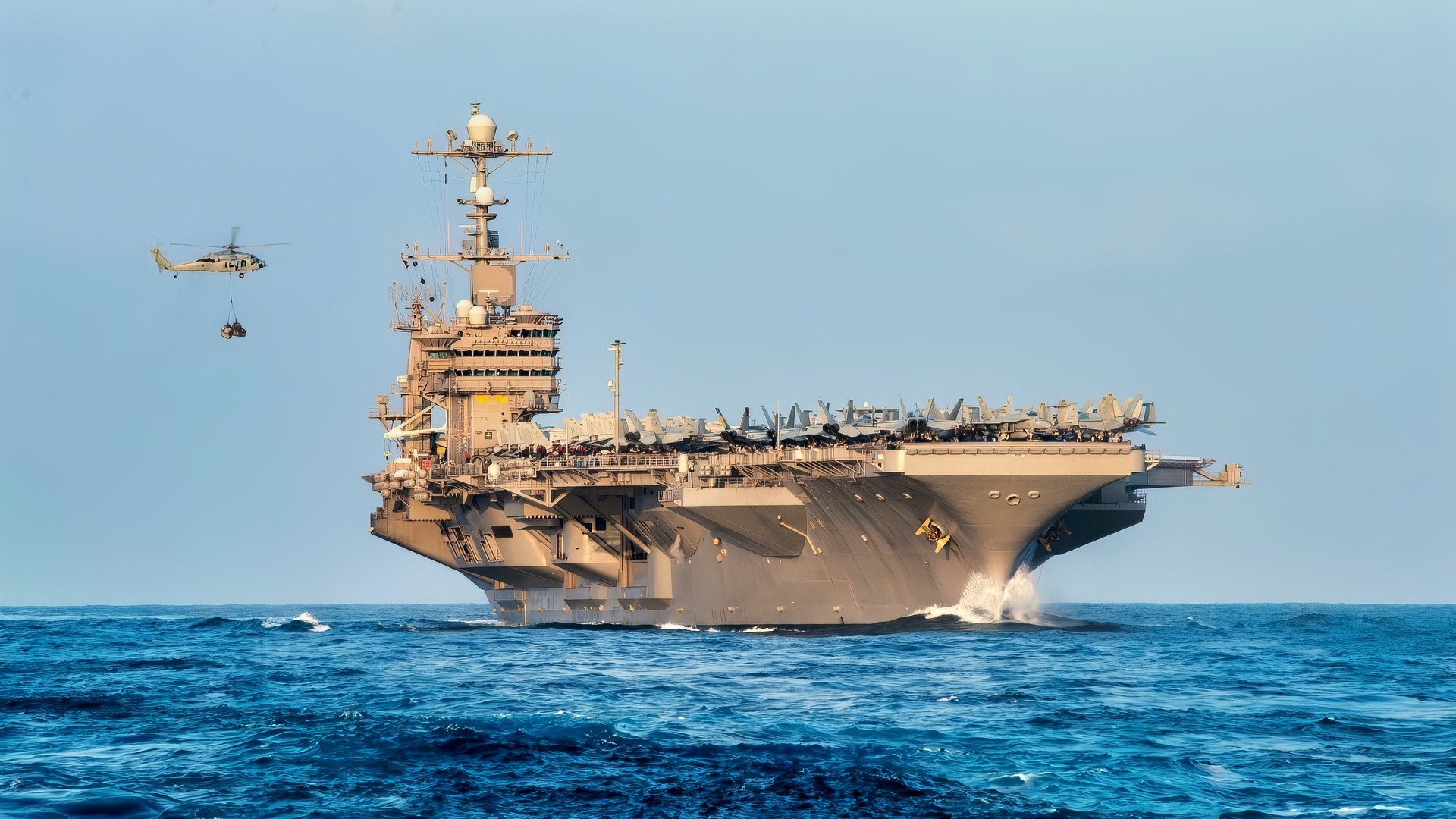
(Aug. 1, 2016) – The Nimitz-class aircraft carrier USS John C. Stennis (CVN 74) receives stores while conducting a vertical replenishment at sea, during Rim of the Pacific 2016. Twenty-six nations, more than 40 ships and submarines, more than 200 aircraft and 25,000 personnel are participating in RIMPAC from June 30 to Aug. 4, in and around the Hawaiian Islands and Southern California. The world’s largest international maritime exercise, RIMPAC provides a unique training opportunity that helps participants foster and sustain the cooperative relationships that are critical to ensuring the safety of sea lanes and security on the world’s oceans. RIMPAC 2016 is the 25th exercise in the series that began in 1971. (U.S. Navy photo by Mass Communication Specialist 2nd Class Ryan J. Batchelder)
The Navy also operates nine amphibious assault ships, so-called “helo-carriers” that do have a small contingent of F-35s.
The US Navy Is Required By Law To Maintain 11 Aircraft Carriers
By law, the US Code, specifically 10 USC § 5062, mandates that the US Navy maintain at least 11 operational aircraft carriers in its fleet.
That number was to be cut to 10 with the planned decommissioning of the USS Nimitz this spring, but that was later delayed until 2027, when the USS John F. Kennedy (CVN-79) is scheduled to enter service.
However, the number of deployed carriers is normally about five, sometimes six, with the others being in port for maintenance and upgrades. U.S. aircraft carriers are heavily overtaxed, facing a combination of long-duration, intense deployments, significant maintenance backlogs, and an aging fleet that limits the Navy’s ability to meet global requirements.
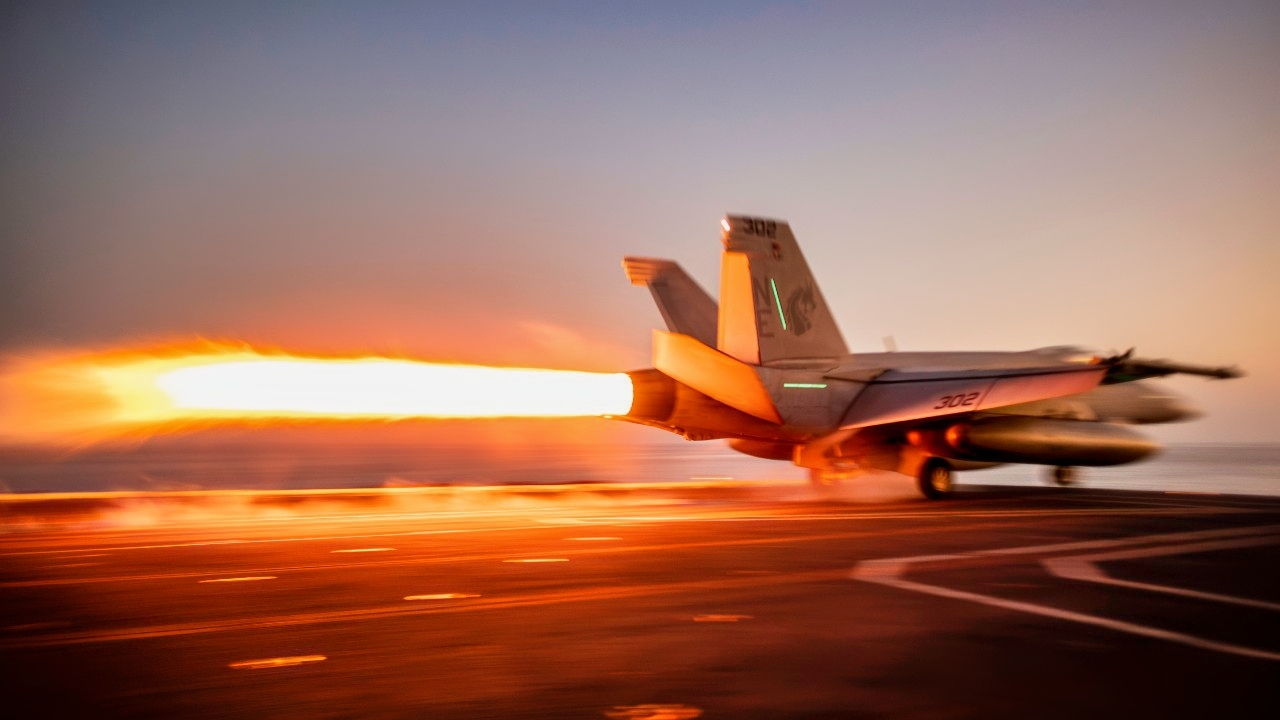
250429-N-FS097-1154 U.S. CENTRAL COMMAND AREA OF RESPONSIBILITY (April 28, 2025) An F/A-18E Super Hornet, attached to Strike Fighter Squadron (VFA) 192, launches from the flight deck of the Nimitz-class aircraft carrier USS Carl Vinson (CVN 70) in the U.S. Central Command area of responsibility. (Official U.S. Navy photo)

Nimitz-class carrier USS George H.W. Bush (CVN 77) transits the Atlantic Ocean while offloading munitions via helicopter to the world’s largest aircraft carrier, USS Gerald R. Ford (CVN 78), June 27, 2025. Gerald R. Ford, a first-in- class nuclear aircraft carrier and deployed flagship of Carrier Strike Group Twelve, incorporates modern technology, innovative shipbuilding designs, and best practices from legacy aircraft carriers to increase the U.S. Navy’s capacity to underpin American security and economic prosperity, deter adversaries, and project power on a global scale through sustained operations at sea. (U.S. Navy photo by Mass Communication Specialist Seaman Jarrod Bury)
These pressures are compounded by high-tempo missions, such as those in the Red Sea, and the strain of operating with a smaller fleet. However, despite debates over whether aircraft carriers are survivable in modern war, aircraft carrier strike groups and naval power are the single most versatile and maneuverable elements of the United States’ power projection.
America’s Ford-class aircraft carriers are built to anchor sea power for decades, but the industrial base meant to sustain them is under heavy strain. Maintenance backlogs, too few dry docks, worker shortages, aging shipbuilding infrastructure, and inconsistent funding are stretching repair timelines and disrupting deployments.
US Aircraft Carrier OPTEMPO Strains The Readiness Of The Fleet
Carriers are frequently deployed for extended periods, leading to high-tempo missions that strain both ships and crews, as seen with the USS Harry S. Truman’s 2025 deployment.
The operational tempo (OPTEMPO) of U.S. Navy aircraft carriers is severely overtaxed, driven by an increased demand for global presence and, more recently, aggressive operations in the Red Sea and Mediterranean.
The fleet is stretched far too thin, forcing ships into longer, more frequent deployments that lead to maintenance backlogs, technical failures, and crew burnout.
USS Gerald R. Ford, And Its 9-Month Deployment:
The USS Gerald R. Ford and its strike group, after operating in the Red Sea, have been part of an aggressive, intense campaign that pushes the limits of new technology. This high pace has caused technical issues, such as severe plumbing failures in the ship’s sewage system, with crews working 19-hour shifts to manage repairs.
A $1.8 billion maintenance backlog, as noted in a 2022 GAO report, means ships are spending more time in shipyards.
The Ford is currently on its way home after a close to year-long deployment. It took part in the Venezuela operation to oust strongman Nicolas Maduro and then was involved in the Iran air campaign until the fire on March 12.
Seventy-five percent of planned maintenance periods for aircraft carriers and submarines were completed late between 2015 and 2019, with an average delay of 113 days for carriers, the GAO reported.
“The USS Gerald Ford has been deployed since last June and was previously in the Caribbean, ahead of the January operation that captured Venezuelan leader Nicolas Maduro. That has led to one of the longest deployments in Naval history, and that, according to a new report in the Wall Street Journal, is beginning to take a toll on sailors and their families.”
The high-stress environment, combined with long, back-to-back deployments, has led to decreased morale, with some carriers reporting, “sailors describe fatigue… and rising frustration”. Meanwhile, the supply chain is working overtime to maintain the necessary logistics.
USS Harry S. Truman Still Operating After A Collision:
A case in point of this backlog involves the USS Harry S. Truman. Eight months after a February collision with a cargo ship in the Mediterranean, the aircraft carrier USS Harry S. Truman continues to operate with visible hull damage.
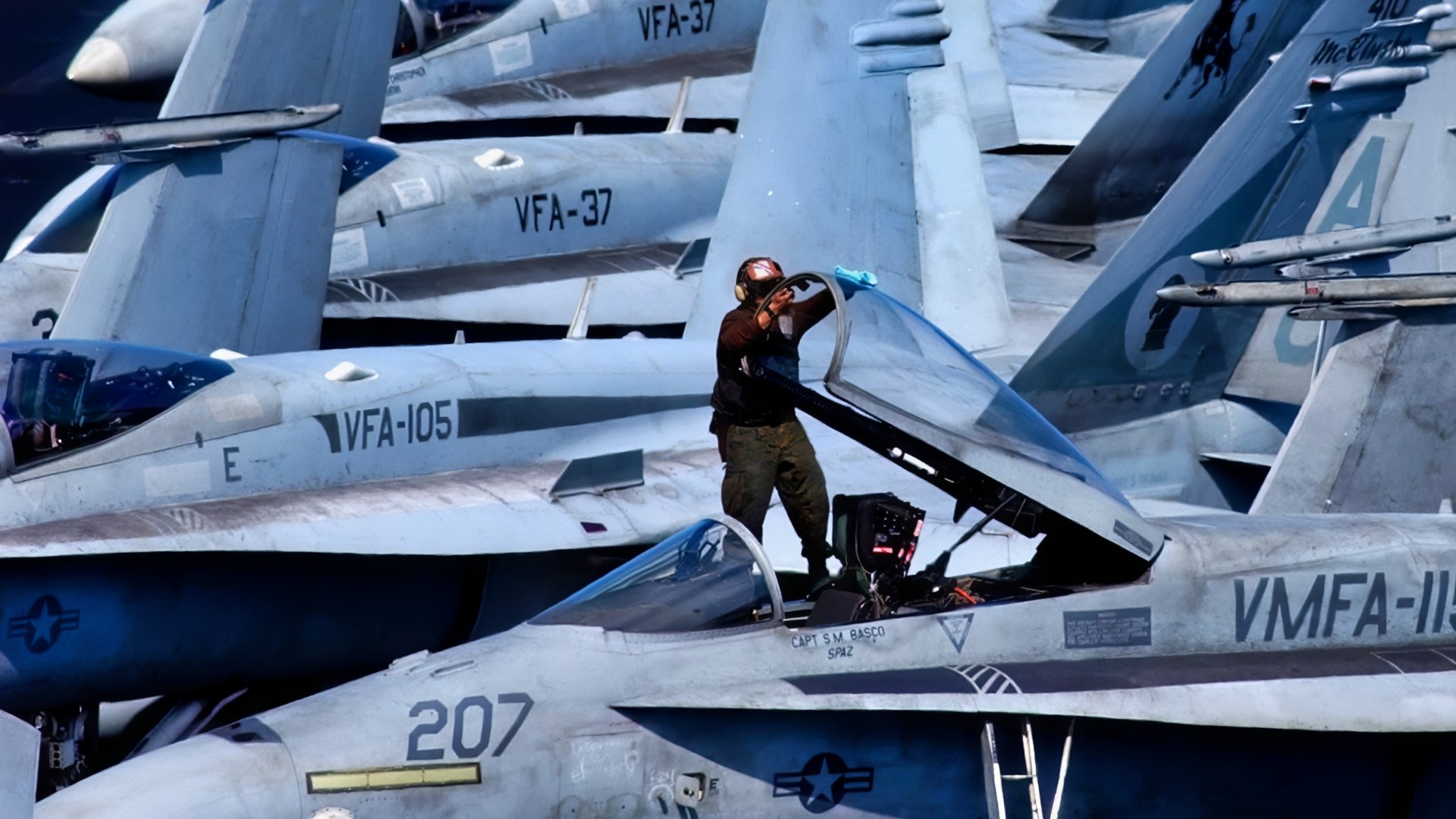
Marine Cpl. Rodger Lagrange cleans the canopy of a Marine F/A-18A+ Hornet onboard the USS Harry S. Truman (CVN 75) while the aircraft carrier operates at sea on Feb. 14, 2005. The Truman Strike Group and Carrier Air Wing 3 are conducting close air support, intelligence, surveillance, and reconnaissance missions over Iraq. Lagrange is attached to Marine Fighter Attack Squadron 115 deployed from Marine Corps Air Station Beaufort, S.C.
(DoD photo by Airman Philip V. Morrill, U.S. Navy. (Released))
The Navy has deferred complete repairs until the ship’s scheduled mid-life Refueling and Complex Overhaul (RCOH), expected to begin sometime next month. This kind of issue is unacceptable on the Navy’s power-projection platforms.
Aging Fleet & Reduced Numbers:
The fleet is at its smallest since WWI, forcing the Navy’s existing carriers to work harder. This issue is exacerbated by the scheduled retirement of the USS Nimitz.
The USS Nimitz (CVN-68), the US Navy’s oldest active nuclear-powered aircraft carrier, was scheduled for decommissioning and retirement in May 2026 after over 50 years of service. The vessel was on its final deployment, traveling from Washington state to Norfolk, Virginia, for dismantling and defueling. However, that retirement was delayed until 2027, when the USS Kennedy is scheduled to be commissioned.
That retirement would have cut the Navy’s carrier fleet from 11 to 10. However, only about half of those are at sea at any given time; the rest are in port undergoing scheduled maintenance and upgrades. That’s where the maintenance backlogs truly hurt fleet readiness.
The Navy is currently too small to maintain the operational tempo required to match the Chinese Navy (PLAN) in the Indo-Pacific, leading to dangerous overextension. Coupled with the current deployment of three carriers off Iran, the fleet has been left overextended.
Budget & Construction Issues:
The immense cost of building and maintaining carriers, such as the $13.3 billion per-ship cost for the Ford-class, limits the ability to expand the fleet, making it difficult to replace older ships.
The US shipbuilding capacity has significantly declined since the Cold War, struggling with workforce shortages, aging infrastructure, and a reliance on a limited number of specialized yards.
Shipbuilding programs are consistently over budget and behind schedule, with some ships facing delays of up to three years. Collaboration with allies like Japan and South Korea could help address shipbuilding challenges.
With the US building larger ships and its shipyards geared toward them, Japan and South Korea could take up the mantle of building smaller vessels, such as corvettes and frigates.
The Threat Environment Is Constantly Evolving:
New threats from hypersonic missiles and anti-ship missiles that Russia and China possess have many analysts worried that the age of the aircraft carrier is ending and that they are more vulnerable than ever.
But reports have surfaced that Iran fired 50 of the much-ballyhooed Chinese CM-302 anti-ship missiles at American carriers in the Gulf, and that they were either all shot down or destroyed on the ground.
Still, many argue that the future of the US Navy lies in smaller, cheaper combat ships and smaller drone-based carriers to keep pace with China’s rapid naval growth.
The Navy has always believed that “preventing wars is just as important as winning wars,” and that this required forward deployment of power-projection capabilities in the form of carrier strike groups. But our demands have outstripped our abilities, and the cracks are beginning to show.
Eleven Aircraft Carriers Are No Longer Enough To Meet Our Needs:
Eleven carriers were deemed sufficient by Congress and the Navy to meet the requirements of a world without today’s “near peer” power competition. This won’t be sufficient to preserve American naval superiority for much longer.
China now has three carriers, including one modern one, and is building its first nuclear-powered carrier that will reportedly be the largest ever built. It plans on having six carriers in the Pacific by 2035.
The current 11-carrier fleet barely meets the Navy’s two-hub fleet requirement. The Navy should actually have another two, perhaps three or four more carriers, but it can’t afford to build them, nor does it have the surface ships required to round out a carrier strike group.
The Navy needs the carriers for deterrence as much as for actual combat operations. Because it is always more economical to prevent a war than to actually fight one. But the US shipyards are in no shape to be building that many carriers and surface ships.’
About the Author: Steve Balestrieri
Steve Balestrieri is a National Security Columnist. He served as a US Army Special Forces NCO and Warrant Officer. In addition to writing on defense, he covers the NFL for PatsFans.com and is a member of the Pro Football Writers of America (PFWA). His work was regularly featured in many military publications.


