


Key Points and Summary – The U.S. Navy faces a hard reality: too few ready surface ships, years-long carrier overhauls, and late, over-budget programs—from LCS and Zumwalt to DDG(X), Constellation frigates, and even Columbia/Virginia subs.
-Yet bright spots remain.
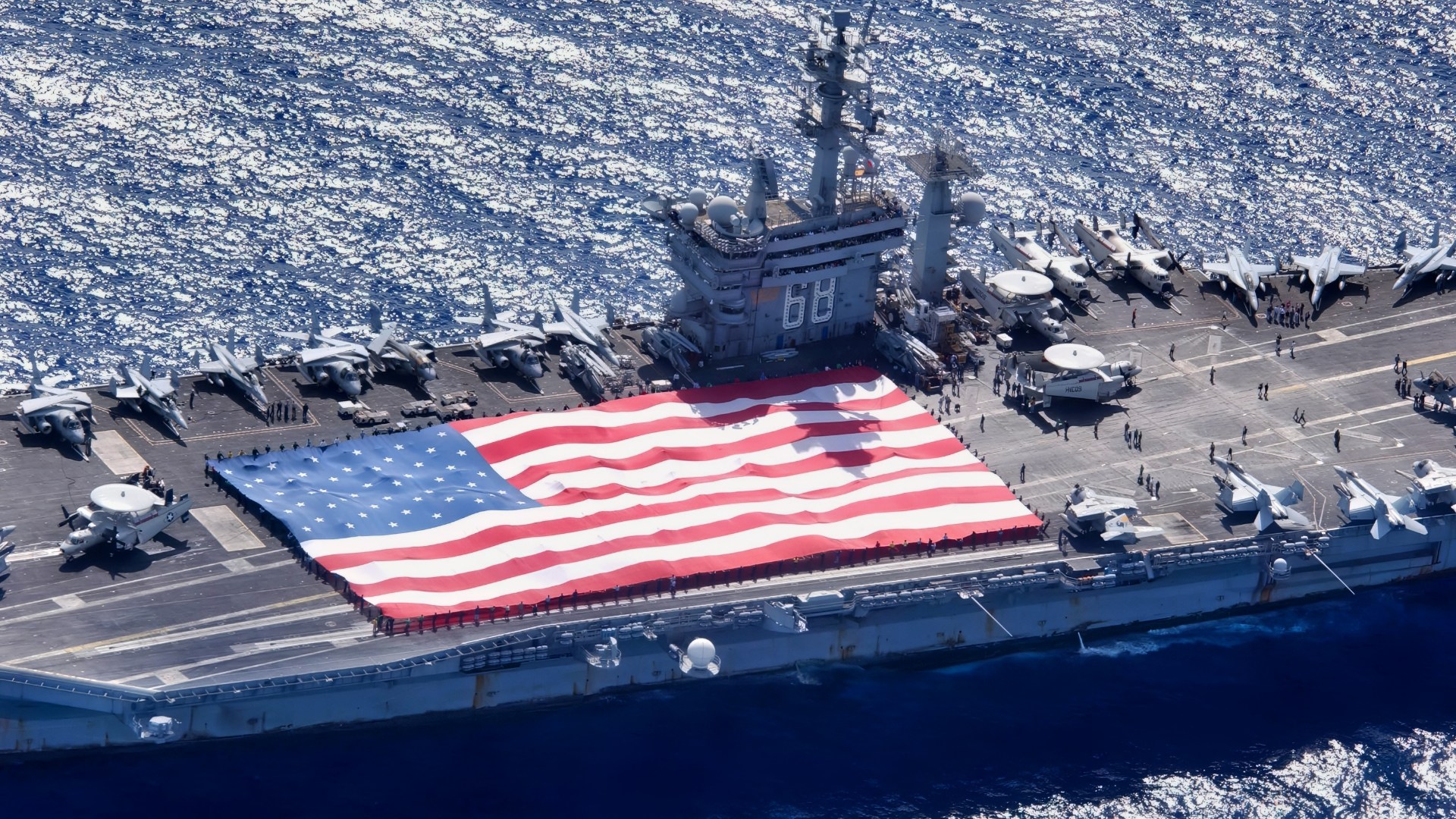
Pacific Ocean (November 3, 2003) — During Tiger Cruise aboard USS Nimitz (CVN 68), Nimitz and Carrier Air Wing Eleven personnel participate in a flag unfurling rehearsal with the help of fellow tigers on the flight deck. The Nimitz Carrier Strike Force and Carrier Air Wing Eleven (CVW-11) are in route to Nimitz homeport of San Diego, California after an eight-month deployment to the Arabian Gulf in support of Operation Iraqi Freedom. U.S. Navy photo by Photographer Mate 3rd Class Elizabeth Thompson
-Carrier groups just outdueled Houthi barrages.
-Recruiting is up, training is strong, and unmanned vessels, lasers, and F-35C/F/A-XX air wings are maturing.
-The fix isn’t mystery—it’s acquisition discipline: stable designs before build, workforce and supplier investment, tougher oversight, and ruthless schedule control.
-If shipyards deliver and maintenance flows, the Navy’s combat-tested sailors will have the tools they need—before a Pacific crisis tests them at sea.
Is the U.S. Navy In a Hole It Can’t Get Out Of?
Just how bad can it get for the U.S. Navy?
There are not enough surface ships on active duty. Aircraft carriers spend years in maintenance. Fast-attack submarine programs have experienced delays and cost overruns.
The Littoral Combat Ship has been a disaster. The Zumwalt-class destroyer was never what it was supposed to be. The DDG(X) next-generation warship is a question mark, and Constellation-class frigates are late.

(July 28, 2022) U.S. Navy Zumwalt-class guided-missile destroyer USS Michael Monsoor (DDG 1001) sails in formation during Rim of the Pacific (RIMPAC) 2022, July 28. Twenty-six nations, 38 ships, three submarines, more than 30 unmanned systems, approximately 170 aircraft and 25,000 personnel are participating in RIMPAC from June 29 to Aug. 4 in and around the Hawaiian Islands and Southern California. The world’s largest international maritime exercise, RIMPAC provides a unique training opportunity while fostering and sustaining cooperative relationships among participants critical to ensuring the safety of sea lanes and security on the world’s oceans. RIMPAC 2022 is the 28th exercise in the series that began in 1971. (U.S. Navy photo by Mass Communication Specialist 3rd Class Aleksandr Freutel)
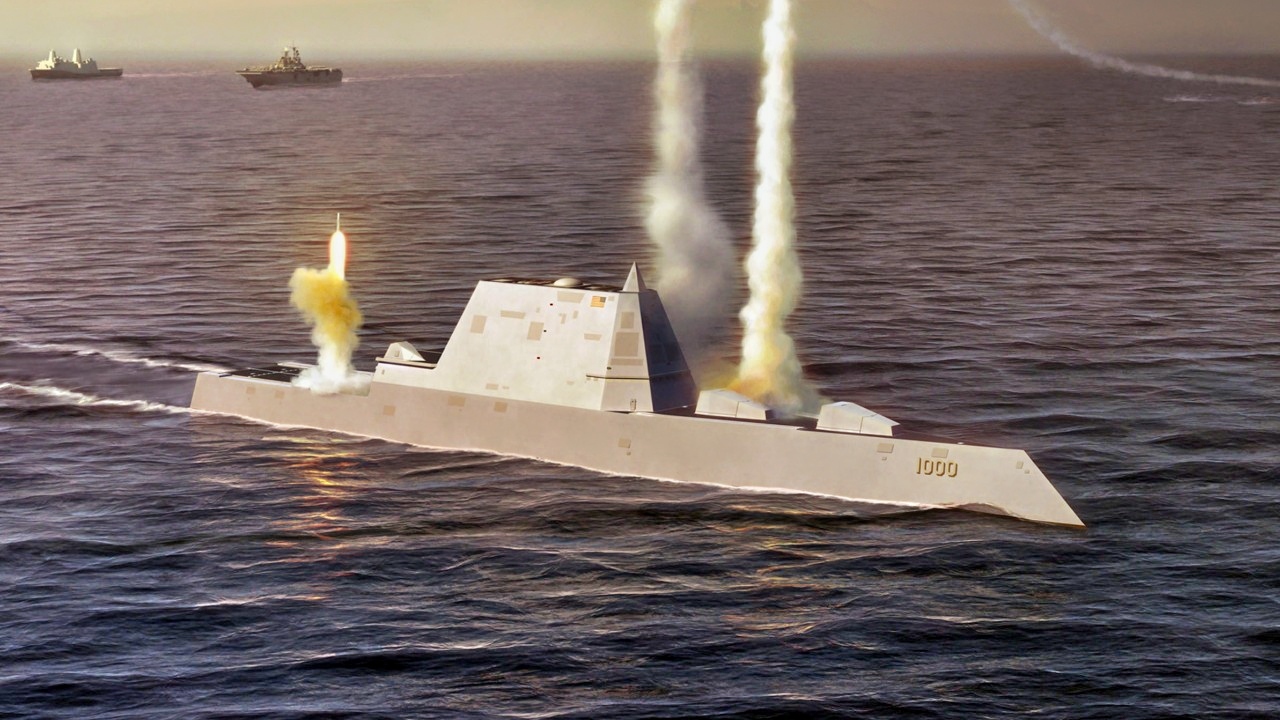
The US Navy’s troubled Zumwalt-class destroyers are being revitalized with the integration of Conventional Prompt Strike (CPS) hypersonic missiles, transforming them into powerful long-range strike platforms. The original class of 32 ships was cut to just three after its Advanced Gun System failed due to exorbitant costs. Now, these stealthy, $8 billion warships are having their defunct guns replaced with vertical launch tubes for hypersonic weapons. This upgrade will dramatically increase their strike range from a mere 63 miles to over 1,700 miles, making the Zumwalts relevant and formidable assets for deterring adversaries like China in the 21st century.
With all of these problems, the Navy is in crisis mode.
However, there are some green shoots of promise.
Two carrier battle groups just performed admirably in combat against the Iranian-backed Houthis terrorists in Yemen.
The Houthis launched numerous ballistic missiles and drones at ships in the Red Sea and the Gulf of Aden. The Navy did not take a loss and outlasted the militants.
What the Navy Does Right
The Navy has plans to build sea drones and robot ships to fight back against adversaries.
These programs are forging ahead. Lasers will soon perform air defense duties that are much more efficient and cheaper when it comes to “frying” incoming projectiles.
Recruiting is up, and the Navy excels at training newcomers – whether in the submarine branch or in forging new Navy SEALs.
The Navy is also returning to its amphibious warfare roots and working with the U.S. Marine Corps to take and hold territory.
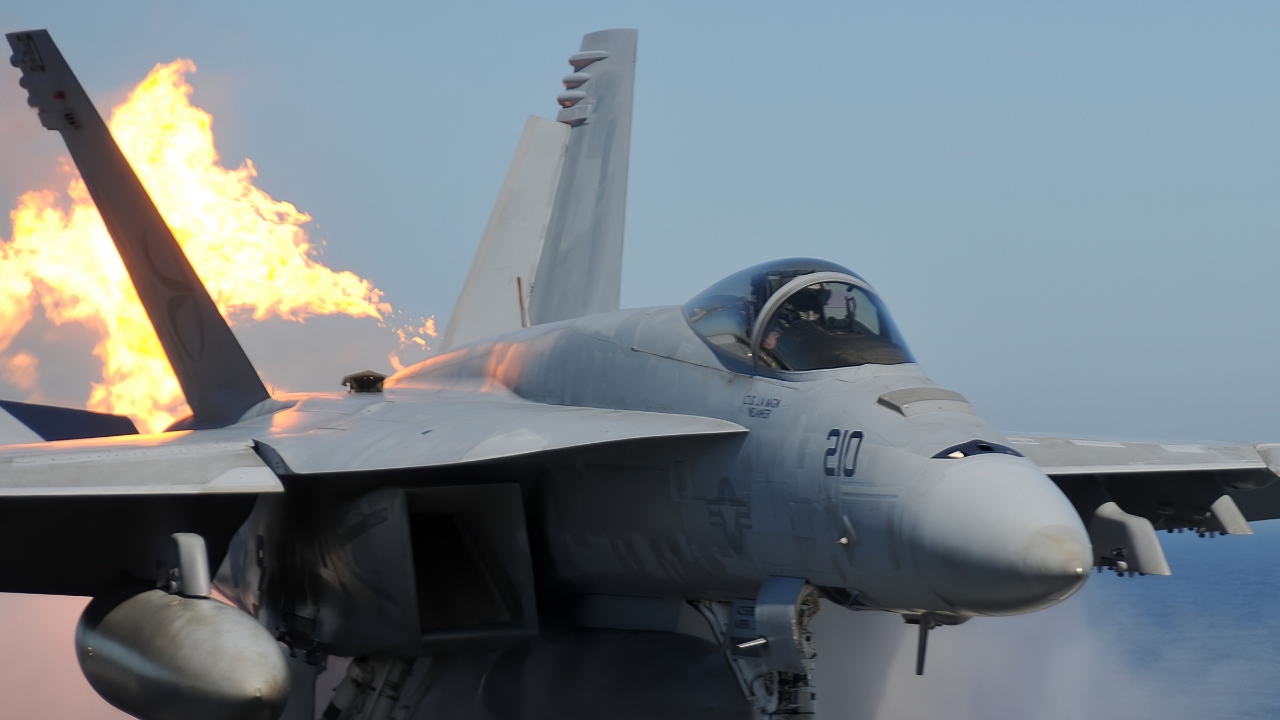
A U.S. Navy F/A-18E Super Hornet aircraft assigned to Strike Fighter Squadron 137 is launched from the flight deck of the aircraft carrier USS Abraham Lincoln (CVN 72) while underway in the Pacific Ocean on Feb.2, 2009. (DoD photo by Petty Officer 2nd Class James R. Evans, U.S. Navy. (Released))
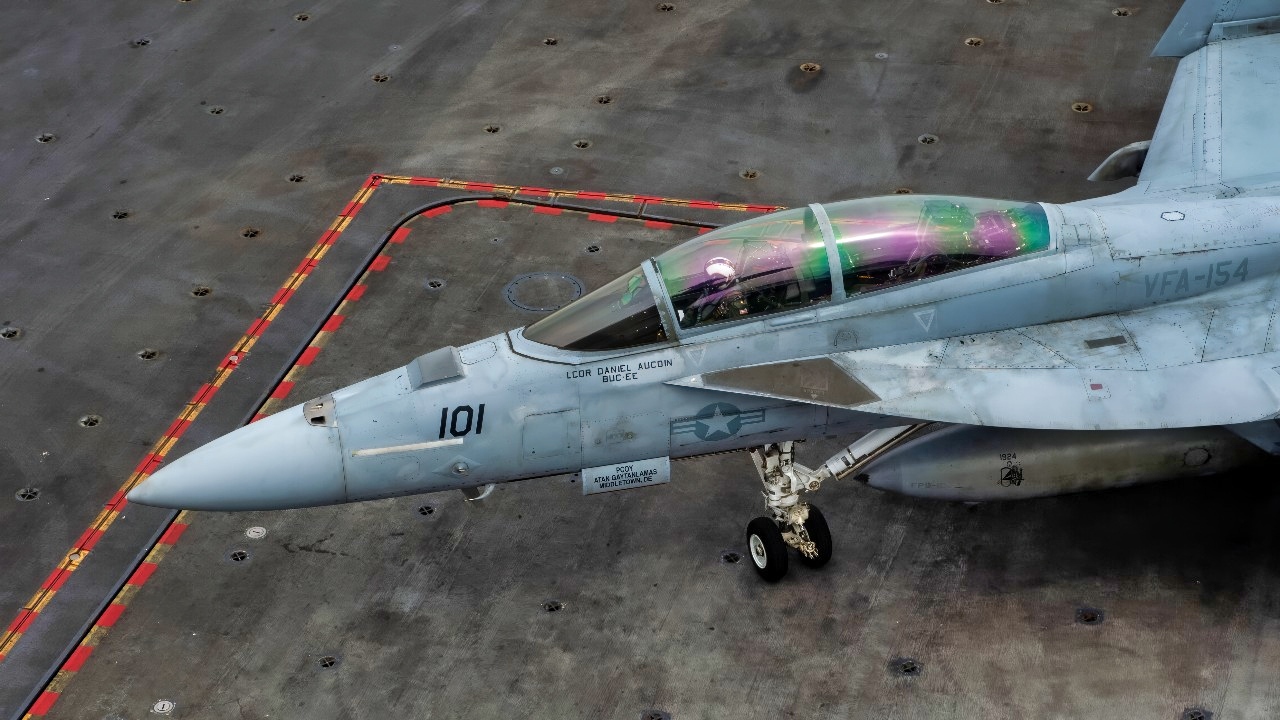
(July 24, 2025) – A U.S. Navy F/A-18F Super Hornet, assigned to the “Black Knights” of Strike Fighter Squadron (VFA) 154, transits the flight deck of Nimitz-class aircraft carrier USS Theodore Roosevelt (CVN 71), July 24, 2025. Theodore Roosevelt, flagship of Carrier Strike Group (CSG) 9, is underway conducting exercises to bolster strike group readiness and capability in the U.S. 3rd Fleet area of operations. (U.S. Navy photo by Mass Communication Specialist Seaman Maddix Almeyda)
Carrier aviation is strong with the F/A-18E/F Super Hornet and the F-35C Lightning II. The F/A-XX will add sixth-generation features to fighter squadrons.
The Navy has been in combat mode for decades.
Many senior sailors are combat-tested and experienced – simply experts at their jobs. These noncommissioned officers will be able to train younger men and women in the art of naval warfare.
A potential maritime fight with China would show that the American sailors are better trained and can do their jobs with aplomb.
Keeping Aircraft Carriers in the Water
These are the positive things about the Navy, but let’s take a deeper dive into some of the negatives.
The first is the maintenance ailments of aircraft carriers.
These mammoth ships must sometimes stay in drydock for years to refuel nuclear reactors and undergo refit procedures.
There are inefficiencies due to supply chain issues, parts bottlenecks, and worker shortages. The USS George Washington was out of service for nearly six years.
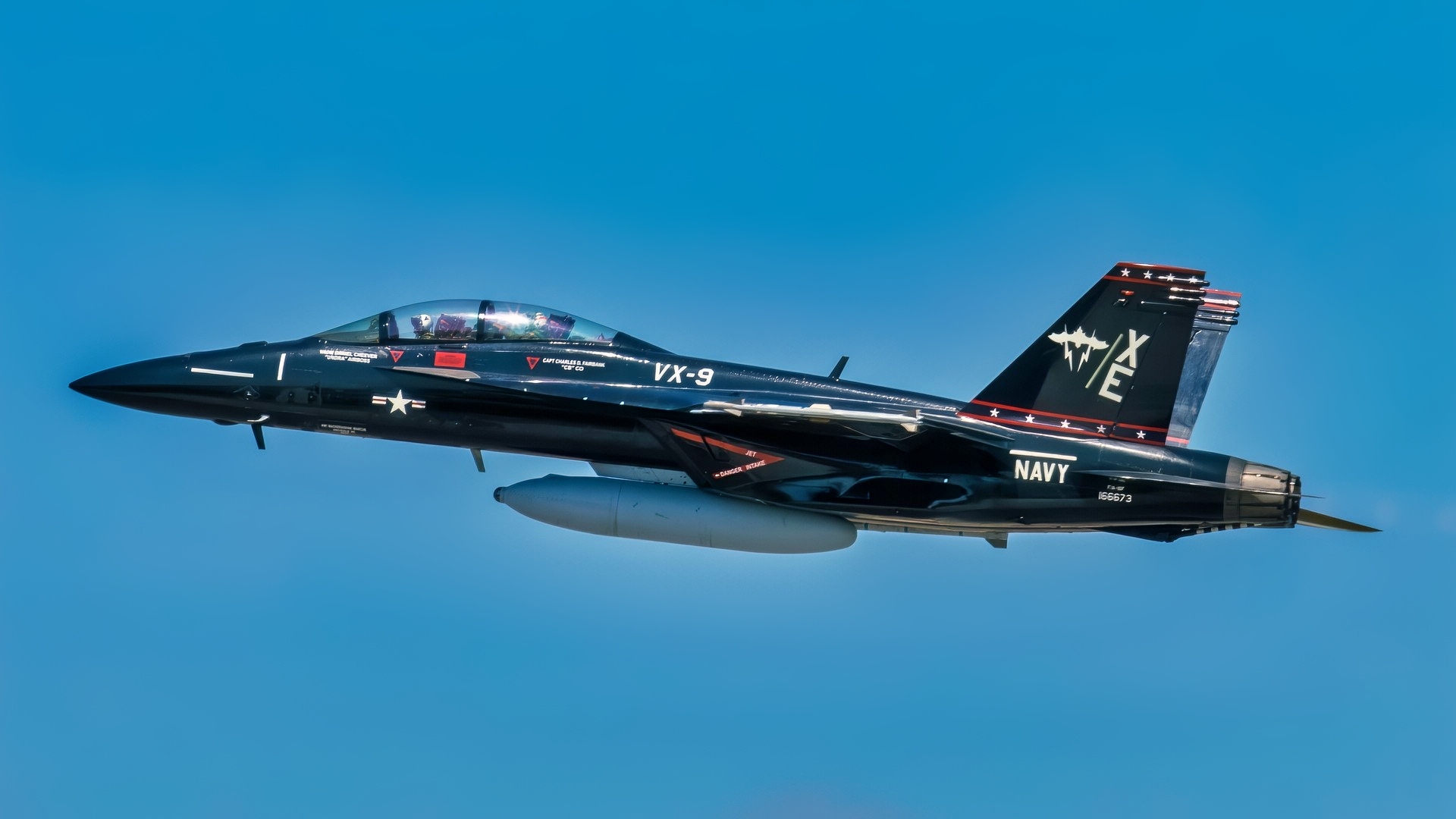
An F/A-18F Super Hornet attached to Air Test and Evaluation Squadron (VX) 9, the “Vampires,” takes off from Naval Air Station Point Mugu, California, September 11, 2025. Gray Flag 2025 is the naval aviation test community’s premier large force test event, providing unique venues for large scale integration of new capabilities across services and platform. Working with the Joint Force, industry, and our nation’s allies to ensure seamless integration and interoperability is key to ensuring warfighters have a decisive advantage in the field. (U.S. Navy photo by Mass Communication Specialist 2nd Class John T. Jarrett)
Carriers also have endured schedule slips in new construction.
The second Ford-class carrier, the USS John F. Kennedy, was supposed to be ready this year, but its arrival has been pushed to 2027 or 2028.
The LCS Problem Must Be Solved
The Littoral Combat Ship has been a cautionary tale. Meant for counter-insurgency and counter-terror operations close to shore, the LCS is now a solution looking for a problem. They are not survivable enough to take on a great-power navy like those of Russia and China. There have been schedule slips and cost overruns.
The LCS is struggling to remain relevant and to be stocked with new anti-ship missiles, but these efforts may be too late to make the LCS a difference-maker in future warfare.
The Zumwalt-class Disappointment
The Zumwalt-class destroyers have been another acquisition failure. Thirty-two were originally ordered, but only three were built. Each costs around $7.5 billion. These became even more expensive, and the program was delayed as well.
The main gun was a disaster, and its ammunition was way too expensive. The Zumwalt’s are not integrated well with the Aegis Weapon System, which makes them mostly combat ineffective.
Can’t the DDG(X) Be Ready for Combat?
The DDG(X) next-generation destroyer has also been a time-suck, and costs have ballooned.
There are design issues with the ship’s new hull form.
The DDG(X) is a technology demonstrator, but integrating the planned lasers and hypersonic missile launchers is challenging. The DDG(X) program will have to compete with other shipbuilding plans for scarce funding.

DDG(X) U.S. Navy. Image Credit: Creative Commons.
The Constellation-class frigates are behind schedule. There have been design changes throughout the history of the program. The delivery date has been pushed back to 2029. To keep up, shipbuilders began construction, but this was before the Navy agreed on how the ship would be designed, which has created more delays.
New submarine construction is enduring issues as well. The Columbia-class and the Virginia-class programs are also struggling to meet deadlines, and costs have increased. The Columbia-class is 12 to 18 months behind schedule, and the Virginia-class is 24 to 36 months tardy. Again, there is a shortage of shipyard workers and supply chain inefficiencies.
One can surmise that the Navy’s most significant problems are from defense acquisition struggles. The maritime branch must develop a better way to get shipyards producing vessels more quickly and efficiently. It seems that everything is delayed – from maintenance to new construction.
The Navy must allocate more funds so defense contractors can recruit qualified workers and produce parts and components promptly.
The Government Accountability Office and Congress need better oversight of Navy acquisition. The Department of Defense is working to address cultural issues within the fighting force and avoid political correctness at the expense of individual readiness and lethality. These are fine objectives, but the Navy is struggling with its maintenance and building procedures. The DOD must make solving these maladies a priority.
The Navy can fix its acquisition problems. The service branch knows where the troubles lie. The good part is that individual sailors are great, and the human element of the Navy is better than ever.
All sailors know that they could be involved in ship-on-ship combat someday and an American warship could be lost. This has raised the stakes and given sailors a sense of urgency.
Warfare is a human endeavor, but individual sailors must have the best ships and submarines at all times. If they are still being built or laid up in maintenance, this keeps the branch from operating at its optimal level.
Leadership from the high command is essential to maintain the Navy’s manpower advantage. With Congress and the White House working to fix acquisition problems, the Navy can do what it does best: win wars at sea.
Can the U.S. Navy Move Forward?
This may be a crisis time for the Navy, but there is a way out of the mess. The branch is liable to be in combat in the coming years, and the Navy must be ready.
Ships and submarines should be combat-effective if the emphasis is on improving acquisition practices and keeping costs down while meeting schedule timelines.
There is always hope for the Navy to excel and attain victory at sea at all times.
About the Author: Brent M. Eastwood
Brent M. Eastwood, PhD is the author of Don’t Turn Your Back On the World: a Conservative Foreign Policy and Humans, Machines, and Data: Future Trends in Warfare plus two other books. Brent was the founder and CEO of a tech firm that predicted world events using artificial intelligence. He served as a legislative fellow for US Senator Tim Scott and advised the senator on defense and foreign policy issues. He has taught at American University, George Washington University, and George Mason University. Brent is a former US Army Infantry officer. He can be followed on X @BMEastwood.
More Military
Forget the F-35 of F-47: A 7th Generation Fighter Is Possible
$500 Drones are Destroying $10,000,000 NATO Tanks in Ukraine War
The Mach 2.2 F-4 Phantom II Fighter Has a Message for Every Air Force on Earth
China’s White Emperor ‘NGAD’ Stealth Fighter Summed Up in 2 Words


