

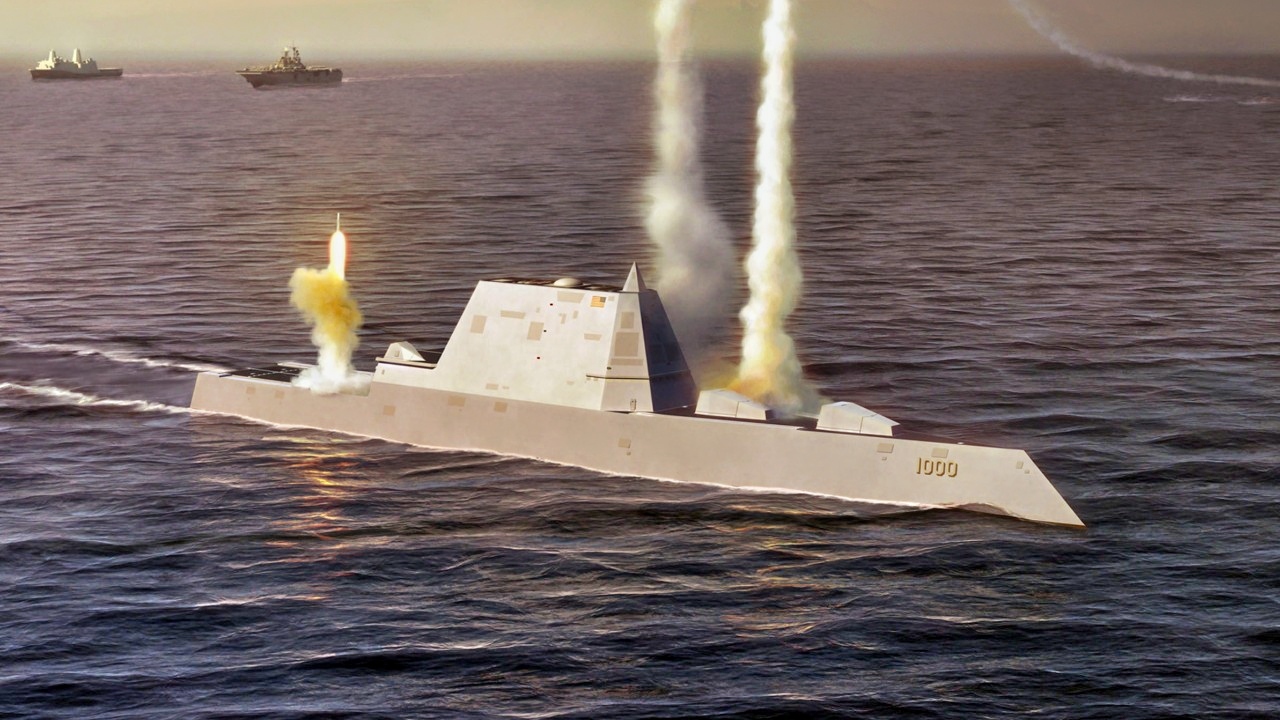
Key Points and Summary – The Zumwalt-class flopped at its original mission: AGS guns needed million-dollar rounds, killing affordability and the shore-fire concept.
-Rather than scrap the trio, the Navy re-roled them as stealth strike destroyers.
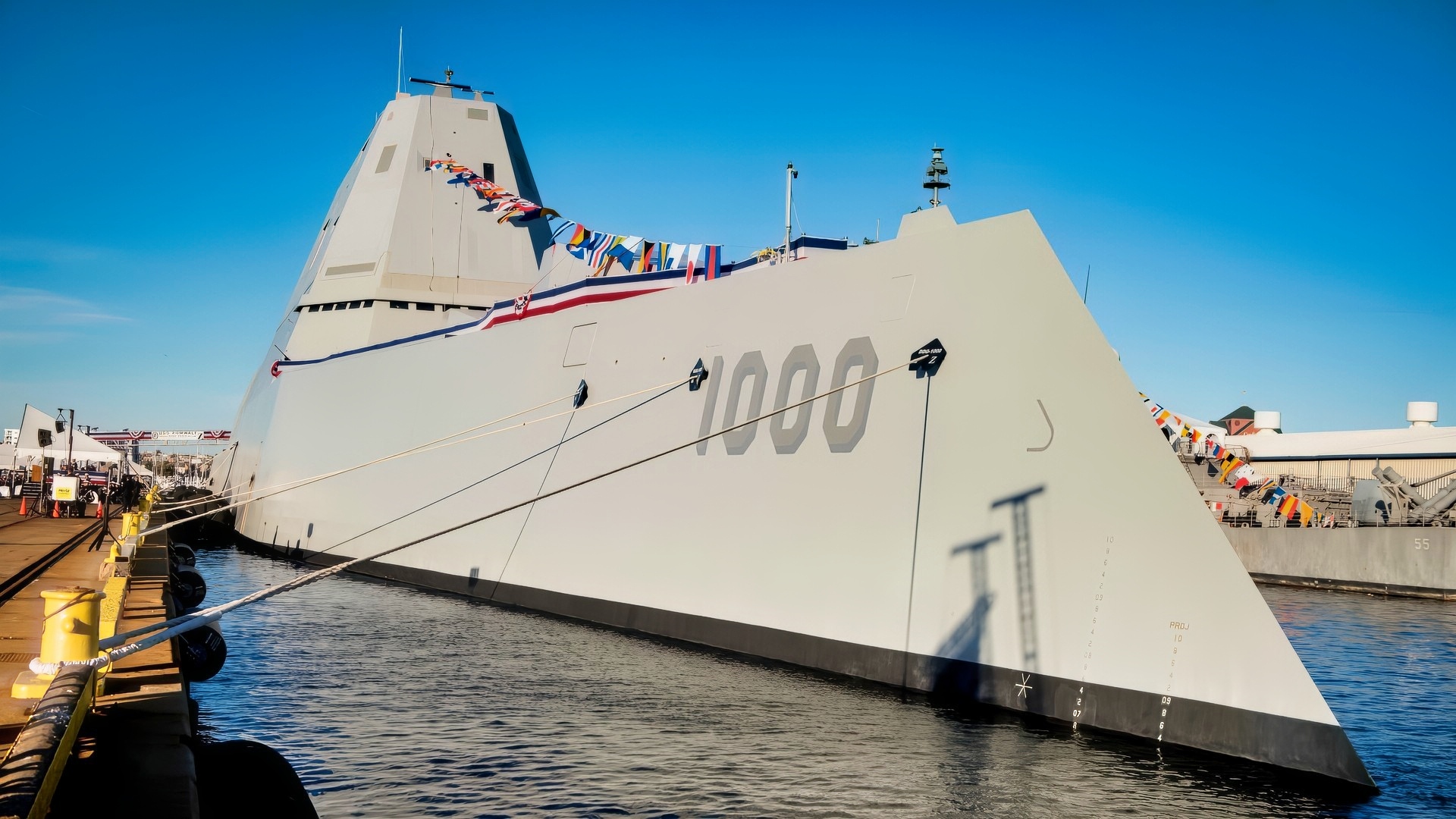
The Navy’s newest and most technologically advanced warship, USS Zumwalt (DDG 1000), is moored to the pier during a commissioning ceremony at North Locust Point in Baltimore. (U.S. Navy photo by Petty Officer 1st Class Nathan Laird/Released)
-Removing AGS opened space for additional launchers, while the ships’ generous power, automation, and low signatures made them ideal hosts for long-range weapons.
-With 80 Mk 57 PVLS cells and integration of Conventional Prompt Strike hypersonics, Zumwalt now offers a fast, hard-to-find shooter that can threaten high-value targets from well offshore.
-It’s a boutique capability—only three ships—but the class now delivers real utility and a laboratory for future fleet tech.
The Zumwalt-class Reboot Is Here
Hopes for the Zumwalt-class were high. Utilizing an innovative tumblehome hull shape—a radical design that diverges from typical ship hulls—the Zumwalts would have a significantly reduced radar signature.
The extensive use of composite materials enhances this, the ability to generate substantial amounts of electrical power, and advanced crew automation to reduce crew size.
One of the most radical features of the Zumwalt-class, however, was to be their Advanced Gun System, which would fire very long-range 155mm naval artillery rounds in support of landed amphibious forces.
The goal, in sum, was to build a highly survivable and stealthy platform capable of generating enough electricity to power future weapon systems, such as the upcoming crop of directed energy or laser weapons.
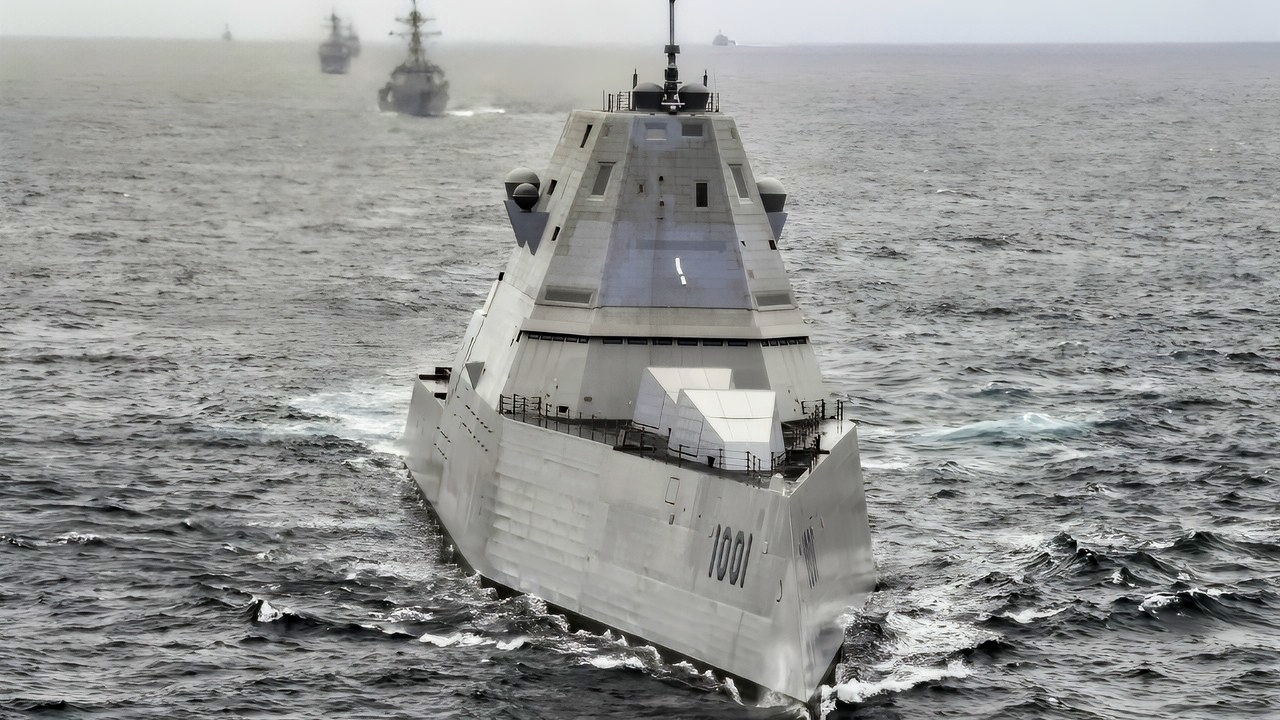
(April 21, 2021) The Zumwalt-class guided-missile destroyer USS Michael Monsoor (DDG 1001) leads a formation including the Arleigh Burke-class guided missile destroyers USS Fitzgerald (DDG 62), USS Spruance (DDG 111), USS Pinckney (91), and USS Kidd (DDG 100), and the Independence-variant littoral combat ship USS Coronado (LCS 4) during U.S. Pacific Fleet’s Unmanned Systems Integrated Battle Problem (UxS IBP) 21, April 21. UxS IBP 21 integrates manned and unmanned capabilities into challenging operational scenarios to generate warfighting advantages. (U.S. Navy photo by Chief Mass Communication Specialist Shannon Renfroe)
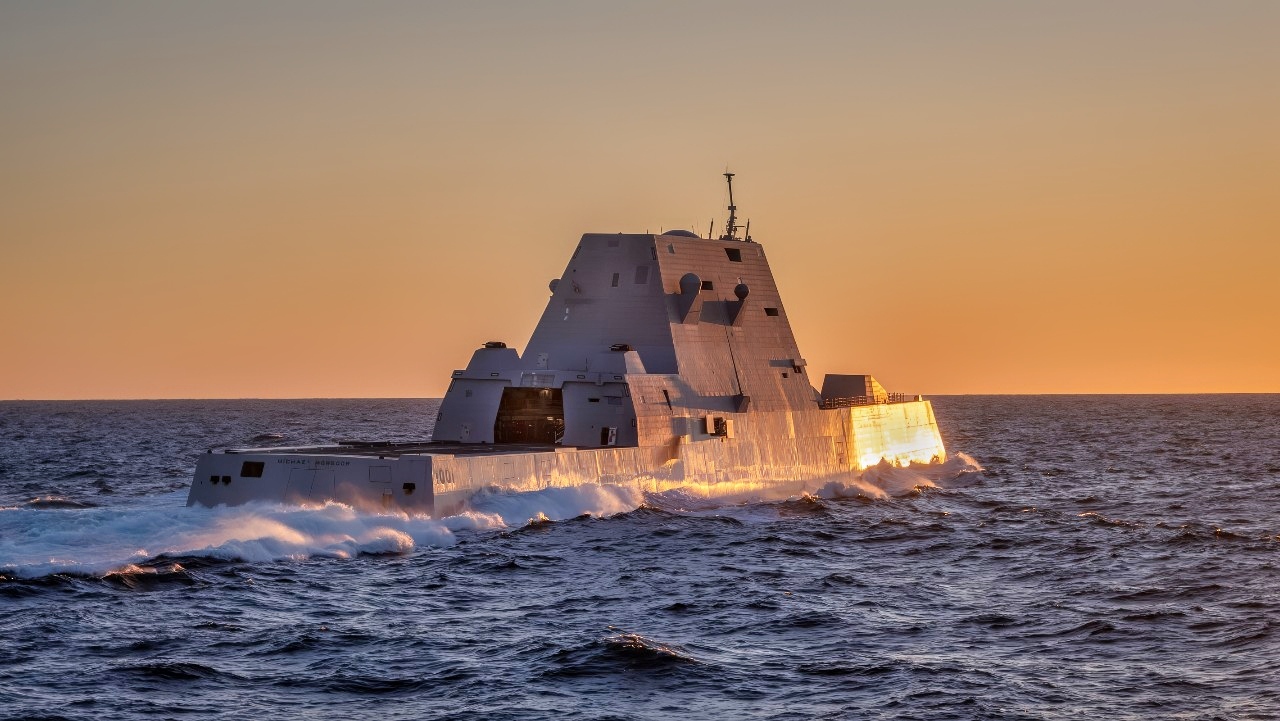
(February 10, 2024) — The Zumwalt Class Guided Missile Destroyer USS Michael Monsoor (DDG 1001) breaks away from the Henry J. Kaiser-class fleet replenishment oiler USNS Pecos (T-AO 197) shortly before sunset after taking on fuel. (U.S. Navy photo by Chief Mass Communication Specialist Mark D. Faram)
The US Navy’s ambitious project, however, encountered significant cost overruns, growing technical risks, and a shift in its role and priorities.
The Zumwalt-class’s costs ballooned, and in tandem, projected fleet numbers sank.
Instead of ultimately building a class of 32 Zumwalt’s, the numbers steadily sank to 24 hulls, then to eight hulls, and ultimately just a paltry three Zumwalt’s.
RAND Corporation, a think tank based in California, conducted a comprehensive analysis of the reasons why the Zumwalt-class experienced significant cost overruns, which triggered a breach of the Nunn-McCurdy Act, a piece of legislation designed to limit cost overruns in American defense procurement programs.
The most significant challenge to the Zumwalt-class was its Advanced Gun System.
Although its ammunition was of the same caliber as the NATO-standard 155mm artillery shells used throughout the United States military and widely within the North Atlantic Treaty Organization alliance, the AGS naval artillery ammunition was not compatible with its land-based counterparts.
Given the specialized nature of the AGS ammunition — exquisite and long-range projectiles — the cost per round soared from hundreds of thousands of dollars to around a million dollars for a single projectile, making it wildly unaffordable.
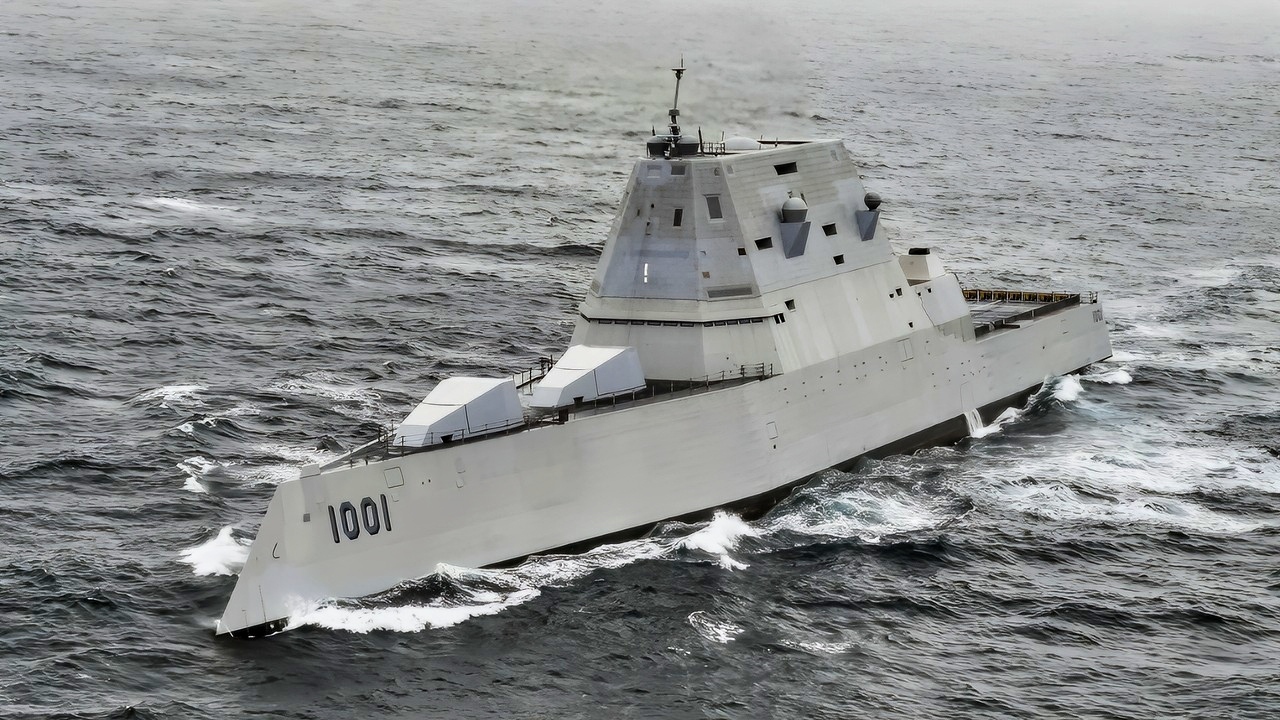
(April 21, 2021) Zumwalt-class guided-missile destroyer USS Michael Monsoor (DDG 1001) participates in U.S. Pacific Fleet’s Unmanned Systems Integrated Battle Problem (UxS IBP) 21, April 21. UxS IBP 21 integrates manned and unmanned capabilities into challenging operational scenarios to generate warfighting advantages. (U.S. Navy photo by Chief Mass Communication Specialist Shannon Renfroe)
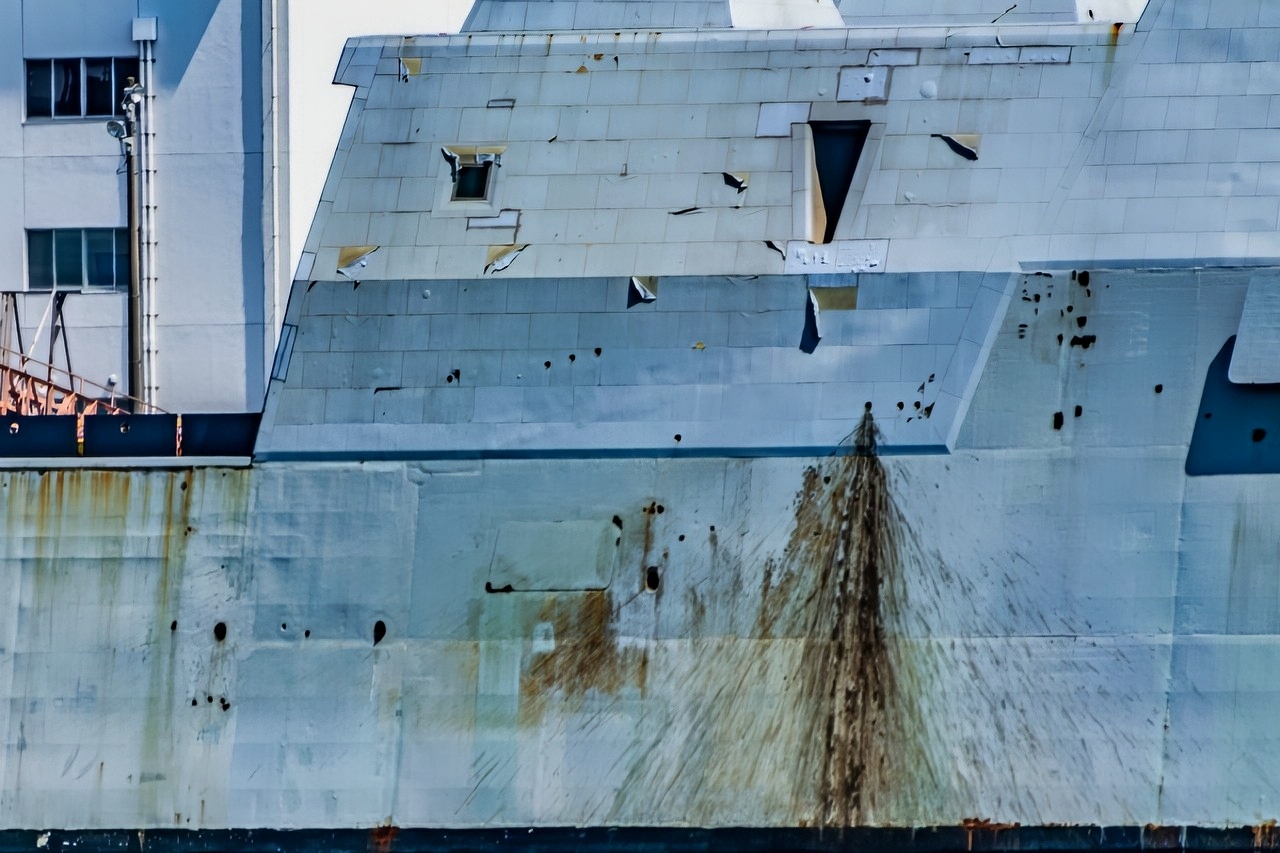
Zumwalt-Class In Bad Shape X Screenshot.
For comparison, a standard high-explosive 155mm shell costs around $3,000 to $4,000 per round.
The Zumwalt-class’s central gun system, therefore, became no longer viable, making the AGS essentially dead weight on the Zumwalt-class ships while also eliminating the ship’s ability to support disembarked land forces.
The US Navy put the kibosh on Zumwalt-class procurement, opting to repurpose the ships. Instead of supporting land forces from long range, the Navy retrofitted the ships for long-range conventional strike instead.
Beginning in the 2020s, the Zumwalt-class’s AGS gun mounts were removed and the vessels modified to accept conventional Vertical Launch System (VLS) cells in their stead.
The decision was driven by pragmatism: the Zumwalt-class’s ample internal volume, coupled with generous electrical power generation and stealth characteristics, made it uniquely capable of shipping advanced long-range and hypersonic weaponry.
The centerpiece of the new strategy was Conventional Prompt Strike, a hypersonic missile jointly developed by the U.S. Navy and Army that can reach speeds in excess of seven or eight times the speed of sound. With the AGS gun system gone, each Zumwalt could integrate four VLS missile cells, with three missiles in each cell.
Though the Zumwalt’s hypersonic Conventional Prompt Strike is a potent long-range munition, the fact that there are only three Zumwalt-class ships within the Navy makes the CPS-Zumwalt combination relatively niche and somewhat limited.
Additionally, the Conventional Prompt Strike missiles are large, expensive munitions, and integrating them more broadly into the Navy’s other, conventional vessels would be a significant engineering challenge.

Zumwalt-class Guided Missile Destroyer USS Michael Monsoor (DDG 1001) transits the Pacific Ocean, June 25, 2022. Twenty-six nations, 38 ships, four submarines, more than 170 aircraft and 25,000 personnel are participating in RIMPAC from June 29 to Aug 4 in and around Hawaiian Islands and Southern California. The world’s largest international maritime exercise, RIMPAC provides a unique training opportunity while fostering and sustaining cooperative relationships among participants critical to ensuring the safety of sea lanes and security on the world’s oceans. RIMPAC 2022 is the 28th exercise in the series that began in 1971.

(July 28, 2022) U.S. Navy Zumwalt-class guided-missile destroyer USS Michael Monsoor (DDG 1001) sails in formation during Rim of the Pacific (RIMPAC) 2022, July 28. Twenty-six nations, 38 ships, three submarines, more than 30 unmanned systems, approximately 170 aircraft and 25,000 personnel are participating in RIMPAC from June 29 to Aug. 4 in and around the Hawaiian Islands and Southern California. The world’s largest international maritime exercise, RIMPAC provides a unique training opportunity while fostering and sustaining cooperative relationships among participants critical to ensuring the safety of sea lanes and security on the world’s oceans. RIMPAC 2022 is the 28th exercise in the series that began in 1971. (U.S. Navy photo by Mass Communication Specialist 3rd Class Aleksandr Freutel)
However, the Zumwalt’s impromptu role as a stealthy CPS platform brings unique capabilities to the Navy.
The backbone of the Zumwalt-class’s offensive firepower remains the Mk-57 Peripheral Vertical Launch System — in total, eighty cells arrayed around the ship’s sides — that are physically larger than the Navy’s ubiquitous Mk-41 vertical alnico cells that arm the Arleigh Burke-class destroyers.
Due to the Mk-57 cells’ larger size, they accommodate larger, more advanced weapons, such as new-generation hypersonic weapons. They can also be equipped with anti-scar missiles, cruise missiles, and other weapons launched from VLS systems.
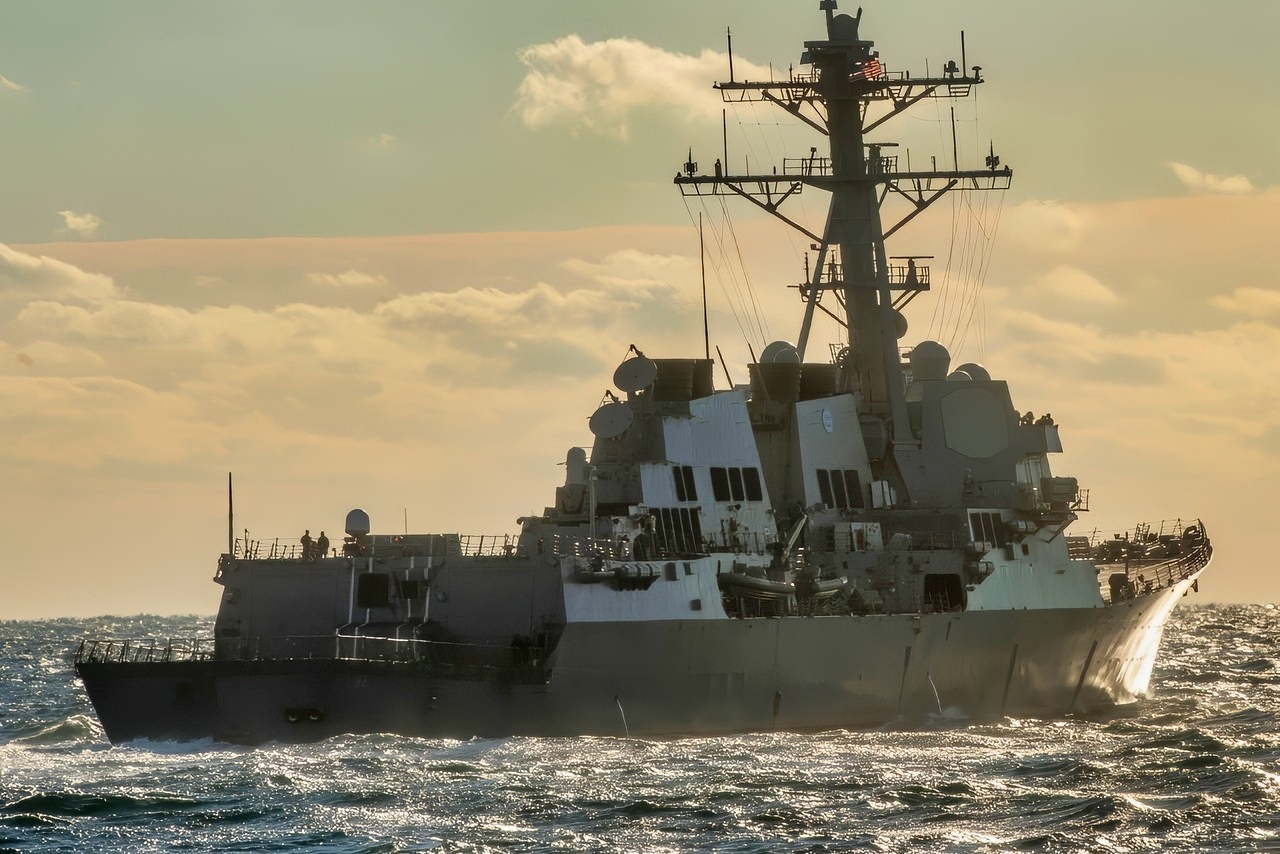
The Arleigh Burke-class guided-missile destroyer USS Lassen (DDG 82) moves into position for an underway exercise with the British Royal Navy aircraft carrier HMS Queen Elizabeth (R08) and Pre-Commissioning Unit (PCU) Michael Monsoor (DDG 1001). The future USS Michael Monsoor is the second ship in the Zumwalt-class of guided-missile destroyers. (Photo by Mass Communication Specialist 1st Class John Philip Wagner, Jr./Released)
However, the Zumwalt-class’s Mk-57 PVLS has a uniquely defensive capability too: arrayed along the outside of the ships, the Mk-57 cells are designed to absorb and redirect hostile fire outward and away from the ship, somewhat akin to how explosive-reactive armor protects tanks and other armored vehicles.
Postscript
Ultimately, the Zumwalt-class was a qualified success: as an experimental technology demonstrator, it pushed the boundaries of warship stealth, automation, and generous power generation.
But it failed in its original mission as a littoral vessel that could operate in support of land forces, due to its enormous cost overruns and the lack of ammunition for its Advanced Gun System.
About the Author: Caleb Larson
Caleb Larson is an American multiformat journalist based in Berlin, Germany. His work covers the intersection of conflict and society, focusing on American foreign policy and European security. He has reported from Germany, Russia, and the United States. Most recently, he covered the war in Ukraine, reporting extensively on the war’s shifting battle lines from Donbas and writing on the war’s civilian and humanitarian toll. Previously, he worked as a Defense Reporter for POLITICO Europe. You can follow his latest work on X.
More Military
USS America: The U.S. Navy Failed To Sink Its Own Aircraft Carrier
The Mach 3 SR-71 Blackbird Summed Up in 4 Words
The Russian Military: A Spent Force?
How China Would Decide to Invade Taiwan
Russia’s ‘New’ Su-75 Checkmate Stealth Fighter Looks Like a ‘Fake Out’


Pingback: US Navy building hypersonic hub in Hawaii – The Clear Media Project