


Key Points and Summary – SSN(X) is the Navy’s planned successor to Virginia: a larger, stealthier, longer-legged attack submarine that teams with UUVs, carries more weapons, and is designed for higher availability.
The Mistakes – Costs will dwarf current boats, and industrial bottlenecks—from single-source suppliers to overloaded yards—are real. Budget trade-offs and shipyard realities have pushed the first procurement to around FY-2040, delaying entry to the fleet.
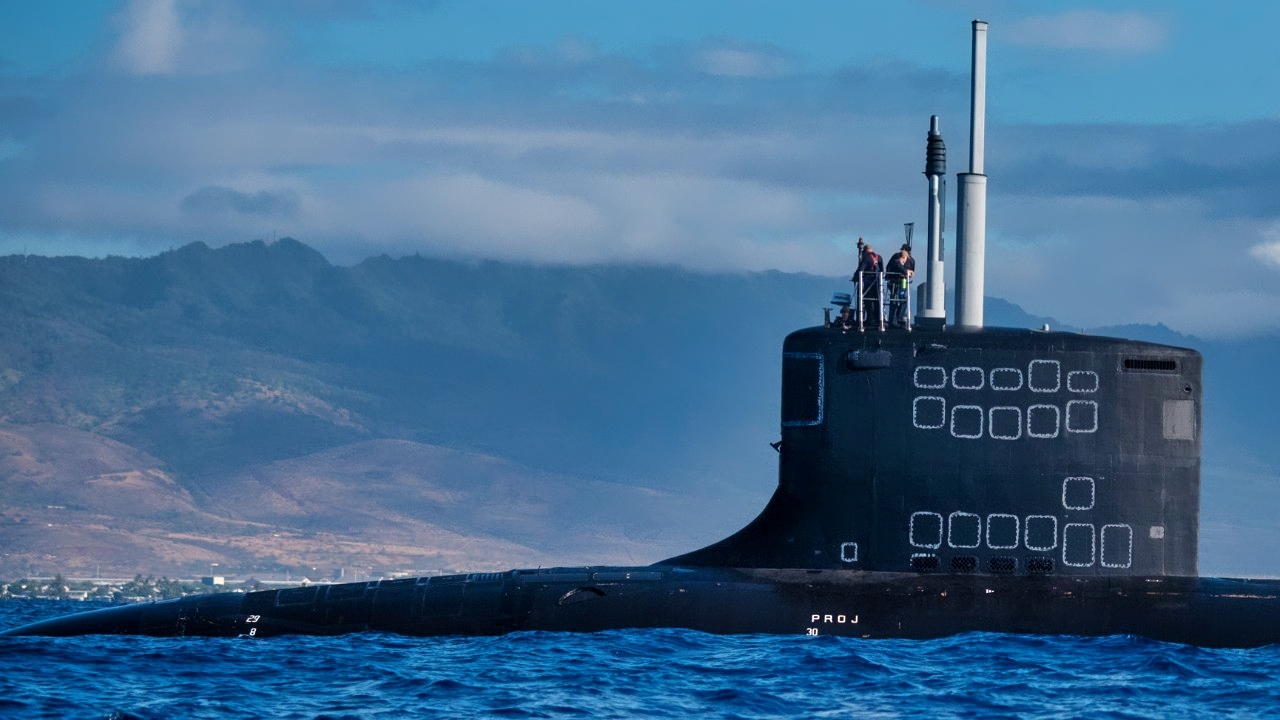
180709-N-KC128-1131 PEARL HARBOR (July 9, 2018) – Multi-national Special Operations Forces (SOF) participate in a submarine insertion exercise with the fast-attack submarine USS Hawaii (SSN 776) and combat rubber raiding craft off the coast of Oahu, Hawaii during Rim of the Pacific (RIMPAC) exercise, July 9. Twenty-five nations, 46 ships and five submarines, about 200 aircraft, and 25,000 personnel are participating in RIMPAC from June 27 to Aug. 2 in and around the Hawaiian Islands and Southern California. The world’s largest international maritime exercise, RIMPAC provides a unique training opportunity while fostering and sustaining cooperative relationships among participants critical to ensuring the safety of sea lanes and security of the world’s oceans. RIMPAC 2018 is the 26th exercise in the series that began in 1971.` (U.S. Navy photo by Mass Communication Specialist 1st Class Daniel Hinton)
-Proponents argue the boat is essential to out-hunt China’s growing undersea force; skeptics prefer a “Virginia Improved” path and faster UUV fielding.
-The outcome hinges on execution—early prototyping, supply-chain hardening, and fixing maintenance so expensive subs don’t languish ashore.
SSN(X) – The Navy’s Delays and Costs Look Like a Huge Problem
The Navy’s current attack boats—Virginia and the smaller number of surviving Seawolf hulls—are lethal, quiet, and battle-proven.
But the threat is shifting. China is fielding more capable nuclear and diesel-electric submarines, knitting them into a sensor web at sea and ashore, and raising the bar for what it takes to own the undersea picture day after day. The Navy’s answer is SSN(X): a next-generation attack submarine designed to find first, fire first, and remain undetected in waters crowded with new sonars, seabed arrays, and uncrewed adversary vehicles.
In Navy shorthand, SSN(X) aims to blend the speed and magazine of Seawolf, the acoustic stealth and sensors of Virginia, and the high availability and long service life expected of Columbia-class ballistic-missile subs. Translate the buzzwords and you get clear operational goals: sprint farther, carry more weapons and off-board systems, manage acoustic and non-acoustic signatures better than adversaries can track, and stay in the fight thanks to higher reliability and easier maintenance.

Norfolk, VA. (May 7, 2008)-The Virginia-class submarine USS North Carolina (SSN 777) pulls into Naval Station Norfolk’s Pier 3 following a brief underway period. North Carolina was commissioned in Wilmington, N.C. on May 3, 2008. (U.S. Navy Photo By Mass Communications Specialist 3rd Class Kelvin Edwards) (RELEASED)
What SSN(X) Is Supposed To Be
Although the design isn’t public, the Navy has telegraphed the direction.
Expect a larger hull than Virginia’s, more internal volume for torpedo-room payload (heavyweight torpedoes, cruise missiles, and emerging long-range anti-ship/land-attack weapons), and broadband quieting that targets not just what a traditional sonar hears but also non-acoustic tells (thermal, hydrodynamic, electromagnetic).
A defining feature will be how the boat teams with uncrewed systems: launching, recovering, and controlling UUVs to scout minefields, trail enemy subs, or park discreet sensors on the seabed. The goal is an attack boat that fights as a node in a constellation, not a lone wolf—still stealthy, but surrounded by its own off-board eyes and ears.
The other big design theme is availability. Too many attack subs sit idle waiting on parts, yard space, or post-overhaul fixes. SSN(X) is being scoped with maintainability as a first-order requirement—modular access, smarter diagnostics, and margins for future cooling and power so upgrades don’t force the boat back to the yard for months. In plain English: build it so the fleet can keep it at sea.
The Sticker Shock: Why It’s So Expensive
Nuclear attack subs are already some of the costliest warships on earth. SSN(X) layers on size, stealth, power, sensors, and UUV integration, each a price multiplier. At the unit level, you’re paying for, as best we can tell, based on sources that are in the public domain:
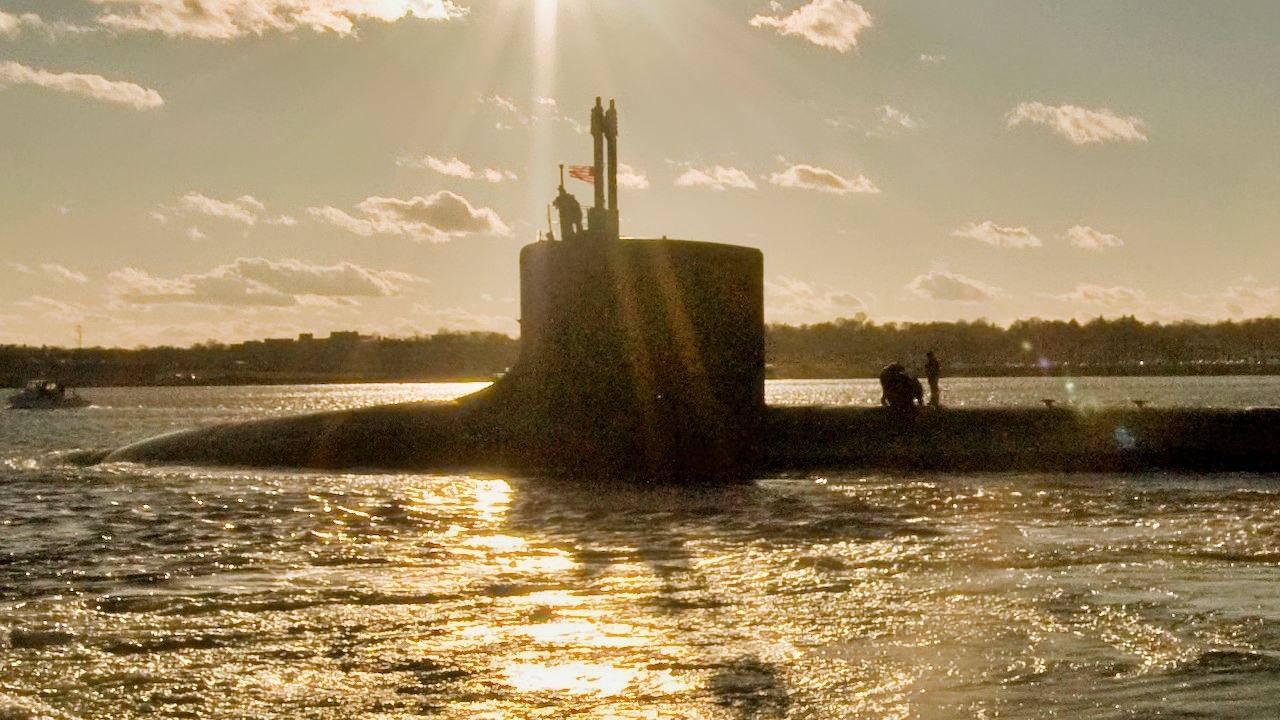
The Virginia-class attack submarine USS Virginia departs for a six-week underway. During this deployment, Virginia will undergo an Operational Reactor Safeguard Examination and a Tactical Readiness Evaluation to assess the submarine’s reactor along with its capacity to combat casualties through damage control.
A bigger pressure hull with exquisite tolerances.
Advanced quieting (from propulsors to rafted machinery) that gets more expensive the closer you drive signatures to the noise floor.
Next-gen combat system and sensors, including large-aperture arrays and computing back-ends with real power and cooling demands.
Integration for UUVs and future weapons, which means designing handling systems and comms that won’t give the boat away when it talks to its “kids.”
Then there’s the bill you don’t see on a tour: the industrial base—yards, suppliers, and workers. Submarines depend on a long tail of single-source parts and specialized trades. When a program scales up or changes direction, suppliers need years to add capacity and certify processes.
Those ramp costs land on the front end of SSN(X) whether you buy ten hulls or thirty.
The Industrial Bottleneck—And AUKUS In The Background
Two yards build America’s nuclear subs, and both are already loaded: Columbia-class ballistic-missile subs (the nation’s top shipbuilding priority) plus the ongoing Virginia-class builds with the payload module variant.
Add heavy maintenance backlogs and the result is a workforce and supplier network that must expand just to meet today’s promises.
Insert SSN(X), and you’re asking the same strained ecosystem to design, prototype, and then produce a more complex boat—while also delivering Virginias on time and finishing Columbia without a slip.
Overlay AUKUS—the trilateral plan to supply Australia with Virginia-class boats and help the U.K. and Australia stand up a new “SSN-AUKUS” line—and you add more demand for the very hulls, parts, and people the U.S. needs for its own fleet. Even with new funding to widen the pipe, the near-term constraint is the calendar of human skill: welders, nuclear trades, quality inspectors, and supervisors don’t appear overnight. Every new priority competes for the same hands.
The Schedule Slip Problem: Now A 2040s Story
The Navy originally pointed to a mid-2030s start for buying the first SSN(X). Budget trade-offs, industrial-base reality, and the need to finish Columbia and stabilize Virginia have pushed that to the early 2040s, with first procurement targeted around FY-2040 and the earliest delivery following a few years later. The program hasn’t been canceled; it’s been sequenced behind higher-priority and higher-risk work.
The risk in that delay is obvious: adversaries aren’t standing still, and attack-sub capacity, especially in the late 2030s, will be tight as older Los Angeles-class hulls retire.
Honestly, the plan on this, looking at the long-term threats undersea coming from Russia and especially China, makes the timing delays look like a giant mistake that could have been avoided.
The Case For SSN(X)
Three arguments carry weight:
Adversary Quieting And Numbers. China is adding hulls and refining quieting and sensors. The bar to out-sneak and out-hunt keeps rising. SSN(X) isn’t about vanity; it’s about staying ahead of the physics.
Range, Speed, And Payload. To kill enemy subs and ships before they threaten carriers, logistics ships, or allied ports, you need long reach and big magazines. A larger, faster boat with more onboard weapons—and more UUVs—changes the geometry of a campaign in the Western Pacific.
Availability As Combat Power. A superb submarine that spends half its life in a queue is a paper asset. Designing availability in—so a smaller fleet generates more sea days—is a way to buy real capability without simply buying more hulls.
The Case Against—Or At Least, “Not So Fast”
The pushback comes from several angles:
Cost And Trade-Offs. At projected prices per hull, every SSN(X) may equal two or more high-end surface combatants—or a chunk of an air wing, or a year’s worth of munitions buys. Critics ask if the fleet can achieve 80–90% of the effect by extending Virginia with another block of improvements: better arrays, more UUV capacity, propulsor tweaks, and an upgraded combat system.
The cost, while numbers vary by source and U.S. Navy officials I spoke to on background for this article, is estimated to be somewhere between $6 and $8 billion per sub. Ouch.
For reference, most sources say a new Virginia-class boat is projected to cost a little over $4 billion per boat. Will the new SSN(X) be worth the added cost? It seems so, however…
Industrial Reality. If the yards can barely deliver Virginias and Columbias on schedule, introducing a new, harder-to-build design could slow everything. Some argue for a “Virginia Improved” interim path—keep building what the workforce knows while methodically maturing SSN(X) design features in parallel.
Concept-Of-Operations Risk. SSN(X) assumes the manned boat remains the right mothership and brain for undersea combat in the 2040s and 2050s. That’s likely true—but the balance between the manned hull and its uncrewed teammates may shift faster than expected. If large UUVs shoulder more of the dangerous work, a marginally smaller, cheaper manned sub might be the better buy.
What The Navy Can Do Now To Earn The Program
There’s a smart way to bridge from today’s boats to SSN(X) without hand-waving:
Prototype The Hard Stuff Early. Quieting features, new propulsors, UUV handling systems, and next-gen arrays should be tested on land and—where possible—at sea on a surrogate before locking the design. Every unknown solved early is a year saved later.
Harden The Supply Chain. Pay to qualify second sources for fragile single-supplier parts, fund long-lead items early, and keep a buffer of critical components. No submarine should wait on a niche valve or sensor that takes 18 months to build.
Fix Maintenance. Attack-sub availability has been kneecapped by depot bottlenecks. The Navy and industry need more dry docks, more certified tradesmen, and streamlined work packages so boats don’t linger in overhaul. SSN(X) can be easier to maintain, but the yards have to keep pace.
Field UUVs At Scale. Make uncrewed teammates routine on Virginias now: standard interfaces, reliable comms, practiced TTPs. The more the force learns before SSN(X) arrives, the more the new boat can focus on what only it can do—silent speed, heavy weapons, and hard kills.
Costs, In Context
However you slice the ledger, SSN(X) will be a premium platform—both to buy and to crew. The Navy will argue (credibly) that the right comparison isn’t one hull vs. one hull; it’s sea days of stealthy presence vs. anything else you could buy. In war-fighting terms, an attack sub’s ability to deny key waters—without advertising itself—has an outsized deterrent effect. The question for Congress isn’t whether SSN(X) would be valuable. It’s whether the fleet mix that includes SSN(X) gives more campaign value than a fleet that extends Virginia, accelerates large UUVs, and buys more undersea munitions and sensors instead.
Why The Delay Isn’t All Bad—If The Time Is Used Well
Slipping the first buy to the 2040s hurts in the near term but offers a silver lining: time to get the design right, train the workforce, and stabilize the yards. A rushed, under-resourced start would guarantee overruns and late boats. A deliberate start—backed by steady funding for design teams and suppliers—can yield a program that hits stride instead of stumbling through early hulls.
The catch is obvious: time only helps if you spend it wisely. That means money now for design, test articles, manufacturing demos, and workforce growth—not promises to backfill later.
The Bottom Line on SSN(X)
SSN(X) is the Navy’s wager that undersea dominance will still decide wars in the missile-saturated, sensor-rich oceans of the 2040s—and that beating China’s numbers and networks demands a new class of hunter. The price will be enormous. The delay into the early 2040s is real. The controversy is warranted.
But the logic is sound: if the U.S. wants to own the deep fight, it needs a boat designed for it—not just an upgraded version of yesterday’s winner.
The test won’t be the concept. It will be execution—design maturity before steel is cut, a supply chain that can actually deliver, and a maintenance system that keeps expensive boats at sea. Get those right and SSN(X) becomes the quiet backbone of deterrence in the Western Pacific.
Get them wrong and it becomes an expensive lesson in how not to build the future.
About the Author: Harry J. Kazianis
Harry J. Kazianis (@Grecianformula) is Editor-In-Chief and President of National Security Journal. He was the former Senior Director of National Security Affairs at the Center for the National Interest (CFTNI), a foreign policy think tank founded by Richard Nixon based in Washington, DC. Harry has over a decade of experience in think tanks and national security publishing. His ideas have been published in the NY Times, The Washington Post, The Wall Street Journal, CNN, and many other outlets worldwide. He has held positions at CSIS, the Heritage Foundation, the University of Nottingham, and several other institutions related to national security research and studies. He is the former Executive Editor of the National Interest and the Diplomat. He holds a Master’s degree focusing on international affairs from Harvard University.
More Military
J-20 Stealth Fighter: The Secret Is Out
The F-22 Raptor Stealth Fighter Will Be Retired
F-22 vs. F-35: The Dogfight With a Shocking Result


