

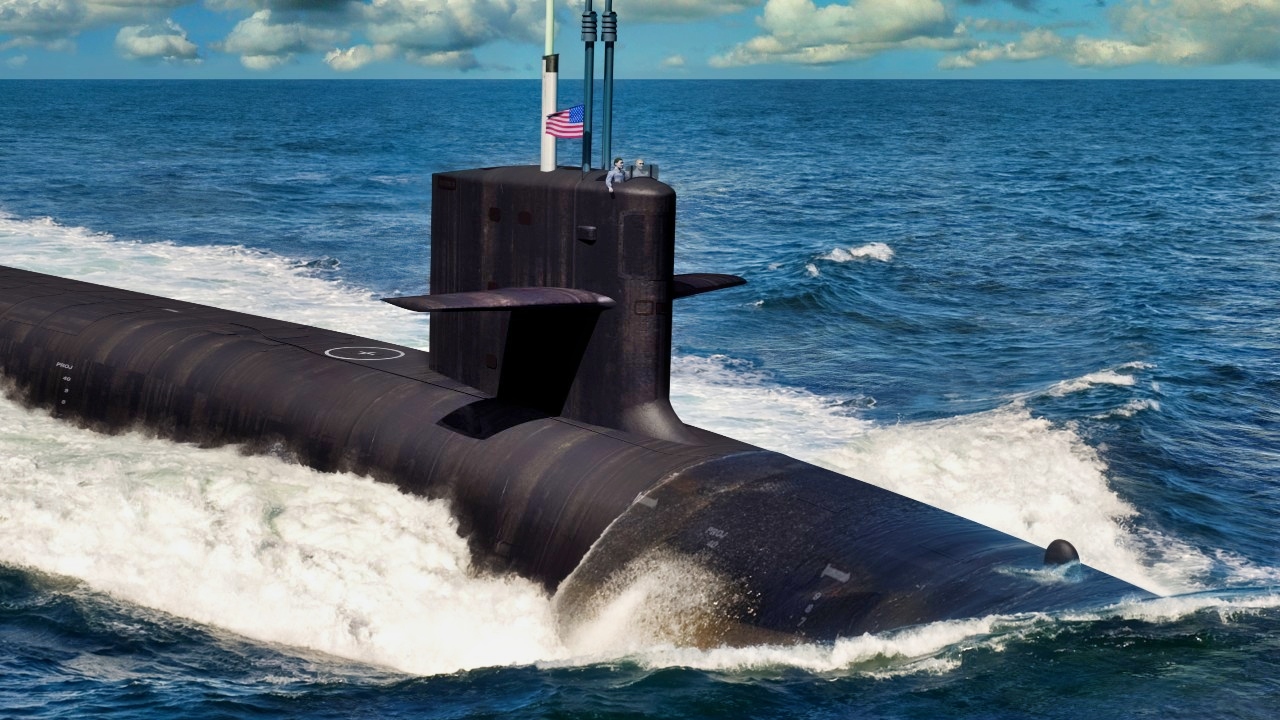
PUBLISHED on August 14, 2025, 1:07 PM EDT – Key Points and Summary: The U.S. Navy’s Columbia-class submarine program, the designated replacement for the aging Ohio-class SSBNs, is facing significant challenges that could threaten America’s nuclear deterrent.
-The most expensive submarine acquisition in U.S. history, the program is already experiencing 12-to-16-month delays on its lead vessel, the USS District of Columbia.
-A recent GAO report highlighted major strains on the industrial base, including labor shortages and supply chain disruptions, as well as the risk of major cost overruns.
-These hurdles raise serious concerns about whether the new class will be ready before the Ohio-class begins retiring in 2028.
The Columbia-Class: Most Expensive U.S. Navy Submarine Has Problems
Ever since the 1980s, the Ohio-class Submarine has been the premier SSBN in the U.S. Navy’s submarine fleet. While it remains one of the most formidable classes of submarines in existence, the Ohio-class is starting to age, necessitating a replacement class in the future.
Originally referred to as SSBN-X, the Colombia-class is intended to replace the Ohio-class and ensure American naval dominance for the next several decades.
Currently, the program is on track with the flagship, the USS District of Columbia, which is under construction.
What’s the Latest on the Columbia-class?
The Columbia-class submarines are nuclear-powered and will each carry 16 Trident II D5 ballistic missiles. This is fewer than the 20 carried by the Ohio-class, but the Columbia-class will feature significant technological advancements in stealth, survivability, and operational efficiency.
These submarines are being designed to operate for 42 years without the need for a mid-life nuclear refueling, which is a major improvement in terms of lifecycle cost and operational availability. Each submarine is expected to conduct 124 deterrent patrols over its service life.
As of 2025, the Columbia-class program has achieved several significant milestones, although not without challenges. The lead submarine, USS Columbia (SSBN-826), began procurement in fiscal year 2021, with funding allocated over three years.
However, the construction of this first vessel has encountered delays. The Navy now expects the USS Columbia to be delivered between October 2028 and February 2029, which is 12 to 16 months later than initially planned. This delay is attributed to a combination of factors, including design finalization issues, material shortages, and labor constraints.
The second submarine in the class was procured in fiscal year 2024, with funding continuing into 2025. The Navy has requested $3.3 billion in fiscal year 2025 to complete its procurement. The third submarine, USS Groton (SSBN-828), is scheduled for procurement in fiscal year 2026. From that point forward, the Navy plans to procure one Columbia-class submarine per year through fiscal year 2035, for a total of 12 submarines.
Industrial Strains and Economic Problems
Despite this progress, the program is facing significant challenges. One of the most pressing issues is the strain on the U.S. submarine industrial base. The Columbia-class submarines are being built concurrently with Virginia-class attack submarines, which has placed immense pressure on the shipyards responsible for their construction, namely General Dynamics Electric Boat and Huntington Ingalls Industries’ Newport News Shipbuilding. These shipyards are grappling with labor shortages, supply chain disruptions, and the complexity of managing two major submarine programs simultaneously.
The supplier base for submarine components has also been a concern. Since 2018, the Navy has invested over $2.6 billion to strengthen this supplier base, but the effectiveness of these investments is difficult to assess due to inconsistent tracking and reporting.
The Government Accountability Office (GAO) has noted that the Navy lacks consistent metrics to evaluate the return on investment from these supplier development efforts, which undermines the ability to ensure timely and cost-effective component delivery.
How Much Will the Columbia-Class Cost?
The Columbia-class program is currently the most expensive submarine acquisition in U.S. Navy history. The total estimated cost for the program has risen over time. Initially projected at around $126 billion, the current estimate stands at approximately $132 billion for all 12 submarines. The lead submarine alone is expected to cost $15.2 billion, which includes $6.56 billion for design and engineering and $8.62 billion for construction. The second submarine is estimated to cost $9.3 billion, reflecting efficiencies gained from the initial design and production work. The Navy has also requested $6.2 billion in fiscal year 2025 for advance procurement of future submarines.
The GAO has expressed concerns about the Navy’s cost estimation practices, warning that the lead submarine’s construction costs could exceed planned budgets by hundreds of millions of dollars. These concerns stem from what the GAO describes as unrealistic performance assumptions and inadequate risk analysis.
The GAO has recommended that the Navy require Electric Boat, the lead contractor, to revise its cost estimates to reflect more realistic performance expectations. Additionally, the GAO has urged improvements in Earned Value Management (EVM) better to identify the root causes of delays and cost overruns.
Will The Columbia-class be Ready Soon Enough?
Another area of concern is the potential impact of construction delays on the Navy’s ability to maintain a continuous at-sea deterrent. The Ohio-class submarines are scheduled to begin retiring in 2028, and the Columbia-class must be ready to take over their patrol duties without any gaps. If the USS Columbia is not operational by 2030, the Navy could face a shortfall in SSBN availability, which would have serious implications for national security.
To address these challenges, the GAO has made several recommendations. These include requiring more accurate cost estimates from contractors, improving oversight of subcontracted work, and ensuring adequate staffing at the Navy’s shipbuilding oversight offices.
The Department of Defense has agreed with these recommendations and is taking steps to implement them. Whether these will substantially affect the Columbia-class’s development timetable remains to be seen.
About the Author: Isaac Seitz
Isaac Seitz, a Defense Columnist, graduated from Patrick Henry College’s Strategic Intelligence and National Security program. He has also studied Russian at Middlebury Language Schools and has worked as an intelligence Analyst in the private sector.
Military Matters
The F-22 Raptor Just Keeps Getting Better


1KoolKat
August 19, 2025 at 5:51 am
Releasing the new Columbia-class submarine from construction to the Navy marks the beginning of sea trials, during which all its new components will be certified. It is unlikely that there would be no issues (rework) during that phase, given the introduction of new, immature technology into this new design/build.