


Key Points and Summary – Between 1982 and 1992, the U.S. Navy resurrected its four Iowa-class battleships, turning WWII gun platforms into multi-role missile warships.
-Upgrades added 16 Tomahawk cruise missiles, 16 Harpoon anti-ship missiles, and 4–6 Phalanx CIWS per ship; radars, integrated combat systems, and SLQ-32 electronic warfare; refreshed machinery; and flagship-level comms with Link 11/16.
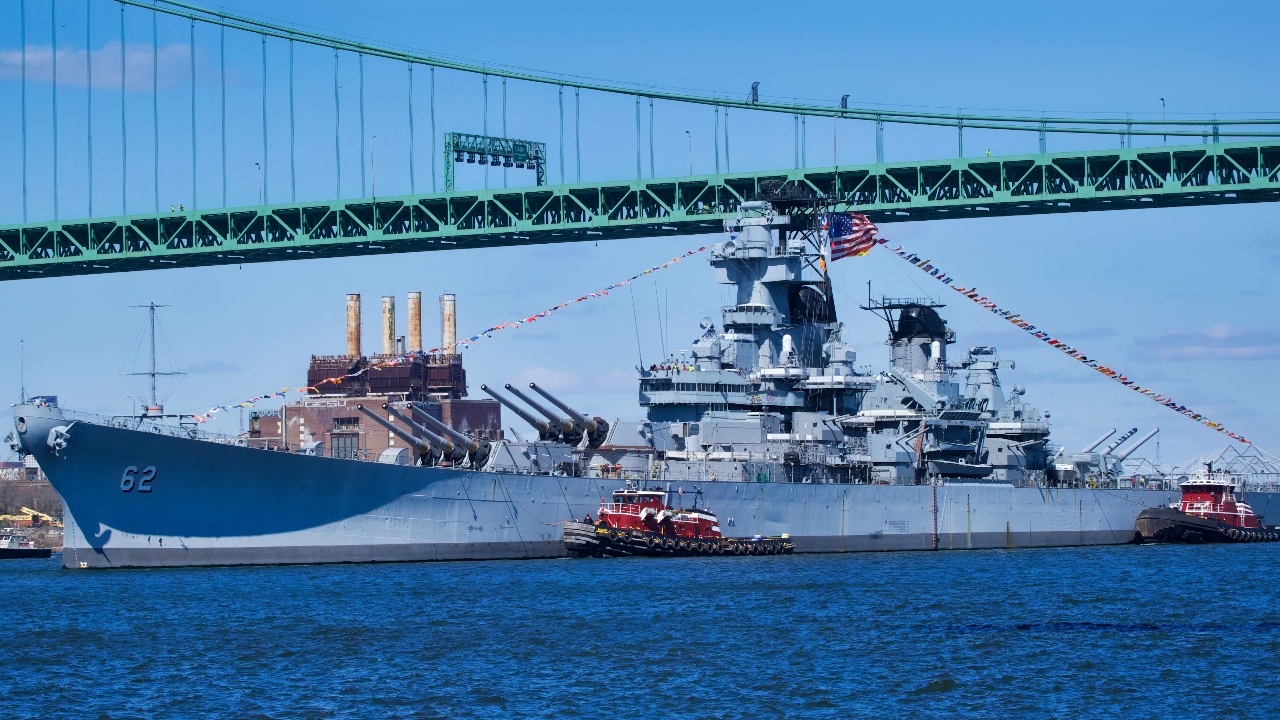
USS New Jersey Iowa-Class Battleship. Image Credit: Creative Commons.
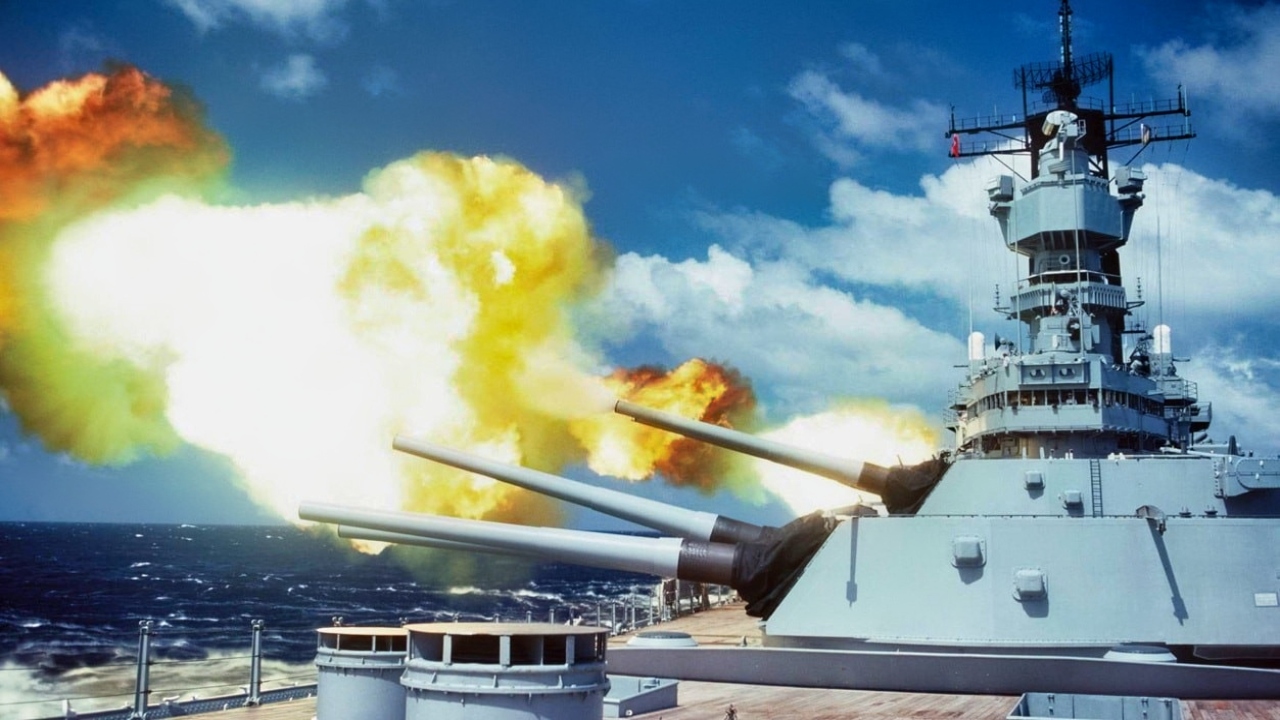
Iowa-Class Battleship. Image Credit: Creative Commons.
-The ships kept nine 16-inch guns and ten 5-inch mounts for shore bombardment.
-New Jersey fired in Lebanon, Iowa and Missouri escorted tankers in the Gulf, and Missouri and Wisconsin struck Iraq in 1991. Retired by 1992, all four survive as museum ships after a Cold War encore.
How the 1980s Turned Iowa-Class Battleships Into Missile Warships
The Iowa-class battleships were some of the largest non-aircraft carrier warships ever created.
Originally constructed during WW2 for the purpose of escorting aircraft carriers and delivering devastating costal bombardments with their massive guns.
As service life dragged on, however, it became evident that these iron giants needed more than large guns and thick hulls to remain relevant in contemporary warfare. Thus, in the 1980s, all four Iowa-class battleships underwent massive upgrades that massively increased their capability and versatility.
Why the Navy Modernized its Iowa-Class Ships
By the late 1970s, the U.S. Navy faced a growing Soviet threat, particularly from missile-equipped cruisers and submarines.
The Reagan administration responded with a plan to dramatically expand the Navy’s fleet, and the Iowa-class battleships were seen as ideal platforms for modernization.
Their massive hulls, thick armor, and long operational range made them suitable for a variety of roles, including power projection, strategic strike, and command and control. The modernization program, which took place between 1982 and 1992, aimed to transform these World War II-era ships into multi-role platforms capable of operating in a missile-dominated naval environment.
One of the most significant aspects of the upgrade was the overhaul of the battleships’ weapons systems.
The most dramatic addition was the installation of BGM-109 Tomahawk cruise missiles.
Each ship received four Mk 143 Armored Box Launchers, each containing four Tomahawk missiles, for a total of sixteen. These missiles gave the battleships a strategic strike capability, allowing them to hit land targets over a thousand miles away with precision.
This was a revolutionary change, turning the battleships into long-range missile platforms capable of contributing to strategic operations far beyond the reach of their traditional guns.
Improved Air Defenses
In addition to the Tomahawks, the ships were outfitted with RGM-84 Harpoon anti-ship missiles.
Each battleship received four Mk 141 quad launchers, totaling sixteen Harpoons.

Iowa-Class 16-Inch Shell Menu. Image Credit: National Security Journal.
These missiles extended the ships’ reach in naval engagements, allowing them to strike enemy vessels well beyond the range of their guns. This addition made the battleships formidable surface combatants, capable of engaging enemy ships with modern missile technology.
To defend against incoming threats, particularly anti-ship missiles, the battleships were equipped with the Phalanx Close-In Weapon System (CIWS). Each ship received between four and six of these radar-guided 20mm Gatling guns, which could fire up to 4,500 rounds per minute.
The Phalanx system provided a last-ditch defense against incoming missiles and aircraft, significantly enhancing the ships’ survivability in a modern combat environment.
Improved Onboard Systems
Beyond weapons, the modernization program included extensive upgrades to the ships’ electronics and combat systems.
Each battleship received a modern Combat Information Center (CIC), integrating radar, sonar, and fire control systems to improve situational awareness and coordination. New radar systems were installed, including the AN/SPS-49 long-range air search radar and the AN/SPS-67 surface search radar.
Fire control systems were also upgraded, with the Mk 160 system for the 16-inch guns and the Mk 86 system for the 5-inch guns, improving targeting accuracy and responsiveness.
Electronic warfare capabilities were significantly enhanced with the installation of the SLQ-32(V)3 electronic warfare suite. This system allowed the battleships to detect, jam, and deceive enemy radar and missile systems, providing a critical layer of defense in a missile-saturated environment. These upgrades ensured that the battleships could operate effectively alongside modern naval assets and respond to contemporary threats.
Despite these missile additions, the battleships retained their original main battery of nine 16-inch/50 caliber Mark 7 guns.
These guns, capable of firing 2,700-pound shells over 20 miles, remained unmatched in terms of raw firepower and were particularly useful for shore bombardment. The ten 5-inch/38 caliber dual-purpose guns were also retained, serving in both anti-air and surface roles. These traditional weapons complemented the new missile systems, giving the ships a versatile and layered offensive capability.
The Iowa-class ships were also upgraded to serve as flagships, capable of hosting fleet commanders and coordinating large-scale operations. This required enhancements to their command and control infrastructure, including advanced communications systems, satellite uplinks, and secure data links such as Link 11 and later Link 16.
These capabilities allowed the battleships to function as command hubs within carrier battle groups or amphibious task forces, further expanding their strategic utility.
The Iowa-Class’s Last Hoorah
Structural and engineering enhancements were essential to ensure the ships’ continued reliability. The hulls and propulsion systems were overhauled, with boilers and turbines refurbished and hull plating inspected and repaired. Electrical systems were upgraded to support the new weapons and electronics.
These improvements extended the ships’ service life and ensured they could operate effectively into the 1990s and beyond.
The impact of these upgrades was felt in several key operations during the 1980s and early 1990s. USS New Jersey participated in the Lebanon crisis in 1983–84, bombarding Syrian positions near Beirut. USS Iowa and USS Missouri were involved in Operation Earnest Will during the Iran-Iraq War, escorting Kuwaiti oil tankers through the Persian Gulf.
During Operation Desert Storm in 1991, USS Missouri and USS Wisconsin launched Tomahawk missiles and conducted shore bombardments in support of coalition forces. In each case, the battleships demonstrated their versatility and power, serving as both strategic strike platforms and symbols of American resolve.
Unfortunately, the Iowa-class battleships could not remain in service forever. After remaining in service through the end of the Cold War, all four battleships eventually retired. By 1992, the USS Missouri was retired, marking the end of the Iowa-classes battleships. From WW2 to the Cold War, the Iowa-class served with distinction and honor which has earned them a special place in Naval history. Fortunately, rather than being scrapped, these ships remain as museum ships where they serve as reminders of what was.
About the Author: Isaac Seitz
Isaac Seitz, a Defense Columnist, graduated from Patrick Henry College’s Strategic Intelligence and National Security program. He has also studied Russian at Middlebury Language Schools and has worked as an intelligence Analyst in the private sector.
More Military
The B-21 Raider ‘Arsenal Plane’ Would Be Epic
China’s Aircraft Carrier Strategy: Stay Local, Stay Ready to Fight
Aircraft Carrier USS Theodore Roosevelt (CVN-71) Has A Message for Any Navy on Earth
Bad News for Putin’s Ukraine War: Russia Is Now Forced to Import Fuel
The Essex-Class Aircraft Carriers Have A Message for Any Navy on Earth


