

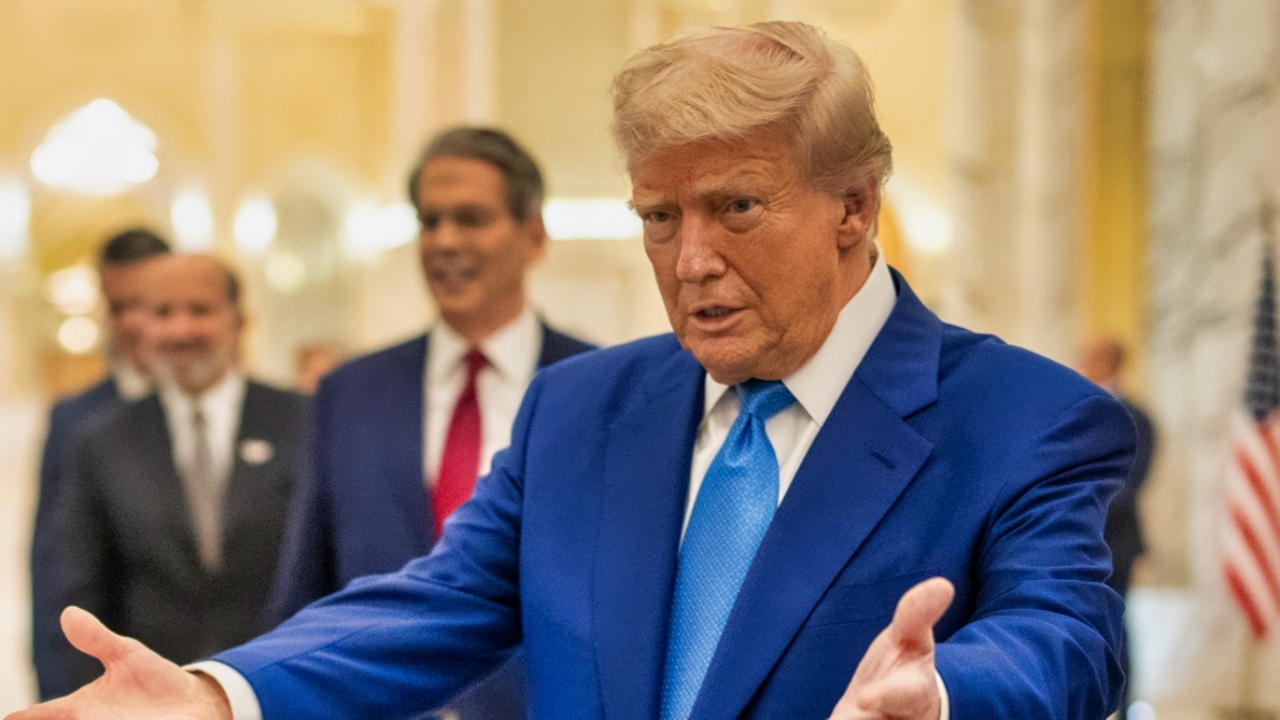
Trump’s Anti-China Strategy Is Failing:
-As the U.S.-China trade war escalates, a critical analysis argues that President Trump’s policies are undermining the effort to build a necessary coalition against Beijing.

Norfolk, VA. (May 7, 2008)-The Virginia-class submarine USS North Carolina (SSN 777) pulls into Naval Station Norfolk’s Pier 3 following a brief underway period. North Carolina was commissioned in Wilmington, N.C. on May 3, 2008. (U.S. Navy Photo By Mass Communications Specialist 3rd Class Kelvin Edwards) (RELEASED)
-The central thesis is that by imposing tariffs on key Asian allies like Japan and South Korea, Trump is alienating the very partners Washington needs to prevent Chinese regional hegemony, causing them to “drift away” or “hedge.”
-Whether by incompetence or part of a deliberate grand strategy of U.S. retrenchment from Asia, the result is the same: an ironic bolstering of Chinese power and a weakening of America’s long-standing foreign policy.
Trump is Making It Harder to Build a Coalition Against China
The Sino-American trade war heated up substantially this week.
China restricted US access to rare earth minerals. American President Donald Trump responded immediately.
He promised a punishing 100% tariff on top of the existing 30% tariff on Chinese exports to the US. The stock market promptly dropped 900 points.
It has since rebounded, but it is becoming increasingly clear that both China and the US want to unravel their deeply intertwined relationship.
A de-linking of the two countries’ economies makes an arms race between them all the more likely. The US defense establishment already routinely talks about ‘great power competition.’
But for several decades now, the shared economic interests of the two countries have constrained the worst security competition. This relationship reinforced peace.
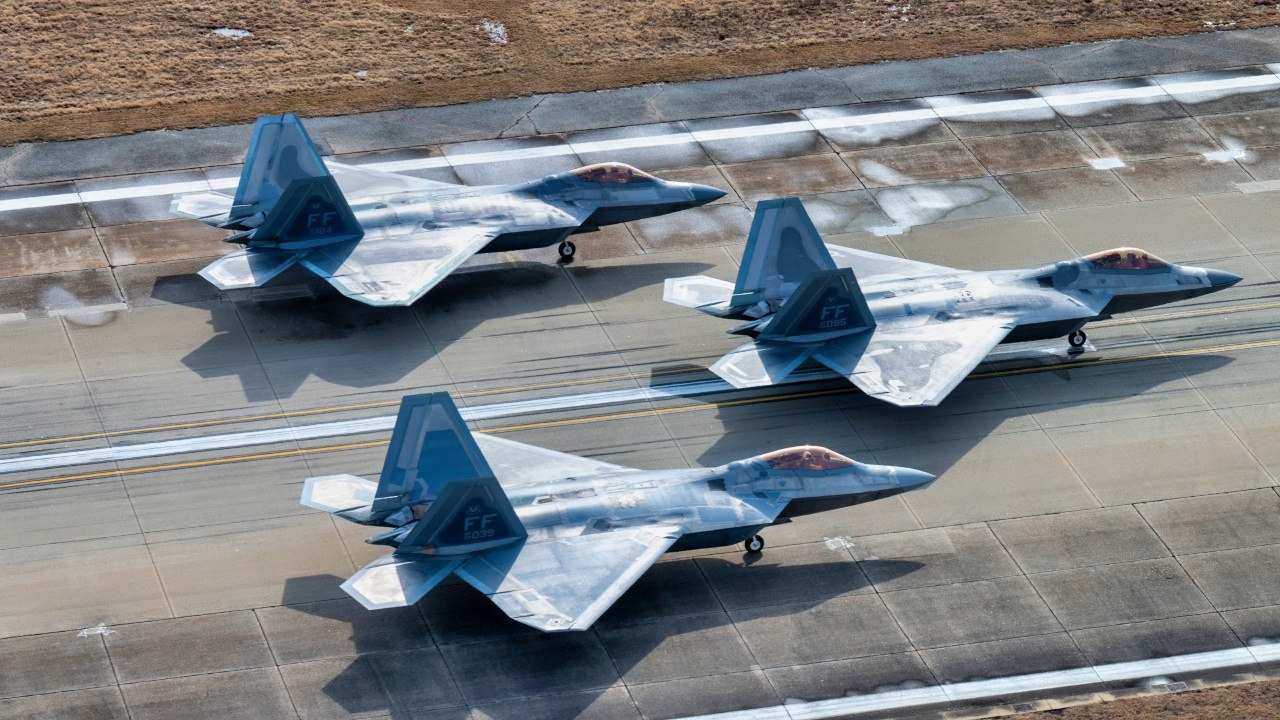
LANGLEY AIR FORCE BASE, Va. – F-22 Raptors from the 1st Fighter Wing sit in position on the runway fduring the Elephant Walk at Langley Air Force Base, Virginia, Jan. 31, 2025. The surge was designed to showcase the wing’s operational readiness and its ability to rapidly mobilize airpower. The 1st FW operates F-22 Raptors and T-38 Talons, maintaining combat capabilities that enable the U.S. Air Force to execute missions across the globe. With a focus on air superiority, the 1st FW plays a critical role in defending the nation’s interests. (U.S. Air Force photo by Tech Sgt. Matthew Coleman-Foster)
China was a useful low-cost producer for the American consumer and a financier of America’s large budget deficits. America was a huge export market whose consumers powered China’s rise.
So lucrative was the relationship that historian Niall Ferguson coined the neologism ‘Chimerica‘ to capture Sino-American interdependence.
If Chimerica is Over, then the US will Need Allies
Trump’s trade war and ‘great power competition’ seem to be ending Chimerica. The US and China now appear to be on a collision course. The flash points are many.
Taiwan is the most likely place for an explicit kinetic conflict. But grey zone competition seems likely around East Asia—already in the South and China Seas, probably coming to the Yellow Sea too.
If this is indeed the future, then the US will need allies, especially local allies, to prevent Chinese regional domination. US grand strategy has long sought to avoid one hegemonic power from controlling the world’s most important economic zones—Western Europe and East Asia.
Preventing Axis domination of these areas was a key goal during World War II. Preventing communist domination of these same zones was a US goal during the Cold War.
Today, it is widely thought that Chinese hegemony in East Asia would evolve into a major threat to US security. It is in America’s interest to keep East Asia multipolar.
If Trump shares this long-held US goal, then his actions toward US allies are deeply flawed. As Bruce Klinger points out, Trump’s tariff war—substantially directed at long-standing US allies—has been a disaster for the geopolitical partnerships the US needs to block China’s rise to regional hegemony.
Countries like Japan, South Korea, Vietnam, Australia, and Thailand will be critical for the US to project power into the region. The one US possession in the eastern Pacific is the island of Guam, but it is simply too small and too vulnerable to Chinese (or North Korean) missile strikes to carry the whole load.
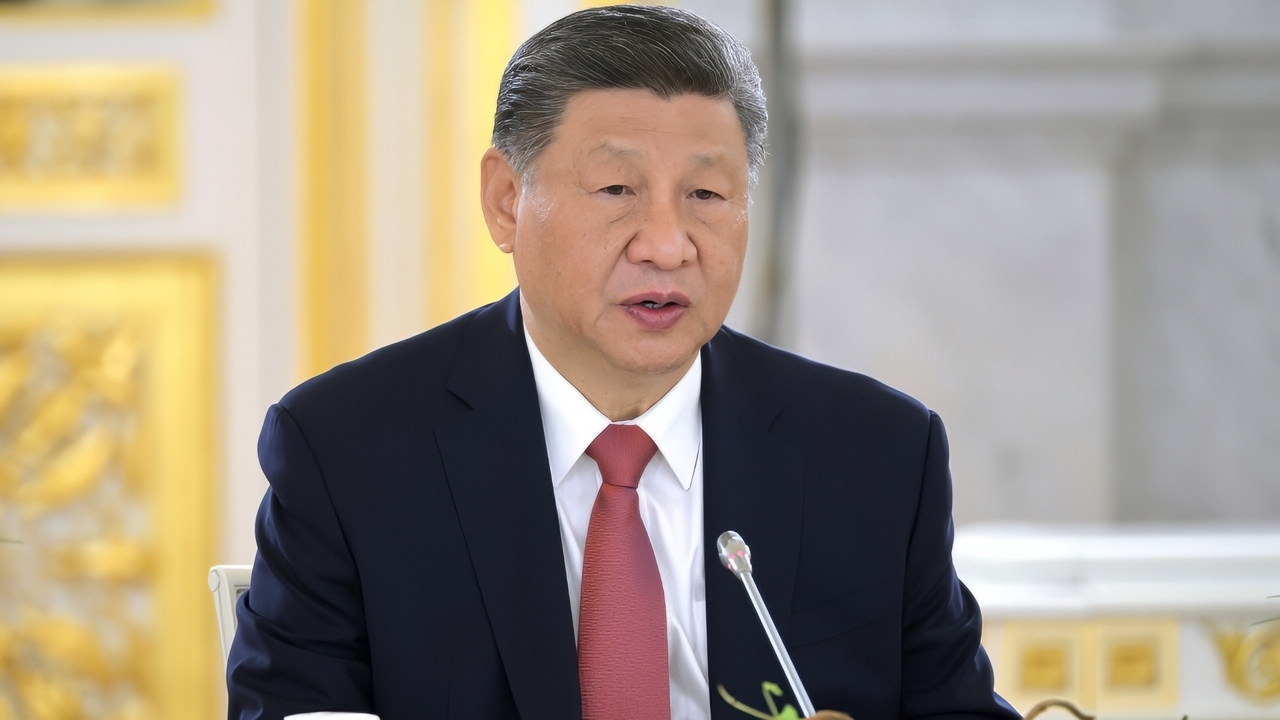
China’s Xi Jinping. Image Credit: Creative Commons.
The US must have regional partners to contest Chinese power. If tariffs and Trump’s general disdain for American allies lead those allies to drift away—or ‘hedge’—the US, they will not help contain China.
Instead, they will appease Beijing and go their own way. America’s particularly poor treatment of South Korea under Trump is producing severe strains and a government that increasingly says in public that it wants equidistance between the US and China.
Does Trump Intend to just Give Up in East Asia?
Trump’s alienation of US allies is often attributed to thoughtlessness or incompetence. But there is another possibility, that Trump seeks a grand bargain with China, which would allow the US to retrench from East Asia.
There have been rumors for months that the Trump White House intends to incorporate Western Hemispheric domination into its grand strategy.
This would, presumably, mean a reduction in US strategic commitments to Europe and East Asia. In Europe, this is not too problematic. The European Union is wealthy, and its primary regional opponent, Russia, is weak.
US retrenchment would not change the regional balance much. Indeed, it would compel a long-overdue European defense build-up.
But in East Asia, a US pull-back would lead to a major regional realignment. US partners there are too weak, scattered, and divided among themselves to resist China alone.
A US departure will greatly tempt China to seek domination over a weak, disunited coalition. Local states will likely either appease, but some may pursue nuclear weapons as an alternative defense.
What Now?
Blocking Chinese domination of East Asia has been a US foreign policy goal for decades. Trump is now hobbling that by disciplining US allies. And is it not even clear if Trump accepts this as a goal of US foreign policy? Trump’s presidency, ironically, is bolstering Chinese power.
About the Author: Dr. Robert Kelly, Pusan National University
Dr. Robert E. Kelly is a professor of international relations in the Department of Political Science and Diplomacy at Pusan National University in South Korea. His research interests focus on Security in Northeast Asia, U.S. foreign policy, and international financial institutions. He has written for outlets including Foreign Affairs, the European Journal of International Relations, and the Economist, and he has spoken on television news services including BBC and CCTV. His personal website/blog is here; his Twitter page is here.
More Military
Army MV-75 Has a “Digital Backbone” to Stand Up to China in the Pacific
The F-35 Stealth Fighter Great Leap Forward Has Arrived
New Challenger 3 NATO Tank Is Built for Just 1 Mission It Can’t Fulfill
Sunk 10,000 Feet Down: A U.S. Navy Nuclear Submarine Was Lost, And No One Knows Why


