

United States President Donald Trump touts his trade deals as victories against foreign countries, but it will ultimately be American businesses and consumers who pay the price. Trump’s tariffs are capricious protectionist measures ostensibly imposed to retaliate against other nations’ trade barriers, but were instead based on US trade deficits. Moreover, the US has now weaponized economic penalties to remedy non-economic issues such as immigration, drug trafficking, and election results.
The Truth About Tariffs
Despite President Trump’s repeated claims, foreign businesses and governments do not pay for tariffs on goods imported into the United States. Instead, it is the American importing firm that pays the tariff, which in turn decides to either absorb the additional cost as reduced profit or pass it along to American consumers as increased prices. So, every increased tariff imposed by the Trump administration is a tax on the American people, perhaps the most significant tax increase in history.
In addition, American firms manufacturing goods in the United States will now be paying significantly higher prices—up to 50 percent more—for some metals and components necessary for making their products. This, in turn, will raise the prices that US consumers will have to pay for American-made products. US car manufacturers are complaining that, because of Trump’s tariffs, they are now more disadvantaged against foreign competitors than before the tariffs.

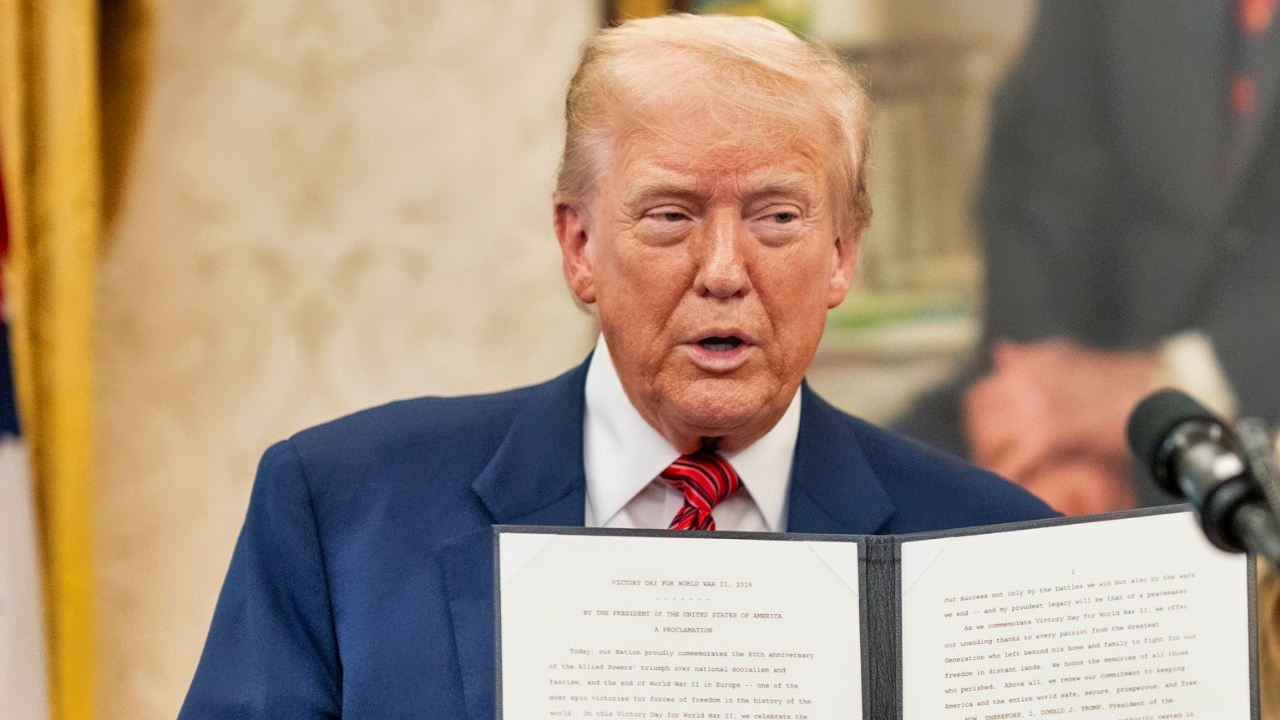
President Donald Trump is joined by Secretary of Commerce Howard Lutnick, Vice President JD Vance, British Ambassador Peter Mandelson, U.S. Trade Representative Jamieson Greer, and Secretary of Agriculture Brooke Rollins, while announcing a trade agreement with the U.K., Thursday, May 8, 2025, in the Oval Office. (Official White House Photo by Emily J. Higgins)
Tariffs Go Against Existing “Deals” and Agreements
The US tariffs on South Korea violate the 2012 South Korea-US (KORUS) free trade agreement that the first Trump administration renegotiated in 2018, and which Trump hailed at the time as “a great deal for American and Korean workers.” Trump’s tariffs also violate the United States-Mexico-Canada Agreement (USMCA), which the first Trump administration renegotiated and he hailed as a “wonderful new trade deal” that “greatly opens markets to our farmers and manufacturers [and] reduces trade barriers to the US”
Suppose Trump is unwilling to abide by formal treaties approved by Congress or his own personal agreements. Why would countries trust that these new minimalist, less formal trade deals will be upheld or that there won’t be additional arbitrary tariff changes in the future?
There are serious doubts about the legality of Trump’s tariffs. The US Court of International Trade and the US Court of Appeals for the Federal Circuit have both ruled against most of the Trump administration’s tariffs by determining that the President exceeded his authority under the International Emergency Economic Powers Act. The Supreme Court has indicated it will review the issue.
Trump’s tariff tantrums left nations with a decision to either reject American economic extortion and risk further retaliation or become supplicants by providing outsized pledges of future investments in the United States. Foreign nations now see themselves stuck between two abusive trading partners, with the US being the more immediate danger to their economies.
The US trade diktats dispensed with any consideration of treaty commitments, loyalty, or previous economic and security contributions to the United States. Reliance on US markets has now become a vulnerability. Even when the tariffs were eventually reduced, the damage had been done to America’s reputation and any goodwill that allies and partners used to have for the United States.
Tariffs Have an Unseen Cost
Treating friend and foe alike and showing disregard for America’s partners undermines trust in the United States, which is the foundation of economic, diplomatic, and security relationships. It will also exacerbate growing doubts among US allies about the US commitment to uphold its pledges to defend them. That will not go unnoticed by America’s opponents.
Trump’s tariffs have severely undermined Washington’s strategic objective of forming an international coalition against China’s predatory business practices and coercive diplomacy. The US goal to reduce Beijing’s ability to bully its neighbors should have first prioritized augmenting regional economic cooperation and integration amongst potential coalition partners rather than initiating trade wars against them. Just as security alliances are military force multipliers, trading partners are economic force multipliers.
The new US tariffs will negatively impact partners’ economies, which could cause anti-American resentment as well as degrade their ability to devote a greater percentage of their GDP towards augmenting defense requirements. Indo-Pacific nations may now be more tempted to seek alternative trade opportunities, forge non-US trade coalitions, and reduce their exposure to the whims of US tariff policy.
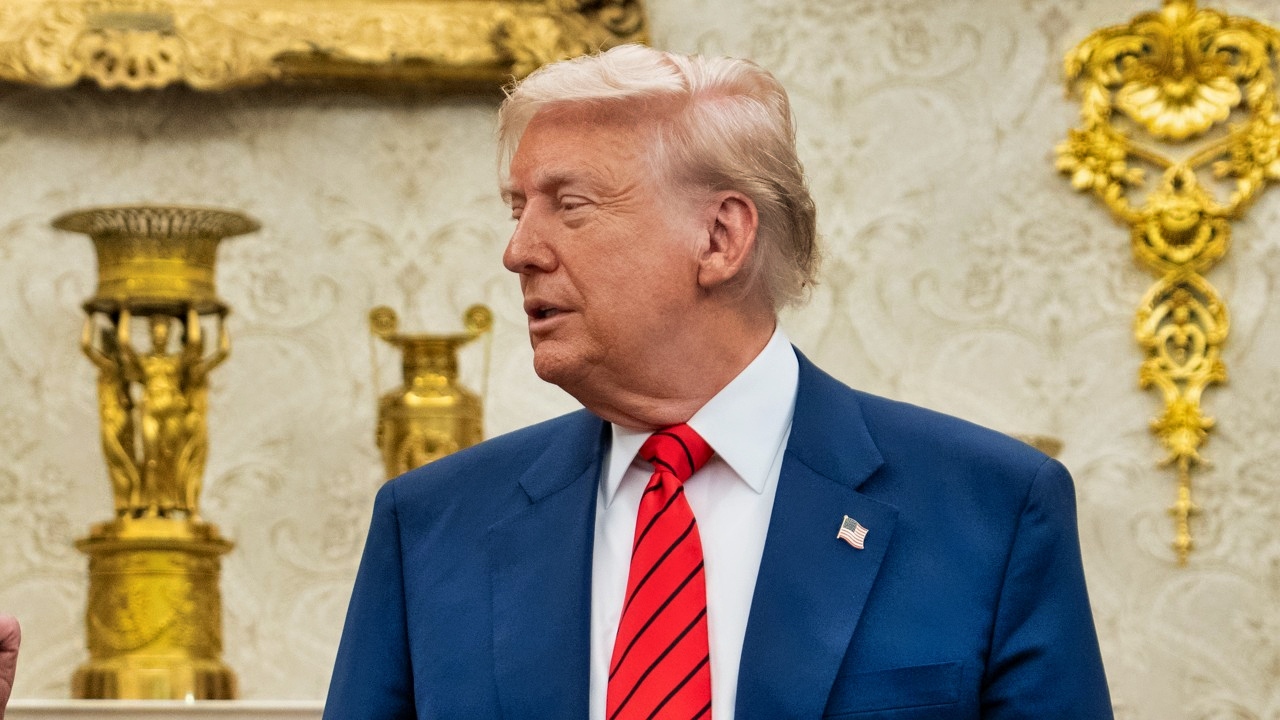
President Donald Trump meets with Canadian Prime Minister Mark Carney, Tuesday, May 6, 2025, in the Oval Office. Vice President JD Vance attends. (Official White House Photo by Emily J. Higgins)
By adopting a mercantilist approach to international relations and abandoning America’s past commitment to shared values, principles, and objectives, President Trump has eroded allies’ trust in Washington as an economic and security partner.
President Trump’s overreliance on tariffs as an economic, diplomatic, and security tool appears akin to a toddler with a hammer—everything looks like a nail—resulting in significant destruction. Washington may have done irreparable damage to its reputation and ability to convince its allies and partners toward reducing their trade dependence on Beijing and susceptibility to Chinese economic coercion.
The US may also have degraded military deterrence by undermining the perception—in the minds of both allies and opponents—that the US is a dependable security partner that sallies forth to fulfill its treaty obligations and defend the common good.
About the Author: Bruce Klingner
Bruce Klingner is a senior fellow at the Mansfield Foundation. He previously served 20 years with the Central Intelligence Agency and the Defense Intelligence Agency, including as CIA’s Deputy Division Chief for Korea. You can follow him on X: @bruceklingner.
More Military
The F-4 Phantom II Has a Message for the U.S. Military
The Iowa-Class Battleships Have a Message for the U.S. Navy
Russia’s Kirov-Class Battlecruisers Have a Message for the U.S. Navy
Russia’s PAK DA Stealth Bomber Has a Message for the U.S. Air Force
The Sturgeon-Class Nuclear Attack Submarines Have a Message for the U.S. Navy


Jim
September 22, 2025 at 3:52 pm
Almost all countries have a VAT, Value Added Tax, or duty (tax) at point of entry.
Trump wanted to establish mirror or reciprocal tax (tariff) at point of entry to roughly match what these other countries have done for decades.
Tariffs are paid by the businesses at point of entry, but who ultimately pays the tariff? A combination or mix: the exporting business can reduce their price, and accept lower revenue, or the receiving business at point of entry, and accepts lower revenue and, occasionally, the exporting country will pick up some of the tax via tax credits or what not. And, yes, the consumer can pick up part or even all the tax upon purchase.
It depends on the product and various political and economic factors… that’s why the correct term is political-economy… it’s a study, not a science.
The bells and whistles of promised direct investment are likely nothing more than a mirage which will likely never happen as governments usually don’t have authority to tell a private business, “You must invest in a foreign country X this much money.”
Trump’s execution of his policy was chaotic and frankly not well thought out, and poorly coordinated. Quiet diplomacy likely would have been a better way to go.
But establishing mirror or reciprocal tariffs was the principle the administration wanted to establish vis-a-vis foreign countries.
The administration for some reason didn’t want to highlight the issue regarding foreign countries’ VAT duty at point of entry.
I give the administration a B+ for establishing the principle of mirror or reciprocal tariffs, but a gentlemen’s C for execution.
Of course, there are other trade barriers foreign countries impose to keep U. S. products out of their markets without formal taxes or formal government decrees or laws… often referred to as informal trade barriers.
Free traders are blind to realities, for them it’s more an ideological principle than anything connected to the real world of international trade, or the barriers most countries put up to protect their markets.
The United States has every reason to regulate foreign trade… tariff are one way to do.
Jim
September 22, 2025 at 8:51 pm
Tariffs should be based on economic terms, promoting specific industries, unfair advantages via arbitrage, labor or tax issues. Tariffs should not be used as a political attack mechanism. Trump is using, quote, tariffs, unquote, against Brazil over a political dispute.
Wrong. Mixing political sanctions masquerading as economic tariffs will hurt the United States Dollar on international markets.
Having the U. S. Dollar as the World’s reserve currency is a Vital National Security Interest for the United States.
Trump did this against India, too… and China to some extent, then backed down when it was obvious who would get the better of things over Rare Earths minerals.
Another mistake, as this has pushed India towards Russia and China, geopolitically and strengthened BRICS… you know Mackinder’s “World Island” and Kissinger’s concern as well.
Trump’s policies are chasing countries away from the Dollar, the exact opposite from what I presume is his objective.
Better to encourage use of the Dollar, not penalize nations for using the Dollar for international transactions.
Seizing Dollar denominated assets in international banks is a sure way to chase nations and individuals from holding such assets.
No, they want to protect their assets from seizure so they deposit or invest beyond the reach of Uncle Sam.
Tariffs have their place in regulating trade, but should not be used as a club to hit people over the head with…. for perceived political issues.
Trump has cross a red line, I hope he wises up and steps back in regards to punitive sanctions.
They don’t work.
These are unforced errors.
And give economic tariffs a bad name… unnecessarily so in my opinion.