

The war in Ukraine stopped being Ukraine’s war a while ago. The Guardian’s foreign affairs commentator Simon Tisdall made that case this week in a column arguing that the conflict is escalating and will go global unless Europe speaks with one voice.
He also claims that President Trump is a liability, and Europe has to bypass him to secure lasting peace. While Trump’s insistence on calling Putin “a friend” is very concerning, Europe needs the US to ensure that Russia is reined in, as it is continually moving the needle toward a fight with NATO.

Ukraine Switchblade Drone. Image Credit: Creative Commons.

Switchblade Drone. Image Credit: Industry Handout.
One thing is clear: the article’s premise that the war is expanding is spot on.
Ukraine’s sinking of a Russian warship in a Libyan port, and Russia firing cruise missiles into Poland and other Eastern European countries, is proof of that.
The Front Line Keeps Moving West
On August 4, workers at Leipzig/Halle Airport found a drone packed with explosives sitting near a Ukrainian Antonov cargo plane. Leipzig is a major freight hub and a NATO logistics node that has been used to move supplies to Ukraine.
Germany formally blamed Russia on September 1 and moved to shut down a Russian consulate. According to investigation materials reported by Welt am Sonntag, the explosives were hidden in a vegetable can, and the only reason the thing didn’t go off was a broken detonator connection.
On November 14, an attempt was made to blow up and burn the building of Threod Systems, an Estonian drone maker whose biggest customer is Ukraine. Prime Minister Kristen Michal pinned it on the GRU and called it part of Russia’s “broader hybrid war against Europe.” Estonia is now weighing outright closure of its border with Russia.
In Romania back in May, a Russian drone hit an apartment building in Galați, injuring two civilians. Romanian authorities logged more than 40 incursions in the first half of the year alone, and Bucharest passed a law authorizing its military to shoot down intruders in peacetime.
Earlier this month, bomb threats snarled air travel at airports in Rome, Copenhagen, Prague, Warsaw and Lisbon. Attribution is still being worked out. However, most analysts believe that it is just more Russian hybrid warfare.
The Drones Are Cheap, Interceptors Are Not
An F-16 firing an AIM-9X Sidewinder at a Shahed drone spends about $400,000 to kill a target worth roughly $35,000.
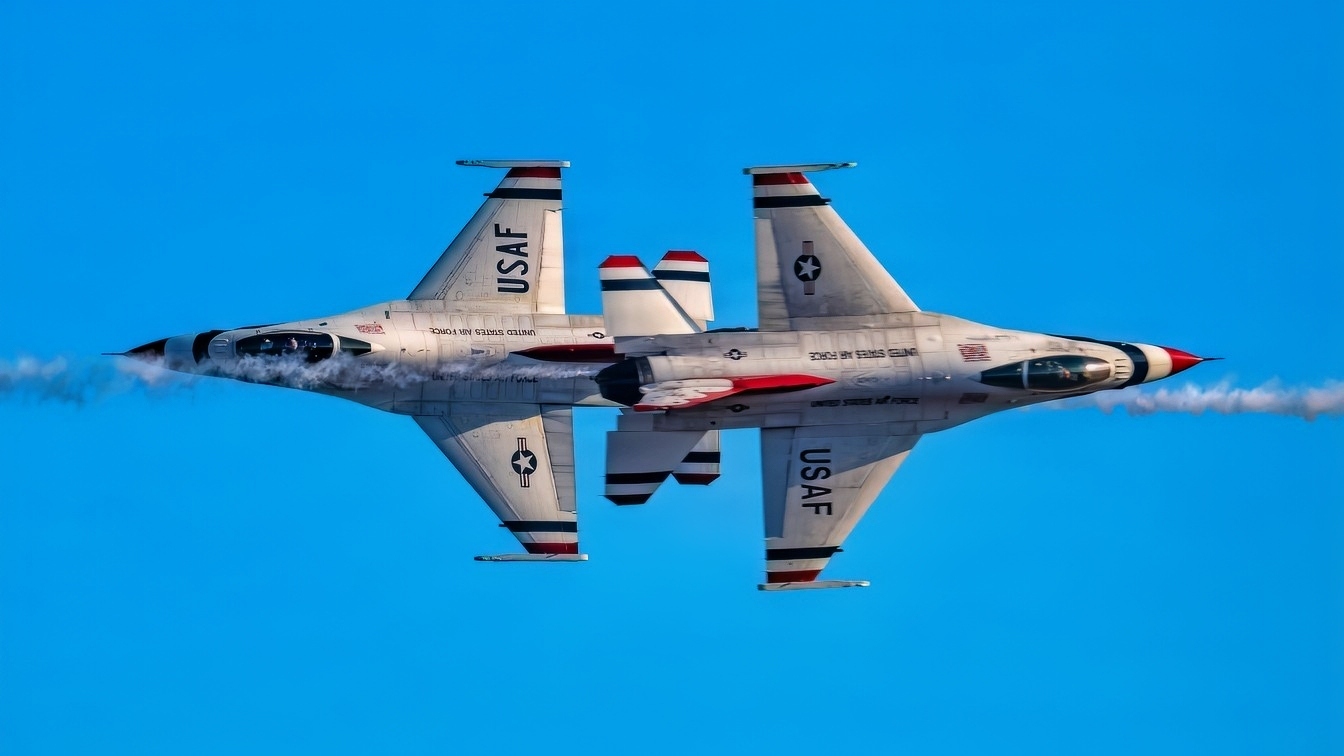
U.S. Air Force Thunderbirds F-16 Fighting Falcons perform a formation maneuver during the California Capital Airshow at Mather Airport in Mather, California, Oct. 10, 2026. The aerial demonstration highlighted the precision and skill of the Air Demonstration Squadron. (U.S. Air Force photo by Brian Collett)
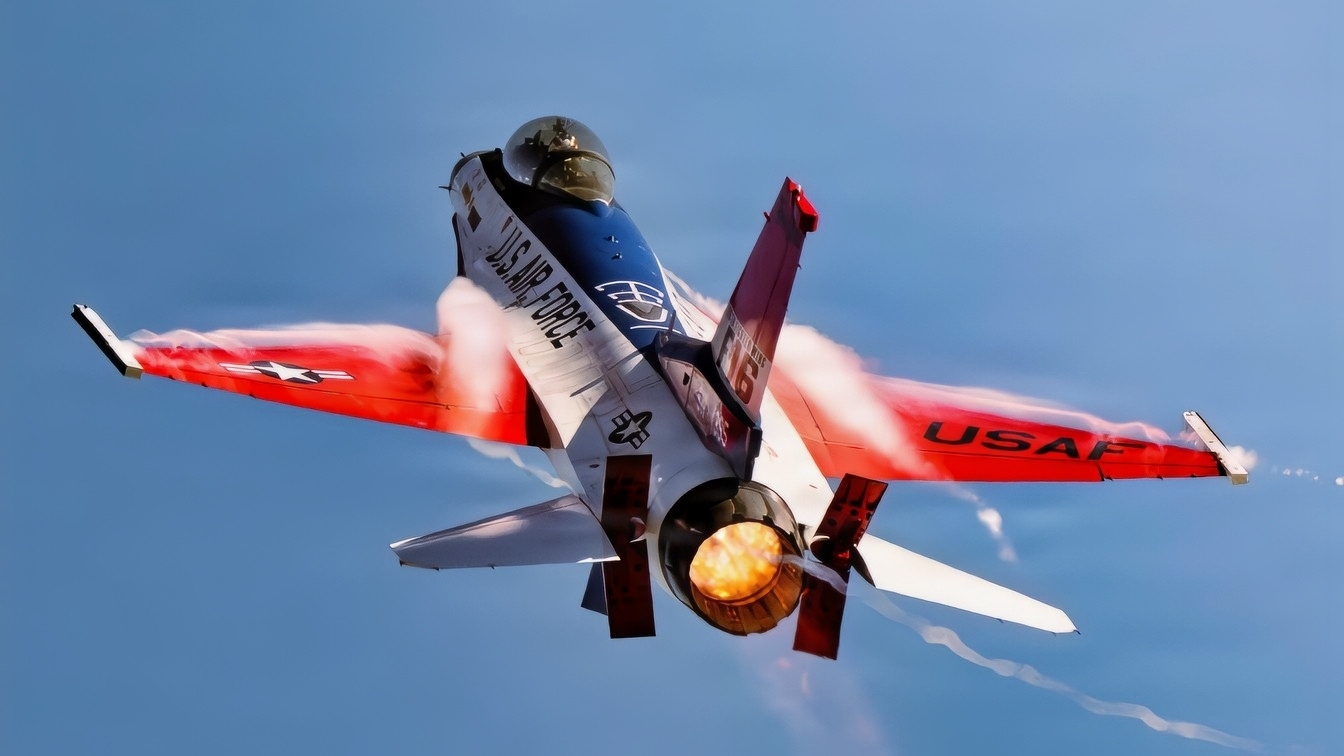
U.S. Air Force Maj. Taylor “FEMA” Hiester, F-16 Viper Demonstration Team commander and pilot, performs aerial maneuvers in a U.S. Air Force F-16C Fighting Falcon during a practice demonstration at Shaw Air Force Base, South Carolina, Sep. 29, 2026. The team travels to airshows across the U.S. and abroad to demonstrate the capabilities of the F-16 and the professionalism of the Airmen who operate and maintain them. (U.S. Air Force photo by Staff Sgt. Steven Cardo)
At the recent Ankara summit, NATO allies pledged $40 billion over five years for counter-drone capabilities, and that’s a start. It’s also an admission that the alliance spent three years treating this as strictly a Ukrainian problem.
The War Has Spread Beyond Europe
In March, the Russian LNG carrier Arctic Metagaz, hauling 61,000 tons of liquefied natural gas, was hit by a suspected sea drone near Maltese waters.
Two Libyan officials later said Ukrainian forces had been staging drone operations out of western Libya, and RFI reported more than 200 Ukrainian military personnel on the ground there.
Ukraine’s drone operators are hunting Russia’s shadow fleet in the Mediterranean. Kyiv has also hit the Baltic port of Ust-Luga and, by Russia’s own count, launched 1,336 drones in a single night this month.
Then there’s the diplomacy, which now runs through Shenzhen. Trump used his trilateral summit with Xi Jinping and Vladimir Putin last week to tell skeptical Europeans that “Putin wants to end the war.” He does, but he wants to end it strictly on his terms.
Trump Negotiation Without Europe Favors Putin
At the White House on November 5, the president met with Russian envoy Kirill Dmitriev with no Ukrainians or European allies in the room, and announced that he and Putin were close to a “big, beautiful agreement” covering Ukraine and “all of Europe.” That isn’t going to work for anyone other than Putin.
He’s pushing hard to sign a peace agreement before January. Ukrainian President Zelenskyy said that Russia isn’t willing to make any concessions.
There is a desire to act very quickly, and both we and the Russians understand that. We understand what the price may be. We also very much want peace, but not at Ukraine’s expense alone,” he said.
However, Europe’s participation came only after Steve Witkoff and Jared Kushner flew to Moscow and Putin signed off on it. Putin only invited European negotiators to Moscow to “clarify their position,” after which Russia “will decide in what format to continue the dialogue with Ukraine.” That’s unacceptable.
One Voice Or None
The EU’s foreign policy chief Kaja Kallas said it plainly in Warsaw. Russia cannot be Europe’s security guarantor.
The US and Europe need to present a united front regarding Russia and granting Ukraine security guarantees. Such as the meeting of “The Coalition of the Willing” in Berlin, and not sending mixed messages, such as with Trump at the trilateral summit in Shenzhen, China.
About the Author: Steve Balestrieri
Steve Balestrieri is a National Security Columnist. He served as a US Army Special Forces NCO and Warrant Officer. In addition to writing on defense, he covers the NFL for PatsFans.com and is a member of the Pro Football Writers of America (PFWA). His work was regularly featured in many military publications.


