

Key Points – The U.S. Army has officially canceled the M10 Booker combat vehicle program (commonly known as a light tank), its first new armored vehicle in two decades, just two years after it was unveiled.
-The Army announced on June 11th that it was terminating the low-rate initial production contract with General Dynamics.

A live fire demonstration of the Army’s newest and most modernized combat vehicle, the M10 Booker, marks the conclusion of the M10 Booker Dedication Ceremony at Aberdeen Proving Ground, in Aberdeen, Md., April 18, 2024. (U.S. Army photo by Cpl. Jonathon Downs)
-Army Secretary Dan Driscoll admitted, “We got the Booker wrong,” explaining that the vehicle, intended to be a light, air-droppable tank-like platform, ended up too heavy and unable to be dropped from an airplane.
-The cancellation is part of a broader Pentagon push under Defense Secretary Pete Hegseth to cut “obsolete or ineffective systems” and reinvest savings.
The M10 Booker Is Now Truly Doomed
Back in the summer of 2023, the U.S. Army unveiled the M10 Booker armored vehicle, described at the time by Stars and Stripes as “its first new combat vehicle in two decades.”
The light tank, formerly known as the “Mobile Protected Firepower Ground Combat Vehicle,” was named for both World War II-era Medal of Honor winner Pvt. Robert D. Booker and Staff Sgt. Stevon A. Booker, who was posthumously awarded the Distinguished Service Cross for his valor in the Iraq War.
Per Task and Purpose, the Booker was to be “the first major weapons system in the U.S. military named for a service member from the post-9/11 wars.”
While it is not technically a tank, the M10 Booker was described as a “tank-like armored vehicle.”
The Army first contracted General Dynamics to build what would become the Booker in 2022. The first M10 Bookers were scheduled for delivery later in 2023, with the Army expecting “its first M10 battalion to conduct initial operations testing in late 2024 or early 2025.”
But now, just two years later, the Army has pulled the plug on the Booker.
Hegseth Swings the Axe
Stars and Stripes reported in early May that the Army was “canning’ the M10 Booker, as part of the Pentagon’s push to cut spending and streamline operations. The Army side of that is known as the Army Transformation Initiative.
“The Army will cease investment and procurement of the M10 Booker so that we can optimize and reinvest those savings into war-winning capabilities,” said Lt. Col. Jeff Tolbert, a spokesman for Army Secretary Dan Driscoll, told Stars and Stripes.
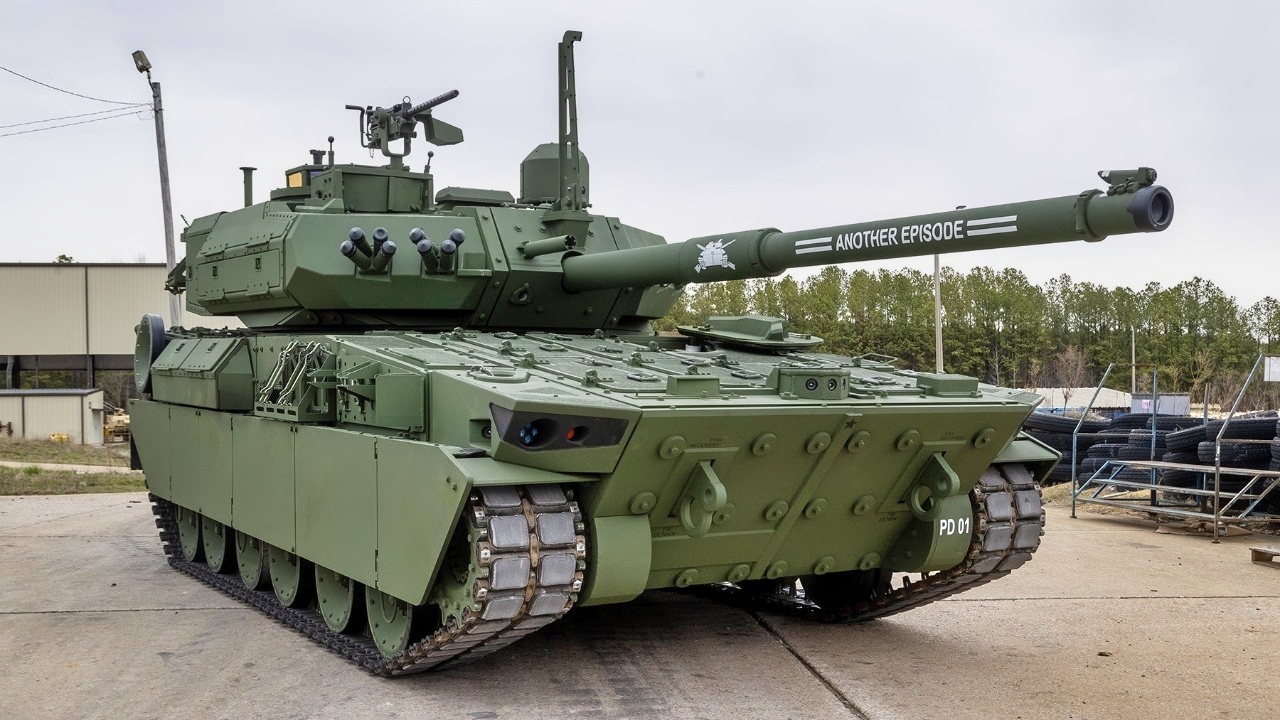
PD1 – Delivery of First Production Vehicle M10 Booker Combat Vehicle. Image Credit: U.S. Army.
“The Army is increasing lethality by ceasing procurement of obsolete or ineffective systems so that we can invest in capabilities that benefit the American soldier.”
Hegseth sent a memo on April 30 laying out priorities for the Army Transportation Initiative, and while it didn’t specifically mention the M10 Booker, it did include a subheading on “Eliminating Wasteful Programs and Outdated Equipment.”
Also in April, Defense One had written about the Booker, stating that the Army “made a tank it doesn’t need and can’t use. Now it’s figuring out what to do with it.”
It wasn’t until June 11 that the Army made an official announcement of the Booker’s end.
“The U.S. Army has issued a termination for convenience of the current low-rate initial production of the M10 Booker Combat Vehicle and will not enter into full-rate production as originally planned,” the statement said.
Why the Booker?
According to the Stars and Stripes report, part of the problem with the M10 Booker was that it could not be dropped to the ground from an airplane. There was also the long-time controversy over whether the Booker was or wasn’t a tank.
“Now that we’re canceling, you can call it whatever,” Driscoll told reporters last month, per Task and Purpose.
“We got the Booker wrong,” Driscoll admitted to the press. “We wanted to develop a small tank that was agile and could do [airdrops] to the places our regular tanks can’t.”
“We got a heavy tank,” the secretary added. “What’s historically happened is we would have kept buying this to build out some number of Bookers, and then in decades in the future we would have switched. Instead, we went to the Pentagon leadership and we said, ‘We made a mistake, this didn’t turn out right. We’re going to stop. We’re going to own it.’”
MORE: Iran’s Nuclear Program Isn’t Dead Yet
MORE: America Only Has 19 B-2 Stealth Bombers
Another issue, per the Task and Purpose report, was that the original contract for the Booker required all repairs to be done by the manufacturer, General Dynamics, rather than by the Army’s mechanics, who had hoped they could use 3D-printed parts and do the repairs themselves. Those restrictions were raised in Driscoll’s confirmation hearing earlier this year by Sen. Elizabeth Warren (D-MA).
About the Author:
Stephen Silver is an award-winning journalist, essayist and film critic, and contributor to the Philadelphia Inquirer, the Jewish Telegraphic Agency, Broad Street Review and Splice Today. The co-founder of the Philadelphia Film Critics Circle, Stephen lives in suburban Philadelphia with his wife and two sons. For over a decade, Stephen has authored thousands of articles that focus on politics, technology, and the economy. Follow him on X (formerly Twitter) at @StephenSilver, and subscribe to his Substack newsletter
Fighter Jet Fails
Russia’s Su-57 Felon Stealth Fighter Is a Waste of Rubles


Pingback: 'We Got It Wrong': M10 Booker Light Tank 'Axed' By US Army - National Security Journal
Pingback: M10 Booker: The US Army Cancelled the Frankenstein 'Light Tank' - National Security Journal