

New information shows the flow of vessels through the Strait of Hormuz, a key oil waterway, slowed to a virtual standstill over the weekend. This comes as Washington tightens a naval embargo on Iran, and Tehran has said it will utilize all possible methods to oppose it.
Record Attack Reports in October

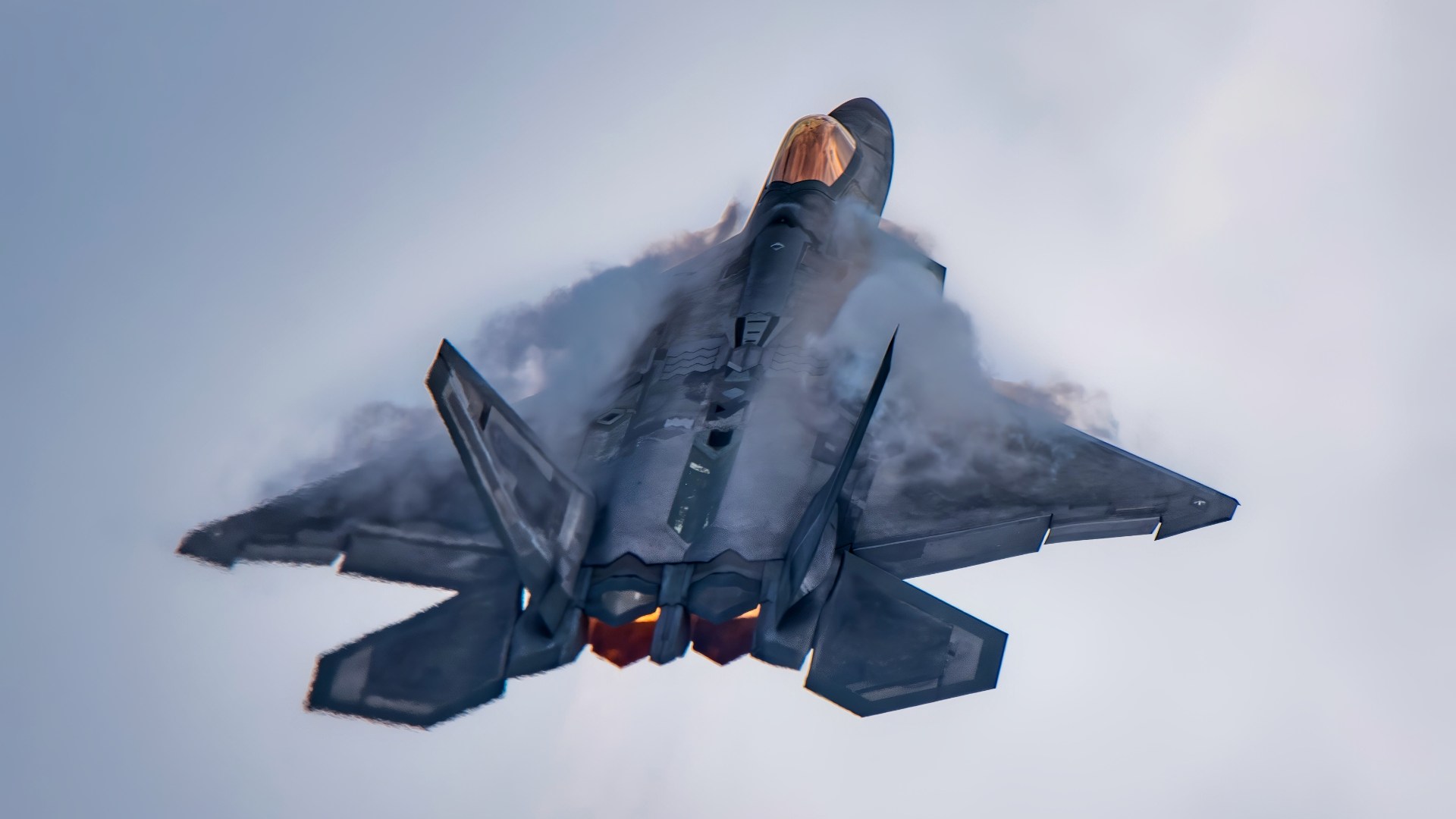
F-22 Raptor Elephant Walk. Image Credit: Creative Commons.
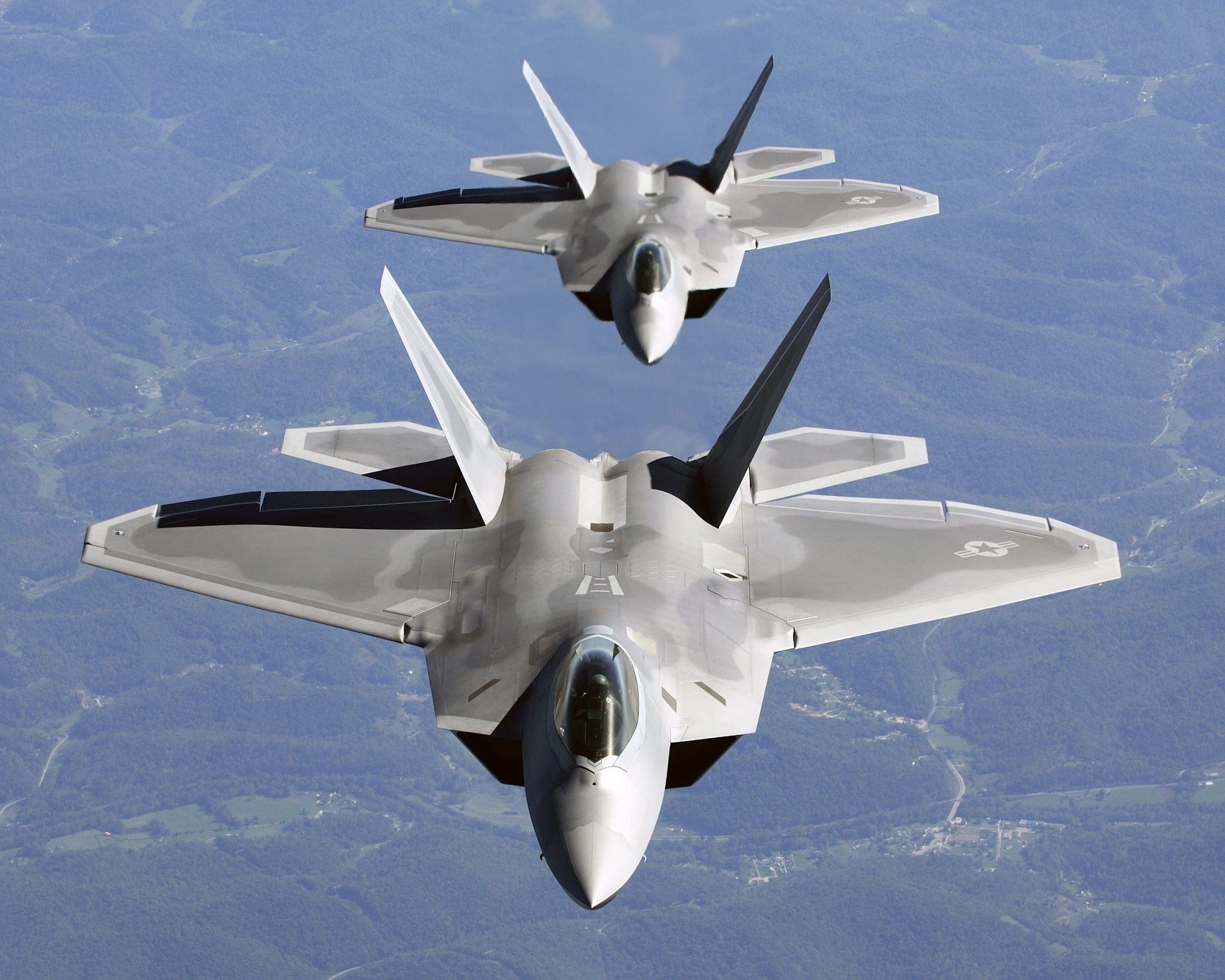
Lt. Col. James Hecker (front) and Lt. Col. Evan Dertein line up their F/A-22 Raptor aircraft behind a KC-10 Extender to refuel while en route to Hill Air Force Base, Utah. Colonel Hecker commands the first operational Raptor squadron — the 27th Fighter Squadron at Langley Air Force Base, Va. The unit went to Hill for operation Combat Hammer, the squadron’s first deployment, Oct. 15. The deployment has a twofold goal: complete a deployment and to generate a combat-effective sortie rate away from home. [U.S. Air Force photo by TSgt Ben Bloker]
ABC News put the figure at 31 for October.
In November, there were at least 22 incidents up to Sunday, according to CNN.
Many vessels involved in incidents fail to provide information to UKMTO, making it difficult to assess accurately, it said in a November 20 summary.
The U.S. Joint Maritime Information Center (JMIC) has kept its “SEVERE” threat level for commercial shipping in the strait live.
The UKMTO reported that the strait’s traffic was around65 percent lower than prewar levels in the week ending November 18. A total of 263 transits were recorded, down from 308 the previous week
Three Tankers Attacked
Marisks, a marine risk consultancy, said that on Friday and Saturday three tankers were attacked while leaving the strait. On November 20, a projectile struck Captain Leon’s bow, sparking a fire aboard the vessel, Marisks said.
All crew members were reported safe. On Saturday, the Torkel and Arina, both Hong Kong-registered tankers, were also attacked.
While Marisks said Iranian responsibility was “assessed as likely,” it did not confirm who carried out the strikes.
Reuters also reported on Friday that UKMTO records showed that one tanker was attacked eight nautical miles off Khasab in Oman.
There were no reports of injuries or environmental damage resulting from this.
However, Iran’s Revolutionary Guards claimed that a ship in the area had run aground on a mine. Again, this could not be independently confirmed.
Kpler data showed five tracked commodity-vessel transits on Saturday and none on Sunday, compared with 31 the previous weekend.
Vessels that have chosen not to activate their monitoring devices may not be included in such statistics.
Southern Route Remains Key
While attacks have largely been centered on the Omani side of the strait, vessels have still often been chosen to take the southern shipping route — backed by U.S. naval forces — as an alternative to those under Tehran’s control.
“Iran’s objective remains to keep the Omani route, which is described as a U.S.-facilitated route, a very high-risk passage and to keep the energy recovery inconsistent,” Noam Raydan, senior fellow at the Washington Institute for Near East Policy, told ABC News on November 21.
“Tehran now seems determined to make these arrangements more costly and less reliable,” Hamidreza Azizi, an International Crisis Group analyst, told the network.
The U.S. and its Gulf partners have routinely used ship-to-ship (STS) transfers to maintain oil exports.
Smaller tankers have also been able to cross the strait, often without transmitting their positions, before moving their cargo onto larger vessels outside the waterway.
However, Sina Toossi of the Center for International Policy noted on Saturday that:
“Tehran has escalated its attacks to make the STS system more dangerous, costly, and ultimately unviable.”
Iran’s Economic Situation Suffering
Iran’s economic situation has also worsened.
As CNN cited, commodities data service Kpler said that “Iranian oil on water outside the blockade zone has hit zero” and warned that oil revenues “could drop to zero by mid-December.”
Again, this is a prediction and does not yet constitute fact.
However, Reuters reported on Monday that TankerTrackers.com had discovered a tanker which appeared to be receiving Iranian crude oil via a ship-to-ship method and which may therefore avoid the embargo.
Iran’s Foreign Ministry spokesman Esmaeil Baghaei was adamant at a weekly news conference on Monday: “We will definitely not tolerate it (the blockade), and we will use all our tools to confront this US aggression.”
“The naval blockade … is considered a military aggression,” he said, adding that “Iran has the right to use any available tool to defend itself in this regard.”
Shipping Still a Dangerous Game
As of November 17, the International Maritime Organization had confirmed 139 incidents and 25 fatalities involving crew members in the region.
On November 11, its secretary-general Arsenio Dominguez called on shipping company owners to “refrain from commercial activities in the Strait that expose seafarers to unacceptable risks.”
Jorge León, an analyst at Rystad Energy, told the Financial Times on November 21 that “Iranian attacks on shipping are averaging 1 to 1.5 a day and there’s a lot of under-reporting.”
“Iran is trying to demonstrate that the United States cannot guarantee maritime security in the Persian Gulf despite its overwhelming naval superiority,” Azizi told ABC News.
About the Author: Georgia Gilholy
Georgia Gilholy is a journalist based in the United Kingdom who has been published in Newsweek, The Times of Israel, and the Spectator. Gilholy writes about international politics, culture, and education.


